From pop-up glamping suites to all-season commercial event venues, the inflatable tent market has evolved far beyond the simple camping shelter.
The outdoor living industry has undergone a quiet revolution over the past few years. Where once a canvas pole tent was the default option for an outdoor gathering, today's event planners, hospitality operators, and even homeowners are turning to a far more versatile solution: inflatable tents. These air-supported structures now rival traditional buildings in comfort and durability, while offering a level of portability and visual impact that rigid structures simply cannot match.
Whether you are sourcing an inflatable house tent for adults for a luxury camping experience, planning a winter festival, or outfitting a commercial venue, understanding what separates a quality inflatable tent from a short-lived novelty is essential. This guide walks through the practical considerations, material choices, and sourcing strategies that will help you make a confident investment.
What Actually Sets Inflatable Tents Apart
The core difference between an inflatable tent and a traditional pole tent lies in the structural system. Instead of rigid aluminum or steel poles, inflatable tents use air-filled beams — typically made from high-strength PVC tarpaulin or reinforced Oxford fabric — to create a self-supporting frame. A continuous-duty blower maintains pressure, and the tent remains standing as long as the blower is running.
This design brings several practical advantages. Setup time drops dramatically: a large inflatable dome tent that might take a crew of four several hours to erect with traditional poles can often be inflated and secured in under 30 minutes. The absence of rigid poles also means the tent packs down into a far smaller volume, making transport and storage simpler and cheaper.
From a safety perspective, the air-beam structure has inherent flexibility. In strong winds, an inflatable tent bends and recovers rather than snapping — a meaningful advantage for event organizers working in unpredictable weather. The seamless, curved architecture of inflatable structures also creates an interior aesthetic that feels spacious and modern, free from the visual clutter of internal poles and cross-bracing.
A Tent for Every Season and Scenario
One of the most common misconceptions about inflatable tents is that they are only suitable for summer festivals or fair-weather camping. In reality, the product range available from specialized inflatable tent manufacturers has expanded to cover virtually every outdoor scenario:
- Glamping and Hospitality: Clear inflatable bubble tents and dome tents with transparent PVC windows create immersive overnight experiences. These are increasingly used by resorts, eco-lodges, and pop-up hotels to offer guests panoramic views of the night sky in climate-controlled comfort.
- Commercial Events and Exhibitions: Large inflatable cube tents, tunnel tents, and custom-shaped structures serve as trade show booths, product launch venues, and branded activation spaces. Their exterior surfaces can be printed with full-color logos and graphics.
- Winter and All-Weather Use: Heavy-duty inflatable tents constructed with double-layer insulation, reinforced anchoring systems, and high-output heating compatibility are now deployed for ski resorts, Christmas markets, and cold-weather corporate events. When built with the right materials, these tents perform reliably in sub-zero conditions.
- Sports and Recreation: Inflatable golf simulator enclosures, spray-painting booths, and covered training areas demonstrate how far the category has moved beyond traditional camping.
- Emergency and Industrial Use: Rapid-deployment inflatable shelters are used by disaster response teams, military field operations, and remote work sites where speed of setup is critical.
What to Look for When Sourcing Inflatable Tents
Not all inflatable tents are built to the same standard. The difference between a product that lasts three seasons and one that fails after a handful of events often comes down to a few key manufacturing decisions:
Material Grade: Commercial-grade PVC tarpaulin is the industry standard for durable inflatable tents. For certain applications — such as lightweight camping or indoor use — Oxford fabric, nylon, or TPU may be more appropriate. The key is to match the material to the intended use case. A reputable manufacturer will offer material options and explain the trade-offs between weight, durability, and cost.
Seam Construction: Air-tightness is everything. High-temperature fusion welding creates stronger, more reliable seals than stitching alone. For sewn products, look for reinforced seams with waterproof nylon thread and additional reinforcement at high-stress areas such as corners and anchor points. The quality of seam work directly determines how long the tent holds air pressure and resists leakage.
Blower Compatibility: Every inflatable tent requires a blower sized appropriately for its volume. A quality supplier will provide a correctly matched blower — available in 110V, 220V, or 380V configurations — and ensure it meets CE or UL safety requirements. The blower should run continuously and quietly, maintaining stable pressure without overheating.
Anchoring and Wind Resistance: D-ring or round metal anchor systems integrated into the tent design provide reliable tie-down points for stakes, weights, or ground anchors. This is especially important for large tents deployed in open areas where wind loads can be significant.
Safety Certifications: For inflatable products used in public settings, material safety certifications matter. Look for compliance with standards such as EN71 (toy safety), EN14960 (inflatable play equipment), EN15649 (floating leisure articles), and RoHS (hazardous substance restrictions). These certifications indicate that the manufacturer takes quality control seriously.
Pro Tip: Ask About Repair Kits
A quality inflatable tent manufacturer supplies a repair kit with every product. This should include patching material, adhesive, and basic tools. Combined with reinforced seam construction, a repair kit can extend the service life of a well-maintained inflatable tent significantly — some manufacturers report a typical service life of three years or more with proper care.
Customization: Why It Matters More Than You Think
Off-the-shelf tents work for generic needs, but the real value of working with a dedicated inflatable tent manufacturer lies in customization. A full-service manufacturer can take a concept from a rough sketch, photograph, or site plan and produce a fully customized inflatable structure that matches your exact requirements.
Customization options typically include:
- Size and Shape: From compact 3-meter dome tents for intimate glamping setups to expansive tunnel tents spanning 20 meters or more for large-scale events, dimensions are tailored to your site and capacity needs.
- Color and Branding: Full-color logo printing, custom artwork, and brand-specific color schemes turn an inflatable tent into a powerful marketing tool. The exterior surface of an inflatable tent is essentially a three-dimensional billboard.
- Windows, Doors, and Flooring: Mesh windows for ventilation, transparent PVC panels for panoramic views, zippered doors, and reinforced flooring can all be specified during the design phase.
- Lighting and Electrical Integration: LED lighting channels, cable management ports, and blower power routing can be built into the design for a clean, professional finish.
The design process at a manufacturer like YOLLOY typically follows a structured workflow: the client provides a brief or concept, the design team creates simulation renderings for approval, and production begins only after the client signs off on the design. This iterative approach ensures that the final product matches expectations — and the stated minimum order quantity of one piece means even small-scale buyers can access custom solutions.
Setup, Maintenance, and Avoiding Common Pitfalls
Even the best inflatable tent will underperform if it is set up incorrectly or poorly maintained. Here are the most common mistakes — and how to avoid them:
Mistake 1: Skipping the Site Inspection
Always inspect the setup site before inflating. Remove sharp objects, rocks, and debris. Choose a level surface whenever possible. For large tents on uneven ground, plan your anchoring strategy in advance — sandbags, water weights, or ground stakes depending on the surface type.
Mistake 2: Under-Anchoring the Structure
An inflatable tent is lightweight for its size, which means it catches wind. Use every anchor point provided. In windy conditions, add extra tie-downs. A tent that lifts off the ground is not just a financial loss — it is a serious safety hazard.
Mistake 3: Neglecting Ventilation
Inflatable tents can trap humidity, especially in cooler weather. Open mesh windows and doors during the day to promote airflow. For tents used in humid climates, consider specifying additional ventilation panels during the design phase.
Mistake 4: Improper Storage
Never store an inflatable tent while it is damp. Mold and mildew can degrade PVC and fabric, shortening the product's lifespan. After deflating, clean the tent with mild soap and water, dry it completely, and store it in a cool, dry location away from direct sunlight.
Packaging, Shipping, and What to Expect
When sourcing from an overseas manufacturer, packaging and logistics should not be an afterthought. Quality manufacturers use soft carpet protection, waterproof PVC bags, and outer PE film to protect products during transit. Large or heavy items may be packed on steel pallets for additional security.
Shipping options typically include air freight (5-7 days transit) and sea freight (15-30 days or more). Production time for a standard inflatable product is generally 6-15 days, though complex custom orders may take longer. A manufacturer that regularly achieves a 95% on-time delivery rate and responds to inquiries within 24 hours signals a level of operational reliability that is worth paying for.
Making the Right Choice
The inflatable tent market is crowded with options, but the gap between a well-engineered commercial product and a budget alternative is substantial. A quality inflatable tent is an investment that should deliver multiple seasons of reliable performance, whether it is hosting weddings, housing glamping guests, or anchoring a brand activation at a trade show.
When evaluating suppliers, look beyond the price tag. Ask about material specifications, seam construction methods, blower certifications, and the availability of customization. A manufacturer that can walk you through every stage of the design-to-production pipeline — from simulation renderings to final inspection — is a partner worth keeping.
Ready to Explore Custom Inflatable Tent Solutions?
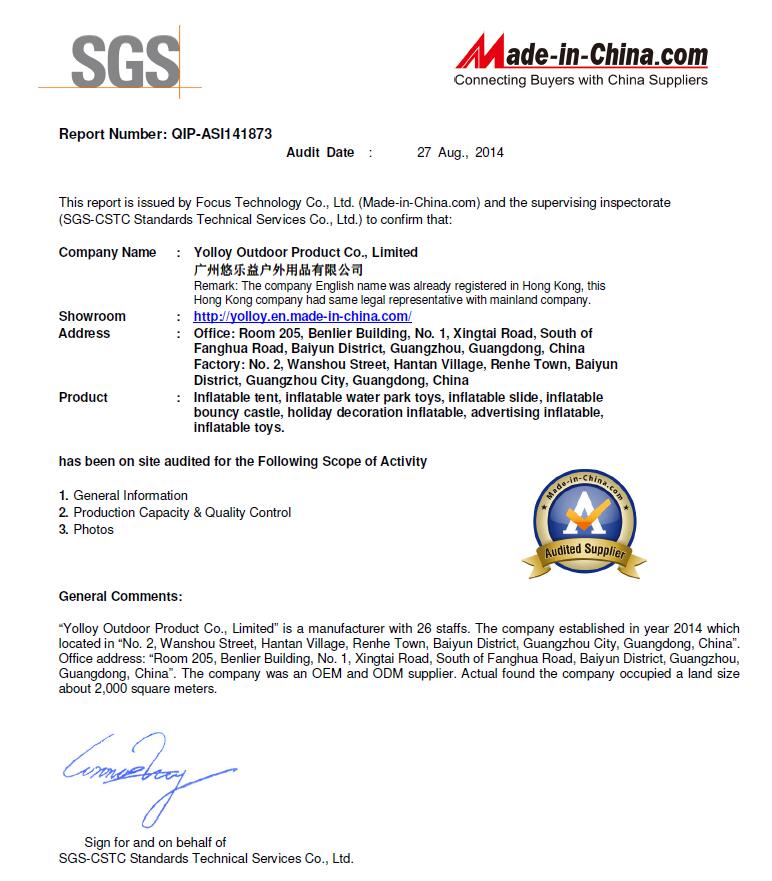
YOLLOY Outdoor Product Co., Limited designs and manufactures custom inflatable tents, clear domes, event structures, and more from its facility in Guangzhou, China. With a full-service design team, an MOQ of just one piece, and a proven track record of on-time delivery to markets across Europe, Asia, the Americas, and beyond, YOLLOY offers a dependable path from concept to finished product. Contact Sunny Yang at [email protected] or call +86-20-8370 0771 to discuss your project requirements and receive a tailored quotation.