Products Category
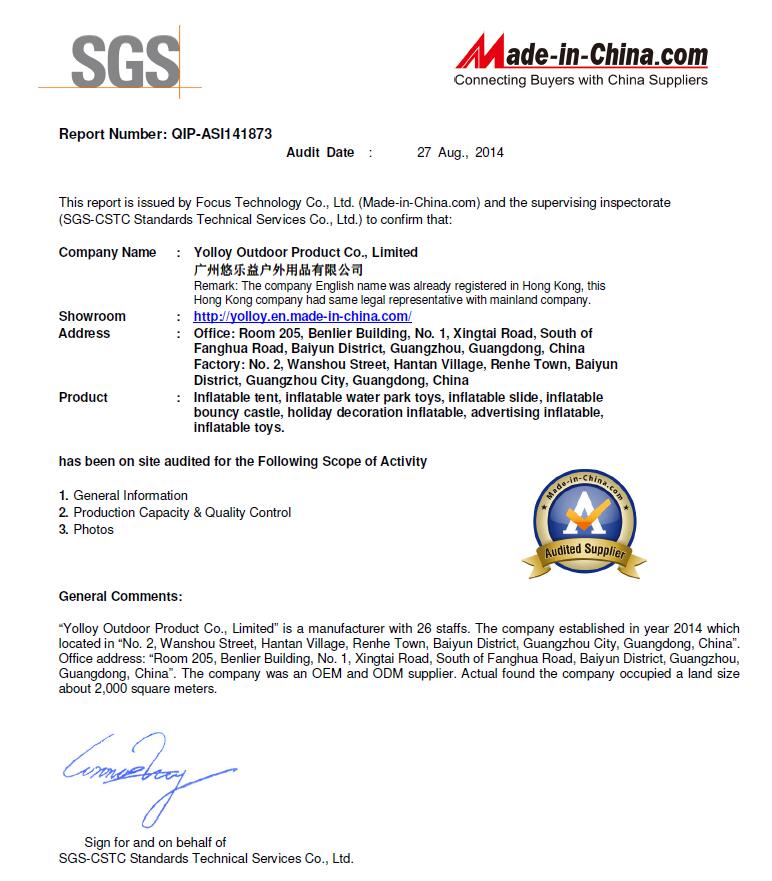
Certification

News

• New Order Successfully Finished for Long-Time Cooperated Japanese Client | YOLLOY Wins Full Client Recognition

• YOLLOY Custom Inflatable Pool Tent for Danish Client: Professional Pool Repair Shelter & Debris Protection

• Trusted Once Again! Greek Captain Re-orders Our Products After 4 Years

• Revolutionize Your Outdoors: The All-Terrain Inflatable Floating Tent for Land & Water

• Elevate Your Summer Fun: The Ultimate Inflatable Water Floating Volleyball Court Trampoline

• Innovative Inflatable Nightclub Tents & Pop-Up Bars: The Ultimate Solution for Portable Party Venues

Contact Us

Name: Sunny Yang
Tel: +86-20-8370 0771
Fax: +86-20-8370 0771
Mobile: 13570587575
E-mail: sales@yolloy.com
Add: No 5,Xiong wei Bo Nan Road,ZhongLuoTan Town,Baiyun district,Guangzhou,China
Friend me on Facebook Follow me on Twitter Add me to your circles Follow me on Pinterest Watch my channel on YouTube
News

Why Inflatable Tents Are the Smart Choice for Outdoor Events: A Complete Guide for Event Planners

Author:yolloy Date:2026/7/20 18:59:30
Picture this: you have three hours before a corporate product launch begins. The venue is a waterfront lawn with no permanent structures. A traditional frame tent would require a crew of six, a truckload of aluminum poles, and at least half a day of assembly. But an inflatable tent rolls out of a compact bag, connects to a blower, and stands fully erect in under 15 minutes — with just two people.
That speed is not a marketing claim. It is the engineering reality that is quietly reshaping how event planners think about temporary shelters. Whether you organize weddings, trade shows, music festivals, or corporate gatherings, the choice of shelter sets the tone for everything that follows. And increasingly, event professionals are choosing inflatable tent for events over traditional rigid-frame alternatives.
This guide walks you through why inflatable tents have become the preferred option for outdoor events, what types are available, and how to choose a manufacturer that delivers consistent quality — not just a low price.

Why Inflatable Tents Win Over Traditional Frame Tents

Every event planner knows the pain points of traditional tent setup: heavy components, complicated assembly instructions, large storage requirements, and labor costs that inflate the overall budget. An outdoor inflatable tent solves these problems at the structural level.

Setup Speed

Inflatable tents use air beams instead of metal poles. Once the tent body is laid out and staked, a continuous-duty blower inflates the structure in minutes. When the event ends, deflation is just as fast. This means you can set up on the morning of the event and tear down the same evening — no overnight crew, no overtime charges.

Portability

A deflated tent packs into a fraction of its deployed volume. For event rental businesses that rotate inventory between multiple venues each week, this translates directly into lower transport costs and fewer trips.

Safety in Wind

Because inflatable tents rely on flexing air beams rather than rigid metal frames, they absorb wind gusts instead of resisting them. Combined with D-ring and round metal anchor systems, a properly staked inflatable tent stays stable in conditions that would stress a pole-frame structure.

Visual Impact

The clean, curved architecture of an inflatable tent creates a modern, eye-catching presence that traditional boxy marquees simply cannot match. For brand activations, product launches, and high-end celebrations, that visual distinction matters.

Types of Inflatable Tents for Different Events

Not all events call for the same tent shape. A wedding reception in a garden needs a different profile than a sports medical station at a marathon. Here is how the main types of custom inflatable tent designs map to event scenarios:

Inflatable Cube Tents

With straight walls and a flat or slightly pitched roof, cube tents maximize usable interior space. They are ideal for trade show booths, exhibition halls, and corporate hospitality areas where you need to fit furniture, displays, and foot traffic inside a defined footprint.

Inflatable Dome Tents

A dome shape distributes wind load evenly across the entire surface, making it one of the most stable inflatable designs. An inflatable dome tent works exceptionally well for outdoor cinema screenings, planetarium experiences, and immersive brand installations. When built with clear PVC panels, the dome becomes a transparent bubble that lets guests enjoy the surrounding landscape while staying sheltered.

Inflatable Tunnel Tents

Long, arched structures suit walk-through experiences: registration corridors at festivals, covered walkways between event zones, or sponsor showcase tunnels at sports events. The tunnel shape naturally guides foot traffic in one direction — useful for managing crowd flow.

Inflatable Party Tents

Designed for celebrations, an inflatable party tent typically features open sides or roll-up walls, decorative shapes, and options for integrated LED lighting. These tents are popular for weddings, birthday parties, anniversary dinners, and garden receptions where atmosphere is as important as shelter.

Special-Application Tents

Beyond the standard categories, inflatable tents can be configured for highly specific uses: inflatable spray booths for automotive detailing, golf simulator enclosures, emergency shelters, and sports changing rooms. If a use case exists, a custom design can accommodate it.

What to Look for in a Quality Inflatable Tent

Not all inflatable tents are built to the same standard. The difference between a tent that lasts three seasons and one that fails mid-event comes down to materials, construction methods, and quality control.

Materials

Commercial-grade PVC tarpaulin is the workhorse material for most inflatable tents. For applications that require lighter weight or breathability, manufacturers may use Oxford fabric, nylon, or TPU. The key question to ask any supplier is not just "what material do you use?" but "what material testing has it passed?" Look for materials that have been tested to EN71, EN14960, and RoHS standards — certifications that indicate the fabric has been evaluated for safety, mechanical properties, and restricted substances.

Seam Construction

The weakest point of any inflatable structure is the seam. Quality manufacturers use precision sewing equipment with waterproof nylon thread, reinforced stitching at high-load areas, and high-temperature fusion welding for airtight sections. These are not cosmetic details — they determine whether the tent holds pressure through a 10-hour event day.

Blower Quality

The blower is the heart of an inflatable tent. It must run continuously while the tent is in use. CE or UL-certified blowers rated for 110V, 220V, or 380V operation ensure compatibility with local power grids and provide reliable performance. A blower that overheats or trips a circuit breaker can deflate an entire event.

Anchor Systems

D-ring and round metal anchor points integrated into the tent body provide secure tie-down points for stakes, ropes, and weights. The number and placement of anchors should match the tent's size and expected wind exposure.

Customization: Making the Tent Your Own

One of the strongest arguments for working with a manufacturer rather than buying off-the-shelf is the ability to customize. A custom inflatable tent can carry your brand colors, logo, and artwork — turning a functional shelter into a marketing asset.
Customization options include:
Size and shape modifications to fit specific venue dimensions or crowd capacities
Color matching to corporate brand guidelines or event themes
Logo and artwork printing on walls, roof, or both
Integrated LED lighting for nighttime visibility and atmosphere
Window and door configurations including roll-up walls, zip doors, and mesh panels
Blower voltage selection (110V, 220V, or 380V) to match local electrical standards
The design process typically starts with a proposal, description, or sketch from the client. The manufacturer's design team prepares simulation renderings for review and revision. Production begins only after the design is approved. This collaborative approach ensures that the final product matches expectations — and the event site.

Choosing the Right Manufacturer

The global inflatable market includes hundreds of suppliers, but the gap between a commodity producer and a reliable manufacturing partner is wide. Here are the factors that separate the two:

Production Capability

A manufacturer that handles everything from material cutting and sewing to high-frequency welding and printing in-house maintains tighter quality control than one that outsources critical steps. Ask whether the factory uses precision sewing equipment, high-temperature fusion welding, and systematic inspection before shipment.

Certifications and Compliance

Request documentation for material certifications. EN71 covers toy safety, EN14960 applies to inflatable play equipment, and EN15649 is relevant for inflatable water park products. CE or UL certification for blowers is also essential for markets in Europe and North America.

Minimum Order Quantity

Some manufacturers require large minimum orders. Others accept orders starting from a single piece. This matters particularly for event businesses testing a new tent type or for companies that need one custom tent for a signature event.

Production and Delivery Timeline

A typical production time for one regular inflatable product is 6–15 days, excluding transit. Complex or large custom projects may take longer. Air shipping takes 5–7 days, while sea shipping takes 15–30 days or more. A 95% on-time delivery rate is a reasonable benchmark to expect from a professional manufacturer.

Warranty and Support

A three-year service life is achievable when the tent is used and maintained correctly. Each product should come with a repair kit, and the manufacturer should respond to inquiries within 24 hours. These are not luxury features — they are indicators of a supplier that stands behind its work.

Packaging

Products should be packed with soft carpet protection, waterproof PVC bags, and outer PE film. Large products may require steel pallets. Proper packaging prevents transit damage and ensures the tent arrives ready to inflate.

YOLLOY: A Manufacturing Partner for Event Professionals

YOLLOY Outdoor Product Co., Limited, based in Guangzhou, China, is an inflatable product manufacturer that covers the entire range of event shelter needs: from outdoor inflatable tent designs in cube, dome, tunnel, shelter, car, party, and sports configurations to clear inflatable dome tents, portable planetarium domes, inflatable water parks, interactive sports games, commercial slides, bounce houses, paintball bunkers, and advertising inflatables.
The company's workflow is built around a custom design-to-production model. Designers prepare simulation renderings from client proposals, revise the design until the client approves, and then release the project for factory production. This ensures that every tent matches the client's vision before a single cut is made.
Quality is supported by materials that have passed EN71, EN14960, and RoHS-related testing, CE or UL-certified blowers, precision sewing with reinforced seams, high-temperature fusion welding for airtight products, and pre-shipment inspection and testing. Products are exported to Europe, Asia, South America, Africa, the Middle East, Latin America, and beyond.
For event planners, rental businesses, and corporate event teams, the combination of low minimum order quantities, responsive service, and consistent on-time delivery makes YOLLOY a practical choice when sourcing inflatable tent for events at commercial scale.

Conclusion

The tent is often the first thing guests see and the last thing they leave. It defines the physical space of an event, influences the atmosphere, and — when done right — becomes part of the experience itself.
An inflatable tent delivers on the practical demands of event planning: fast setup, easy transport, and dependable performance in outdoor conditions. But it also offers something more: the flexibility to shape a space that looks exactly the way you envisioned it, whether that means a branded cube at a trade show, a transparent dome under the stars, or a tunnel that guides guests into your event world.
Ready to Explore Inflatable Tents for Your Next Event?
If you are planning an outdoor event and want to explore inflatable tent options — from standard designs to fully custom solutions — contact YOLLOY at sales@yolloy.com or call +86-20-8370 0771. Design consultations start with a conversation, not a commitment.

Why Inflatable Tents Are the Smart Choice for Outdoor Events: A Complete Guide for Event Planners

Author:yolloy Date:2026/7/20 18:59:30

Picture this: you have three hours before a corporate product launch begins. The venue is a waterfront lawn with no permanent structures. A traditional frame tent would require a crew of six, a truckload of aluminum poles, and at least half a day of assembly. But an inflatable tent rolls out of a compact bag, connects to a blower, and stands fully erect in under 15 minutes — with just two people.
That speed is not a marketing claim. It is the engineering reality that is quietly reshaping how event planners think about temporary shelters. Whether you organize weddings, trade shows, music festivals, or corporate gatherings, the choice of shelter sets the tone for everything that follows. And increasingly, event professionals are choosing inflatable tent for events over traditional rigid-frame alternatives.
This guide walks you through why inflatable tents have become the preferred option for outdoor events, what types are available, and how to choose a manufacturer that delivers consistent quality — not just a low price.

Why Inflatable Tents Win Over Traditional Frame Tents

Every event planner knows the pain points of traditional tent setup: heavy components, complicated assembly instructions, large storage requirements, and labor costs that inflate the overall budget. An outdoor inflatable tent solves these problems at the structural level.

Setup Speed

Inflatable tents use air beams instead of metal poles. Once the tent body is laid out and staked, a continuous-duty blower inflates the structure in minutes. When the event ends, deflation is just as fast. This means you can set up on the morning of the event and tear down the same evening — no overnight crew, no overtime charges.

Portability

A deflated tent packs into a fraction of its deployed volume. For event rental businesses that rotate inventory between multiple venues each week, this translates directly into lower transport costs and fewer trips.

Safety in Wind

Because inflatable tents rely on flexing air beams rather than rigid metal frames, they absorb wind gusts instead of resisting them. Combined with D-ring and round metal anchor systems, a properly staked inflatable tent stays stable in conditions that would stress a pole-frame structure.

Visual Impact

The clean, curved architecture of an inflatable tent creates a modern, eye-catching presence that traditional boxy marquees simply cannot match. For brand activations, product launches, and high-end celebrations, that visual distinction matters.

Types of Inflatable Tents for Different Events

Not all events call for the same tent shape. A wedding reception in a garden needs a different profile than a sports medical station at a marathon. Here is how the main types of custom inflatable tent designs map to event scenarios:

Inflatable Cube Tents

With straight walls and a flat or slightly pitched roof, cube tents maximize usable interior space. They are ideal for trade show booths, exhibition halls, and corporate hospitality areas where you need to fit furniture, displays, and foot traffic inside a defined footprint.

Inflatable Dome Tents

A dome shape distributes wind load evenly across the entire surface, making it one of the most stable inflatable designs. An inflatable dome tent works exceptionally well for outdoor cinema screenings, planetarium experiences, and immersive brand installations. When built with clear PVC panels, the dome becomes a transparent bubble that lets guests enjoy the surrounding landscape while staying sheltered.

Inflatable Tunnel Tents

Long, arched structures suit walk-through experiences: registration corridors at festivals, covered walkways between event zones, or sponsor showcase tunnels at sports events. The tunnel shape naturally guides foot traffic in one direction — useful for managing crowd flow.

Inflatable Party Tents

Designed for celebrations, an inflatable party tent typically features open sides or roll-up walls, decorative shapes, and options for integrated LED lighting. These tents are popular for weddings, birthday parties, anniversary dinners, and garden receptions where atmosphere is as important as shelter.

Special-Application Tents

Beyond the standard categories, inflatable tents can be configured for highly specific uses: inflatable spray booths for automotive detailing, golf simulator enclosures, emergency shelters, and sports changing rooms. If a use case exists, a custom design can accommodate it.

What to Look for in a Quality Inflatable Tent

Not all inflatable tents are built to the same standard. The difference between a tent that lasts three seasons and one that fails mid-event comes down to materials, construction methods, and quality control.

Materials

Commercial-grade PVC tarpaulin is the workhorse material for most inflatable tents. For applications that require lighter weight or breathability, manufacturers may use Oxford fabric, nylon, or TPU. The key question to ask any supplier is not just "what material do you use?" but "what material testing has it passed?" Look for materials that have been tested to EN71, EN14960, and RoHS standards — certifications that indicate the fabric has been evaluated for safety, mechanical properties, and restricted substances.

Seam Construction

The weakest point of any inflatable structure is the seam. Quality manufacturers use precision sewing equipment with waterproof nylon thread, reinforced stitching at high-load areas, and high-temperature fusion welding for airtight sections. These are not cosmetic details — they determine whether the tent holds pressure through a 10-hour event day.

Blower Quality

The blower is the heart of an inflatable tent. It must run continuously while the tent is in use. CE or UL-certified blowers rated for 110V, 220V, or 380V operation ensure compatibility with local power grids and provide reliable performance. A blower that overheats or trips a circuit breaker can deflate an entire event.

Anchor Systems

D-ring and round metal anchor points integrated into the tent body provide secure tie-down points for stakes, ropes, and weights. The number and placement of anchors should match the tent's size and expected wind exposure.

Customization: Making the Tent Your Own

One of the strongest arguments for working with a manufacturer rather than buying off-the-shelf is the ability to customize. A custom inflatable tent can carry your brand colors, logo, and artwork — turning a functional shelter into a marketing asset.
Customization options include:
Size and shape modifications to fit specific venue dimensions or crowd capacities
Color matching to corporate brand guidelines or event themes
Logo and artwork printing on walls, roof, or both
Integrated LED lighting for nighttime visibility and atmosphere
Window and door configurations including roll-up walls, zip doors, and mesh panels
Blower voltage selection (110V, 220V, or 380V) to match local electrical standards
The design process typically starts with a proposal, description, or sketch from the client. The manufacturer's design team prepares simulation renderings for review and revision. Production begins only after the design is approved. This collaborative approach ensures that the final product matches expectations — and the event site.

Choosing the Right Manufacturer

The global inflatable market includes hundreds of suppliers, but the gap between a commodity producer and a reliable manufacturing partner is wide. Here are the factors that separate the two:

Production Capability

A manufacturer that handles everything from material cutting and sewing to high-frequency welding and printing in-house maintains tighter quality control than one that outsources critical steps. Ask whether the factory uses precision sewing equipment, high-temperature fusion welding, and systematic inspection before shipment.

Certifications and Compliance

Request documentation for material certifications. EN71 covers toy safety, EN14960 applies to inflatable play equipment, and EN15649 is relevant for inflatable water park products. CE or UL certification for blowers is also essential for markets in Europe and North America.

Minimum Order Quantity

Some manufacturers require large minimum orders. Others accept orders starting from a single piece. This matters particularly for event businesses testing a new tent type or for companies that need one custom tent for a signature event.

Production and Delivery Timeline

A typical production time for one regular inflatable product is 6–15 days, excluding transit. Complex or large custom projects may take longer. Air shipping takes 5–7 days, while sea shipping takes 15–30 days or more. A 95% on-time delivery rate is a reasonable benchmark to expect from a professional manufacturer.

Warranty and Support

A three-year service life is achievable when the tent is used and maintained correctly. Each product should come with a repair kit, and the manufacturer should respond to inquiries within 24 hours. These are not luxury features — they are indicators of a supplier that stands behind its work.

Packaging

Products should be packed with soft carpet protection, waterproof PVC bags, and outer PE film. Large products may require steel pallets. Proper packaging prevents transit damage and ensures the tent arrives ready to inflate.

YOLLOY: A Manufacturing Partner for Event Professionals

YOLLOY Outdoor Product Co., Limited, based in Guangzhou, China, is an inflatable product manufacturer that covers the entire range of event shelter needs: from outdoor inflatable tent designs in cube, dome, tunnel, shelter, car, party, and sports configurations to clear inflatable dome tents, portable planetarium domes, inflatable water parks, interactive sports games, commercial slides, bounce houses, paintball bunkers, and advertising inflatables.
The company's workflow is built around a custom design-to-production model. Designers prepare simulation renderings from client proposals, revise the design until the client approves, and then release the project for factory production. This ensures that every tent matches the client's vision before a single cut is made.
Quality is supported by materials that have passed EN71, EN14960, and RoHS-related testing, CE or UL-certified blowers, precision sewing with reinforced seams, high-temperature fusion welding for airtight products, and pre-shipment inspection and testing. Products are exported to Europe, Asia, South America, Africa, the Middle East, Latin America, and beyond.
For event planners, rental businesses, and corporate event teams, the combination of low minimum order quantities, responsive service, and consistent on-time delivery makes YOLLOY a practical choice when sourcing inflatable tent for events at commercial scale.

Conclusion

The tent is often the first thing guests see and the last thing they leave. It defines the physical space of an event, influences the atmosphere, and — when done right — becomes part of the experience itself.
An inflatable tent delivers on the practical demands of event planning: fast setup, easy transport, and dependable performance in outdoor conditions. But it also offers something more: the flexibility to shape a space that looks exactly the way you envisioned it, whether that means a branded cube at a trade show, a transparent dome under the stars, or a tunnel that guides guests into your event world.
Ready to Explore Inflatable Tents for Your Next Event?
If you are planning an outdoor event and want to explore inflatable tent options — from standard designs to fully custom solutions — contact YOLLOY at sales@yolloy.com or call +86-20-8370 0771. Design consultations start with a conversation, not a commitment.