Imagine arriving at your campsite after a long drive, the sun already dipping below the treeline. Instead of wrestling with a tangle of aluminum poles, puzzling over which sleeve connects to which hub, and spending 30 minutes on setup while your family waits impatiently, you simply unroll your tent, connect a blower, and watch it rise into shape in under five minutes. That is the reality of an
inflatable tent for camping and it is changing the way people experience the outdoors.
What Makes Inflatable Tents Different
Traditional pole tents have served campers well for decades, but they come with inherent frustrations: broken poles, confusing assembly instructions, and significant time investment. Inflatable tents replace the rigid pole structure with air beams reinforced tubes that, once inflated, create a sturdy, self-supporting frame. The result is a shelter that goes up in minutes, packs down compactly, and delivers consistent structural integrity without the weak points that pole joints create over time.
The technology has matured considerably. Modern
inflatable tent manufacturer operations now use commercial-grade PVC tarpaulin, Oxford fabric, nylon, and TPU materials selected based on the specific application. High-temperature fusion welding equipment creates airtight seams, while precision sewing machines with waterproof nylon thread reinforce high-load areas. The difference between a well-made inflatable tent and a budget option is immediately apparent in the materials, the stitching, and the overall feel of the product.
Beyond Camping: The Versatility of Inflatable Tents
While the term camping tent conjures images of a two-person dome in a forest clearing, the inflatable tent category has expanded dramatically. Today's manufacturers produce inflatable shelters for a remarkably diverse range of applications:
Event and Party Tents: Large-format inflatable structures that serve as venues for weddings, corporate events, and festivals. These can be customized with brand logos, specific color schemes, and printed artwork to match any event theme.
Sports and Training Facilities: Inflatable sport tents used for temporary training facilities, equipment storage, and athlete staging areas at competitions.
Emergency and Relief Shelters: Rapid-deployment inflatable tents that can be set up in minutes for disaster response, field hospitals, and temporary housing.
Commercial Spray Booths: Airtight inflatable enclosures designed for automotive spray painting and detailing, providing a controlled environment that prevents overspray contamination.
Golf Simulator Enclosures: Portable inflatable structures that house golf simulators, allowing practice facilities to be set up virtually anywhere.
Car and Workshop Tents: Inflatable garages and workshop spaces that protect vehicles and equipment from the elements.
What to Look for When Sourcing Inflatable Tents
Whether you are purchasing for personal camping use, starting a rental business, or outfitting a commercial operation, understanding what separates a quality inflatable tent from an inferior one is essential.
Material Quality and Construction
The foundation of any durable inflatable tent is the material. Commercial-grade PVC tarpaulin offers excellent waterproofing, UV resistance, and tear strength. For applications where breathability matters such as camping tents Oxford fabric or cotton-blend materials provide better airflow while maintaining weather resistance. Ask potential suppliers about the specific materials they use and whether those materials have been tested to relevant standards.
YOLLOY, for example, states that its materials have passed EN71, EN14960, and RoHS-related testing. For inflatable water park products, EN 15649 standards apply. These certifications are not just paperwork they represent independent verification that the materials meet safety and quality benchmarks recognized in European and international markets.
Construction Methods
The way an inflatable tent is put together matters enormously. Look for manufacturers that use high-temperature fusion welding for airtight sections, precision sewing with waterproof nylon thread for fabric components, and additional reinforcement at stress points. D-ring or round metal anchor systems should be incorporated for wind resistance and secure installation.
Customization Capabilities
One of the significant advantages of working directly with a
custom inflatable tent manufacturer is the ability to tailor products to your exact specifications. Custom sizes, colors, and configurations are typically available. Customer logos and artwork can be printed directly onto the tent surface. The best manufacturers can design a product from a description, drawing, sketch, photograph, site plan, and budget turning a concept into a production-ready product.
The minimum order quantity is another important consideration. Some manufacturers require large bulk orders, while others YOLLOY included accept orders starting from just one piece, making custom projects accessible to small businesses and individual buyers alike.
Blowers and Power Compatibility
Every inflatable tent requires a blower to stay inflated during use. Quality manufacturers supply appropriately powered blowers matched to the tent's specifications. Check that blowers are available for your local voltage requirements 110V, 220V, or 380V and that they carry CE or UL certification.
Production Timeline and Delivery
For business buyers, production speed matters. Typical production times for a standard inflatable product range from 6 to 15 days, excluding transit. Complex or large custom products may take longer. Shipping options include air freight (5-7 days transit) and sea freight (15-30 days or more). A manufacturer's on-time delivery rate YOLLOY reports a 95% rate is a useful indicator of reliability.
After-Sales Support
Reputable manufacturers include a repair kit with each inflatable product, allowing minor damage to be addressed in the field. Warranty expectations vary, but a three-year service life under normal use and correct maintenance is a reasonable benchmark. Responsive customer service the manufacturer should answer emails within 24 hours is equally important, especially for commercial buyers who depend on their equipment for revenue.
The Commercial Opportunity
For entrepreneurs and established businesses, inflatable tents represent a growing market opportunity. The global camping and outdoor recreation sector continues to expand, driven by increased interest in outdoor experiences and experiential events. Inflatable tent rental businesses, event supply companies, and glamping operators are all finding strong demand for high-quality inflatable structures.
Sourcing directly from a manufacturer rather than through distributors or retail channels offers significant cost advantages. Wholesale pricing, combined with the ability to customize products for specific markets, gives businesses a competitive edge. When you work with a manufacturer that handles everything from design to production to quality control in-house, you eliminate layers of markup and gain direct communication about your order.
Why YOLLOY Stands Out
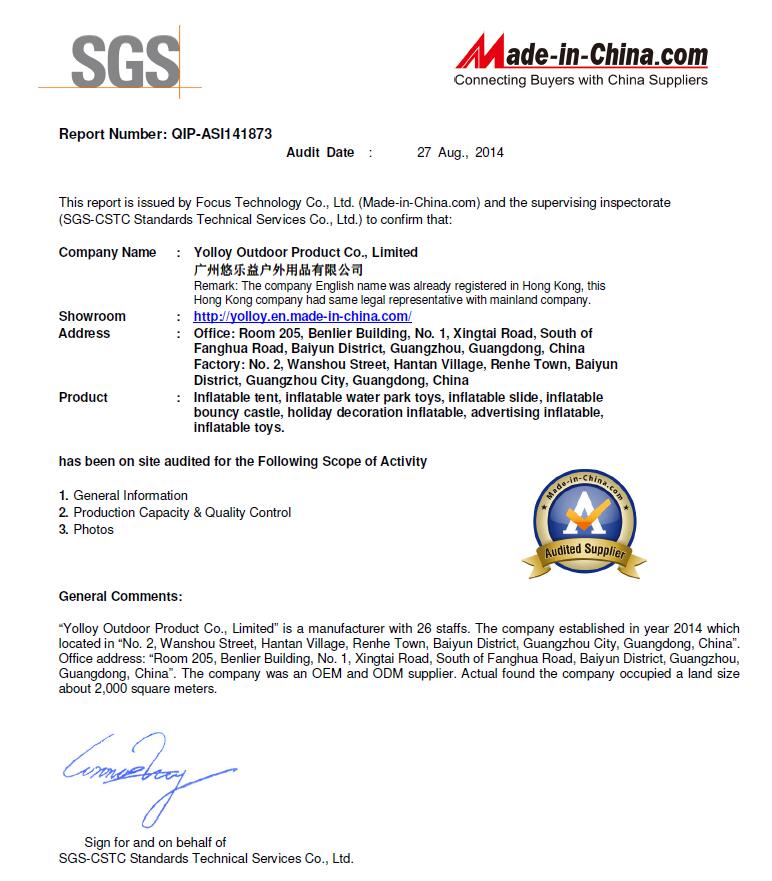
Based in Guangzhou, China, Yolloy Outdoor Product Co., Limited has built its reputation as a comprehensive inflatable product manufacturer and solution provider. The company's product range spans outdoor inflatable tents, clear dome tents, portable planetarium domes, water park products, interactive sports games, commercial slides, bounce houses, paintball bunkers, air mattresses, and advertising inflatables.
Several factors distinguish YOLLOY in the market:
Design-to-Production Workflow: Designers prepare simulation renderings from customer proposals, revise until approval, and then release for factory production. Clients see exactly what they are getting before manufacturing begins.
Material Transparency: Products are made from commercial-grade PVC tarpaulin, Oxford fabric, nylon, TPU, and other materials selected for each application. All relevant materials have passed EN71, EN14960, and RoHS testing.
Quality Control: Every product is inspected and tested before shipment. The company uses precision sewing equipment, reinforced seams, waterproof nylon thread, and high-temperature fusion welding as appropriate.
Global Export Experience: Products are exported to Europe, Asia, South America, Africa, the Middle East, and Latin America, with appropriate voltage blowers supplied for each market.
Packaging Care: Products are packed with soft carpet protection, waterproof PVC bags, and outer PE film. Large products use steel pallets for safe transit.
Responsive Communication: The company commits to answering emails and faxes within 24 hours, with a reported 95% on-time delivery rate.
Getting Started with Your Inflatable Tent Project
If you are considering an inflatable tent whether for personal camping, a business venture, or a large-scale commercial application the process begins with a conversation. Prepare your requirements: the intended use, desired dimensions, any specific features you need, your budget range, and your timeline. A good manufacturer will guide you through material options, design possibilities, and practical considerations you may not have thought of.
The inflatable tent market has matured to the point where quality, reliability, and customization are accessible to buyers at every scale. The key is choosing a manufacturer that combines production expertise with genuine customer service one that treats your project as more than just another order number.