Products Category
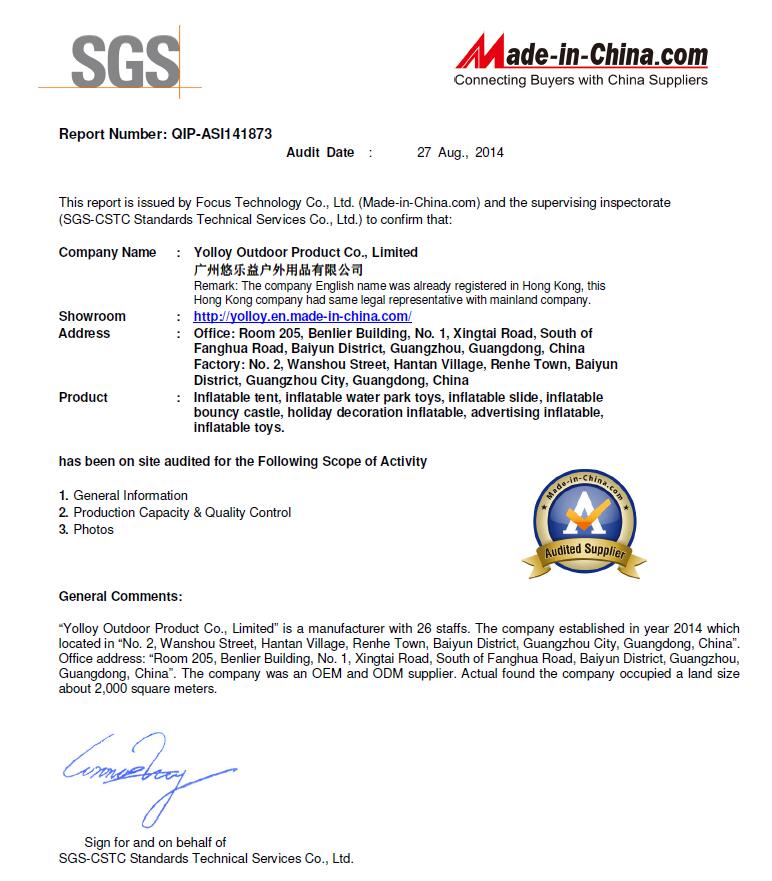
Certification

News

• New Order Successfully Finished for Long-Time Cooperated Japanese Client | YOLLOY Wins Full Client Recognition

• YOLLOY Custom Inflatable Pool Tent for Danish Client: Professional Pool Repair Shelter & Debris Protection

• Trusted Once Again! Greek Captain Re-orders Our Products After 4 Years

• Revolutionize Your Outdoors: The All-Terrain Inflatable Floating Tent for Land & Water

• Elevate Your Summer Fun: The Ultimate Inflatable Water Floating Volleyball Court Trampoline

• Innovative Inflatable Nightclub Tents & Pop-Up Bars: The Ultimate Solution for Portable Party Venues

Contact Us

Name: Sunny Yang
Tel: +86-20-8370 0771
Fax: +86-20-8370 0771
Mobile: 13570587575
E-mail: [email protected]
Add: No 5,Xiong wei Bo Nan Road,ZhongLuoTan Town,Baiyun district,Guangzhou,China
Friend me on Facebook Follow me on Twitter Add me to your circles Follow me on Pinterest Watch my channel on YouTube
News

Why Inflatable Camping Tents Are the Future of Outdoor Adventures: A Complete Guide

Author:yolloy Date:2026/8/11 4:40:41

For decades, traditional pole-and-fabric tents dominated the camping landscape. Campers accepted the ritual of wrestling with aluminum poles, threading sleeves, and hammering stakes — often in fading daylight or gusty conditions. But the outdoor gear market has evolved, and inflatable camping tent technology is rapidly changing how families, event organizers, and outdoor enthusiasts approach temporary shelter. With air-beam construction replacing rigid poles, these tents offer a faster setup, more interior space, and surprising durability that traditional designs struggle to match.

How Inflatable Camping Tents Actually Work

Unlike conventional tents that rely on a network of interlocking poles, inflatable tents for camping use reinforced air beams as their structural backbone. These beams — typically made from high-strength TPU or PVC-coated fabric — are inflated with a manual or electric pump in minutes. Once pressurized, the air beams create a rigid frame that holds the tent's shape even under significant wind load. The absence of metal poles eliminates pinch points, reduces weight, and allows the tent to flex rather than snap under stress.

Modern inflatable tents use precision high-temperature fusion welding technology to create airtight seams. This manufacturing approach ensures consistent air retention and long-term structural integrity, even after hundreds of inflation-deflation cycles.

Key Advantages Over Traditional Pole Tents

When comparing inflatable tent camping setups to their pole-based counterparts, several practical differences emerge that matter in real-world use:

  • Setup speed: A family-sized inflatable tent can be fully pitched by one person in under 10 minutes. No threading poles, no matching color-coded sleeves — just inflate and secure.
  • Interior space: Without internal poles creating obstructions, inflatable designs offer more usable floor area and headroom. The curved air-beam architecture maximizes standing space.
  • Wind resistance: Air beams absorb and dissipate wind energy through flex, unlike rigid poles that can bend permanently or break. Reinforced anchor points with D-ring systems provide additional stability.
  • Packability: Deflated tents compress into compact carrying bags that are easier to transport and store than bundled pole sets.
  • Safety: No sharp pole ends or snapped metal components reduce injury risk during setup and takedown.

Materials That Make the Difference

The performance of an inflatable tent depends heavily on the materials used in its construction. Commercial-grade PVC tarpaulin remains the industry standard for durability and weather resistance. For specialized applications, manufacturers also employ Oxford fabric, nylon, and TPU — each chosen for specific performance characteristics such as breathability, UV resistance, or cold-weather flexibility.

Quality indicators include waterproof nylon thread at all seams, additional reinforcement at high-load stress points, and materials that have passed relevant safety testing. Certifications such as EN71, EN14960, and RoHS compliance provide independent verification that materials meet international safety standards for recreational products.

Choosing the Right Inflatable Tent for Your Needs

The inflatable tent market has expanded far beyond basic camping models. Today's buyers can choose from a wide range of specialized designs:

  • Family camping tents: Spacious multi-room designs with standing-height interiors, suitable for weekend getaways and extended camping trips.
  • Dome and cube tents: Geodesic-inspired shapes that offer excellent wind resistance and a distinctive aesthetic for events and glamping operations.
  • Clear bubble tents: Transparent PVC designs that provide 360-degree views, popular for stargazing, dining experiences, and luxury camping.
  • Car and roof-top tents: Compact designs that mount on vehicles for overlanding and road trip adventures.
  • Commercial event tents: Large-scale inflatable structures for weddings, corporate events, exhibitions, and promotional activations.

What to Look for in Inflatable Tent Manufacturers

When sourcing an inflatable tent — whether for personal use or commercial investment — the choice of inflatable tent manufacturers directly impacts product quality, durability, and after-sales support. Key factors to evaluate include:

  • Customization capability: Can the manufacturer produce tents in custom sizes, colors, and with your logo or artwork printed on the fabric?
  • Material quality: What grades of PVC, Oxford fabric, or TPU are used? Are materials certified to relevant safety standards?
  • Production standards: Look for manufacturers that use precision sewing equipment, high-temperature fusion welding, and conduct pre-shipment inspections.
  • Blower compatibility: Quality manufacturers supply appropriately powered blowers configured for your local voltage requirements — 110V, 220V, or 380V.
  • Minimum order flexibility: Whether you need a single unit for personal use or a bulk order for a rental business, flexible MOQ policies matter.
  • Warranty and support: A repair kit should be included with every purchase, and the manufacturer should offer responsive after-sales communication.

Maintenance Tips for Long-Term Performance

With proper care, a well-built inflatable tent can deliver years of reliable service. Follow these practical guidelines:

  • Always dry the tent completely before packing to prevent mold and mildew growth.
  • Store in a cool, dry environment away from direct sunlight when not in use.
  • Use the included repair kit for minor punctures — most can be patched in minutes.
  • Inspect air beams and seams before each trip for signs of wear.
  • Clean with mild soap and water; avoid harsh chemicals that can degrade fabric coatings.
  • Anchor securely using the provided D-ring or round metal anchor points, especially in windy conditions.

The Investment Perspective

While inflatable tents typically carry a higher upfront cost than basic pole tents, the value proposition extends beyond the initial purchase. Faster setup means more time enjoying the outdoors. Better wind resistance reduces the risk of mid-trip failures. Flexible air-beam construction avoids the common failure point of bent or broken poles that plague traditional designs. For commercial operators — rental businesses, event planners, glamping sites — the speed of deployment and distinctive appearance can justify premium pricing and higher booking rates.

Shipping options from experienced manufacturers include air freight (typically 5–7 days) and sea freight (15–30 days or more), with products packaged using soft carpet protection, waterproof PVC bags, and outer PE film to ensure they arrive in pristine condition.

Ready to upgrade your outdoor experience with a high-quality inflatable camping tent? Yolloy Outdoor Product Co., Limited is a Guangzhou-based manufacturer specializing in custom inflatable tents, clear domes, and outdoor shelters. With materials tested to EN71, EN14960, and RoHS standards, CE/UL-compliant blowers, and a 95% on-time delivery rate, Yolloy serves clients across Europe, Asia, the Americas, and beyond. Every product includes a repair kit, and the team responds to inquiries within 24 hours. Visit Yolloy to explore the full product range or contact us at [email protected] to discuss your custom requirements.

Why Inflatable Camping Tents Are the Future of Outdoor Adventures: A Complete Guide

Author:yolloy Date:2026/8/11 4:40:41

For decades, traditional pole-and-fabric tents dominated the camping landscape. Campers accepted the ritual of wrestling with aluminum poles, threading sleeves, and hammering stakes — often in fading daylight or gusty conditions. But the outdoor gear market has evolved, and inflatable camping tent technology is rapidly changing how families, event organizers, and outdoor enthusiasts approach temporary shelter. With air-beam construction replacing rigid poles, these tents offer a faster setup, more interior space, and surprising durability that traditional designs struggle to match.

How Inflatable Camping Tents Actually Work

Unlike conventional tents that rely on a network of interlocking poles, inflatable tents for camping use reinforced air beams as their structural backbone. These beams — typically made from high-strength TPU or PVC-coated fabric — are inflated with a manual or electric pump in minutes. Once pressurized, the air beams create a rigid frame that holds the tent's shape even under significant wind load. The absence of metal poles eliminates pinch points, reduces weight, and allows the tent to flex rather than snap under stress.

Modern inflatable tents use precision high-temperature fusion welding technology to create airtight seams. This manufacturing approach ensures consistent air retention and long-term structural integrity, even after hundreds of inflation-deflation cycles.

Key Advantages Over Traditional Pole Tents

When comparing inflatable tent camping setups to their pole-based counterparts, several practical differences emerge that matter in real-world use:

  • Setup speed: A family-sized inflatable tent can be fully pitched by one person in under 10 minutes. No threading poles, no matching color-coded sleeves — just inflate and secure.
  • Interior space: Without internal poles creating obstructions, inflatable designs offer more usable floor area and headroom. The curved air-beam architecture maximizes standing space.
  • Wind resistance: Air beams absorb and dissipate wind energy through flex, unlike rigid poles that can bend permanently or break. Reinforced anchor points with D-ring systems provide additional stability.
  • Packability: Deflated tents compress into compact carrying bags that are easier to transport and store than bundled pole sets.
  • Safety: No sharp pole ends or snapped metal components reduce injury risk during setup and takedown.

Materials That Make the Difference

The performance of an inflatable tent depends heavily on the materials used in its construction. Commercial-grade PVC tarpaulin remains the industry standard for durability and weather resistance. For specialized applications, manufacturers also employ Oxford fabric, nylon, and TPU — each chosen for specific performance characteristics such as breathability, UV resistance, or cold-weather flexibility.

Quality indicators include waterproof nylon thread at all seams, additional reinforcement at high-load stress points, and materials that have passed relevant safety testing. Certifications such as EN71, EN14960, and RoHS compliance provide independent verification that materials meet international safety standards for recreational products.

Choosing the Right Inflatable Tent for Your Needs

The inflatable tent market has expanded far beyond basic camping models. Today's buyers can choose from a wide range of specialized designs:

  • Family camping tents: Spacious multi-room designs with standing-height interiors, suitable for weekend getaways and extended camping trips.
  • Dome and cube tents: Geodesic-inspired shapes that offer excellent wind resistance and a distinctive aesthetic for events and glamping operations.
  • Clear bubble tents: Transparent PVC designs that provide 360-degree views, popular for stargazing, dining experiences, and luxury camping.
  • Car and roof-top tents: Compact designs that mount on vehicles for overlanding and road trip adventures.
  • Commercial event tents: Large-scale inflatable structures for weddings, corporate events, exhibitions, and promotional activations.

What to Look for in Inflatable Tent Manufacturers

When sourcing an inflatable tent — whether for personal use or commercial investment — the choice of inflatable tent manufacturers directly impacts product quality, durability, and after-sales support. Key factors to evaluate include:

  • Customization capability: Can the manufacturer produce tents in custom sizes, colors, and with your logo or artwork printed on the fabric?
  • Material quality: What grades of PVC, Oxford fabric, or TPU are used? Are materials certified to relevant safety standards?
  • Production standards: Look for manufacturers that use precision sewing equipment, high-temperature fusion welding, and conduct pre-shipment inspections.
  • Blower compatibility: Quality manufacturers supply appropriately powered blowers configured for your local voltage requirements — 110V, 220V, or 380V.
  • Minimum order flexibility: Whether you need a single unit for personal use or a bulk order for a rental business, flexible MOQ policies matter.
  • Warranty and support: A repair kit should be included with every purchase, and the manufacturer should offer responsive after-sales communication.

Maintenance Tips for Long-Term Performance

With proper care, a well-built inflatable tent can deliver years of reliable service. Follow these practical guidelines:

  • Always dry the tent completely before packing to prevent mold and mildew growth.
  • Store in a cool, dry environment away from direct sunlight when not in use.
  • Use the included repair kit for minor punctures — most can be patched in minutes.
  • Inspect air beams and seams before each trip for signs of wear.
  • Clean with mild soap and water; avoid harsh chemicals that can degrade fabric coatings.
  • Anchor securely using the provided D-ring or round metal anchor points, especially in windy conditions.

The Investment Perspective

While inflatable tents typically carry a higher upfront cost than basic pole tents, the value proposition extends beyond the initial purchase. Faster setup means more time enjoying the outdoors. Better wind resistance reduces the risk of mid-trip failures. Flexible air-beam construction avoids the common failure point of bent or broken poles that plague traditional designs. For commercial operators — rental businesses, event planners, glamping sites — the speed of deployment and distinctive appearance can justify premium pricing and higher booking rates.

Shipping options from experienced manufacturers include air freight (typically 5–7 days) and sea freight (15–30 days or more), with products packaged using soft carpet protection, waterproof PVC bags, and outer PE film to ensure they arrive in pristine condition.

Ready to upgrade your outdoor experience with a high-quality inflatable camping tent? Yolloy Outdoor Product Co., Limited is a Guangzhou-based manufacturer specializing in custom inflatable tents, clear domes, and outdoor shelters. With materials tested to EN71, EN14960, and RoHS standards, CE/UL-compliant blowers, and a 95% on-time delivery rate, Yolloy serves clients across Europe, Asia, the Americas, and beyond. Every product includes a repair kit, and the team responds to inquiries within 24 hours. Visit Yolloy to explore the full product range or contact us at [email protected] to discuss your custom requirements.