When it comes to outdoor adventures, your tent is more than just shelter — it is your home base after a long day of hiking, your refuge from unexpected weather, and the place where memories are made. For years, traditional pole tents dominated the camping scene, but that is changing fast. An inflatable camping tent offers a fundamentally different experience: faster setup, greater interior space, and a structure that handles wind and rain with surprising resilience. Whether you are a solo camper, a family looking for a weekend escape, or a rental business sourcing commercial-grade gear, knowing what separates a well-built inflatable tent from a mediocre one can save you money and frustration.
How Inflatable Camping Tents Work
Instead of aluminum or fiberglass poles, inflatable tents rely on air beams — reinforced tubes that are pumped up using a manual foot pump or an electric blower. Once inflated, these air beams form a rigid frame that holds the tent's shape. The key advantage is speed: a typical inflatable tent can be pitched by one or two people in under five minutes. Taking it down is just as quick — simply release the air valves and the tent collapses on its own.
The air beam design also means there are no rigid poles to snap in high winds. A well-made inflatable tent flexes and absorbs gusts rather than fighting against them, which is why many campers report that their inflatable tents actually outperform pole tents in stormy conditions.
What to Look for in a Quality Inflatable Tent
Not all inflatable tents are created equal. Here are the factors that matter most when you are evaluating a product:
Material quality — Commercial-grade PVC tarpaulin is the industry standard for durable inflatable tents. Look for fabrics that have been tested for UV resistance, waterproofing, and tear strength. Some manufacturers also offer Oxford fabric, nylon, and TPU options depending on the use case.
Seam construction — Reinforced seams with waterproof nylon thread make the difference between a tent that lasts for years and one that leaks after a few trips. High-load areas — such as where the air beams connect to the tent body — should have extra reinforcement.
Certifications — Reputable manufacturers test their materials and finished products against recognized standards. For inflatable camping products, look for EN71, EN14960, and RoHS compliance. Blowers should carry CE or UL certification.
Anchor system — D-ring or round metal anchor points are essential for securing the tent in windy conditions. Check that the anchor points are evenly distributed and firmly attached.
Ventilation — Mesh windows and vents are critical for reducing condensation inside the tent. Multiple ventilation points also help keep the interior comfortable on warm days.
Why Choosing the Right Manufacturer Matters
When you buy an inflatable tent, you are not just buying a product — you are entering into a relationship with the company that made it. Experienced inflatable tent manufacturers do more than stitch fabric together; they guide you through material selection, size options, and design choices that match your specific needs. A factory-direct manufacturer can also offer pricing that resellers and middlemen cannot match.
One of the most important things to check is whether the manufacturer supports custom orders. Many businesses — from event rental companies to outdoor resorts — need tents in specific sizes, colors, or with custom branding. The best manufacturers can work from a simple sketch, a photograph, or even a verbal description to create a tent that fits your exact requirements. A low minimum order quantity is also a strong signal that the manufacturer is willing to work with small businesses and startups, not just large-volume buyers.
What Sets YOLLOY Apart in the Inflatable Tent Market
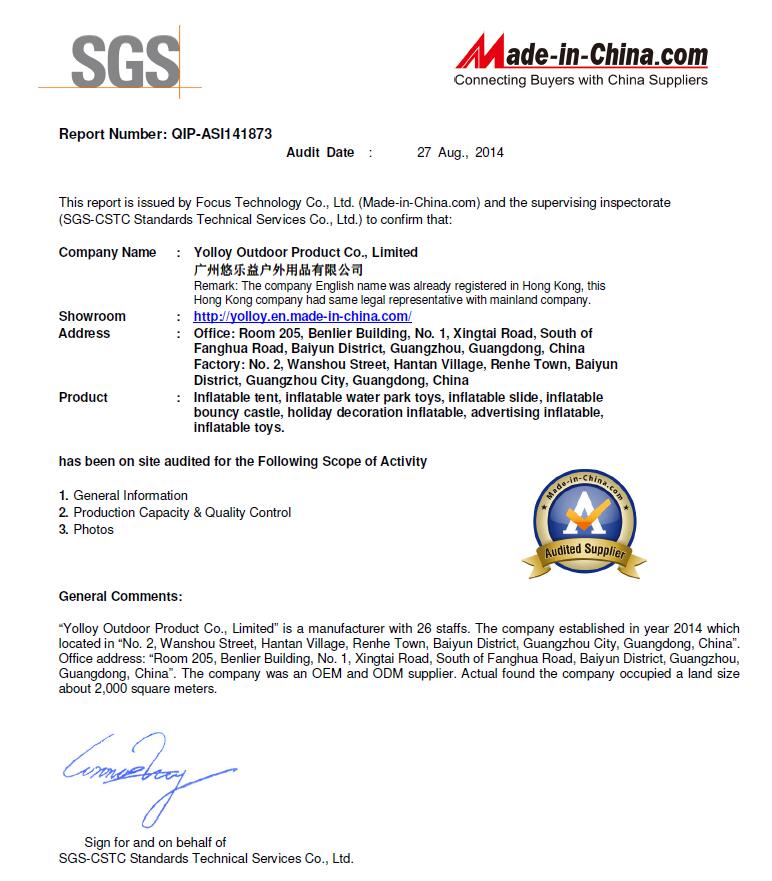
YOLLOY Outdoor Product Co., Limited, based in Guangzhou, China, has built its reputation on a straightforward approach: design what the customer needs, build it to last, and deliver it on time. The company offers a full range of custom inflatable tent solutions, including cube tents, tunnel tents, inflatable dome tent models, shelter tents, car tents, party tents, and sport tents. Each product is built from commercial-grade PVC tarpaulin and assembled with precision sewing equipment, reinforced seams, and waterproof nylon thread.
YOLLOY's customization process is designed to be collaborative. A customer can send a drawing, a site plan, or even a rough idea, and the in-house design team will produce simulation renderings before any production begins. Revisions continue until the design is approved, and only then does the order move to the factory floor. This approach eliminates guesswork and ensures that what arrives in the shipping container is exactly what the customer expected.
Key YOLLOY advantages: Minimum order quantity of just one piece; materials tested to EN71, EN14960, and RoHS standards; blowers available for 110V, 220V, or 380V; typical production time of 6–15 days for standard products; 95% on-time delivery rate; and a repair kit included with every inflatable product.
Beyond Camping: Versatile Uses for Inflatable Tents
While camping is the most obvious application, inflatable tents have found their way into a wide range of industries. Event organizers use them as pop-up bars, VIP lounges, and wedding reception spaces. Car detailers rely on inflatable spray booths to create controlled environments for paint correction. Golf enthusiasts use inflatable simulator enclosures to practice year-round at home. Emergency response teams deploy inflatable shelters for medical triage and temporary housing. The versatility of the air beam structure means that a single basic design can be adapted to serve dozens of different purposes, and customizing the tent for your specific use case is often simpler than you might expect.
Packaging, Shipping, and After-Sales Support
A tent is only as good as the condition it arrives in. YOLLOY packs its products with soft carpet protection, waterproof PVC bags, and an outer PE film layer. Large orders are shipped on steel pallets to prevent damage during transit. Customers can choose between air freight (5–7 days transit) and sea shipping (15–30 days or more), depending on budget and timeline. The company states that emails and inquiries are answered within 24 hours, and products carry an expected service life of three years when used and maintained properly.
Ready to Find Your Perfect Inflatable Tent?
Whether you need a single tent for personal camping trips or a bulk order for your rental business, working with an experienced manufacturer makes all the difference. YOLLOY welcomes custom inquiries of any size — from one-off designs to large commercial orders. Contact the team at [email protected] or call +86-20-8370 0771 to discuss your project. You can also browse the full product range at www.yolloy.net to see what is possible.