Products Category
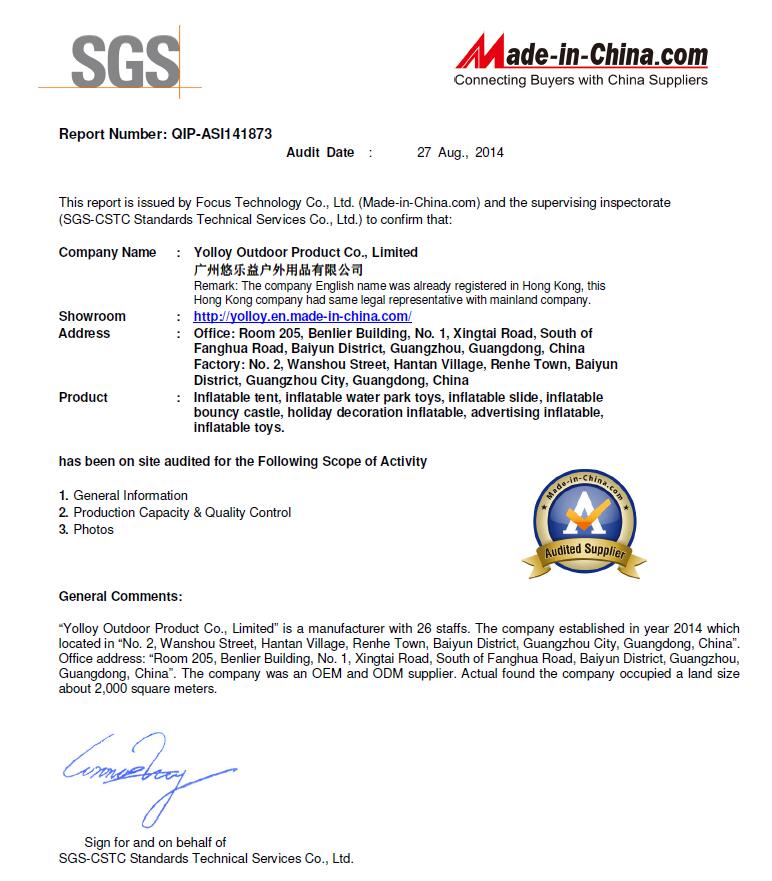
Certification

News

• New Order Successfully Finished for Long-Time Cooperated Japanese Client | YOLLOY Wins Full Client Recognition

• YOLLOY Custom Inflatable Pool Tent for Danish Client: Professional Pool Repair Shelter & Debris Protection

• Trusted Once Again! Greek Captain Re-orders Our Products After 4 Years

• Revolutionize Your Outdoors: The All-Terrain Inflatable Floating Tent for Land & Water

• Elevate Your Summer Fun: The Ultimate Inflatable Water Floating Volleyball Court Trampoline

• Innovative Inflatable Nightclub Tents & Pop-Up Bars: The Ultimate Solution for Portable Party Venues

Contact Us

Name: Sunny Yang
Tel: +86-20-8370 0771
Fax: +86-20-8370 0771
Mobile: 13570587575
E-mail: sales@yolloy.com
Add: No 5,Xiong wei Bo Nan Road,ZhongLuoTan Town,Baiyun district,Guangzhou,China
Friend me on Facebook Follow me on Twitter Add me to your circles Follow me on Pinterest Watch my channel on YouTube
News

Why an Inflatable Golf Simulator Tent Outperforms a Traditional Frame Enclosure

Author:yolloy Date:2026/8/5 0:26:27

When building a home golf simulator, most people immediately think of metal frames, PVC pipes, and heavy-duty impact screens bolted to walls. That approach works — but it comes with a long list of headaches: permanent installation, limited portability, complex assembly, and a price tag that can spiral out of control. What if there were a simpler, smarter way? An inflatable golf simulator tent delivers the same immersive hitting experience with none of the structural headaches. It sets up in minutes, packs away when not needed, and costs a fraction of a permanent build.

The Problem with Traditional Frame Enclosures

Walk through any DIY golf simulator forum and you will see the same frustrations repeated. Frame enclosures require precise measurements, cutting pipes to exact lengths, securing corner joints, and anchoring everything to walls or ceilings. One miscalculation and the entire structure wobbles — or worse, a stray shot tears through drywall. Then there is the screen tensioning: getting the impact screen taut enough to absorb ball speed without excessive bounce-back is a skill in itself. When you factor in the cost of quality framing materials, connectors, foam padding, blackout curtains, and the screen itself, a traditional enclosure frequently runs well past what most home golfers expect to spend.

Beyond the build, there is the permanence. Once a frame enclosure goes up, it stays up. That dedicated room is no longer a guest bedroom, home office, or playroom — it is a golf simulator room, full stop. For renters, apartment dwellers, or anyone who values flexible space, this is a dealbreaker.

What Makes an Inflatable Enclosure the Better Choice

An inflatable golf simulator tent addresses every one of these pain points. The structure is supported by air beams — continuous inflatable tubes that form the frame — so there are no metal poles, no connectors, and no tools required. A standard electric blower inflates the entire tent in under two minutes. When the session is over, simply deflate, fold, and store. The whole unit fits into a carrying bag that slides into a closet or the trunk of a car.

Key Advantages of an Inflatable Golf Simulator Tent
  • Setup in under 2 minutes — just plug in the blower and watch it rise
  • Full portability — deflate, pack into a carry bag, and take it anywhere
  • No permanent installation — ideal for rented spaces, garages, and multi-use rooms
  • Built-in enclosure — walls, ceiling, and impact screen are one integrated unit
  • Forgiving on mishits — air-filled walls naturally absorb stray shots without damage
  • Lower total cost — no separate framing, connectors, foam padding, or blackout curtains needed

Who Should Choose an Inflatable Golf Simulator Enclosure

This type of enclosure suits a remarkably wide range of users. Commercial driving ranges and golf training centers use them to add temporary hitting bays during peak seasons or outdoor events. Golf coaches bring them to corporate team-building days and set up a professional practice station in a parking lot or park within minutes. Home users with limited space — a garage that still needs to park a car, a basement that doubles as a home theater — appreciate the ability to deploy and stow the simulator on demand. Even tournament organizers have adopted inflatable enclosures as mobile warm-up bays at outdoor competitions.

A portable inflatable tent of this kind is not a compromise — it is a deliberate choice for flexibility. The hitting experience inside a properly designed inflatable enclosure is indistinguishable from a permanent frame setup: the screen is taut, the walls contain stray shots, and the enclosed space blocks ambient light for sharper projector image quality.

Inflatable vs. Frame Enclosure: Side-by-Side

Feature Inflatable Golf Simulator Tent Traditional Frame Enclosure
Setup Time Under 2 minutes 2–8 hours (or more)
Portability Fully portable — fits in a carry bag Semi-permanent; disassembly is a major project
Tools Required None — blower only Drill, saw, wrenches, measuring tape, level
Space Flexibility Deploy and stow as needed Dedicated room required
Impact Forgiveness Air walls absorb mishits naturally Requires additional foam padding
Total Cost Lower — all-in-one solution Higher — frame, screen, padding, curtains sold separately
Outdoor Use Yes — weather-resistant materials Rarely — most frames are indoor-only

What to Look for in a Quality Inflatable Golf Simulator Tent

Not all inflatable enclosures are built to the same standard. When sourcing one, pay attention to the materials and construction. Commercial-grade PVC tarpaulin with reinforced seams and high-temperature fusion welding is the benchmark for durability — this is what separates a product that lasts years from one that develops leaks after a few months. The blower should be matched to the tent's air volume and available in your local voltage (110V, 220V, or 380V). A repair kit should be included as standard, and the manufacturer should provide clear anchoring guidance — D-ring or round metal anchor points are essential for wind resistance in outdoor use.

Customization is another factor that separates generic off-the-shelf products from purpose-built solutions. A custom inflatable tent can be tailored to your exact dimensions, color scheme, and branding requirements. Whether you need a specific size to fit a constrained garage bay, want your company logo printed on the exterior, or require a particular door configuration for easy access with a golf bag, working with a manufacturer that offers full customization ensures the enclosure matches your setup perfectly.

Sourcing from the Right Manufacturer

The quality of your inflatable golf simulator enclosure depends heavily on who builds it. Leading inflatable tent manufacturers with dedicated design-to-production workflows offer a distinct advantage: they can take your description, sketch, or site plan and produce a simulation rendering before any cutting begins. This collaborative design phase ensures the final product meets your expectations for dimensions, door placement, cable ports, and ventilation.

Look for manufacturers that use precision sewing equipment with waterproof nylon thread, apply additional reinforcement at high-load areas, and test every product before shipment. Certifications matter too — materials that have passed EN71, EN14960, and RoHS testing give confidence in safety and environmental compliance. Blowers meeting CE or UL standards are another indicator of a supplier that prioritizes quality throughout the product ecosystem.

Questions to Ask Your Inflatable Tent Supplier
  • What material grade do you use — standard or commercial-grade PVC tarpaulin?
  • Can you provide a 3D rendering of my custom design before production?
  • What blower voltage options are available for my region?
  • Is a repair kit included with the product?
  • What is the typical production time for a custom order?
  • Do your materials meet EN71, EN14960, or RoHS standards?
  • What anchoring system do you recommend for outdoor use?

Real-World Applications Beyond the Home

While home use is the most common scenario, the versatility of an inflatable golf simulator tent extends far beyond the garage. Golf retailers use them as pop-up demo bays at shopping malls and outdoor festivals, letting customers test clubs with a launch monitor in a controlled environment. Hotels and resorts add them as seasonal attractions, giving guests a rainy-day activity without committing to a permanent build. Corporate event planners book them for client entertainment at conferences and trade shows. The same tent that serves as a winter practice facility in a basement can become a summer outdoor hitting bay at a backyard barbecue.

For golf instructors who travel between multiple facilities, the portability is transformative. Instead of being tied to a single teaching studio, they can bring a fully enclosed simulator bay to any location — a client's home, a community center, a school gymnasium — and deliver a professional lesson experience with launch monitor data displayed on an impact screen.

Setup and Maintenance Tips

Setting up an inflatable golf simulator tent is straightforward, but a few best practices ensure optimal performance. Always inflate on a clean, flat surface free of sharp objects — a groundsheet or tarp adds an extra layer of protection. Position the blower away from the hitting area to minimize noise interference during your swing. If using outdoors, anchor all D-ring points securely; even a light breeze can shift an unanchored tent. After use, wipe down the surfaces with a mild soap solution and ensure the tent is completely dry before folding and storing to prevent mildew. Store the blower and tent in a cool, dry location away from direct sunlight when not in use.

Most quality inflatable enclosures come with a repair kit for minor punctures. The key is addressing small tears promptly — a quick patch takes minutes and prevents a small issue from becoming a larger one. With proper care, a well-made inflatable golf simulator tent will provide years of reliable service.

Ready to Build Your Portable Golf Simulator Setup?

An inflatable golf simulator tent gives you the freedom to practice your swing wherever and whenever you want — without the cost, complexity, and permanence of a traditional frame enclosure. Whether you are a home user looking for a space-saving solution, a golf coach who needs a mobile teaching bay, or a business seeking a versatile commercial attraction, the right inflatable enclosure makes all the difference. Contact a trusted inflatable tent manufacturer today to discuss your custom requirements, from dimensions and materials to branding and blower specifications. Your year-round golf season starts here.


Why an Inflatable Golf Simulator Tent Outperforms a Traditional Frame Enclosure

Author:yolloy Date:2026/8/5 0:26:27

When building a home golf simulator, most people immediately think of metal frames, PVC pipes, and heavy-duty impact screens bolted to walls. That approach works — but it comes with a long list of headaches: permanent installation, limited portability, complex assembly, and a price tag that can spiral out of control. What if there were a simpler, smarter way? An inflatable golf simulator tent delivers the same immersive hitting experience with none of the structural headaches. It sets up in minutes, packs away when not needed, and costs a fraction of a permanent build.

The Problem with Traditional Frame Enclosures

Walk through any DIY golf simulator forum and you will see the same frustrations repeated. Frame enclosures require precise measurements, cutting pipes to exact lengths, securing corner joints, and anchoring everything to walls or ceilings. One miscalculation and the entire structure wobbles — or worse, a stray shot tears through drywall. Then there is the screen tensioning: getting the impact screen taut enough to absorb ball speed without excessive bounce-back is a skill in itself. When you factor in the cost of quality framing materials, connectors, foam padding, blackout curtains, and the screen itself, a traditional enclosure frequently runs well past what most home golfers expect to spend.

Beyond the build, there is the permanence. Once a frame enclosure goes up, it stays up. That dedicated room is no longer a guest bedroom, home office, or playroom — it is a golf simulator room, full stop. For renters, apartment dwellers, or anyone who values flexible space, this is a dealbreaker.

What Makes an Inflatable Enclosure the Better Choice

An inflatable golf simulator tent addresses every one of these pain points. The structure is supported by air beams — continuous inflatable tubes that form the frame — so there are no metal poles, no connectors, and no tools required. A standard electric blower inflates the entire tent in under two minutes. When the session is over, simply deflate, fold, and store. The whole unit fits into a carrying bag that slides into a closet or the trunk of a car.

Key Advantages of an Inflatable Golf Simulator Tent
  • Setup in under 2 minutes — just plug in the blower and watch it rise
  • Full portability — deflate, pack into a carry bag, and take it anywhere
  • No permanent installation — ideal for rented spaces, garages, and multi-use rooms
  • Built-in enclosure — walls, ceiling, and impact screen are one integrated unit
  • Forgiving on mishits — air-filled walls naturally absorb stray shots without damage
  • Lower total cost — no separate framing, connectors, foam padding, or blackout curtains needed

Who Should Choose an Inflatable Golf Simulator Enclosure

This type of enclosure suits a remarkably wide range of users. Commercial driving ranges and golf training centers use them to add temporary hitting bays during peak seasons or outdoor events. Golf coaches bring them to corporate team-building days and set up a professional practice station in a parking lot or park within minutes. Home users with limited space — a garage that still needs to park a car, a basement that doubles as a home theater — appreciate the ability to deploy and stow the simulator on demand. Even tournament organizers have adopted inflatable enclosures as mobile warm-up bays at outdoor competitions.

A portable inflatable tent of this kind is not a compromise — it is a deliberate choice for flexibility. The hitting experience inside a properly designed inflatable enclosure is indistinguishable from a permanent frame setup: the screen is taut, the walls contain stray shots, and the enclosed space blocks ambient light for sharper projector image quality.

Inflatable vs. Frame Enclosure: Side-by-Side

Feature Inflatable Golf Simulator Tent Traditional Frame Enclosure
Setup Time Under 2 minutes 2–8 hours (or more)
Portability Fully portable — fits in a carry bag Semi-permanent; disassembly is a major project
Tools Required None — blower only Drill, saw, wrenches, measuring tape, level
Space Flexibility Deploy and stow as needed Dedicated room required
Impact Forgiveness Air walls absorb mishits naturally Requires additional foam padding
Total Cost Lower — all-in-one solution Higher — frame, screen, padding, curtains sold separately
Outdoor Use Yes — weather-resistant materials Rarely — most frames are indoor-only

What to Look for in a Quality Inflatable Golf Simulator Tent

Not all inflatable enclosures are built to the same standard. When sourcing one, pay attention to the materials and construction. Commercial-grade PVC tarpaulin with reinforced seams and high-temperature fusion welding is the benchmark for durability — this is what separates a product that lasts years from one that develops leaks after a few months. The blower should be matched to the tent's air volume and available in your local voltage (110V, 220V, or 380V). A repair kit should be included as standard, and the manufacturer should provide clear anchoring guidance — D-ring or round metal anchor points are essential for wind resistance in outdoor use.

Customization is another factor that separates generic off-the-shelf products from purpose-built solutions. A custom inflatable tent can be tailored to your exact dimensions, color scheme, and branding requirements. Whether you need a specific size to fit a constrained garage bay, want your company logo printed on the exterior, or require a particular door configuration for easy access with a golf bag, working with a manufacturer that offers full customization ensures the enclosure matches your setup perfectly.

Sourcing from the Right Manufacturer

The quality of your inflatable golf simulator enclosure depends heavily on who builds it. Leading inflatable tent manufacturers with dedicated design-to-production workflows offer a distinct advantage: they can take your description, sketch, or site plan and produce a simulation rendering before any cutting begins. This collaborative design phase ensures the final product meets your expectations for dimensions, door placement, cable ports, and ventilation.

Look for manufacturers that use precision sewing equipment with waterproof nylon thread, apply additional reinforcement at high-load areas, and test every product before shipment. Certifications matter too — materials that have passed EN71, EN14960, and RoHS testing give confidence in safety and environmental compliance. Blowers meeting CE or UL standards are another indicator of a supplier that prioritizes quality throughout the product ecosystem.

Questions to Ask Your Inflatable Tent Supplier
  • What material grade do you use — standard or commercial-grade PVC tarpaulin?
  • Can you provide a 3D rendering of my custom design before production?
  • What blower voltage options are available for my region?
  • Is a repair kit included with the product?
  • What is the typical production time for a custom order?
  • Do your materials meet EN71, EN14960, or RoHS standards?
  • What anchoring system do you recommend for outdoor use?

Real-World Applications Beyond the Home

While home use is the most common scenario, the versatility of an inflatable golf simulator tent extends far beyond the garage. Golf retailers use them as pop-up demo bays at shopping malls and outdoor festivals, letting customers test clubs with a launch monitor in a controlled environment. Hotels and resorts add them as seasonal attractions, giving guests a rainy-day activity without committing to a permanent build. Corporate event planners book them for client entertainment at conferences and trade shows. The same tent that serves as a winter practice facility in a basement can become a summer outdoor hitting bay at a backyard barbecue.

For golf instructors who travel between multiple facilities, the portability is transformative. Instead of being tied to a single teaching studio, they can bring a fully enclosed simulator bay to any location — a client's home, a community center, a school gymnasium — and deliver a professional lesson experience with launch monitor data displayed on an impact screen.

Setup and Maintenance Tips

Setting up an inflatable golf simulator tent is straightforward, but a few best practices ensure optimal performance. Always inflate on a clean, flat surface free of sharp objects — a groundsheet or tarp adds an extra layer of protection. Position the blower away from the hitting area to minimize noise interference during your swing. If using outdoors, anchor all D-ring points securely; even a light breeze can shift an unanchored tent. After use, wipe down the surfaces with a mild soap solution and ensure the tent is completely dry before folding and storing to prevent mildew. Store the blower and tent in a cool, dry location away from direct sunlight when not in use.

Most quality inflatable enclosures come with a repair kit for minor punctures. The key is addressing small tears promptly — a quick patch takes minutes and prevents a small issue from becoming a larger one. With proper care, a well-made inflatable golf simulator tent will provide years of reliable service.

Ready to Build Your Portable Golf Simulator Setup?

An inflatable golf simulator tent gives you the freedom to practice your swing wherever and whenever you want — without the cost, complexity, and permanence of a traditional frame enclosure. Whether you are a home user looking for a space-saving solution, a golf coach who needs a mobile teaching bay, or a business seeking a versatile commercial attraction, the right inflatable enclosure makes all the difference. Contact a trusted inflatable tent manufacturer today to discuss your custom requirements, from dimensions and materials to branding and blower specifications. Your year-round golf season starts here.