Camping has come a long way from wrestling with tangled poles and squinting at instruction manuals in the dark. If you have ever arrived at a campsite after sunset only to spend half an hour threading fiberglass rods through narrow sleeves, you understand the frustration. Enter the
inflatable camping tent — a practical innovation that is changing how people approach outdoor shelter, whether for weekend getaways, glamping resorts, or large-scale commercial events.
Instead of relying on a rigid pole frame, an inflatable camping tent uses air beams that inflate in minutes with an electric pump. You stake the tent, connect the blower, and watch your shelter rise — no pole threading, no loose components, and no arguments over which rod goes where. For families, rental operators, and event organizers, the time savings alone can transform the outdoor experience.
Why More Campers Are Switching to Inflatable Tents
The shift toward inflatable tent camping is not just about convenience — it is driven by genuine performance advantages over traditional pole tents. Here are the key benefits that are winning over recreational campers and commercial buyers alike:
Rapid Setup and Takedown
Most inflatable tents can be fully pitched in under five minutes by a single person. This is especially valuable for families arriving at dusk, touring campers moving between sites daily, and rental businesses that need to deploy multiple units quickly. Deflation is equally fast — open the valve and the tent collapses in seconds, ready to be packed away.
Superior Wind Resistance
Air beam structures flex with gusts rather than resisting them rigidly. This flexibility means inflatable tents can outperform pole tents in windy conditions, absorbing and dissipating force instead of snapping. When combined with proper anchoring systems — such as D-ring or round metal anchor points — an inflatable tent becomes a stable shelter even in challenging weather.
No Broken Poles, No Lost Parts
Every seasoned camper has a story about a snapped pole or a missing connector. With air beams, there are no poles to break, bend, or lose. The structure resists minor impacts without permanent damage, and a repair kit supplied with each product makes field maintenance straightforward.
Compact Storage and Transport
Deflated, an inflatable tent packs down remarkably small compared to its rigid-frame counterpart. This makes transport easier — whether you are loading a family car or shipping a container of commercial units — and reduces storage space requirements significantly.
Types of Inflatable Tents for Every Outdoor Need
The inflatable tent market has expanded far beyond basic camping shelters. Today, buyers can choose from a wide variety of designs tailored to different applications:
Standard family camping tents — Available in sizes from 2-person to 8-person and larger, these are the go-to choice for recreational camping. They offer quick pitching, generous headroom, and comfortable living space for families and groups.
Clear inflatable bubble tents — Featuring transparent walls that provide 360-degree views of the surrounding landscape, clear bubble tents have become favorites for glamping resorts, luxury camping experiences, and outdoor dining venues.
Inflatable dome tents — Spacious and architecturally striking, dome tents are widely used for exhibitions, trade shows, corporate hospitality, and outdoor events where visual impact matters.
Inflatable tunnel tents — These extended structures provide separate living and sleeping areas, making them ideal for longer stays, base camps, and field operations.
Inflatable party and event tents — Designed for weddings, festivals, product launches, and corporate gatherings, these tents combine large open interiors with customizable branding options.
Inflatable sport and car tents — Specialized designs for sporting events, vehicle exhibitions, mobile workshops, and paint spray booths demonstrate the versatility of inflatable shelter technology.
What to Look for When Choosing the Best Inflatable Tent
Whether you are buying one tent for personal use or sourcing a fleet for commercial operations, these factors should guide your decision:
Material Quality
The
best inflatable tent products use commercial-grade PVC tarpaulin for the main structure, with Oxford fabric, nylon, or TPU employed for specific applications. Look for reinforced seams sewn with waterproof nylon thread and additional reinforcement at high-load areas. For airtight products, high-temperature fusion welding equipment ensures reliable seals that hold up over years of use.
Safety Certifications
Reputable products meet recognized international safety standards. For inflatable tents and toys, relevant certifications include EN71, EN14960, and RoHS compliance. Blowers — the heart of any inflatable system — should carry CE or UL certification. Water park products are also associated with EN 15649. Always verify that the manufacturer can provide documentation for the certifications they claim.
Blower and Power Compatibility
Ensure the blower matches your local voltage requirements. Established manufacturers offer blowers compatible with 110V, 220V, or 380V systems, making international deployment straightforward. The blower should be appropriately powered for the tent size — underpowered blowers lead to sagging structures, while overpowered units waste energy.
Customization Options
For businesses, the ability to customize size, color, and branding is essential. The strongest manufacturers can produce custom designs from a description, drawing, sketch, photograph, or site plan. They prepare simulation renderings for approval before production begins, and can print customer logos and artwork directly onto the product. Custom sizes and colors are standard offerings from experienced suppliers, and the minimum order quantity can be as low as one piece.
How to Source from Reliable Inflatable Tent Manufacturers
If you are buying for a business — whether a rental company, event venue, glamping resort, or retail operation — finding the right
inflatable tent manufacturers is critical to your long-term success. Here is a practical sourcing checklist:
Evaluate Product Range and Manufacturing Depth
An ideal
inflatable camping tents supplier should offer more than just tents. Look for companies with a broad catalog spanning multiple categories — outdoor tents, clear domes, water park products, interactive games, slides, bounce houses, inflatable paintball bunkers, air mattresses, and advertising inflatables. A diverse product range signals comprehensive manufacturing capability and the ability to serve as a one-stop partner as your business grows.
Assess Custom Design Capability
The best suppliers provide end-to-end custom design services. Their workflow should include preparing simulation renderings from your proposal, revising the design until approval, and then releasing it for factory production. This gives you confidence that the finished product will match your expectations before manufacturing begins.
Check Quality Control and Testing Procedures
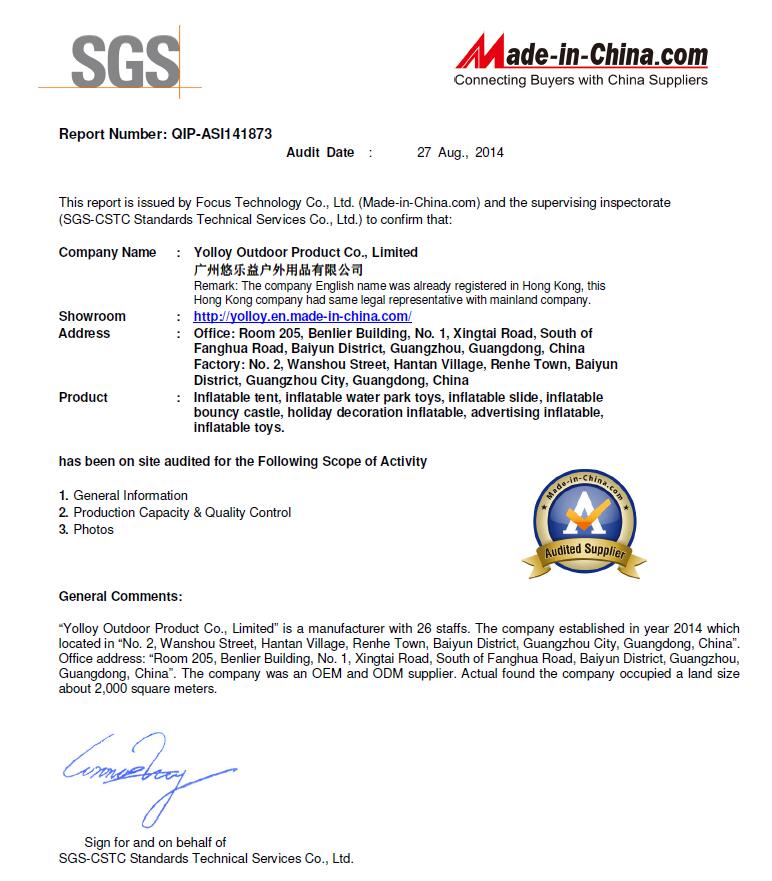
Ask about in-house inspection and testing. Every product should be inspected and tested before shipment. The manufacturer should be transparent about the materials used and the certifications they hold. A repair kit should be supplied with each product, and the company should be able to provide guidance on maintenance and care.
Understand Lead Times and Delivery
Typical production time for a standard inflatable product ranges from 6 to 15 days, excluding transit. Complex or large custom products may take longer. Shipping options typically include air freight (5-7 days) and sea freight (15-30 days or more). A manufacturer reporting a 95% on-time delivery rate is a strong indicator of operational reliability. Products should be packed with proper protection — soft carpet wrapping, waterproof PVC bags, and outer PE film, with steel pallets for large items.
Verify After-Sales Support and Warranty
A reliable supplier stands behind its products. Look for a warranty that covers a reasonable service life — a three-year expectation under correct use and maintenance is a common benchmark. The company should respond to inquiries within 24 hours and be available to support you with spare parts, repair advice, and technical questions throughout the product lifecycle.
The Bottom Line: Is an Inflatable Tent Right for You?
The inflatable camping tent is not a passing novelty — it represents a genuine improvement in outdoor shelter design that benefits everyone from weekend campers to commercial operators. Faster setup, superior wind performance, freedom from broken poles, and compact storage are compelling advantages that traditional tents simply cannot match.
For businesses, the opportunity extends far beyond camping. Inflatable tents are transforming event hosting, glamping hospitality, brand activations, sports facilities, and emergency response operations. The ability to customize every aspect — from dimensions and materials to colors and logos — means each product can be tailored precisely to its intended use and market.
The key to a successful investment lies in choosing the right manufacturing partner. Work with a supplier that offers verified certifications, custom design services, transparent quality control, competitive factory-direct pricing, and responsive after-sales support. With the right partner, you gain more than a product — you gain a reliable supply chain that supports your business as it grows.
Ready to explore the possibilities? Whether you need a single custom tent for a special project or a complete fleet for commercial operations, the right manufacturing partner can make all the difference. Look for a supplier with a proven track record, international certifications, and the design flexibility to bring your vision to life. Your next outdoor adventure — or business venture — starts with the right shelter.