Products Category
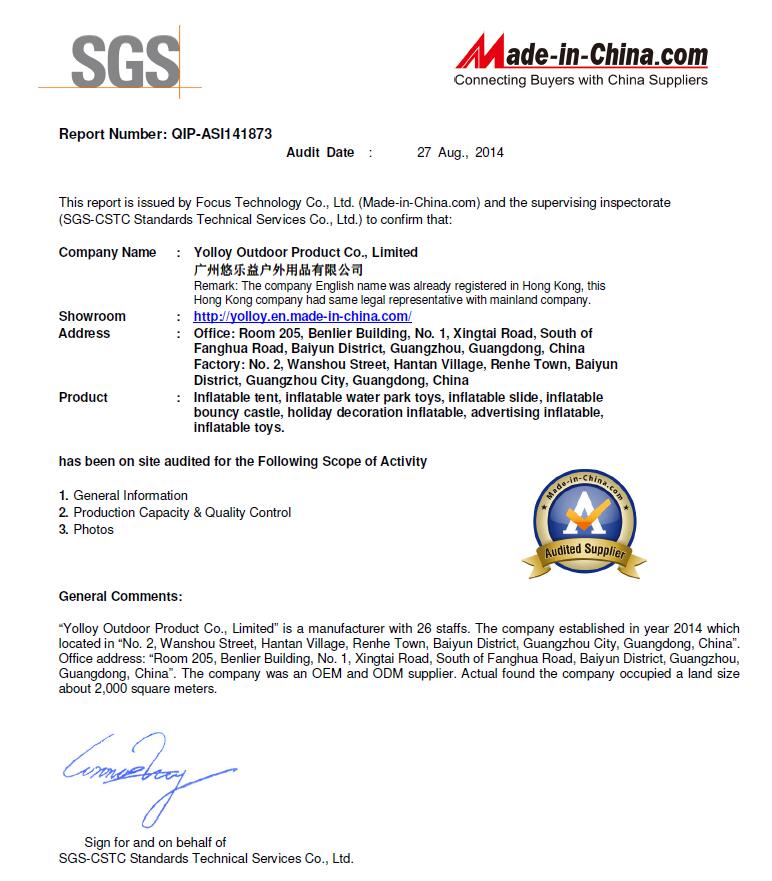
Certification

News

• New Order Successfully Finished for Long-Time Cooperated Japanese Client | YOLLOY Wins Full Client Recognition

• YOLLOY Custom Inflatable Pool Tent for Danish Client: Professional Pool Repair Shelter & Debris Protection

• Trusted Once Again! Greek Captain Re-orders Our Products After 4 Years

• Revolutionize Your Outdoors: The All-Terrain Inflatable Floating Tent for Land & Water

• Elevate Your Summer Fun: The Ultimate Inflatable Water Floating Volleyball Court Trampoline

• Innovative Inflatable Nightclub Tents & Pop-Up Bars: The Ultimate Solution for Portable Party Venues

Contact Us

Name: Sunny Yang
Tel: +86-20-8370 0771
Fax: +86-20-8370 0771
Mobile: 13570587575
E-mail: [email protected]
Add: No 5,Xiong wei Bo Nan Road,ZhongLuoTan Town,Baiyun district,Guangzhou,China
Friend me on Facebook Follow me on Twitter Add me to your circles Follow me on Pinterest Watch my channel on YouTube
News

Which blow up slide for lake is best for a lake?

Author:yolloy Date:2026/8/14 1:26:41

When summer arrives and lake season is in full swing, few things bring more excitement to a waterfront gathering than a well-chosen blow up slide. Whether you own a lakeside property, operate a water park, or run a rental business, picking the right inflatable lake slide can make the difference between a good day on the water and an unforgettable one. But with so many options on the market, how do you decide which one is truly best for a lake environment?

Unlike backyard slides set up on flat grass, lake slides face unique challenges: water exposure, wind, uneven anchoring surfaces, and the need for materials that withstand prolonged sun and moisture. A slide that performs well on a lawn may deteriorate quickly when placed on a dock, a pontoon boat, or a floating platform. This guide breaks down what to look for so you can make an informed choice.

Key Factors to Consider When Choosing a Lake Slide

1. Material Durability and Water Resistance

The single most important factor for a lake slide is the material. Lake environments expose inflatables to constant moisture, UV radiation, and temperature fluctuations. Entry-level slides made from thin nylon or low-denier polyester may look attractive at first glance but tend to develop pinhole leaks, seam separation, and fading after just one season of lake use. Look for slides constructed from commercial-grade PVC tarpaulin or heavy-duty Oxford fabric in the 840D range, which offers superior puncture resistance and UV stability. Double-stitched or heat-welded seams are essential — single stitching creates stress points that fail first under the dynamic loads of sliding and splashing.

2. Anchoring and Stability on Water

Anchoring is another area where lake slides differ significantly from their backyard counterparts. On a lake, your slide may be mounted on a dock, attached to a pontoon boat, or placed on a floating platform. Each scenario requires a different anchoring approach. The best lake slides include heavy-duty D-ring anchor points, reinforced tie-down straps, and multiple attachment options. Ground stakes alone are not enough — you need a system that can handle wave action, wind gusts, and the momentum of users sliding down. A wide base design also helps distribute weight and maintain stability on soft or uneven lakefront terrain.

3. Size and User Capacity

Consider how many people will use the slide at once and the available space at your lakefront. A compact single-lane slide may work for a small family dock, but larger groups or commercial operations benefit from dual-lane designs that allow multiple users to slide simultaneously. Pay attention to both the footprint dimensions and the weight capacity. For family and rental use, a slide that supports 200-450 pounds total weight provides flexibility for different age groups. Measure your dock, platform, or shoreline area before purchasing to ensure the slide fits without overcrowding the space.

4. Safety Features

Safety should never be compromised, especially on a lake where water depth can vary and users may be of different swimming abilities. Look for slides with cushioned side walls, non-slip climbing steps, secure handrails, and raised safety chambers that keep sliders centered during descent. Mesh panels on climbing areas allow parents and supervisors to monitor activity. For slides used in deeper water, consider models that include built-in splash pools or landing zones that give users a controlled exit point.

5. Setup, Portability, and Storage

Lake days are meant to be enjoyable, not spent wrestling with complicated equipment. The best blow up slides inflate quickly with a high-powered blower and deflate just as easily for compact storage. A carrying bag is a practical addition for those who transport the slide between different lake locations. Since lakefront properties often have limited storage space, a slide that packs down small when not in use is a significant advantage.

Types of Inflatable Lake Slides

Lake slides generally fall into three categories:

Floating slides are self-contained inflatable platforms that rest directly on the water surface. They often include a climbing wall, one or two sliding lanes, and a splash pool at the bottom. These are ideal for open water use where no dock or boat is available, and they can be anchored in place with weighted lines.

Dock-mounted and pontoon slides attach to an existing structure such as a dock, deck, or pontoon boat. They typically feature secure strapping systems and are designed to extend from the edge of the structure into the water. These slides save space on the water itself and are easier to board from a stable platform.

Commercial-grade water park slides are larger, more durable units built for heavy daily use. These are the type of slides you see at resorts, water parks, and rental operations. They are constructed from thicker PVC materials, feature reinforced stitching throughout, and are designed to withstand hundreds of users per day without compromising structural integrity.

Why Commercial-Grade Slides Are the Better Investment for Lakes

While retail-grade slides from consumer brands may seem like a budget-friendly choice, they often prove more expensive in the long run when factoring in repairs, replacements, and downtime. Commercial inflatable water slides are built with thicker materials, reinforced stress points, and industrial-grade blowers that provide consistent air pressure even in challenging outdoor conditions. For lake use — where the slide is exposed to water, sun, wind, and frequent use — the commercial-grade difference becomes apparent within the first season.

Commercial-grade slides also offer customization options that retail products cannot match. You can specify exact dimensions, choose colors that match your brand or property, add custom logos and graphics, and even design unique features like themed climbing walls or integrated water spray systems. This level of customization is especially valuable for rental businesses, resorts, and event companies looking to differentiate their offerings.

What to Look for in a Manufacturer

When you are buying a lake slide that needs to perform season after season, choosing the right inflatable water slide manufacturers is just as important as choosing the right product. A reputable manufacturer should offer:

  • Custom design and engineering: The ability to create a slide based on your specific requirements — from a simple sketch or description to a fully rendered 3D simulation before production begins.
  • Quality materials and certifications: Look for manufacturers that use commercial-grade PVC tarpaulin with relevant safety certifications such as EN71, EN14960, and EN15649. Blowers should meet CE or UL requirements.
  • Reinforced construction: Precision sewing equipment, waterproof nylon thread, heat-welded airtight seams, and extra reinforcement at high-load areas are hallmarks of quality manufacturing.
  • Flexible order quantities: Whether you need a single custom slide for your lakeside home or a bulk order for a chain of water parks, a good manufacturer accommodates your needs without forcing large minimum orders.
  • Global shipping and support: The manufacturer should be experienced in exporting to various regions and provide clear information on shipping methods, transit times, and after-sales support.

Making the Final Decision

The best blow up slide for a lake is not necessarily the most expensive one or the one with the most features. It is the slide that matches your specific lake environment, usage patterns, and budget while delivering reliable performance over multiple seasons. Start by assessing your lakefront setup: do you have a dock, a pontoon boat, or open water? How many users will the slide serve at peak times? What is your available storage space? Answering these questions narrows down the options considerably.

For most lake owners and operators, a commercial-grade inflatable slide from a factory-direct manufacturer offers the best combination of durability, safety, customization, and value. By cutting out middlemen and working directly with the manufacturer, you get a higher-quality product at a more competitive price — and you have direct input into the design and specifications.

Final Thoughts

A lake slide is an investment in summer fun, whether for your family, your guests, or your customers. Taking the time to evaluate materials, anchoring systems, safety features, and manufacturer reputation pays off with years of reliable, splash-filled enjoyment. Choose a slide built for the demands of lake environments, and you will spend more time sliding and less time repairing. When you are ready to explore custom options built to your exact specifications, working with an experienced manufacturer ensures you get a product that fits your lake — and your vision — perfectly.


Which blow up slide for lake is best for a lake?

Author:yolloy Date:2026/8/14 1:26:41

When summer arrives and lake season is in full swing, few things bring more excitement to a waterfront gathering than a well-chosen blow up slide. Whether you own a lakeside property, operate a water park, or run a rental business, picking the right inflatable lake slide can make the difference between a good day on the water and an unforgettable one. But with so many options on the market, how do you decide which one is truly best for a lake environment?

Unlike backyard slides set up on flat grass, lake slides face unique challenges: water exposure, wind, uneven anchoring surfaces, and the need for materials that withstand prolonged sun and moisture. A slide that performs well on a lawn may deteriorate quickly when placed on a dock, a pontoon boat, or a floating platform. This guide breaks down what to look for so you can make an informed choice.

Key Factors to Consider When Choosing a Lake Slide

1. Material Durability and Water Resistance

The single most important factor for a lake slide is the material. Lake environments expose inflatables to constant moisture, UV radiation, and temperature fluctuations. Entry-level slides made from thin nylon or low-denier polyester may look attractive at first glance but tend to develop pinhole leaks, seam separation, and fading after just one season of lake use. Look for slides constructed from commercial-grade PVC tarpaulin or heavy-duty Oxford fabric in the 840D range, which offers superior puncture resistance and UV stability. Double-stitched or heat-welded seams are essential — single stitching creates stress points that fail first under the dynamic loads of sliding and splashing.

2. Anchoring and Stability on Water

Anchoring is another area where lake slides differ significantly from their backyard counterparts. On a lake, your slide may be mounted on a dock, attached to a pontoon boat, or placed on a floating platform. Each scenario requires a different anchoring approach. The best lake slides include heavy-duty D-ring anchor points, reinforced tie-down straps, and multiple attachment options. Ground stakes alone are not enough — you need a system that can handle wave action, wind gusts, and the momentum of users sliding down. A wide base design also helps distribute weight and maintain stability on soft or uneven lakefront terrain.

3. Size and User Capacity

Consider how many people will use the slide at once and the available space at your lakefront. A compact single-lane slide may work for a small family dock, but larger groups or commercial operations benefit from dual-lane designs that allow multiple users to slide simultaneously. Pay attention to both the footprint dimensions and the weight capacity. For family and rental use, a slide that supports 200-450 pounds total weight provides flexibility for different age groups. Measure your dock, platform, or shoreline area before purchasing to ensure the slide fits without overcrowding the space.

4. Safety Features

Safety should never be compromised, especially on a lake where water depth can vary and users may be of different swimming abilities. Look for slides with cushioned side walls, non-slip climbing steps, secure handrails, and raised safety chambers that keep sliders centered during descent. Mesh panels on climbing areas allow parents and supervisors to monitor activity. For slides used in deeper water, consider models that include built-in splash pools or landing zones that give users a controlled exit point.

5. Setup, Portability, and Storage

Lake days are meant to be enjoyable, not spent wrestling with complicated equipment. The best blow up slides inflate quickly with a high-powered blower and deflate just as easily for compact storage. A carrying bag is a practical addition for those who transport the slide between different lake locations. Since lakefront properties often have limited storage space, a slide that packs down small when not in use is a significant advantage.

Types of Inflatable Lake Slides

Lake slides generally fall into three categories:

Floating slides are self-contained inflatable platforms that rest directly on the water surface. They often include a climbing wall, one or two sliding lanes, and a splash pool at the bottom. These are ideal for open water use where no dock or boat is available, and they can be anchored in place with weighted lines.

Dock-mounted and pontoon slides attach to an existing structure such as a dock, deck, or pontoon boat. They typically feature secure strapping systems and are designed to extend from the edge of the structure into the water. These slides save space on the water itself and are easier to board from a stable platform.

Commercial-grade water park slides are larger, more durable units built for heavy daily use. These are the type of slides you see at resorts, water parks, and rental operations. They are constructed from thicker PVC materials, feature reinforced stitching throughout, and are designed to withstand hundreds of users per day without compromising structural integrity.

Why Commercial-Grade Slides Are the Better Investment for Lakes

While retail-grade slides from consumer brands may seem like a budget-friendly choice, they often prove more expensive in the long run when factoring in repairs, replacements, and downtime. Commercial inflatable water slides are built with thicker materials, reinforced stress points, and industrial-grade blowers that provide consistent air pressure even in challenging outdoor conditions. For lake use — where the slide is exposed to water, sun, wind, and frequent use — the commercial-grade difference becomes apparent within the first season.

Commercial-grade slides also offer customization options that retail products cannot match. You can specify exact dimensions, choose colors that match your brand or property, add custom logos and graphics, and even design unique features like themed climbing walls or integrated water spray systems. This level of customization is especially valuable for rental businesses, resorts, and event companies looking to differentiate their offerings.

What to Look for in a Manufacturer

When you are buying a lake slide that needs to perform season after season, choosing the right inflatable water slide manufacturers is just as important as choosing the right product. A reputable manufacturer should offer:

  • Custom design and engineering: The ability to create a slide based on your specific requirements — from a simple sketch or description to a fully rendered 3D simulation before production begins.
  • Quality materials and certifications: Look for manufacturers that use commercial-grade PVC tarpaulin with relevant safety certifications such as EN71, EN14960, and EN15649. Blowers should meet CE or UL requirements.
  • Reinforced construction: Precision sewing equipment, waterproof nylon thread, heat-welded airtight seams, and extra reinforcement at high-load areas are hallmarks of quality manufacturing.
  • Flexible order quantities: Whether you need a single custom slide for your lakeside home or a bulk order for a chain of water parks, a good manufacturer accommodates your needs without forcing large minimum orders.
  • Global shipping and support: The manufacturer should be experienced in exporting to various regions and provide clear information on shipping methods, transit times, and after-sales support.

Making the Final Decision

The best blow up slide for a lake is not necessarily the most expensive one or the one with the most features. It is the slide that matches your specific lake environment, usage patterns, and budget while delivering reliable performance over multiple seasons. Start by assessing your lakefront setup: do you have a dock, a pontoon boat, or open water? How many users will the slide serve at peak times? What is your available storage space? Answering these questions narrows down the options considerably.

For most lake owners and operators, a commercial-grade inflatable slide from a factory-direct manufacturer offers the best combination of durability, safety, customization, and value. By cutting out middlemen and working directly with the manufacturer, you get a higher-quality product at a more competitive price — and you have direct input into the design and specifications.

Final Thoughts

A lake slide is an investment in summer fun, whether for your family, your guests, or your customers. Taking the time to evaluate materials, anchoring systems, safety features, and manufacturer reputation pays off with years of reliable, splash-filled enjoyment. Choose a slide built for the demands of lake environments, and you will spend more time sliding and less time repairing. When you are ready to explore custom options built to your exact specifications, working with an experienced manufacturer ensures you get a product that fits your lake — and your vision — perfectly.