What Is the Difference Between an Inflatable Slide and a Water Slide?
If you are planning a party, running a rental company, or adding a commercial attraction to a venue, the choice between an inflatable slide and a water slide can feel confusing at first. Both look similar online, and both keep guests active and entertained. In practice, they are built for different conditions, use different accessories, and need different setup and supervision. Understanding the real difference helps you avoid the common mistake of buying on appearance alone, and it helps you match the product to your space, your audience, and your budget.
The Main Difference at a Glance
An inflatable slide is generally a dry unit. Kids climb, slide, and repeat without getting soaked, which makes it easier for backyard birthdays, school events, church functions, and cooler-season rentals. A water slide uses a connected water source to keep the sliding surface wet and fast, and that changes everything from clothing and supervision to drainage and post-event cleanup.
On the surface, the choice seems simple: if it is hot, pick water; if it is not, pick dry. In practice, there is more to consider. A dry inflatable slide is often the more flexible option because it works across a wider range of temperatures and event types. A water slide can be the bigger crowd-pleaser, but only when your site and schedule support it.
How Each Type Is Built and Used
A dry commercial inflatable slide is a single inflatable structure with a climbing side and a sliding lane. It stays inflated with a blower, and riders slide on the fabric surface. It does not need a nearby tap or a landing pool, so it can be placed on grass, concrete, or pavement with relative ease.
A water slide works on the same inflatable frame but adds a water supply. Water is pumped to the top of the slide and runs down the riding surface to keep it slick and fast, and it often ends in a splash pad or a shallow landing pool. This raises the thrill factor and helps guests cool off, but it also means you need a steady water source, a way to handle runoff, and more supervision around entrances and exits.
When a Dry Inflatable Slide Makes More Sense
Dry slides are often the safer operational choice for hosts who want fewer moving parts on event day. You do not need a hose running the entire time, and you usually do not need to plan for muddy traffic patterns, wet grass, or kids cycling through towels and spare clothes.
This option also fits mixed-use schedules. If you are hosting food, cake, gifts, and games in a tighter window, dry play can be easier to control. Guests are not dripping wet when they sit down to eat or move inside. For schools, churches, and community organizations, that convenience is often a deciding factor. Weather plays a role too: if the temperature is mild, a water slide may not feel comfortable for every child, while a dry inflatable slide is more forgiving in spring, early summer, or fall.
When an Inflatable Water Slide Is Worth It
There are days when a water slide is the right answer and not much else competes. If you are planning a summer event in real heat, a water slide does more than entertain: it helps guests stay cool while they play, which can increase how long kids stay engaged, especially during midday parties. For larger groups, water slides also create a stronger high-energy atmosphere and can become the main attraction without needing much else around them.
Water slides are especially effective for summer birthdays, neighborhood gatherings, and day camps where getting wet is expected and built into the plan. The trade-off is that they ask more from the site and the host. You need a steady water supply, enough space for safe setup, and an area that can handle runoff. If your yard already struggles with drainage, adding water all afternoon may not be the best move.
Space, Water Supply, and Setup Requirements
One of the biggest mistakes people make is choosing based only on appearance. A slide may look perfect online, but the event site determines whether it is actually the right fit. With a water slide, you are not just measuring the footprint of the inflatable. You are also accounting for hose access, wet exit areas, and a surface that stays safe as children run back for another turn. Grass, concrete, and pavement all behave differently once water is involved.
Dry slides usually offer more placement flexibility. They still need adequate clearance, a level surface, and access to power, but they do not create the same slippery surrounding conditions. If your setup area is limited, or if you need the attraction close to seating, food tables, or a walkway, a dry slide may be the easier fit.
Age Group and Guest Mix
Not every party has one simple age range. Many family events include toddlers, grade-school kids, older siblings, and adults. A dry inflatable slide is often the more versatile choice when younger children are included, because it is easier to supervise and more approachable for guests who may not want the full water-play experience. A water slide usually has stronger appeal for older kids and high-energy groups in hot weather, but if you expect a wider age spread or a more structured timeline, the dry option may serve more guests comfortably.
Safety, Materials, and Durability
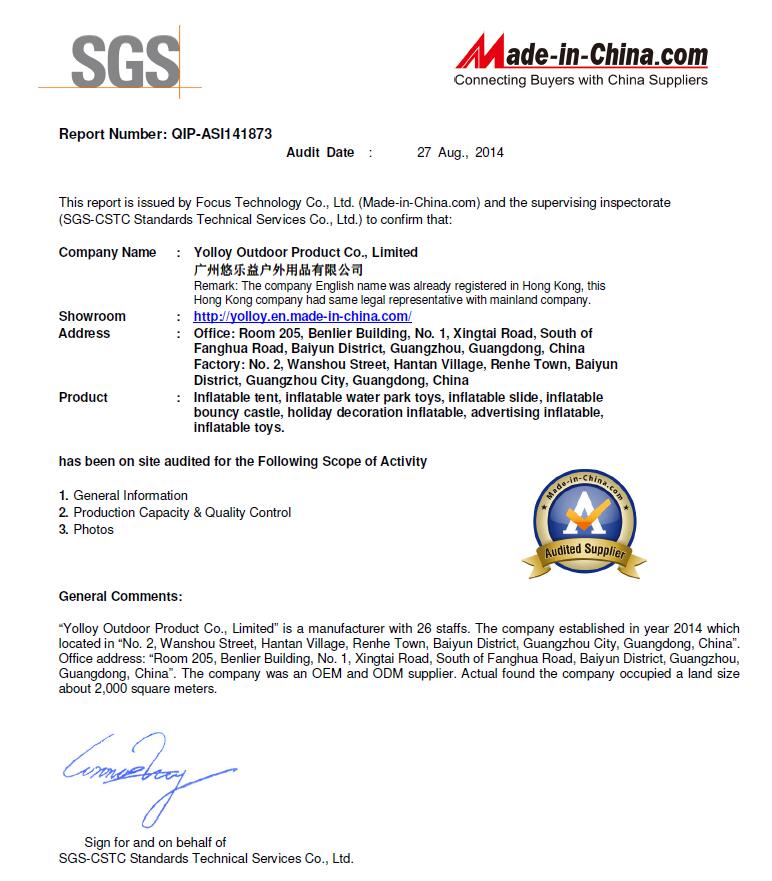
Whatever type you choose, build quality is what separates a safe, long-lasting product from one that fails quickly under repeated use. YOLLOY, a China-based manufacturer and solution provider for inflatable products, produces commercial inflatable slides and water slides from commercial-grade PVC tarpaulin, with materials that have reportedly passed EN71, EN14960, and RoHS-related testing. Airtight products are manufactured with high-temperature fusion and welding equipment, while sewn products use reinforced seams and waterproof nylon thread. D-ring or round metal anchor systems are incorporated where needed for installation and wind resistance, and a repair kit is supplied with each inflatable product.
Depending on the model, blowers can be supplied for 110V, 220V, or 380V requirements, and typical production time for one regular inflatable product is 6 to 15 days, excluding transit. When the products are used and maintained correctly, YOLLOY describes a three-year service life expectation, subject to product type and actual terms. This matters for rental operators, who rely on hardware that survives hundreds of events.
Which Option Suits Your Event or Business Best?
For backyard birthdays, a dry inflatable slide is often the easier all-around choice, while a water slide is usually best when the party is built around outdoor summer play. For school and church events, dry slides tend to fit better because they are easier to supervise and integrate into a broader event layout. For summer camps, neighborhood events, and larger casual gatherings, water slides often perform well because guests are already expecting a more active, weather-driven experience.
For rental companies, the practical question is return on investment. A dry inflatable slide is more flexible across seasons and requires less setup at each job. A water slide can be a stronger statement piece in peak summer, but it depends on your delivery crew and on sites that can provide water and handle runoff. If you are buying for a commercial fleet, commercial inflatable water slides that work as standalone units with their own climb, lane, and splash section tend to have broader rental value because they do not depend on pool infrastructure.
How to Make the Right Call
If the forecast is hot, your guests are ready for water play, and your setup area can handle runoff safely, an inflatable water slide is often the stronger choice. It creates a bigger summer impact and gives kids a way to cool off while staying active. If you want easier logistics, more flexibility, and a product that works across more event types, a dry inflatable slide is usually the better fit.
When comparing options, look at the build quality and the customization offered by the manufacturer. YOLLOY provides custom sizes and colors, printed logos and artwork, and design-to-production service where designers prepare simulation renderings from your proposal and revise them until approval. Whether you need a single unit or a whole fleet, the safest way to get the right product is to discuss the intended use, site conditions, and power supply with the supplier before ordering.
To explore the full range of inflatable slides and inflatable water slide options, visit the commercial slide category at yolloy.net and contact the team to get a quote tailored to your event or business.