When you need to deliver a presentation to a large audience in an outdoor or unconventional venue, a standard projector screen simply will not cut it. A giant inflatable projection screen offers a portable, high-impact solution that transforms any open space into a professional presentation environment. Whether you are hosting a corporate product launch, an educational planetarium show, a trade show demonstration, or a community movie night, choosing the right inflatable screen can make the difference between a forgettable setup and a visually stunning experience.
Unlike rigid-frame screens that require heavy stands, scaffolding, and a crew to assemble, inflatable projection screens are designed for speed and simplicity. Most models can be fully inflated and ready for use in under five minutes. The entire system packs down into a compact carry bag, making transportation and storage remarkably easy. This portability is a game-changer for event organizers who need to move equipment between venues or set up in remote locations without access to permanent infrastructure.
Why an Inflatable Screen Is the Best Choice for Presentations
An outdoor inflatable projection screen delivers several distinct advantages over traditional projection setups. First, the screen surface remains taut and wrinkle-free when properly inflated, thanks to the constant air pressure from the integrated blower. This tension ensures a flat, uniform projection surface that produces sharp, undistorted images — a critical requirement for presentations that include text, charts, and detailed graphics.
Second, inflatable screens support both front and rear projection, giving presenters flexibility in how they arrange their equipment and audience. This dual-sided capability is especially valuable at trade shows and exhibition booths, where space constraints may require creative projector placement. Third, the large format of these screens — often ranging from 12 feet to over 30 feet in diagonal measurement — ensures that even audience members seated far from the stage can clearly see the content being presented.
Key Features to Evaluate When Choosing a Screen
Not all inflatable screens are created equal. When evaluating options for your presentation needs, pay close attention to the following features:
Screen Material and Surface Quality: The projection surface should be a matte white or light grey finish that minimizes hot spots and delivers consistent color reproduction. High-quality screens use commercial-grade PVC tarpaulin or Oxford fabric that is both durable and weather-resistant. The surface should be seamless, with no visible stitching lines across the viewing area that could distract from your content.
Frame Construction and Durability: The inflatable frame must hold its shape reliably throughout the event. Look for reinforced seams, double or triple stitching at stress points, and D-ring metal anchor systems that provide secure tie-down options. A well-built frame resists deformation even in moderate wind conditions when properly anchored with stakes and guy lines.
Blower Performance and Noise Level: The blower is the heart of any inflatable screen. A powerful yet quiet blower ensures quick inflation without creating distracting background noise during your presentation. Quality blowers are designed for continuous operation over extended periods, and they are available in configurations that match local voltage standards including 110V, 220V, and 380V.
Size and Aspect Ratio: Screen sizes are measured diagonally, and the most common aspect ratio for modern presentations is 16:9 widescreen. For corporate events, a screen in the 16-foot to 24-foot range typically provides excellent visibility for medium to large audiences. Larger events with thousands of attendees may require screens of 30 feet or more. Always confirm that your projector has sufficient brightness to fill the screen size you choose, especially in outdoor settings where ambient light is a factor.
Commercial-Grade vs. Consumer Screens
There is a significant quality gap between consumer-oriented inflatable screens sold at retail stores and commercial-grade screens manufactured for professional use. Consumer screens often use thinner materials and less powerful blowers, and they may lack the reinforced construction needed for frequent setup and teardown. Commercial-grade screens, by contrast, are built with heavier-duty fabrics, stronger seams, and more robust anchoring systems designed to withstand repeated use at events, exhibitions, and rental operations.
For organizations that require a reliable inflatable projection screen for regular presentations, investing in a commercial-grade product from a manufacturer that specializes in inflatable structures is the smarter long-term choice. These screens are engineered not just for image quality but also for structural integrity, safety, and longevity under demanding conditions.
Applications Across Industries
The versatility of giant inflatable projection screens makes them valuable across a wide range of industries and use cases:
Corporate Events and Product Launches: Companies use large inflatable screens to create immersive brand experiences at outdoor venues, parking lot activations, and festival grounds. The sheer scale of a giant screen commands attention and elevates the perceived production value of any corporate event.
Education and Planetariums: Portable planetarium domes with integrated projection screens bring astronomy education directly to schools, science centers, and community events. These inflatable dome structures create a 360-degree immersive environment that is impossible to replicate with flat screens. A giant inflatable projection screen inside a dome can display celestial maps, educational films, and interactive content that captivates learners of all ages.
Trade Shows and Exhibitions: In a crowded exhibition hall, standing out is everything. An inflatable projection screen provides a towering visual presence that draws foot traffic to your booth. Because the screen frame can be custom-printed with branding elements, it doubles as both a display surface and a marketing asset.
Outdoor Cinema and Community Events: Municipal parks departments, churches, and community organizations use inflatable screens for outdoor movie nights, sports viewing parties, and public broadcasts. The quick setup and takedown make these screens practical for recurring events with limited volunteer or staff resources.
The Advantage of Working with a Manufacturer
When you purchase an inflatable projection screen from a retail store, you are limited to whatever sizes and configurations are in stock. Working directly with a manufacturer opens up possibilities that off-the-shelf products simply cannot match.
Customization is the most significant advantage. A manufacturer can produce a screen to your exact specifications — custom dimensions, unique aspect ratios, branded colors on the frame, printed logos on the screen border, and tailored blower configurations for your local voltage requirements. If you need a screen that fits a specific venue footprint or matches your company's visual identity, a manufacturer can design and produce it from your drawings, sketches, or site plans. The minimum order quantity from a factory is often as low as one piece, making custom orders accessible even for single-unit purchases.
Quality control is another critical benefit. Reputable manufacturers use materials that meet international safety standards such as EN71, EN14960, and RoHS. They employ precision sewing equipment with reinforced seams and waterproof nylon thread, and their airtight products are manufactured using high-temperature fusion welding technology. Every product undergoes inspection and testing before shipment, and a repair kit is typically included with each unit to address minor punctures in the field.
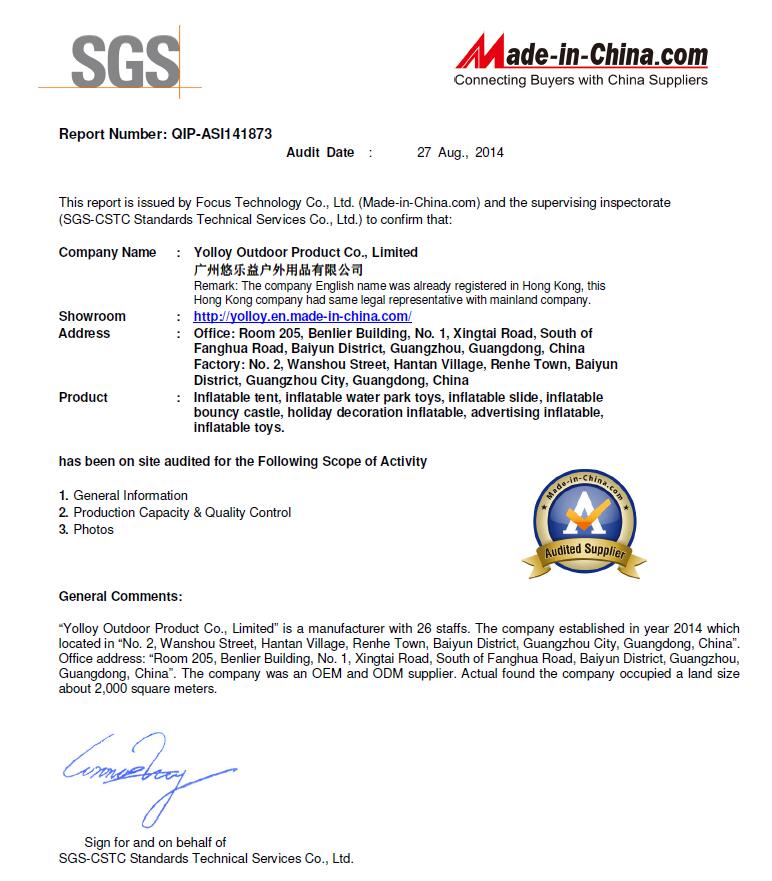
Manufacturers based in China, such as YOLLOY Outdoor Product Co., Limited in Guangzhou, have established themselves as leading suppliers of custom inflatable products for the global market. With extensive experience in designing and producing inflatable tents, domes, projection screens, water park products, and interactive sports games, these manufacturers bring deep technical expertise to every project. Their design teams create simulation renderings from client proposals, revise designs until approval, and then release them for production — ensuring that the final product matches the client's vision precisely.
Setup Best Practices for Flawless Presentations
Even the best inflatable screen will underperform if it is not set up correctly. Follow these guidelines to ensure your presentation goes smoothly:
Choose a flat, debris-free area with enough space for both the screen footprint and your projector's throw distance. Check the wind direction and position the screen so its broad side is not facing directly into the wind. Use all provided stakes and guy lines to anchor the screen securely — never skip this step, even on calm days, as conditions can change quickly.
Allow the screen to fully inflate before attaching the projection surface if your model has a detachable screen. Adjust the tension lines until the screen surface is drum-tight and free of wrinkles. Test your projector's focus and keystone correction before the audience arrives, and position any cables so they do not create tripping hazards. After the event, deflate the screen completely, wipe down any moisture or dirt, and pack it into its storage bag to protect it for the next use.
Making the Right Investment
A giant inflatable projection screen is more than just a piece of AV equipment — it is an investment in the quality and impact of your presentations. By choosing a commercial-grade screen from an experienced manufacturer, you gain a durable, customizable, and portable solution that will serve your organization for years. Whether you need a screen for corporate events, educational programs, trade shows, or community gatherings, the right inflatable screen will elevate every presentation you deliver.
When you are ready to explore your options, consider reaching out to a manufacturer that can guide you through the selection process and produce a screen tailored to your specific requirements. The difference between a generic screen and a purpose-built solution is visible in every presentation you give.