Products Category
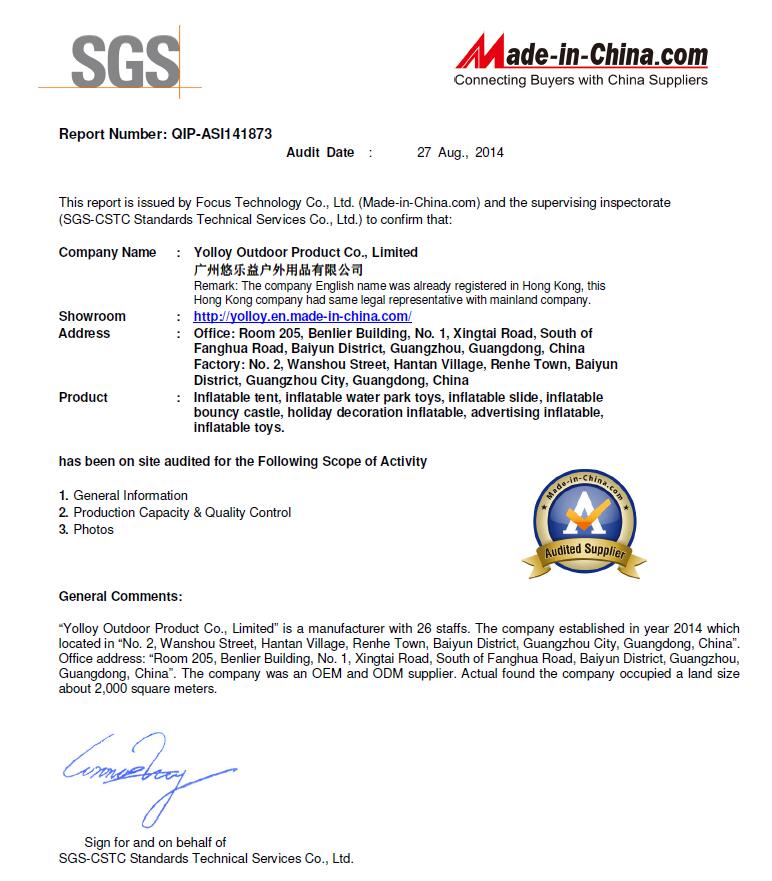
Certification

News

• New Order Successfully Finished for Long-Time Cooperated Japanese Client | YOLLOY Wins Full Client Recognition

• YOLLOY Custom Inflatable Pool Tent for Danish Client: Professional Pool Repair Shelter & Debris Protection

• Trusted Once Again! Greek Captain Re-orders Our Products After 4 Years

• Revolutionize Your Outdoors: The All-Terrain Inflatable Floating Tent for Land & Water

• Elevate Your Summer Fun: The Ultimate Inflatable Water Floating Volleyball Court Trampoline

• Innovative Inflatable Nightclub Tents & Pop-Up Bars: The Ultimate Solution for Portable Party Venues

Contact Us

Name: Sunny Yang
Tel: +86-20-8370 0771
Fax: +86-20-8370 0771
Mobile: 13570587575
E-mail: [email protected]
Add: No 5,Xiong wei Bo Nan Road,ZhongLuoTan Town,Baiyun district,Guangzhou,China
Friend me on Facebook Follow me on Twitter Add me to your circles Follow me on Pinterest Watch my channel on YouTube
News

What is an inflatable lake slide and how does it work?

Author:yolloy Date:2026/8/17 6:13:23

An inflatable lake slide is a large, buoyant water attraction that sits directly on the surface of a lake, river, or reservoir instead of being installed on land. It combines the classic water slide experience with a floating platform, so riders climb up, slide down, and splash straight into open water. Resorts, campgrounds, waterfront clubs, and event organizers use them because they turn an ordinary shoreline into an instant attraction without concrete foundations, permanent construction, or heavy permitting.

At first glance a lake slide looks like a giant pool toy, but the engineering behind it is more thoughtful than it appears. It stays afloat, keeps its shape, and stays safe through three things working together: buoyancy, constant air pressure, and a secure anchoring system. Understanding how these parts work helps you choose the right unit, set it up correctly, and get the most years out of it.

What exactly is an inflatable lake slide?

A typical inflatable lake slide is made up of a wide floating base, a climbing section, a smooth slide lane, and often a small jump deck or splash area on top. The whole structure is built from heavy-duty inflatable chambers that provide both the shape and the buoyancy. When the chambers are inflated, the unit displaces enough water to stay on the surface, while the upper structure rises high enough to give riders a real slide.

Some designs are standalone floating platforms with the slide built in. Others attach to a floating water trampoline or dock. Sizes range from compact units suited to a private lakefront to multi-lane commercial setups for busy resorts. Because every site is different, most manufacturers, including YOLLOY, offer custom sizes, colors, and layouts designed around your water depth and shoreline.

How does it stay afloat?

The secret to floating is buoyancy. The base of the slide is divided into sealed air chambers made from dense, waterproof PVC tarpaulin. Because air is much lighter than water, these chambers push upward with enough force to support the weight of the structure and the riders on top. The larger the base area, the more weight the platform can carry while staying stable.

This is why the base of a lake slide is wide and why manufacturers reinforce the bottom panels. A well-designed base keeps the slide level even when several people are on the platform at once, and it resists tipping when someone lands in the water near the edge. The buoyancy is built in at the factory, so there is nothing to adjust on site beyond keeping the chambers properly inflated.

How does it keep its shape?

An inflatable lake slide does not work like a balloon that is filled once and tied off. Instead, it runs on a continuous airflow system. A blower fan pushes air into the structure the entire time it is in use, keeping the internal pressure slightly higher than the outside air. Small amounts of air naturally escape through seams and zippers, and the blower simply replaces that air as fast as it leaks out.

This constant pressure is what makes the slide firm enough to climb and slide on. If you switch the blower off, the unit starts to soften within minutes, which is why the blower is considered the engine of the whole setup. YOLLOY supplies blowers matched to the volume of each product and can provide them for 110V, 220V, or 380V power supplies, so the unit runs correctly no matter where it is installed.

Where does the water come from?

A lake slide is water-slick rather than water-filled. The slide lane is kept wet by a spray line that runs along the top of the slide, fed by a small pump or by the natural lake water. The thin film of water reduces friction, so riders glide down smoothly instead of sticking. The landing area is simply the lake itself, which is part of the appeal: no separate pool is needed, and the splash is part of the fun.

Because the unit sits in open water, the spray system is usually simpler than on a land-based slide. Many operators use a low-power pump that draws lake water and distributes it across the slide surface. Keeping the spray even matters, because too little water slows riders down and too much can make the landing zone slippery for swimmers nearby.

How is it kept in place?

Air pressure keeps the slide firm and buoyancy keeps it floating, but anchoring is what keeps it from drifting. A floating slide is held in position by anchor lines attached to reinforced D-ring patches on the platform. The lines run down to anchors on the lake bed, typically concrete blocks, mushroom anchors, or auger-style anchors depending on the bottom composition.

Getting the anchoring right is the most important part of installation. Anchor lines should be set at an angle rather than straight down, so the platform stays centered even when the wind picks up or several riders are moving around on it. YOLLOY builds D-ring or round metal anchor systems into its products where needed, so the attachment points are already in the right places and rated for the loads they will carry.

What is it made of?

Because lake water, sun, and constant use are hard on equipment, commercial lake slides are built from commercial-grade PVC tarpaulin with reinforced seams. High-load areas such as the climbing steps, the top platform, and the edges of the slide lane get extra reinforcement so they hold their shape under repeated use. Sewn products use precision stitching with waterproof nylon thread, and airtight chambers are joined with high-temperature welding equipment.

Quality materials are also a safety matter. YOLLOY states that its relevant materials have passed EN71, EN14960, and RoHS-related testing, and that its inflatable water park products reference EN 15649. Blowers are described as meeting CE or UL requirements. When you are comparing suppliers, asking about the materials, the seam construction, and the certifications behind a product is a reasonable first step.

How do you set one up?

Setup follows a simple sequence that becomes routine after the first time:

  • Unroll the slide on a clean beach, dock, or grassy area near the water.
  • Connect the blower and inflate the structure fully. A typical unit is ready in well under fifteen minutes.
  • Float the inflated unit to its position and attach the anchor lines to the D-rings.
  • Set up the spray system and check that water flows evenly across the slide lane.
  • Do a final check of firmness, anchor tension, and the clear landing zone before opening.

At the end of the season, the process reverses: deflate, rinse with fresh water, dry completely, and store in a clean indoor space. YOLLOY ships a repair kit with each inflatable product, so small punctures in non-structural chambers can be patched on site without sending the unit away.

Why operators choose an inflatable lake slide

The biggest advantage of an inflatable water slide over a permanent structure is flexibility. It can be moved to a different spot, taken down for the winter, and stored flat when it is not needed. There is no concrete, no building work, and no permanent footprint on the shoreline. For a campground or resort that wants to test a new attraction before committing, that flexibility is valuable.

The other advantage is speed. Because the product is manufactured off site and simply inflated on arrival, the gap between ordering and opening is short. YOLLOY gives a typical production time of 6 to 15 days for one regular inflatable product, excluding transit, and reports a 95% on-time delivery rate. Combined with air and sea shipping options, that means a lake slide can go from factory to floating in a matter of weeks.

Choosing the right supplier

When you buy commercial inflatable water slides for a lake, the supplier matters as much as the product. Look for a manufacturer that can customize the design to your site, supply the right blower for your power supply, and stand behind the product with responsive support. YOLLOY, an inflatable-product manufacturer in Guangzhou, China, works from a description, drawing, sketch, photograph, or site plan, and prepares simulation renderings for approval before production begins. Custom sizes, colors, and printed logos are all available, and the minimum order quantity is one piece.

A well-made inflatable lake slide is a simple machine with a simple job: keep people having fun on the water all season long. Once you understand how the buoyancy, the air pressure, and the anchoring work together, you can see exactly what to look for in a unit, and what to ask a manufacturer before you order.


What is an inflatable lake slide and how does it work?

Author:yolloy Date:2026/8/17 6:13:23

An inflatable lake slide is a large, buoyant water attraction that sits directly on the surface of a lake, river, or reservoir instead of being installed on land. It combines the classic water slide experience with a floating platform, so riders climb up, slide down, and splash straight into open water. Resorts, campgrounds, waterfront clubs, and event organizers use them because they turn an ordinary shoreline into an instant attraction without concrete foundations, permanent construction, or heavy permitting.

At first glance a lake slide looks like a giant pool toy, but the engineering behind it is more thoughtful than it appears. It stays afloat, keeps its shape, and stays safe through three things working together: buoyancy, constant air pressure, and a secure anchoring system. Understanding how these parts work helps you choose the right unit, set it up correctly, and get the most years out of it.

What exactly is an inflatable lake slide?

A typical inflatable lake slide is made up of a wide floating base, a climbing section, a smooth slide lane, and often a small jump deck or splash area on top. The whole structure is built from heavy-duty inflatable chambers that provide both the shape and the buoyancy. When the chambers are inflated, the unit displaces enough water to stay on the surface, while the upper structure rises high enough to give riders a real slide.

Some designs are standalone floating platforms with the slide built in. Others attach to a floating water trampoline or dock. Sizes range from compact units suited to a private lakefront to multi-lane commercial setups for busy resorts. Because every site is different, most manufacturers, including YOLLOY, offer custom sizes, colors, and layouts designed around your water depth and shoreline.

How does it stay afloat?

The secret to floating is buoyancy. The base of the slide is divided into sealed air chambers made from dense, waterproof PVC tarpaulin. Because air is much lighter than water, these chambers push upward with enough force to support the weight of the structure and the riders on top. The larger the base area, the more weight the platform can carry while staying stable.

This is why the base of a lake slide is wide and why manufacturers reinforce the bottom panels. A well-designed base keeps the slide level even when several people are on the platform at once, and it resists tipping when someone lands in the water near the edge. The buoyancy is built in at the factory, so there is nothing to adjust on site beyond keeping the chambers properly inflated.

How does it keep its shape?

An inflatable lake slide does not work like a balloon that is filled once and tied off. Instead, it runs on a continuous airflow system. A blower fan pushes air into the structure the entire time it is in use, keeping the internal pressure slightly higher than the outside air. Small amounts of air naturally escape through seams and zippers, and the blower simply replaces that air as fast as it leaks out.

This constant pressure is what makes the slide firm enough to climb and slide on. If you switch the blower off, the unit starts to soften within minutes, which is why the blower is considered the engine of the whole setup. YOLLOY supplies blowers matched to the volume of each product and can provide them for 110V, 220V, or 380V power supplies, so the unit runs correctly no matter where it is installed.

Where does the water come from?

A lake slide is water-slick rather than water-filled. The slide lane is kept wet by a spray line that runs along the top of the slide, fed by a small pump or by the natural lake water. The thin film of water reduces friction, so riders glide down smoothly instead of sticking. The landing area is simply the lake itself, which is part of the appeal: no separate pool is needed, and the splash is part of the fun.

Because the unit sits in open water, the spray system is usually simpler than on a land-based slide. Many operators use a low-power pump that draws lake water and distributes it across the slide surface. Keeping the spray even matters, because too little water slows riders down and too much can make the landing zone slippery for swimmers nearby.

How is it kept in place?

Air pressure keeps the slide firm and buoyancy keeps it floating, but anchoring is what keeps it from drifting. A floating slide is held in position by anchor lines attached to reinforced D-ring patches on the platform. The lines run down to anchors on the lake bed, typically concrete blocks, mushroom anchors, or auger-style anchors depending on the bottom composition.

Getting the anchoring right is the most important part of installation. Anchor lines should be set at an angle rather than straight down, so the platform stays centered even when the wind picks up or several riders are moving around on it. YOLLOY builds D-ring or round metal anchor systems into its products where needed, so the attachment points are already in the right places and rated for the loads they will carry.

What is it made of?

Because lake water, sun, and constant use are hard on equipment, commercial lake slides are built from commercial-grade PVC tarpaulin with reinforced seams. High-load areas such as the climbing steps, the top platform, and the edges of the slide lane get extra reinforcement so they hold their shape under repeated use. Sewn products use precision stitching with waterproof nylon thread, and airtight chambers are joined with high-temperature welding equipment.

Quality materials are also a safety matter. YOLLOY states that its relevant materials have passed EN71, EN14960, and RoHS-related testing, and that its inflatable water park products reference EN 15649. Blowers are described as meeting CE or UL requirements. When you are comparing suppliers, asking about the materials, the seam construction, and the certifications behind a product is a reasonable first step.

How do you set one up?

Setup follows a simple sequence that becomes routine after the first time:

  • Unroll the slide on a clean beach, dock, or grassy area near the water.
  • Connect the blower and inflate the structure fully. A typical unit is ready in well under fifteen minutes.
  • Float the inflated unit to its position and attach the anchor lines to the D-rings.
  • Set up the spray system and check that water flows evenly across the slide lane.
  • Do a final check of firmness, anchor tension, and the clear landing zone before opening.

At the end of the season, the process reverses: deflate, rinse with fresh water, dry completely, and store in a clean indoor space. YOLLOY ships a repair kit with each inflatable product, so small punctures in non-structural chambers can be patched on site without sending the unit away.

Why operators choose an inflatable lake slide

The biggest advantage of an inflatable water slide over a permanent structure is flexibility. It can be moved to a different spot, taken down for the winter, and stored flat when it is not needed. There is no concrete, no building work, and no permanent footprint on the shoreline. For a campground or resort that wants to test a new attraction before committing, that flexibility is valuable.

The other advantage is speed. Because the product is manufactured off site and simply inflated on arrival, the gap between ordering and opening is short. YOLLOY gives a typical production time of 6 to 15 days for one regular inflatable product, excluding transit, and reports a 95% on-time delivery rate. Combined with air and sea shipping options, that means a lake slide can go from factory to floating in a matter of weeks.

Choosing the right supplier

When you buy commercial inflatable water slides for a lake, the supplier matters as much as the product. Look for a manufacturer that can customize the design to your site, supply the right blower for your power supply, and stand behind the product with responsive support. YOLLOY, an inflatable-product manufacturer in Guangzhou, China, works from a description, drawing, sketch, photograph, or site plan, and prepares simulation renderings for approval before production begins. Custom sizes, colors, and printed logos are all available, and the minimum order quantity is one piece.

A well-made inflatable lake slide is a simple machine with a simple job: keep people having fun on the water all season long. Once you understand how the buoyancy, the air pressure, and the anchoring work together, you can see exactly what to look for in a unit, and what to ask a manufacturer before you order.