What Is a Floating Tent Raft and How Does It Work?
Picture this: instead of pitching your camp on the shore, you set it up right on the water. That is the idea behind a floating tent raft. It is an inflatable platform that pairs a buoyant raft base with a weatherproof tent on top, so you can sleep, fish, or relax while gently riding a calm lake, a slow-moving river, or a sheltered bay. Once a niche novelty, it has become one of the most talked-about additions to the inflatable water park toys family, and it is winning over campers, anglers, resort operators, and yacht owners alike.
What Exactly Is a Floating Tent Raft?
A floating tent raft is exactly what the name suggests: a tent built on a raft. The lower section is a large inflatable base that provides buoyancy and stability, while the upper section is a tent supported by inflatable beams instead of metal or fibreglass poles. Because the whole structure is air-filled, it folds down into a compact carry bag, weighs far less than a rigid boat or wooden dock, and can be set up by one or two people without any tools.
The design is built from two working parts:
- The raft base. Made from heavy-duty, puncture-resistant PVC tarpaulin, and often using drop-stitch fabric for the floor. Drop-stitch material is filled with thousands of internal threads that connect the top and bottom layers, so once it is inflated to the correct pressure the floor becomes as rigid as a wooden deck. It is the same technology used in high-end inflatable paddleboards.
- The tent topper. A breathable, waterproof canopy held up by inflatable beams. Mesh windows give you ventilation and panoramic views while keeping insects out, and storage pockets keep small gear within reach.
How Does a Floating Tent Raft Work?
The principle is simple: air does the work. A floating tent raft works through four key mechanisms.
- Buoyancy. Any object floats when it displaces water equal to its own weight. The large volume of air trapped inside the raft base displaces enough water to support the weight of the tent, the people inside, and their gear.
- Inflatable structure. The base and the tent beams are inflated to a working pressure that makes them rigid enough to hold their shape without poles or frames. A blower or hand pump does the job in a few minutes.
- Anchoring. To stop the raft drifting, floating tent rafts use a multi-point anchor system. Reinforced stainless steel D-rings are welded to the base, and you can tie off to a lakebed anchor, sandbags, a dock, a buoy, or your own boat. Multiple anchor points reduce swinging and rotation even in a mild wind or current.
- Setup and pack-down. Unfold the raft, inflate the base and beams, launch it into the water, anchor it, and you are ready. When you are done, deflate, roll it up, and stow it in the carry bag.
Where Can You Use One?
A floating tent raft is far more than a camping gadget. It works as a personal island for a wide range of on-water activities:
- Camping and glamping. Sleep over the water with a stable, shaded basecamp that stays put once anchored.
- Fishing. Use it as a quiet, stationary fishing platform that keeps you out of the reeds and away from the bank.
- Resorts and beach clubs. A fleet of branded floating cabanas becomes a bookable experience and a strong marketing feature.
- Yacht and boat owners. Extend your deck with a floating leisure platform that can be tied alongside the vessel.
- Water parks and events. Floating platforms can be combined with other inflatables to build a full inflatable water park experience.
Why Choose YOLLOY for Your Floating Tent Raft?
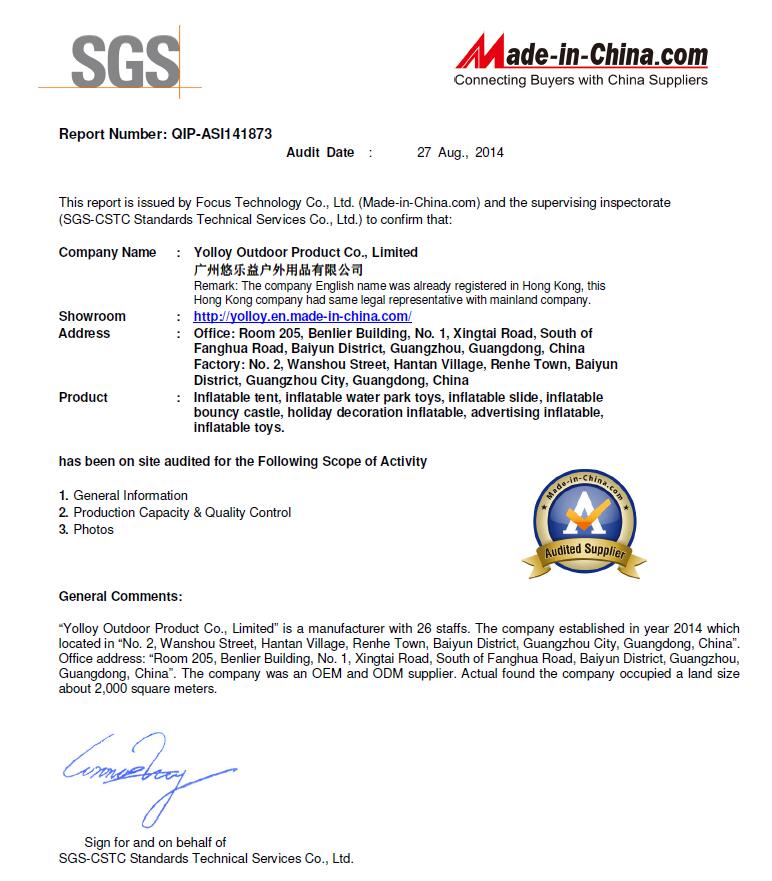
YOLLOY is an inflatable-product manufacturer and solution provider based in Guangzhou, China, with a custom design-to-production workflow. Designers turn your proposal into simulation renderings, revise the design until you approve it, and then release it for factory production. That means your floating tent raft can be made to your exact size, colour, and branding.
- Commercial-grade materials. Products are made from commercial-grade PVC tarpaulin, with relevant materials passing EN71, EN14960, and RoHS-related testing.
- Full customization. Custom sizes, colours, logos, and artwork are available, with a minimum order of one piece.
- Reinforced construction. High-load areas get extra reinforcement, and airtight products are made with high-temperature fusion and welding equipment.
- Practical service. Every inflatable ships with a repair kit, blowers can be supplied for 110V, 220V, or 380V, and emails and faxes are answered within 24 hours.
- Reliable delivery. The company reports a 95% on-time delivery rate, with air and sea shipping available worldwide.
If you are looking for an inflatable floating tent or a custom floating platform for your next project, YOLLOY can design and manufacture it to your requirements. Contact the team with your idea, budget, or site plan, and get a custom quote before you commit.
Frequently Asked Questions
How long does it take to set up? With a blower or pump, most regular inflatable products can be inflated in a few minutes. The exact time depends on the size of the raft and the power of the blower supplied.
How do I keep it from drifting? Use the anchor points built into the base. Tie off to a lakebed anchor, sandbags, a dock, a buoy, or your boat, and use multiple points to reduce swinging and rotation.
What material is it made from? The raft and tent are typically made from commercial-grade PVC tarpaulin, with drop-stitch fabric for the floor base. Materials are waterproof, UV-resistant, and fire-retardant, and relevant materials pass EN71, EN14960, and RoHS-related testing.
How long will it last? With correct use and maintenance, YOLLOY expects a service life of around three years, subject to product type and actual terms. A repair kit is supplied with each inflatable so minor punctures can be fixed quickly.
Can I customize the design? Yes. YOLLOY offers custom sizes, colours, logos, and artwork, with a minimum order of one piece. Typical production time for one regular inflatable product is 6–15 days, excluding transit.