Investing in a commercial inflatable slide is a significant decision for any rental business, water park, or event venue. A high-quality slide can generate consistent revenue for years, while a poorly built one can become a maintenance nightmare and a safety liability. Understanding the key features that separate professional-grade equipment from consumer-grade products is essential before making a purchase. Here are the critical factors to evaluate when selecting a commercial inflatable slide.
1. Material Quality: The Foundation of Durability
The single most important factor in a commercial inflatable slide is the material used in its construction. Professional-grade slides should use commercial PVC tarpaulin with a thickness of at least 0.55mm. Anything thinner will not withstand the repeated stress of daily commercial use. The PVC material must also be fire-retardant, meeting EN71 and ASTM standards, and UV-resistant to prevent fading and cracking from prolonged sun exposure. High-quality materials incorporate anti-fungal coatings that resist mold growth and hydrolysis, which is the breakdown of polymer bonds caused by water exposure over time.
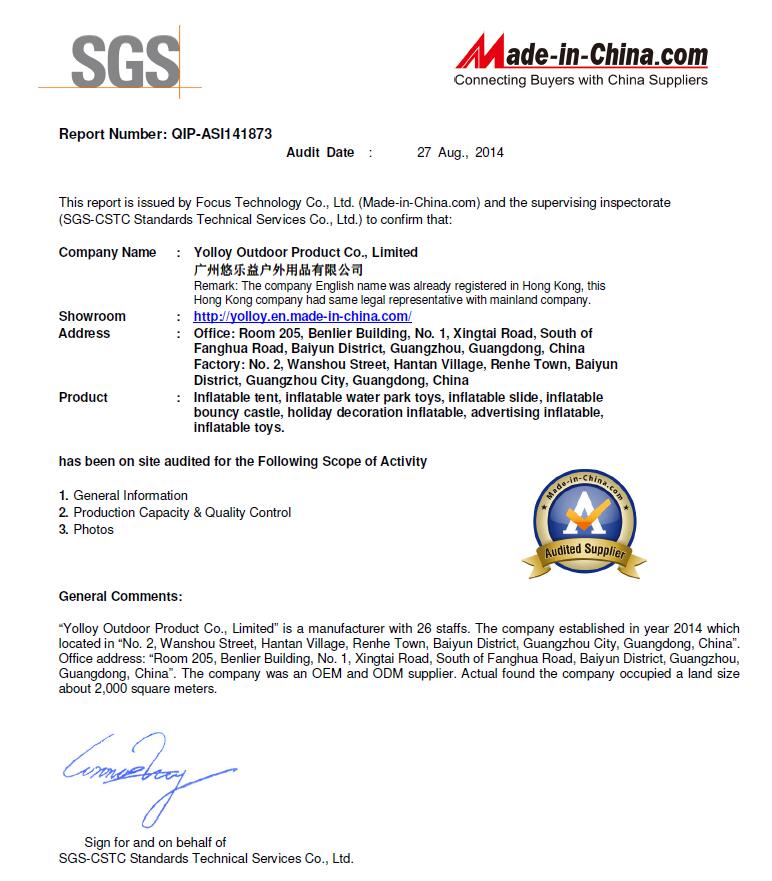
When evaluating a commercial inflatable water slide manufacturer, always ask for material specifications. A reputable supplier will openly share PVC thickness, base fabric denier, and relevant certifications. YOLLOY, for example, uses commercial-grade PVC tarpaulin with reinforced Oxford fabric for specific applications, and all materials have passed EN71, EN14960, and RoHS testing. This transparency is a strong indicator of product quality.
2. Construction Methods: Stitching and Welding
How the slide is put together matters as much as what it is made of. Commercial inflatable slides endure enormous stress at seams and connection points. Look for double-stitching or quadruple-stitching on all high-stress seams, using waterproof nylon thread rated for high tensile strength. Heat-welded or high-temperature fusion-welded joints at critical stress points provide additional durability that purely stitched seams cannot match.
Reinforced corners and additional reinforcement at high-load areas are signs of quality manufacturing. These details prevent the seam separation that plagues budget units after just a few months of regular use. A well-constructed slide from a professional inflatable water slide factory will feature precision sewing equipment and rigorous quality control, with each product inspected and tested before shipment.
3. Safety Features: Non-Negotiable Requirements
Safety should never be compromised. A professional commercial inflatable slide must include several essential safety features. High side walls along the entire slide lane, typically at least 1.2 meters in height, prevent riders from falling off during descent. Non-slip climbing steps with textured surfaces reduce slip incidents significantly compared to smooth surfaces. A deceleration zone at the base of the slide allows riders to come to a safe stop, and padded entry and exit points minimize impact risks.
Safety netting should protect elevated areas where falls pose serious injury risks. Clear capacity limits must be visibly marked on the unit. Beyond physical design features, certifications provide independent verification of safety standards. Look for CE certification, EN71 compliance, and EN14960 compliance for inflatable water park equipment. These certifications confirm that the slide has been tested for dynamic load, structural integrity, and flame retardancy to recognized international standards.
4. Anchor and Tie-Down Systems
Proper anchoring is critical for safe operation. A commercial inflatable slide must include multiple anchor points with heavy-duty D-rings. The anchor hardware should be made of stainless steel, not zinc-plated steel, which corrodes rapidly when exposed to water and outdoor conditions. Rusted anchors can snap under load, creating a serious safety hazard. Quality slides use stainless steel 304 D-rings rated for substantial pull force, along with automotive-grade webbing for all tie-down points.
The number of anchor points scales with slide size. A large slide should have at least 8 to 12 anchor points to ensure stability in windy conditions. D-ring or round metal anchor systems also aid wind resistance when properly deployed. Ground stakes for grass surfaces, sandbag anchors for hard surfaces, and structural tie-downs for indoor installations should all be available options.
5. Blower Specifications and Power Requirements
The blower system keeps the inflatable slide firm and safe during operation. An undersized blower causes sagging, which increases rider friction and the risk of injury. Commercial slides typically require blowers rated at 1.5 HP to 2.2 HP, delivering sufficient CFM (cubic feet per minute) to maintain proper internal pressure. The blower must be properly matched to the slide's air volume requirements.
Look for blowers that are CE or UL certified and designed for continuous operation. Waterproof ratings such as IP44 or higher are important for outdoor water slide applications. Manufacturers should be able to supply blowers configured for different voltage requirements including 110V, 220V, or 380V, depending on your regional power standards. A quality manufacturer will include appropriately powered blowers with every slide purchase.
6. Customization and Design Flexibility
Your commercial inflatable slide should reflect your brand and meet your specific operational needs. A professional manufacturer offers full customization services including custom sizes, colors, themes, and printed logos. Whether you need a specific color scheme to match your venue branding or a themed design for a special event series, the ability to customize sets quality suppliers apart from mass-market vendors.
Customization extends beyond aesthetics. The design process should allow you to start from a description, drawing, sketch, photograph, or site plan. Some manufacturers provide simulation renderings before production begins, allowing you to visualize the final product and make adjustments. This collaborative approach ensures the slide meets your exact requirements for space, capacity, and visual impact.
7. After-Sales Support and Warranty
The relationship with your manufacturer should not end at delivery. A reliable supplier provides ongoing support including repair guidance, replacement parts availability, and clear warranty terms. A warranty period of around three years is typical for quality commercial inflatable products when used and maintained correctly. Each inflatable product should come with a repair kit for field maintenance, allowing you to address minor punctures quickly without returning the unit to the factory.
Responsive communication is equally important. Look for manufacturers who commit to answering inquiries within a reasonable timeframe, such as 24 hours. A proven on-time delivery record, ideally above 90%, indicates a well-organized production and logistics operation. These service factors directly impact your ability to keep equipment in service and generating revenue.
8. Maintenance Considerations
Even the best-built commercial inflatable slide requires proper maintenance to maximize its service life. After each use, the slide should be thoroughly dried before storage to prevent mold growth and material degradation. Water slides in particular need careful drainage — tilt the unit to remove standing water and use a wet/dry vacuum to extract trapped moisture from seams and corners.
Regular inspections should check for visible damage, proper inflation levels, and secure anchoring before each use. Monthly detailed examinations should assess seams, blowers, electrical components, and hardware for signs of wear. Following manufacturer maintenance protocols protects your investment and keeps the slide safe for riders throughout its service life.
Conclusion
Choosing a commercial inflatable slide requires careful evaluation of material quality, construction methods, safety features, anchoring systems, blower specifications, and after-sales support. By prioritizing these features and working with a manufacturer that offers transparency, customization, and reliable service, you can invest in equipment that delivers safe, profitable operation for years to come.