Products Category
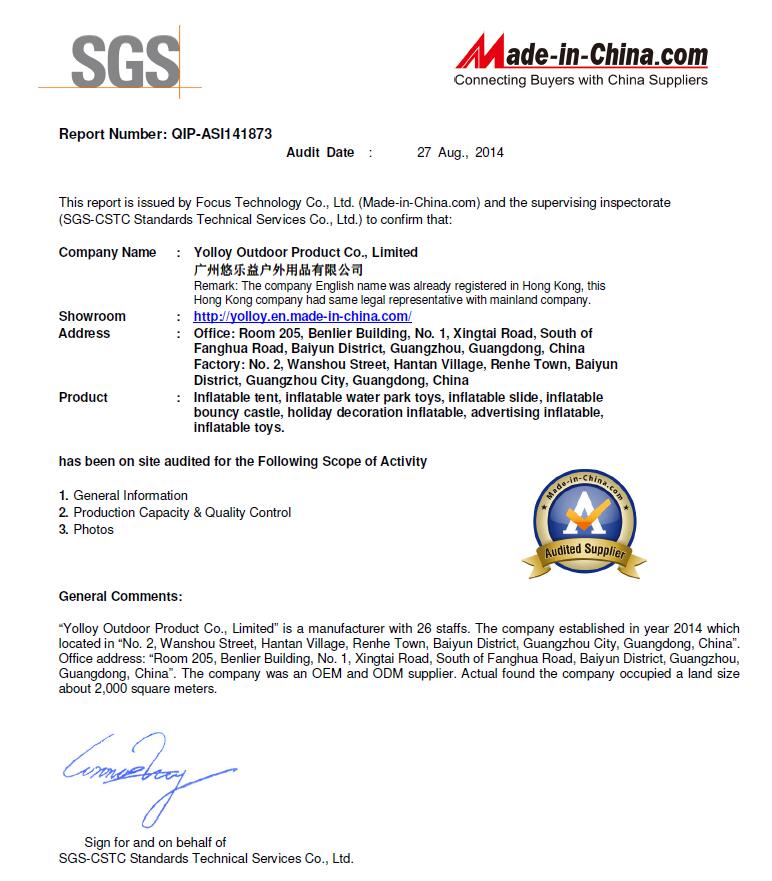
Certification

News

• Possess the Portable Planetarium dome, your life will be more vitality

• Inflatable golf club simulator training tent

• The white inflatable party tent in our life

• YOLLOY Unveils Space-Saving Inflatable Car Wash Mat: The Eco-Friendly Solution for Mess-Free Home Detailing

• Custom Snow-Resistant Inflatable Tunnel Tent to Korean Client

• YOLLOY Launches Innovative Inflatable Light Pillar to Revolutionize Advertising and Event Branding

Contact Us

Name: Sunny Yang
Tel: +86-20-8370 0771
Fax: +86-20-8370 0771
Mobile: 13570587575
E-mail: sales@yolloy.com
Add: No 5,Xiong wei Bo Nan Road,ZhongLuoTan Town,Baiyun district,Guangzhou,China
Friend me on Facebook Follow me on Twitter Add me to your circles Follow me on Pinterest Watch my channel on YouTube
News

Sleeping Pad vs Inflatable Mattress Setup Time: Quick Inflation Tips

Author:yolloy Date:2025/12/24 4:21:55

It's 7 PM, the sun's dipping below the tree line, and your stomach's growling for that campfire chili you've been dreaming of all day. But first, you need to set up your sleeping gear—and fast. The last thing you want is fumbling with a deflated mattress while the temperature drops and the mosquitos start their evening serenade. We've all been there: staring at a crumpled sleeping pad or a flat inflatable mattress, wondering why something that's supposed to make camping comfortable feels like a second job. So, let's cut to the chase: when it comes to setup time, is a sleeping pad or an inflatable mattress faster? And more importantly, how can you shave minutes off that process so you can get back to what matters—enjoying the outdoors?

First Things First: What's the Difference, Anyway?

Before we dive into setup time, let's make sure we're on the same page. When we talk about "sleeping pads" here, we're focusing on self-inflating air mattresses—the ones that, in theory, inflate themselves once you twist open the valve. Inflatable mattresses, on the other hand, are the bulkier, often thicker options that require manual or electric pumping (think of the ones you might use for car camping or guest rooms). And yes, there's a third category: the ultra-lightweight closed-cell foam pads, but let's be real—if you're here, you're probably craving a bit more comfort than those thin slabs offer. So, self-inflating vs. inflatable: let's pit them head-to-head on setup speed.

Self-Inflating Sleeping Pads: The "Set It and Forget It" Contender

Picture this: You unroll your self-inflating pad, pop open the valve, and walk away to gather firewood. By the time you're back, it's puffed up and ready to go. Sounds perfect, right? Well, sort of. Self-inflating pads (like many self inflating air mattresses on the market) work by using open-cell foam that expands when the valve is open, drawing in air automatically. No huffing, no pumping—just patience. But "patience" is the keyword here. Most self-inflating pads take anywhere from 5 to 15 minutes to fully inflate on their own. If you're in a rush, you can top them off with a few breaths, but that defeats the "self-inflating" purpose. And deflating? You'll need to roll them up tightly to squeeze out the air, which can take another 5 minutes if you're doing it right.

Inflatable Mattresses: The "Power User" Option

Inflatable mattresses, especially those with built-in pumps (hello, inflatable mattress with inbuilt pump), are the heavyweights of camp comfort. They're thicker, softer, and often feel more like a real bed than a pad. But how fast do they set up? It depends on the pump. A manual hand pump might take 2–3 minutes of solid pumping (and leave your arms burning if you're out of shape). An electric pump? Plug it in, hit a button, and you're done in 60–90 seconds. The game-changer? Built-in pumps that run on batteries or car adapters—no extra gear to carry, just flip a switch and watch it inflate while you organize your sleeping bag. Deflating is usually faster too: open the valve, press down to push air out, and roll it up. But here's the catch: they're bulkier, heavier, and if you forget to charge the pump or run out of batteries? You're back to huffing and puffing like it's 1999.

Feature Self-Inflating Sleeping Pad Inflatable Mattress (with Built-In Pump)
Setup Time 5–15 minutes (auto-inflate) + 1–2 minutes (topping off) 1–3 minutes (electric/built-in pump)
Physical Effort Low (just open the valve) Low (electric) / High (manual pump)
Dependencies None (no power, no pump) Battery power, car adapter, or manual labor
Deflation Time 5–7 minutes (rolling tightly) 3–5 minutes (press and roll)

What Slows You Down? The Hidden Setup Time Culprits

So, why does your friend's inflatable mattress inflate in 2 minutes while yours takes 10? It's not just luck—it's the little things. Let's break down the factors that can turn a quick setup into a frustrating delay.

1. Valve Design: The Gateway to Air (or Agony)

Ever tried blowing up a balloon with a tiny nozzle? It's slow, and you lose half the air before you can tie it. The same goes for your sleeping gear. A wide, double-sealed valve (like the ones on high-quality best inflatable air mattress for camping models) lets air flow in fast, while a narrow, flimsy valve will have you waiting around. Look for valves with "push-pull" or "twist-lock" mechanisms—they seal better and open fully, so you're not fighting to get air in (or keep it from leaking out).

2. Material Matters: Stiff vs. Supple

You might not think about it, but the material of your pad or mattress affects how quickly it inflates. Cheaper, thin materials can stretch or wrinkle, creating air pockets that slow inflation. High-quality options, like those made with durable PVC or TPU (yes, the same stuff used in premium inflatable products for water resistance and strength), hold their shape better. They're stiffer when deflated, so they unroll smoothly and inflate evenly—no weird folds blocking the air flow.

3. Temperature: Cold Air = Slow Inflation

Ever noticed your mattress takes longer to inflate in winter? Cold air is denser, so it moves slower through the valve. Plus, the material gets stiffer, making it harder for the pad or mattress to expand. Pro tip: If you're camping in cold weather, unroll your gear and let it warm up in the sun (or near your campfire, but not too close!) for 10 minutes before inflating. The material will soften, and the air inside will be warmer and lighter—hello, faster setup.

4. User Error: We've All Been Guilty

Admit it: you've forgotten to fully open the valve, or left a second air chamber closed, or even tried inflating with the deflation port by mistake. (Oops.) Take 5 seconds to check the valve directions—most have clear "IN" and "OUT" labels. And if your mattress has multiple chambers, inflate them one at a time. Overloading the pump by trying to inflate two chambers at once will slow it down and strain the motor.

Quick Inflation Hacks: From 10 Minutes to 2—Guaranteed

Now for the good stuff: actionable tips to cut your setup time in half. Whether you're team self-inflating or team inflatable mattress, these tricks will have you snuggling into your sleeping bag faster than you can say "s'mores."

For Self-Inflating Sleeping Pads

  • Prep the Night Before (If You Can): If you're car camping, unroll your pad and open the valve before you leave home. Let it inflate fully overnight, then deflate it slowly (rolling from the foot to the head to push air out evenly) and roll it up tightly. When you get to camp, unroll it, open the valve, and it'll inflate in half the time—since the foam's already expanded once.
  • Give It a Helping Hand: Don't wait for "self-inflate" to do all the work. After opening the valve, gently press down on the pad (starting from the foot) to squeeze out any remaining air from storage, then release. This "jumpstarts" the foam, drawing in air faster. Repeat once or twice, and you'll cut 3–5 minutes off the wait time.
  • Close the Valve Tightly (But Not Too Tight): A loose valve will let air leak out while you're setting up, so twist it closed firmly—but don't overdo it. Over-tightening can damage the seal, leading to slow leaks later. A good rule: twist until it's snug, then give it a tiny extra turn. You'll know it's right when you can't hear air hissing out.

For Inflatable Mattresses (Especially with Built-In Pumps)

  • Charge the Pump Before You Go: This seems obvious, but you'd be surprised how many people forget. If your mattress has a rechargeable built-in pump, charge it fully the night before your trip. For battery-powered models, pack extra batteries—cold weather drains batteries faster, so you'll want backups.
  • Use the "Burp" Method: After inflating, turn off the pump and open the valve for 2–3 seconds, then close it quickly. This releases any "trapped" air that might be causing the mattress to feel lumpy, and it'll firm up faster. Think of it like burping a baby—you're just letting the extra air escape so it sits evenly.
  • Inflate in Stages for Large Mattresses: If you're using a large, queen-sized inflatable mattress, don't try to inflate it all at once. Let it inflate to 70% full, then stop and smooth out any wrinkles or folds. Resume inflating to 100%—this prevents the material from stretching unevenly, which can slow down the final inflation and even cause leaks.

Pro Tip for Both: Keep It Clean

Dirt, sand, or pine needles in the valve can block air flow and cause leaks. Before inflating, wipe the valve with a clean cloth (or even a dry leaf if you're in a pinch) to remove debris. It takes 2 seconds and can save you 10 minutes of frustration later.

So, Which One Should You Choose? It Depends on Your "Why"

At the end of the day, the "best" option isn't about which is faster—it's about what fits your needs. Let's match the gear to the scenario.

Choose a Self-Inflating Sleeping Pad If…

  • You're backpacking or hiking: They're lighter, pack smaller, and don't require extra pumps. Even with the 5–15 minute inflation time, you'll appreciate the weight savings on the trail.
  • You hate dealing with batteries or power: No pumps, no cords, no stress. Just unroll, open, and wait (patiently, but still).
  • You camp in remote areas: No electricity? No problem. Self-inflating pads work anywhere, anytime.

Choose an Inflatable Mattress (with Built-In Pump) If…

  • You're car camping or glamping: Weight and size don't matter as much, and you want maximum comfort (and speed). Plug it in, and you're done before you can finish setting up your tent.
  • You have limited time: Whether you're arriving late to camp or need to break down quickly in the morning, that 1–3 minute setup is a game-changer.
  • Comfort is non-negotiable: Let's be real—thicker inflatable mattresses feel more like home. If you need a good night's sleep to enjoy your trip, the extra setup time (if any) is worth it.

Final Thought: Setup Time Shouldn't Ruin Your Trip

At the end of the day, whether you're Team Sleeping Pad or Team Inflatable Mattress, the goal is the same: to spend less time wrestling with gear and more time enjoying the outdoors. A self inflating air mattress might take a few extra minutes, but it's reliable and lightweight. An inflatable mattress with inbuilt pump is fast and luxurious, but it needs a little prep (read: charged batteries). And the best inflatable air mattress for camping? It's the one that fits your style, your budget, and your need for speed.

So, next time you're packing for a trip, remember: a few simple hacks—like prepping your pad the night before, checking the valve, or charging the pump—can turn a frustrating setup into a breeze. And when you're finally settled in, warm and cozy, listening to the crickets or the waves, you'll be glad you took the time to learn these tips. After all, the best part of camping isn't the gear—it's the moments you get to enjoy once the gear is set up. Now go out there, inflate fast, and sleep well.

Sleeping Pad vs Inflatable Mattress Setup Time: Quick Inflation Tips

Author:yolloy Date:2025/12/24 4:21:55

It's 7 PM, the sun's dipping below the tree line, and your stomach's growling for that campfire chili you've been dreaming of all day. But first, you need to set up your sleeping gear—and fast. The last thing you want is fumbling with a deflated mattress while the temperature drops and the mosquitos start their evening serenade. We've all been there: staring at a crumpled sleeping pad or a flat inflatable mattress, wondering why something that's supposed to make camping comfortable feels like a second job. So, let's cut to the chase: when it comes to setup time, is a sleeping pad or an inflatable mattress faster? And more importantly, how can you shave minutes off that process so you can get back to what matters—enjoying the outdoors?

First Things First: What's the Difference, Anyway?

Before we dive into setup time, let's make sure we're on the same page. When we talk about "sleeping pads" here, we're focusing on self-inflating air mattresses—the ones that, in theory, inflate themselves once you twist open the valve. Inflatable mattresses, on the other hand, are the bulkier, often thicker options that require manual or electric pumping (think of the ones you might use for car camping or guest rooms). And yes, there's a third category: the ultra-lightweight closed-cell foam pads, but let's be real—if you're here, you're probably craving a bit more comfort than those thin slabs offer. So, self-inflating vs. inflatable: let's pit them head-to-head on setup speed.

Self-Inflating Sleeping Pads: The "Set It and Forget It" Contender

Picture this: You unroll your self-inflating pad, pop open the valve, and walk away to gather firewood. By the time you're back, it's puffed up and ready to go. Sounds perfect, right? Well, sort of. Self-inflating pads (like many self inflating air mattresses on the market) work by using open-cell foam that expands when the valve is open, drawing in air automatically. No huffing, no pumping—just patience. But "patience" is the keyword here. Most self-inflating pads take anywhere from 5 to 15 minutes to fully inflate on their own. If you're in a rush, you can top them off with a few breaths, but that defeats the "self-inflating" purpose. And deflating? You'll need to roll them up tightly to squeeze out the air, which can take another 5 minutes if you're doing it right.

Inflatable Mattresses: The "Power User" Option

Inflatable mattresses, especially those with built-in pumps (hello, inflatable mattress with inbuilt pump), are the heavyweights of camp comfort. They're thicker, softer, and often feel more like a real bed than a pad. But how fast do they set up? It depends on the pump. A manual hand pump might take 2–3 minutes of solid pumping (and leave your arms burning if you're out of shape). An electric pump? Plug it in, hit a button, and you're done in 60–90 seconds. The game-changer? Built-in pumps that run on batteries or car adapters—no extra gear to carry, just flip a switch and watch it inflate while you organize your sleeping bag. Deflating is usually faster too: open the valve, press down to push air out, and roll it up. But here's the catch: they're bulkier, heavier, and if you forget to charge the pump or run out of batteries? You're back to huffing and puffing like it's 1999.

Feature Self-Inflating Sleeping Pad Inflatable Mattress (with Built-In Pump)
Setup Time 5–15 minutes (auto-inflate) + 1–2 minutes (topping off) 1–3 minutes (electric/built-in pump)
Physical Effort Low (just open the valve) Low (electric) / High (manual pump)
Dependencies None (no power, no pump) Battery power, car adapter, or manual labor
Deflation Time 5–7 minutes (rolling tightly) 3–5 minutes (press and roll)

What Slows You Down? The Hidden Setup Time Culprits

So, why does your friend's inflatable mattress inflate in 2 minutes while yours takes 10? It's not just luck—it's the little things. Let's break down the factors that can turn a quick setup into a frustrating delay.

1. Valve Design: The Gateway to Air (or Agony)

Ever tried blowing up a balloon with a tiny nozzle? It's slow, and you lose half the air before you can tie it. The same goes for your sleeping gear. A wide, double-sealed valve (like the ones on high-quality best inflatable air mattress for camping models) lets air flow in fast, while a narrow, flimsy valve will have you waiting around. Look for valves with "push-pull" or "twist-lock" mechanisms—they seal better and open fully, so you're not fighting to get air in (or keep it from leaking out).

2. Material Matters: Stiff vs. Supple

You might not think about it, but the material of your pad or mattress affects how quickly it inflates. Cheaper, thin materials can stretch or wrinkle, creating air pockets that slow inflation. High-quality options, like those made with durable PVC or TPU (yes, the same stuff used in premium inflatable products for water resistance and strength), hold their shape better. They're stiffer when deflated, so they unroll smoothly and inflate evenly—no weird folds blocking the air flow.

3. Temperature: Cold Air = Slow Inflation

Ever noticed your mattress takes longer to inflate in winter? Cold air is denser, so it moves slower through the valve. Plus, the material gets stiffer, making it harder for the pad or mattress to expand. Pro tip: If you're camping in cold weather, unroll your gear and let it warm up in the sun (or near your campfire, but not too close!) for 10 minutes before inflating. The material will soften, and the air inside will be warmer and lighter—hello, faster setup.

4. User Error: We've All Been Guilty

Admit it: you've forgotten to fully open the valve, or left a second air chamber closed, or even tried inflating with the deflation port by mistake. (Oops.) Take 5 seconds to check the valve directions—most have clear "IN" and "OUT" labels. And if your mattress has multiple chambers, inflate them one at a time. Overloading the pump by trying to inflate two chambers at once will slow it down and strain the motor.

Quick Inflation Hacks: From 10 Minutes to 2—Guaranteed

Now for the good stuff: actionable tips to cut your setup time in half. Whether you're team self-inflating or team inflatable mattress, these tricks will have you snuggling into your sleeping bag faster than you can say "s'mores."

For Self-Inflating Sleeping Pads

  • Prep the Night Before (If You Can): If you're car camping, unroll your pad and open the valve before you leave home. Let it inflate fully overnight, then deflate it slowly (rolling from the foot to the head to push air out evenly) and roll it up tightly. When you get to camp, unroll it, open the valve, and it'll inflate in half the time—since the foam's already expanded once.
  • Give It a Helping Hand: Don't wait for "self-inflate" to do all the work. After opening the valve, gently press down on the pad (starting from the foot) to squeeze out any remaining air from storage, then release. This "jumpstarts" the foam, drawing in air faster. Repeat once or twice, and you'll cut 3–5 minutes off the wait time.
  • Close the Valve Tightly (But Not Too Tight): A loose valve will let air leak out while you're setting up, so twist it closed firmly—but don't overdo it. Over-tightening can damage the seal, leading to slow leaks later. A good rule: twist until it's snug, then give it a tiny extra turn. You'll know it's right when you can't hear air hissing out.

For Inflatable Mattresses (Especially with Built-In Pumps)

  • Charge the Pump Before You Go: This seems obvious, but you'd be surprised how many people forget. If your mattress has a rechargeable built-in pump, charge it fully the night before your trip. For battery-powered models, pack extra batteries—cold weather drains batteries faster, so you'll want backups.
  • Use the "Burp" Method: After inflating, turn off the pump and open the valve for 2–3 seconds, then close it quickly. This releases any "trapped" air that might be causing the mattress to feel lumpy, and it'll firm up faster. Think of it like burping a baby—you're just letting the extra air escape so it sits evenly.
  • Inflate in Stages for Large Mattresses: If you're using a large, queen-sized inflatable mattress, don't try to inflate it all at once. Let it inflate to 70% full, then stop and smooth out any wrinkles or folds. Resume inflating to 100%—this prevents the material from stretching unevenly, which can slow down the final inflation and even cause leaks.

Pro Tip for Both: Keep It Clean

Dirt, sand, or pine needles in the valve can block air flow and cause leaks. Before inflating, wipe the valve with a clean cloth (or even a dry leaf if you're in a pinch) to remove debris. It takes 2 seconds and can save you 10 minutes of frustration later.

So, Which One Should You Choose? It Depends on Your "Why"

At the end of the day, the "best" option isn't about which is faster—it's about what fits your needs. Let's match the gear to the scenario.

Choose a Self-Inflating Sleeping Pad If…

  • You're backpacking or hiking: They're lighter, pack smaller, and don't require extra pumps. Even with the 5–15 minute inflation time, you'll appreciate the weight savings on the trail.
  • You hate dealing with batteries or power: No pumps, no cords, no stress. Just unroll, open, and wait (patiently, but still).
  • You camp in remote areas: No electricity? No problem. Self-inflating pads work anywhere, anytime.

Choose an Inflatable Mattress (with Built-In Pump) If…

  • You're car camping or glamping: Weight and size don't matter as much, and you want maximum comfort (and speed). Plug it in, and you're done before you can finish setting up your tent.
  • You have limited time: Whether you're arriving late to camp or need to break down quickly in the morning, that 1–3 minute setup is a game-changer.
  • Comfort is non-negotiable: Let's be real—thicker inflatable mattresses feel more like home. If you need a good night's sleep to enjoy your trip, the extra setup time (if any) is worth it.

Final Thought: Setup Time Shouldn't Ruin Your Trip

At the end of the day, whether you're Team Sleeping Pad or Team Inflatable Mattress, the goal is the same: to spend less time wrestling with gear and more time enjoying the outdoors. A self inflating air mattress might take a few extra minutes, but it's reliable and lightweight. An inflatable mattress with inbuilt pump is fast and luxurious, but it needs a little prep (read: charged batteries). And the best inflatable air mattress for camping? It's the one that fits your style, your budget, and your need for speed.

So, next time you're packing for a trip, remember: a few simple hacks—like prepping your pad the night before, checking the valve, or charging the pump—can turn a frustrating setup into a breeze. And when you're finally settled in, warm and cozy, listening to the crickets or the waves, you'll be glad you took the time to learn these tips. After all, the best part of camping isn't the gear—it's the moments you get to enjoy once the gear is set up. Now go out there, inflate fast, and sleep well.