The short answer is yes — a floating inflatable tent can be safe for use on water, provided it is built with high-quality materials, properly anchored, and used under appropriate conditions. Over the past decade, advances in inflatable engineering have transformed these products from novelty items into reliable aquatic structures used by resorts, event venues, and water sports enthusiasts worldwide.
What Makes a Floating Inflatable Tent Safe?
Safety on the water depends on three core factors: the quality of construction, the stability of the platform, and how the tent is used. A well-designed inflatable tent built for water use is fundamentally different from a basic camping tent placed on an air mattress. It is engineered from the ground up to handle buoyancy, water exposure, and the dynamic forces of waves and wind.
The foundation of any safe floating tent is its base platform. Modern designs use high-strength drop-stitch material, the same technology found in professional stand-up paddleboards and inflatable docks. When inflated to the recommended pressure, this material creates a rigid, flat surface that feels remarkably stable underfoot. Unlike traditional air mattresses that sag and wobble, a drop-stitch platform maintains its shape even when several people move around on it.
Material Quality and Water Resistance
The canopy and walls of a floating tent are typically made from commercial-grade PVC tarpaulin, a material that offers several safety advantages. It is naturally waterproof, so it does not absorb moisture or become heavy over time. It resists UV degradation, which is critical for products exposed to direct sunlight for extended periods. The material is also treated to be fire retardant — an important consideration when the tent is used near electrical equipment or in event settings.
Equally important is the manufacturing process. Seams should be reinforced with advanced welding techniques rather than simple stitching, because welded seams create an airtight bond that is stronger than the surrounding material. Before a floating tent is shipped, it should undergo leak detection testing to ensure there are no weak points. This is a standard practice at reputable factories, where each unit is fully inflated and inspected before leaving the production line.
Anchor Points and Stability on the Water
One of the most important safety features is the anchor system. A floating tent without proper anchoring can drift, tip, or collide with obstacles. Quality tents come equipped with multiple heavy-duty D-rings or anchor points positioned around the perimeter. These allow the tent to be secured to the seabed, a dock, or shoreline using ropes or chains.
Key anchoring tips for safe use:
- Use at least four anchor points — one at each corner — to distribute tension evenly and prevent the tent from rotating in the wind.
- Choose the right anchor type for the bottom surface. Sand anchors work well on beaches, while grapnel anchors are better for rocky lake beds.
- Check weather conditions before deployment. Floating tents are designed for calm to moderate conditions and should not be used in strong winds or heavy waves.
- Inspect lines regularly for signs of wear, especially if the tent is left in place for multiple days.
Safety Certifications and Testing Standards
When evaluating a floating tent, look for products that comply with recognized safety standards. In the inflatable industry, EN71 certification is a widely respected benchmark. This European standard tests for mechanical and physical safety, flammability, and the absence of harmful chemicals in materials that come into contact with skin. For inflatable water park equipment, EN 15649 is another relevant standard that addresses safety requirements for floating leisure articles.
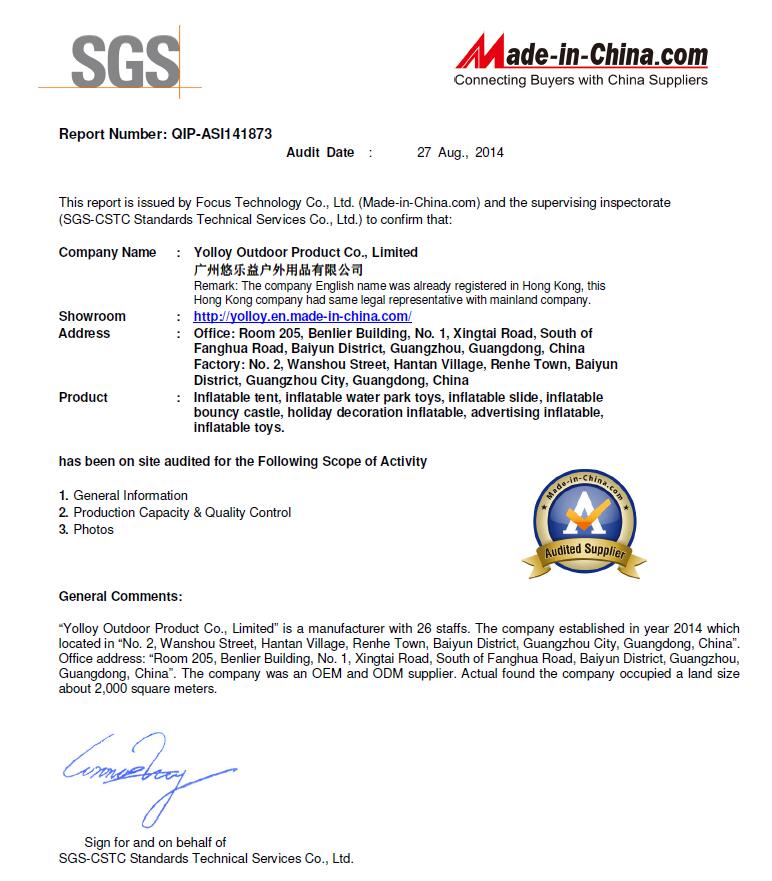
Beyond certifications, the reputation of the manufacturer matters. A factory with years of experience in producing water inflatables will have refined its production processes and quality control systems. For instance, reinforced stitching at high-load areas, double-layer construction at stress points, and the use of waterproof nylon thread all contribute to long-term durability and safety.
Proper Usage and Maintenance
Even the best-built floating tent requires proper usage to remain safe. Here are the most important guidelines:
| Factor | Recommendation |
|---|
| Water depth | At least 1.5 meters to avoid contact with submerged obstacles |
| Wave conditions | Calm to light chop only; avoid open sea with swells above 30 cm |
| Supervision | Adult supervision is essential when children are using the tent |
| Inflation pressure | Inflate to the manufacturer's recommended PSI for full rigidity |
| Cleaning | Rinse with fresh water after each use, especially after saltwater exposure |
| Storage | Dry completely before folding to prevent mildew; store in a cool, dry place |
After use in saltwater, a thorough rinse with fresh water is essential. Salt crystals can accelerate material wear and corrode metal components like D-rings and zippers. Allow the tent to dry fully before packing it away, as trapped moisture can lead to mold growth on the fabric surface.
The Role of Customization in Safety
One of the advantages of working with a specialized manufacturer is the ability to order a custom inflatable tent built to your exact specifications. This is especially relevant for commercial operators — resorts, water parks, and event companies — who need tents that meet specific safety and operational requirements. Customization options include reinforced anchor points for high-wind areas, thicker material for heavy-use environments, custom dimensions to fit a particular pool or dock, and branded colors with UV-stable printing.
The customization process typically involves a design consultation, 3D rendering for approval, and production with consistent quality checks. A well-managed custom order ensures the final product matches the intended use case, which directly contributes to safety.
Common Misconceptions About Floating Tents
There are a few misconceptions that can lead to unsafe usage. The first is that any inflatable tent can be used on water. A standard camping tent, even if it is inflatable, lacks the sealed base, buoyancy, and anchoring hardware needed for water use. Attempting to float a ground tent is dangerous and should be avoided.
Another misconception is that floating tents are inherently unstable. With a properly inflated drop-stitch floor and secure anchoring, a floating tent can be as stable as a small dock. The key is following the manufacturer's setup instructions and not exceeding the recommended weight capacity. Most floating tents designed for 4-6 adults remain stable when evenly loaded.
Some users also assume that PVC material is fragile. In reality, commercial-grade PVC tarpaulin used in quality inflatables is highly resistant to punctures and tears. It is the same class of material used in inflatable boats, rescue equipment, and industrial containment structures. A repair kit is usually included with the product for minor fixes, and with proper care, a floating tent can last for several seasons.
A floating inflatable tent is safe when it is built from the right materials, equipped with a stable base and robust anchor system, and used under suitable conditions with proper supervision. By choosing a product from an experienced manufacturer and following the recommended setup and maintenance guidelines, users can enjoy a secure and enjoyable experience on the water. Whether for a private gathering, a resort attraction, or a commercial event, the safety of a floating tent ultimately comes down to informed purchasing and responsible use.