Inflatable Winter Tents: The Ultimate Cold-Weather Outdoor Event Solution for Your Business
As outdoor events extend beyond the summer months, event organizers, rental businesses, and venue operators are increasingly looking for reliable shelter solutions that can withstand cold temperatures, wind, and snow. An
inflatable winter tent offers a practical, portable, and visually striking alternative to traditional heavy-frame structures — and it sets up in a fraction of the time.
Why Traditional Tents Fall Short in Winter
Conventional pole-and-frame tents, while functional in mild weather, present serious challenges during winter months. Metal frames become brittle in freezing temperatures, canvas covers sag under snow accumulation, and assembly often requires a team of workers spending hours on-site in harsh conditions. For businesses that need to host Christmas markets, New Year celebrations, corporate winter retreats, or seasonal pop-up dining experiences, these limitations translate directly into higher labor costs and logistical headaches.
An inflatable alternative solves all of these problems at once. The air-beam structure naturally sheds snow due to its curved profile, and because there are no rigid poles to snap or corrode, the tent remains structurally sound even when temperatures drop well below freezing. The rapid inflation and deflation cycle means a single installation can be completed far more quickly than traditional frame tents — a game-changer for event businesses operating on tight schedules.
What Makes a Quality Inflatable Winter Tent
Not all inflatable tents are built to handle winter conditions. When sourcing from
inflatable tent manufacturers, there are several material and construction factors that directly determine cold-weather performance.
Material Selection: The tent body should use commercial-grade PVC tarpaulin or heavy-duty Oxford fabric with a waterproof coating. For extreme cold, TPU (thermoplastic polyurethane) offers superior flexibility at sub-zero temperatures compared to standard PVC. The material should have passed relevant safety testing — for instance, EN71 and RoHS compliance indicate the fabric meets international safety and environmental standards.
Seam Construction: Winter tents face additional stress from wind loads and snow weight. High-frequency welding for airtight sections and reinforced double-stitched seams with waterproof nylon thread are essential. Extra reinforcement at high-load connection points prevents seam failure when the tent is under sustained tension.
Anchoring System: D-ring or round metal anchor points distributed around the base perimeter are critical for wind resistance. In winter conditions, these anchors must be paired with ground stakes suitable for frozen soil or weighted base plates for hard-surface installations.
Blower Compatibility: The inflation blower should be rated for continuous outdoor operation and available in 110V, 220V, or 380V configurations to match local power standards. Blowers meeting CE or UL certification requirements provide an extra layer of reliability for commercial use.
Business Applications for Inflatable Winter Tents
The versatility of inflatable winter tents opens up revenue opportunities that traditional event structures simply cannot match. Here are several proven business models where these tents deliver exceptional value:
Winter wedding venues — Create intimate, heated celebration spaces with transparent panels for stargazing, turning cold-weather weddings into a premium offering.
Christmas market stalls and grottoes — Set up festive retail spaces that can be branded with custom logos and artwork printed directly on the tent surface.
Corporate winter retreats and team-building events — Deploy large-capacity tents for dining, presentations, and breakout sessions at ski resorts or mountain lodges.
Seasonal pop-up restaurants and bars — Offer a unique dining experience with clear dome tents that let guests enjoy snowy landscapes while staying warm inside.
Outdoor sports and recreation — Provide shelter for ice-skating rinks, curling events, or winter sports registration and spectator areas.
Emergency and relief shelters — Supply rapid-deployment heated shelters for cold-weather disaster response or temporary medical facilities.
Why Customization Matters for Your Brand
Off-the-shelf tents rarely align perfectly with a business's branding and operational needs. Working with a manufacturer that offers
custom inflatable tent production allows you to specify exact dimensions, choose colors that match your brand identity, and have your logo or artwork printed directly onto the tent fabric. This level of customization transforms a functional shelter into a powerful marketing asset that reinforces brand visibility at every event.
Beyond aesthetics, custom sizing ensures the tent fits your specific venue requirements — whether you need a compact 3-meter cube for intimate gatherings or a spacious 10-meter dome for large-scale celebrations. Some manufacturers can even design entirely new tent shapes based on a sketch, photograph, or site plan, giving you a unique structure that no competitor can replicate.
The YOLLOY Advantage: Quality Manufacturing from Guangzhou
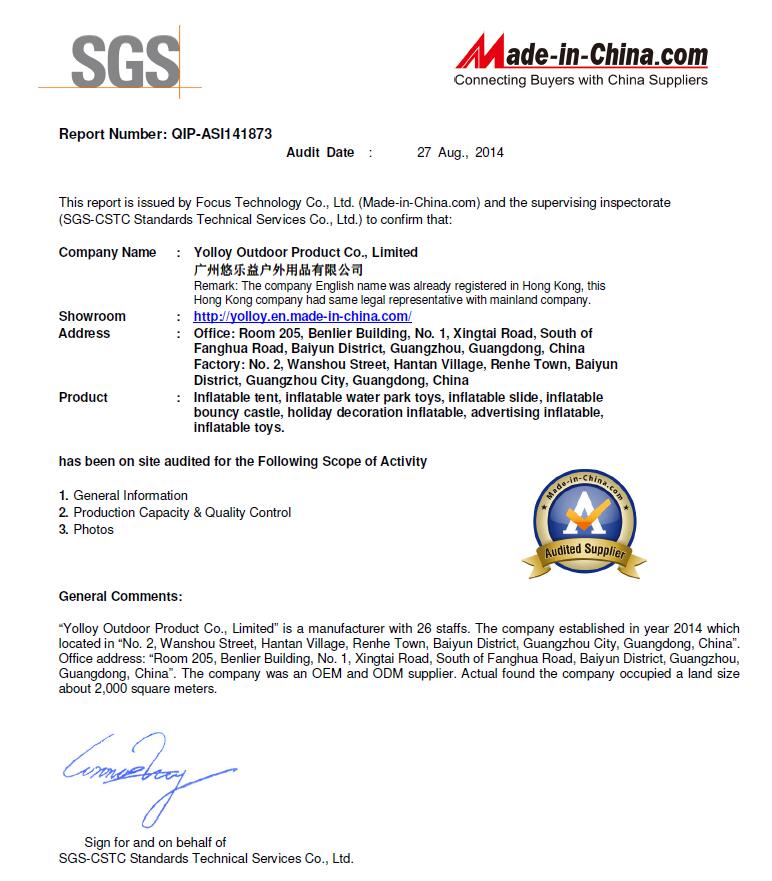
YOLLOY Outdoor Product Co., Limited, based in Guangzhou, China, is a specialized inflatable product manufacturer with extensive experience in designing and producing custom inflatable tents for global markets. The company's product range spans outdoor inflatable tents in cube, tunnel, dome, and shelter configurations, as well as clear dome tents, party tents, sports tents, and more — all of which can be adapted for winter use.
Key Advantages of Partnering with YOLLOY:
• Custom design-to-production workflow — from your initial concept or sketch to factory-ready production files
• Materials that have passed EN71, EN14960, and RoHS testing
• CE/UL-compliant blowers supplied in 110V, 220V, or 380V configurations
• Minimum order quantity of just one piece — ideal for testing new concepts
• Typical production time of 6–15 days for regular products
• Repair kit included with every inflatable product
• 95% on-time delivery rate with air and sea shipping options available
• Products exported to Europe, Asia, South America, Africa, the Middle East, and Latin America
What to Look for in a Winter Tent Supplier
When evaluating potential suppliers for your inflatable winter tent investment, consider these factors beyond the base price:
Quality assurance process: Does the manufacturer inspect and test every product before shipment? Look for suppliers that conduct inflation tests, seam integrity checks, and material inspections as standard procedure.
Packaging and protection: Winter tents often travel long distances. Proper packaging with soft carpet protection, waterproof PVC bags, and reinforced outer wrapping prevents transit damage.
After-sales support: A repair kit should be included, and the supplier should be responsive to inquiries. YOLLOY states that emails are answered within 24 hours — a standard worth insisting on.
Warranty and service life: When properly maintained, a commercial-grade inflatable tent should deliver reliable service for at least three years. Confirm the warranty terms before committing to a purchase.
Shipping logistics: Air freight typically takes 5–7 days, while sea freight takes 15–30 days or more. Plan your order timeline accordingly, especially for seasonal winter events.
Ready to expand your event business with custom inflatable winter tents? Contact YOLLOY today to discuss your requirements. Whether you need a single custom tent or a full fleet for your rental operation, the team can design a solution that matches your specifications, budget, and timeline. Reach out at
[email protected] or call
+86-20-8370 0771 to start the conversation. Visit
www.yolloy.net to explore the full product range and see how custom inflatable solutions can transform your winter event offerings.