When event organizers and rental business owners think about temporary shelter, traditional pole tents and marquee structures often come to mind first. But the event industry is shifting — and fast. A growing number of planners are discovering that an
inflatable tent for events delivers everything a classic marquee does, plus advantages that old-school structures simply cannot match. From trade shows and product launches to weddings, sports tournaments, and emergency response operations, inflatable event tents are proving their value across every sector.
The reason is simple: inflatable structures combine speed, portability, branding flexibility, and weather performance in a way that frame tents and pole tents cannot. If you have been on the fence about whether inflatable event tents are right for your business or your next event, this guide breaks down what you need to know — the advantages, the use cases, the quality criteria, and how to choose the right manufacturer.
What Makes Inflatable Event Tents Different From Traditional Structures?
A traditional marquee tent relies on a network of metal poles, guy ropes, and heavy ground anchors to stay upright. Setting one up can take an entire crew most of a day, especially for larger sizes. An
outdoor inflatable tent, by contrast, uses pressurized air as its structural support. High-strength PVC tarpaulin chambers are inflated by an electric blower, and the entire structure goes from a compact storage bag to a fully erected event space in roughly the time it takes to brew a pot of coffee.
This fundamental difference — air-supported structure versus rigid frame — cascades into every other advantage. Fewer parts mean fewer things that can break. Lighter total weight means lower shipping costs and easier handling. Continuous air pressure means the structure distributes wind loads evenly rather than concentrating stress on a handful of joints. The result is a shelter that is faster to deploy, easier to transport, and surprisingly durable.
Core Differences at a Glance:
• Inflatable tents use air pressure for structural support; traditional tents use metal frames
• Inflatable setup takes minutes; marquee setup takes hours and a crew
• Inflatable tents pack into a single bag; marquees require multiple crates or trucks
• Inflatable structures have no sharp metal parts inside, improving guest safety
• Custom shapes and branding are easier with inflatable construction
Seven Compelling Advantages of Inflatable Tents for Events
1. Lightning-Fast Setup and Takedown
Time is the most precious resource at any event. An inflatable party tent can be fully operational in 10 to 20 minutes with just one or two people and a standard electric blower. When the event ends, deflation and repacking are equally fast. This is a game-changer for event rental companies, who can turn over more events per week with smaller crews, and for pop-up activations where the setup window is measured in minutes, not hours.
2. Unmatched Portability
An inflatable event tent of the same footprint as a traditional marquee weighs a fraction as much and packs into a compact carry bag. This means a single van can transport what used to require a truck. Smaller transport volume also cuts international shipping costs for buyers sourcing from overseas manufacturers — a major consideration for businesses building rental fleets or reselling event equipment.
3. Built-In Branding Opportunities
The smooth, continuous surface of an inflatable tent is a blank canvas for your brand. Logos, graphics, full-color artwork, and custom color schemes can be printed directly onto the PVC tarpaulin during manufacturing. For trade show booths, product launches, and marketing activations, this means your shelter is also your largest piece of signage — no separate banners or fabric wraps required.
4. Versatility Across Event Types
From cube-shaped exhibition booths to dome-shaped VIP lounges, tunnel-shaped sports entrances to car-shaped display structures, inflatable event tents come in far more shapes than traditional rectangular marquees. This design freedom lets event planners match the structure to the experience they want to create, rather than forcing the event to fit the tent.
5. Weather-Resistant Performance
Quality commercial inflatable tents are made from waterproof, UV-resistant PVC tarpaulin and are engineered to handle wind, rain, and temperature variations. D-ring or round metal anchor systems, when properly secured, provide the wind resistance needed for outdoor events. The curved surfaces of inflatable domes and arched tents shed rain and snow more efficiently than flat-topped marquees, reducing the risk of water pooling and structural stress.
6. Guest Comfort and Safety
Without internal poles, metal frames, or guy ropes running through the usable space, inflatable tents provide a clear, unobstructed interior. There are no trip hazards inside, no low-hanging beams to duck under, and no center poles blocking sightlines. For events involving children — such as bounce houses and interactive play areas — the soft inflatable surfaces are inherently safer than rigid structures.
7. Cost Efficiency
When you factor in faster setup (lower labor costs), easier transport (lower logistics costs), and durable multi-season construction, inflatable event tents deliver a lower total cost of ownership than many traditional alternatives. And because they support custom branding and unique shapes, they can also command higher rental rates — boosting your revenue per event.
Who Uses Inflatable Event Tents — and For What?
The range of industries adopting inflatable event structures continues to expand. Here are some of the most common applications, along with the specific inflatable types that work best for each.
| Industry / Use Case |
Recommended Inflatable Type |
Why It Works |
| Trade shows and exhibitions |
Cube tent, custom branded booth |
Quick setup; full-wall branding; professional appearance |
| Weddings and parties |
Dome tent, party tent, clear bubble tent |
Elegant shapes; no internal poles blocking views |
| Sporting events |
Sports dome, inflatable arch, tunnel tent |
Weather protection; branded team entrances; spectator shelter |
| Emergency and disaster relief |
Shelter tent, medical tent, workshop tent |
Rapid deployment; portability to remote areas |
| Product launches and brand activations |
Custom-shaped structure, advertising inflatable arch |
High visual impact; fully customizable shapes and logos |
| Car detailing and spray booths |
Inflatable spray booth, airtight tent |
Portable workspace; controlled environment; easy relocation |
| Golf simulators and indoor sports |
Golf simulator tent, inflatable sports dome |
Climate-controlled enclosure; quick installation anywhere |
This is only a partial list. Inflatable structures are also used for movie screenings (with
inflatable projection screen setups), paintball arenas, seasonal retail pop-ups, food festivals, and military field operations. The common thread is a need for temporary, high-quality shelter that goes up fast and looks great.
How to Evaluate an Inflatable Tent Manufacturer: Nine Quality Checks
Buying an inflatable event tent is a business investment, and not all manufacturers deliver the same level of quality. If you are sourcing from a
China inflatable manufacturer or comparing suppliers from different regions, here is what to look for before you place an order.
Material quality and certification. Commercial-grade PVC tarpaulin is the standard for inflatable tents. Verify that the material meets relevant safety standards — EN71 for general inflatable products, EN14960 for inflatable play equipment, EN15649 for water-related products, and RoHS for non-toxic materials. These certifications are not optional; they are your baseline for safety and regulatory compliance.
Seam construction. For sewn products, look for precision sewing with reinforced seams at all high-stress points and waterproof nylon thread. For airtight products (such as spray booth tents and air-supported domes), high-temperature fusion welding creates bonds stronger than the material itself. Ask the manufacturer to describe their seam process — a reputable supplier will be transparent about it.
Blower quality and certification. The blower is the heart of any inflatable tent. It should be CE or UL certified, and it should support the voltage used in your market (110V, 220V, or 380V). A weak or unsafe blower will not only shorten the life of your tent but also create a safety hazard.
Custom design capability. One of the biggest advantages of inflatable structures is customization. A good manufacturer should be able to work from sketches, photos, site plans, or even verbal descriptions to create a design that meets your exact requirements. They should provide simulation renderings before production begins and allow for design revisions.
Anchor and wind-resistance systems. D-ring or round metal anchor points should be integrated into the base of the tent for proper tie-down. The manufacturer should be able to advise you on wind ratings and the appropriate anchoring method for your location and tent size.
Production and delivery timeline. A standard inflatable product typically takes 6 to 15 days to produce, with complex custom projects taking longer. A manufacturer that can give you a clear, realistic timeline — and has a track record of on-time delivery — is worth its weight in gold. Look for a stated on-time delivery rate of 95% or higher.
Packaging for protection. Quality products deserve quality packaging. Look for multi-layer protection: soft carpet wrapping, waterproof PVC bags, and outer PE film for transit. Large products should be palletized on steel pallets to prevent damage during shipping.
After-sales support and warranty. What happens if something goes wrong? A responsible manufacturer includes a repair kit with every product, provides clear care instructions, and stands behind their work. A three-year service life expectation, under proper use and maintenance, is a reasonable benchmark for commercial-grade inflatable products.
Responsive communication. Email response time matters, especially when you are working across time zones. A manufacturer that answers inquiries within 24 hours and provides clear, detailed information is more likely to be reliable throughout the production and delivery process.
The Custom Design Process: From Your Idea to a Finished Tent
One of the most exciting aspects of working with a custom inflatable manufacturer is the design freedom. You are not limited to catalog sizes and shapes. Here is how the process typically works.
It starts with your idea. You might have a detailed CAD drawing, a hand-drawn sketch, a photo of something you like, a site plan with specific dimensions, or just a verbal description of what you want to achieve. The design team takes your input and creates digital simulation renderings that show exactly how the finished tent will look, including proportions, colors, and branding placement.
You then review the renderings and request any changes — whether that means adjusting the size, tweaking the color, moving a door, or refining the logo placement. The design goes back and forth until you are completely satisfied. Only after you give final approval does production begin. And with a minimum order quantity of just one piece, you do not have to commit to a large volume to get a fully custom product.
Customization Options You Can Specify:
• Exact dimensions and overall shape (cube, dome, tunnel, arch, custom organic forms)
• Color matching to your brand palette
• Logo and graphic printing on any surface
• Door size, window placement, and skylight options
• Interior features like LED lighting integration
• Material type (PVC tarpaulin, Oxford fabric, nylon, TPU) based on your use case
• Blower voltage and plug type for your market
Maximizing the Lifespan of Your Inflatable Event Tent
A well-built inflatable event tent is designed for years of commercial use, but how you care for it directly affects how long it lasts. Follow these best practices to get the most out of your investment.
Clean it properly. Wipe down the PVC tarpaulin with a mild soap solution and a soft cloth after each use. Never use harsh chemicals, abrasive cleaners, or high-pressure washers, as these can damage the material and the seams.
Store it dry. Always make sure the tent is completely dry before packing it away for storage. Storing a damp inflatable promotes mold and mildew growth, which can weaken the material and cause odors.
Anchor it correctly. Always use the proper anchoring system for the tent size and wind conditions. Never exceed the manufacturer's recommended wind rating. Taking the tent down in severe weather is better than risking damage.
Use the right blower. Always use the blower specified by the manufacturer. Using an underpowered blower will not properly inflate the tent, and an overpowered one can strain the seams.
Keep a repair kit on hand. Small punctures and tears happen. With the included repair kit — patches and adhesive — most minor damage can be fixed on-site in minutes, preventing it from growing into a larger problem.
With proper care and maintenance, a commercial-grade inflatable tent can deliver reliable performance for three years or more. When spread across dozens or hundreds of events, the cost per use is remarkably low — making inflatable event tents one of the smartest investments in the events and rental industry.
Getting Started With Your First Inflatable Event Tent
If you are ready to explore what inflatable event tents can do for your business, the best first step is to talk with a manufacturer that specializes in custom inflatable solutions. Share your event type, your space requirements, your branding needs, and your budget. An experienced manufacturer can recommend the right tent style, size, and features for your specific situation — and they can often create a custom design that fits your budget.
Remember that the cheapest option is rarely the best value. A tent that fails after one season, leaks air through poor seams, or arrives without proper safety certifications is not a bargain. It is a liability. Invest in quality from a manufacturer you can trust, and your inflatable event tent will pay for itself many times over.
Ready to Upgrade Your Event Shelter Game?
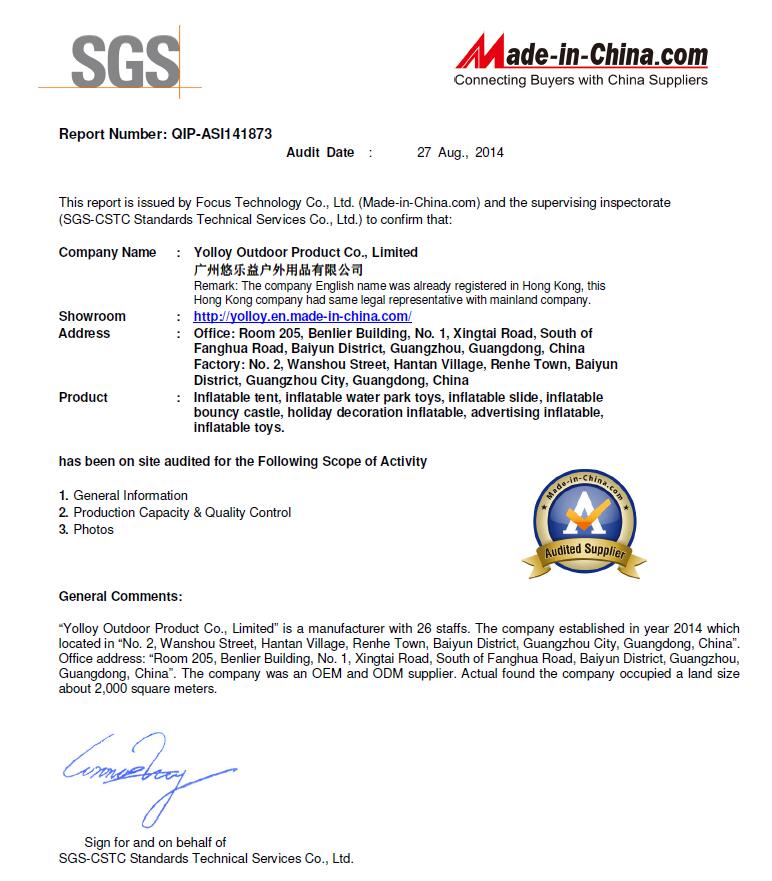
YOLLOY Outdoor Product Co., Limited designs and manufactures custom inflatable tents and structures for events, exhibitions, weddings, sports, emergency response, and more. With commercial-grade PVC tarpaulin, internationally certified materials and blowers, precision construction, and a custom design process that starts with your vision, we build inflatable solutions that perform as good as they look.
Whether you need a single branded trade show booth or a full fleet of event rental tents, our team is ready to help. Contact us today to discuss your project, request a free design rendering, and get a quote tailored to your needs.