July 17, 2026
An inflatable water park is one of the fastest ways to turn a lake, beachfront, or open water area into a revenue-generating attraction. Compared with permanent concrete structures, inflatable parks cost less to install, take less time to set up, and can be reconfigured or expanded as your business grows. Whether you run a resort, a seasonal campground, or a municipal recreation area, an inflatable water park can bring in families, school groups, and tourists with minimal upfront risk.
Step 1: Clarify Your Target Audience and Goals
Before you start comparing products, take a step back and think about who will use your park. Are you building a high-energy obstacle course for teenagers and young adults? A gentle floating play area for families with young children? Or a mixed zone that serves both?
Your answer shapes every decision that follows. A family-oriented park might lean toward shallow pools, slides, and bounce areas. An adventure-focused park might prioritize floating platforms, climbing elements, and balance beams. Being clear about your audience also helps you decide on capacity, lifeguard requirements, and the overall size of your installation.
Step 2: Evaluate Your Water Site
The physical characteristics of your site matter a great deal. You will want to check water depth, wave conditions, and bottom composition. Most inflatable water attractions work well in depths of 1.2 to 3.5 meters, but the exact requirement depends on the specific products you choose. Lakes, reservoirs, calm sea bays, and large swimming pools can all work — what matters is that the water is stable enough for safe operation and that you have a reliable anchoring system in place.
Accessibility is equally important. Think about how guests will reach the water, where they will change clothes, and how lifeguards will monitor the area. A site that is easy to reach and well-supervised is a site that will attract more visitors.
Step 3: Choose the Right Products for Your Park
The product selection is where your park truly takes shape. A well-rounded inflatable floating water park typically includes several categories of equipment working together:
Floating platforms and walkways — These connect different sections of the park and give guests a place to rest between activities. They also serve as launch points for slides and climbing elements.
Water slides and slip-and-slides — Commercial-grade inflatable slides bring the thrill factor. They come in various heights and lane configurations, and can be placed on land or directly on the water.
Climbing walls and obstacle courses — These add physical challenge and replay value. Guests come back to beat their own time or compete with friends.
Water balls, rollers, and zorb balls — These individual play items are popular with younger guests and make great add-on attractions.
Bounce houses and splash pools — For parks with a shallow-water or dry-land section, bounce houses and inflatable pools expand the age range you can serve.
The key is variety. A park that offers only one type of activity will see guests leave sooner and return less often. A mix of physical challenges, sliding fun, and relaxed floating areas keeps different age groups engaged for longer.
Step 4: Understand What Goes into Quality Manufacturing
Not all inflatable products are built the same way. When you are investing in equipment that will sit in water, sun, and wind for months at a time, material quality is the difference between a park that lasts three seasons and one that needs constant repairs.
The best inflatable water park products are made from commercial-grade PVC tarpaulin, which resists UV damage, saltwater corrosion, and repeated impact. Seams should be heat-welded rather than glued, and high-stress areas — such as anchor points, climbing grips, and slide entry zones — need extra reinforcement. Look for products that have been tested to recognized safety standards such as EN 14960 and EN 15649, which cover inflatable play equipment and floating leisure articles respectively.
Working with an experienced China inflatable manufacturer gives you access to these production standards at a competitive price point. A good manufacturer will use precision sewing equipment, waterproof nylon thread, and high-temperature fusion welding to produce airtight, durable products. They should also provide blowers with the appropriate voltage for your region — 110V, 220V, or 380V — and supply a repair kit with every product shipped.
Step 5: Plan for Customization and Branding
Your water park should look like your park, not a generic copy of someone else's. The ability to customize colors, print your logo, and tailor product sizes to your specific site is a major advantage of working with a manufacturer that handles custom orders.
Customization goes beyond aesthetics. You might need a slide that fits a specific shoreline slope, a floating platform shaped to match your bay, or a themed bounce house that ties into your resort's branding. A manufacturer that accepts custom designs from a simple sketch, photograph, or site plan can build exactly what you need — and the minimum order quantity can be as low as one piece.
Step 6: Handle Installation, Training, and Maintenance
Once your products arrive, the work of setting up and operating the park begins. Installation should be straightforward: most inflatable products come with detailed instructions, and the blower system means inflation is fast. Anchoring is the critical step — products should use D-ring or round metal anchor systems that secure firmly to the lakebed, seabed, or pool floor.
On the maintenance side, daily cleaning and visual inspection go a long way. Look for tears, check anchor tension, and keep the blowers free of debris. A repair kit (supplied by good manufacturers with every product) lets you handle small punctures on the spot. With proper care, a well-made inflatable product can deliver a service life of around three years under regular commercial use.
Staff training is non-negotiable. Lifeguards and operators need to know the layout of every module, understand capacity limits, and follow clear emergency procedures. A well-trained team not only keeps guests safe — it also makes the park feel professional and well-run, which keeps visitors coming back.
What to Look for in a Manufacturer
Choosing the right supplier has a direct impact on your park's success. Here are a few things to look for when evaluating a manufacturer:
Product range — Can they supply everything you need from one source? Platforms, slides, bounce houses, water balls, and advertising inflatables should all be available.
Material certifications — Ask about EN71, EN14960, EN15649, RoHS, CE, and UL compliance. These certifications confirm that materials and blowers meet international safety and environmental standards.
Customization capability — Can they work from your design, logo, and site measurements? A flexible manufacturer saves you from compromising on your vision.
Production and delivery time — For a typical custom inflatable product, production can take anywhere from 6 to 15 days, with air shipping adding another 5 to 7 days and sea shipping taking 15 to 30 days or more. A manufacturer with a track record of on-time delivery (95% or better) keeps your project on schedule.
Packaging quality — Products should arrive in good condition, packed with soft carpet protection, waterproof PVC bags, and outer PE film. Large items may ship on steel pallets for extra protection.
Ready to Start Your Inflatable Water Park Project?
Building an inflatable water park is a practical, profitable way to add a major attraction to your venue. Whether you are planning a floating obstacle course on a lake, a series of commercial slides for a beachfront resort, or a complete water play zone for a municipal park, the right products and the right manufacturing partner make all the difference.
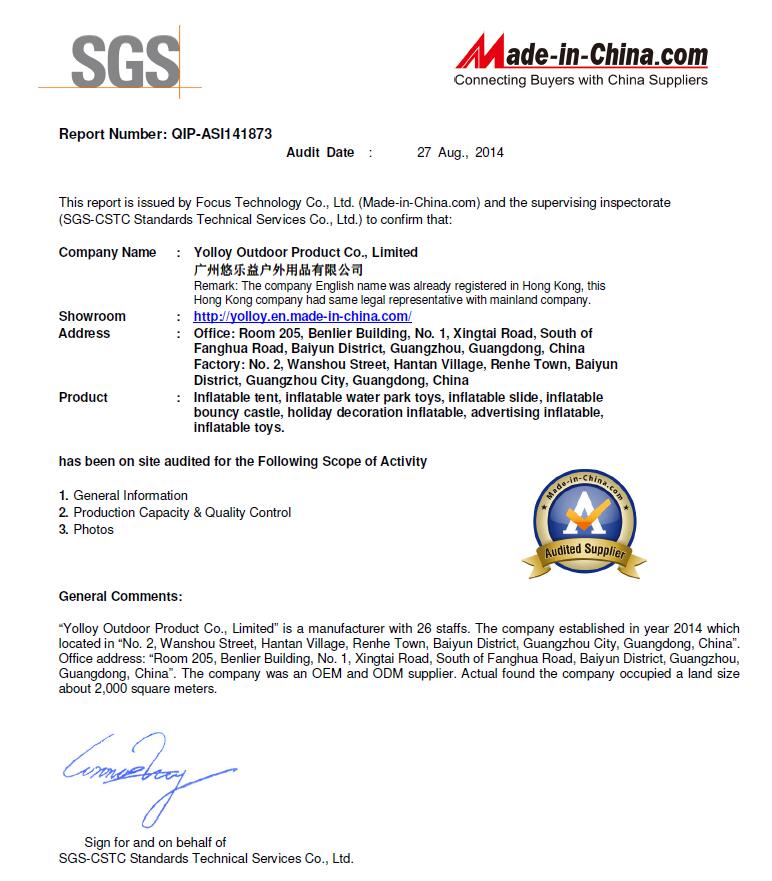
YOLLOY Outdoor Product Co., Limited designs and manufactures a full range of inflatable water park equipment — from floating platforms and slides to water balls, bounce houses, and custom inflatable pools. Every product is built with commercial-grade PVC tarpaulin, heat-welded seams, and reinforced stress points, backed by EN and CE safety certifications. Custom sizes, colors, and logos are available, and the minimum order quantity is just one piece. To discuss your project, get a quote, or request a design rendering, contact YOLLOY at [email protected] or call +86-20-8370 0771.
|