Imagine walking into a transparent dome where the sky above feels close enough to touch, yet you are shielded from wind, rain, and insects. That is the promise of the inflatable bubble tent — a structure that has moved far beyond its novelty origins to become a serious tool for event planners, glamping operators, and brand marketers. In this guide, we break down what makes these domes work, where they add real value, and how to evaluate a supplier if you are considering a purchase for commercial use.
What Exactly Is an Inflatable Bubble Tent?
An inflatable bubble tent is a freestanding, air-supported structure made from clear or semi-transparent flexible film. Unlike traditional pole-supported tents, it uses a continuous-flow blower to maintain internal pressure, which holds the shape of the dome without any internal frames or poles. The result is an unobstructed, 360-degree panoramic space that feels open to the outdoors while remaining fully enclosed.
The concept first drew public attention through boutique glamping sites in Europe, where guests would sleep under the stars inside a see-through sphere. Today, the category has expanded dramatically. Inflatable dome tent designs are used for pop-up retail, wedding ceremonies, corporate activations, golf simulators, dining pods, children's play areas, and even emergency medical shelters.
Key difference: bubble tents use continuous blower pressure to stay inflated, while sealed air domes hold air like a mattress and require no ongoing power. Both are available from quality manufacturers.
Why Businesses Are Buying These Domes
The commercial appeal comes down to three qualities that traditional tent structures struggle to match: visual impact, speed of setup, and versatility.
1. They Stop People in Their Tracks
A glowing transparent dome at an event is impossible to ignore. For brand activations, product launches, and trade shows, a custom-printed dome acts as both a shelter and a giant billboard. Even without printing, the shape alone generates foot traffic and social media shares — a form of earned media that fabric-sided rectangular tents simply cannot match.
2. Setup Takes Hours, Not Days
A standard event marquee can require a crew and half a day of labor. A well-made inflatable dome can be unpacked, rolled out, and fully inflated in under two hours by two people. This is a game-changer for one-day activations, weekend festivals, and pop-up concepts where fast turnaround directly affects profitability.
3. One Structure, Many Uses
The same dome can serve as a inflatable party tent on Saturday, a yoga studio on Sunday, and a promotional booth at a trade fair the following week. Unlike fixed constructions, inflatable domes pack down into a compact bag for transport and storage, making them a flexible asset for rental companies and multi-venue operators.
Top Commercial Applications
If you are trying to justify a purchase, consider which of these use cases maps to your business:
| Industry |
Use Case |
Why It Works |
| Hospitality & Glamping |
Guest accommodation, star-gazing suites |
Instagrammable, low construction cost, seasonal deployment |
| Event Rental |
Weddings, corporate parties, festivals |
Fast setup, reusable, premium pricing vs. standard tents |
| Retail & Marketing |
Pop-up stores, brand activations, sampling booths |
High visual impact, customizable printing, relocatable |
| Sports & Leisure |
Golf simulators, gym pods, spectator lounges |
Weather-protected, clear sightlines, portable |
| Emergency & Relief |
Medical triage, temporary shelter, decontamination |
Rapid deployment, air-tight options available |
What to Look for in a Quality Dome
Not all inflatable domes are built the same. When evaluating suppliers, pay close attention to the following details — they are the difference between a structure that lasts for years of commercial use and one that leaks, tears, or fails on your first event.
Material Grade
Commercial-grade structures use reinforced PVC tarpaulin for the opaque sections and durable TPU or PVC film for transparent panels. Budget consumer domes may use thin plastic that yellows, stretches, or tears after a few uses. Look for material specifications and ask about thickness, UV resistance, and cold-crack performance if you operate in a variable climate.
Blower System
Continuous-inflation domes run on a blower 24/7. The blower must be appropriately sized for the dome volume, quiet enough for hospitality settings, and rated for the correct voltage in your market (110V, 220V, or 380V). Reputable inflatable tent manufacturer suppliers include blowers that meet CE or UL electrical safety standards.
Seams and Reinforcements
Airtight products are welded with high-temperature fusion equipment; sewn products use precision sewing with reinforced seams at high-load points. D-ring or metal anchor systems should be integrated into the structure, not glued on as afterthoughts. Weak anchors are the most common cause of wind damage.
Certifications and Testing
Look for products that have passed relevant standards such as EN71, EN14960, and RoHS testing for inflatable structures. Blowers with CE or UL certification indicate electrical safety. For commercial rental operations, these certifications are not just marketing claims — they are often required by venue contracts and insurance policies.
Customization: The Real Competitive Advantage
Off-the-shelf domes work for basic applications, but the real commercial value unlocks when you customize. A capable custom inflatable dome partner can adjust size, shape, color, transparency level, door configuration, and branding to match your exact needs.
Here is what customization typically covers:
- Size and proportions — from compact 3-meter pods to 20-meter event domes
- Color and printing — full-color digital printing of logos, artwork, and patterns
- Transparency options — fully clear, partially frosted, or fully opaque panels
- Door and access — zipper doors, tunnel entrances, airlock-style entryways
- Interior features — floor mats, lighting hooks, equipment pockets, cable pass-throughs
The best manufacturers will work from a sketch, a photo, a site plan, or even a rough description. Minimum order quantities of one piece are standard for custom work at experienced factories, which means small businesses can access the same design flexibility as large brands.
Care, Maintenance, and Expected Lifespan
A well-cared-for commercial inflatable dome can serve you for years. The site FAQ at most manufacturers references a three-year service life when products are used and maintained correctly, but actual lifespan depends heavily on how often you set it up, the conditions it operates in, and how carefully it is stored.
Basic best practices include:
- Always clean and fully dry the structure before packing — moisture causes mold and material degradation
- Inspect seams and anchors before each setup, especially after windy events
- Use the ground sheet or protective floor to prevent abrasion from rough surfaces
- Store in a cool, dry location away from direct sunlight and rodents
- Keep a repair kit on hand for small punctures — most suppliers include one with each product
How to Choose the Right Supplier
The inflatable products market has no shortage of sellers, and price ranges vary wildly. Before you commit to a purchase, evaluate potential suppliers on these criteria:
- Factory experience — how long have they been manufacturing inflatables?
- Custom design capability — do they have in-house designers who can create renderings from your proposal?
- Quality documentation — can they provide material test reports, certification numbers, and blower specifications?
- Production timeline — standard products may ship in days; custom builds typically take 6 to 15 working days depending on complexity
- Shipping and packaging — do they use proper protective packing (carpet, PVC bags, PE film, pallets for large items)?
- Communication — do they respond within 24 hours? Clear communication is the best predictor of a smooth order
- On-time delivery record — manufacturers that consistently meet deadlines are worth a slight price premium
The Bottom Line
Inflatable bubble domes have matured from a glamping novelty into a versatile commercial asset. Whether you run an event rental company, a hospitality property, a marketing agency, or a sports facility, a well-made inflatable dome can generate revenue through premium pricing, repeat bookings, and word-of-mouth promotion. The key is buying from a manufacturer that treats your structure as a custom solution — not a commodity product pulled from a warehouse shelf.
If you are still early in the research phase, start by defining your primary use case, measuring the available space, and sketching out what you want the dome to do. Then reach out to a supplier with experience in your industry and ask for a rendering. Most reputable factories will produce a design mockup before you commit to production, so you can see exactly what you are getting before you invest.
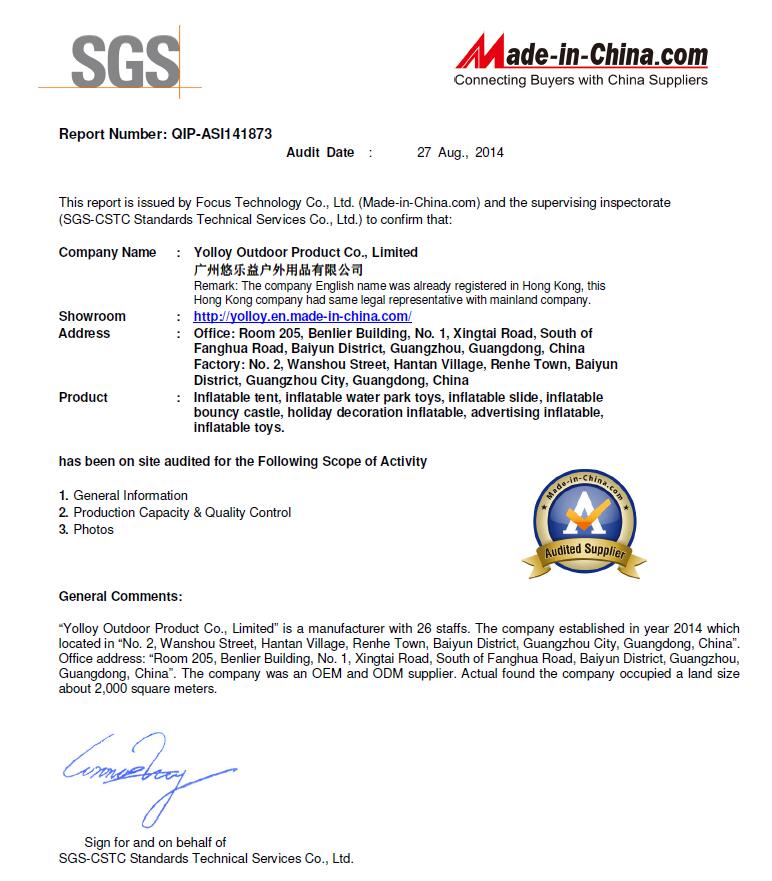
Ready to explore custom inflatable domes for your business? YOLLOY Outdoor Product Co., Limited designs and manufactures commercial-grade inflatable tents, clear domes, water parks, and interactive sports equipment from its factory in Guangzhou, China. With custom design-to-production service, CE/UL-rated blowers, EN71 and EN14960 compliant materials, and a 95% on-time delivery rate, YOLLOY serves event, hospitality, and advertising clients across Europe, Asia, the Americas, and the Middle East. Request a design proposal and rendering at yolloy.net.
|