Products Category
Certification

News

• New Order Successfully Finished for Long-Time Cooperated Japanese Client | YOLLOY Wins Full Client Recognition

• YOLLOY Custom Inflatable Pool Tent for Danish Client: Professional Pool Repair Shelter & Debris Protection

• Trusted Once Again! Greek Captain Re-orders Our Products After 4 Years

• Revolutionize Your Outdoors: The All-Terrain Inflatable Floating Tent for Land & Water

• Elevate Your Summer Fun: The Ultimate Inflatable Water Floating Volleyball Court Trampoline

• Innovative Inflatable Nightclub Tents & Pop-Up Bars: The Ultimate Solution for Portable Party Venues

Contact Us

Name: Sunny Yang
Tel: +86-20-8370 0771
Fax: +86-20-8370 0771
Mobile: 13570587575
E-mail: sales@yolloy.com
Add: No 5,Xiong wei Bo Nan Road,ZhongLuoTan Town,Baiyun district,Guangzhou,China
Friend me on Facebook Follow me on Twitter Add me to your circles Follow me on Pinterest Watch my channel on YouTube
News

How to Launch a Profitable Inflatable Water Park Business in 2026: A Step-by-Step Guide

Author:yolloy Date:2026/8/4 20:46:56

Summer after summer, water-based entertainment draws crowds like nothing else. Families, teens, and corporate groups all seek ways to cool off, laugh, and make memories together—and that is exactly where a well-run inflatable water park shines. Unlike permanent water parks that demand millions in construction and years of permitting, an inflatable water attraction lets entrepreneurs enter the market at a fraction of the cost and start earning revenue within weeks. If you have been thinking about launching your own inflatable water park business in 2026, this step-by-step guide walks you through everything you need to know, from market research and product selection to safety standards and long-term profitability.

Step 1: Validate the Market and Define Your Niche

Before purchasing any equipment, take the time to understand who your customers will be and where they will come from. Inflatable water parks serve a surprisingly wide range of audiences, and picking the right niche shapes every other decision you make.

  • Resort and hotel operators add floating water features to upgrade the guest experience and justify higher nightly rates.
  • Municipal parks and campgrounds use inflatable attractions to increase visitor numbers during peak summer months.
  • Event rental companies offer inflatable water slides and obstacle courses for birthday parties, school fairs, and corporate team-building days.
  • Shopping centers and family entertainment centers install seasonal water attractions to drive foot traffic and extend dwell time.
  • Beach clubs and lakeside venues deploy floating aqua parks as their headline summer draw.

Spend a few weeks mapping out the competition in your target area. Check which venues already have water attractions, what they charge, and what seems to be missing. Often the best entry point is a gap in the market—for example, a city with several public pools but no dedicated inflatable aqua park, or a coastal area where only one operator offers floating water play.

Step 2: Choose the Right Product Mix for Your Venue

The product lineup you choose depends on your available space, target audience, and budget. A commercial inflatable water park is not a single item—it is a modular system of interconnected attractions that you can mix, match, and expand over time.

Here are the core product categories to consider:

  • Floating aqua parks: Interconnected climbing walls, balance beams, trampolines, and slides designed to be anchored on lakes, bays, or large pools. Ideal for lakeside resorts and beach destinations.
  • Inflatable water slides: Available in single-lane, double-lane, and multi-lane configurations. Some models are standalone units for dry-land pools, while others integrate into floating park systems.
  • Water obstacle courses: Race-style courses with multiple challenge stations that appeal to both children and adults, making them a top choice for competitive events and rentals.
  • Water balls and zorb balls: Transparent inflatable spheres that let people walk or roll on water. A classic crowd-pleaser for festivals and malls.
  • Floating platforms and pool bars: Relaxation-focused products such as swim platforms, inflatable loungers, and floating pool bars that complement more active attractions and extend guest stay time.
  • Inflatable swimming pools: Self-contained round or rectangular pools that can be set up on any flat surface, perfect for venues without natural water access.

Pro tip: Start with a core set of 3–5 high-impact attractions rather than buying a massive park all at once. Modular design means you can add more units each season as revenue grows, reducing your upfront risk.

Step 3: Budgeting and Revenue Planning

One of the biggest advantages of an inflatable water park business is the relatively low entry cost compared with permanent attractions. Still, you need a clear picture of both startup costs and ongoing expenses.

One-time startup costs include:

  • Inflatable products and blowers
  • Anchoring and safety equipment
  • Transportation and shipping
  • Business registration and insurance
  • Initial marketing and branding

Ongoing costs include:

  • Staff wages (lifeguards, attendants, maintenance)
  • Water supply and treatment (if applicable)
  • Electricity for blowers and lighting
  • Marketing and seasonal promotions
  • Repair and maintenance supplies
  • Storage during off-season months

On the revenue side, there are multiple income streams to tap into: general admission tickets, hourly rentals, birthday party packages, corporate event bookings, group discounts, season passes, food and beverage concessions, and merchandise sales. Many operators find that combining two or three revenue streams dramatically improves profitability compared with relying on ticket sales alone.

Step 4: Select a Reputable Manufacturer

Your manufacturer is the single most important partner in your business. Quality, safety, delivery time, and after-sales support all depend on who you buy from. When evaluating inflatable water park suppliers, look for the following markers of reliability:

  • Custom design capability: A manufacturer that can create custom layouts, sizes, and branded artwork gives you a competitive edge over operators who only stock off-the-shelf products.
  • Safety certifications: Products should meet EN 14960 for inflatable toys, EN 15649 for water park equipment, EN71, and RoHS material standards. Blowers should be CE or UL certified.
  • Material quality: Commercial-grade PVC tarpaulin is the industry standard for water park products because of its strength, UV resistance, and waterproof properties.
  • Production transparency: Clear timelines, pre-shipment inspection, and responsive communication within 24 hours are signs of a well-run factory.
  • Low minimum order quantity: A manufacturer that accepts orders of just one piece gives you flexibility to test new products without overcommitting.
  • After-sales support: Look for repair kits included with each product and a manufacturer that stands behind its work with clear warranty terms.

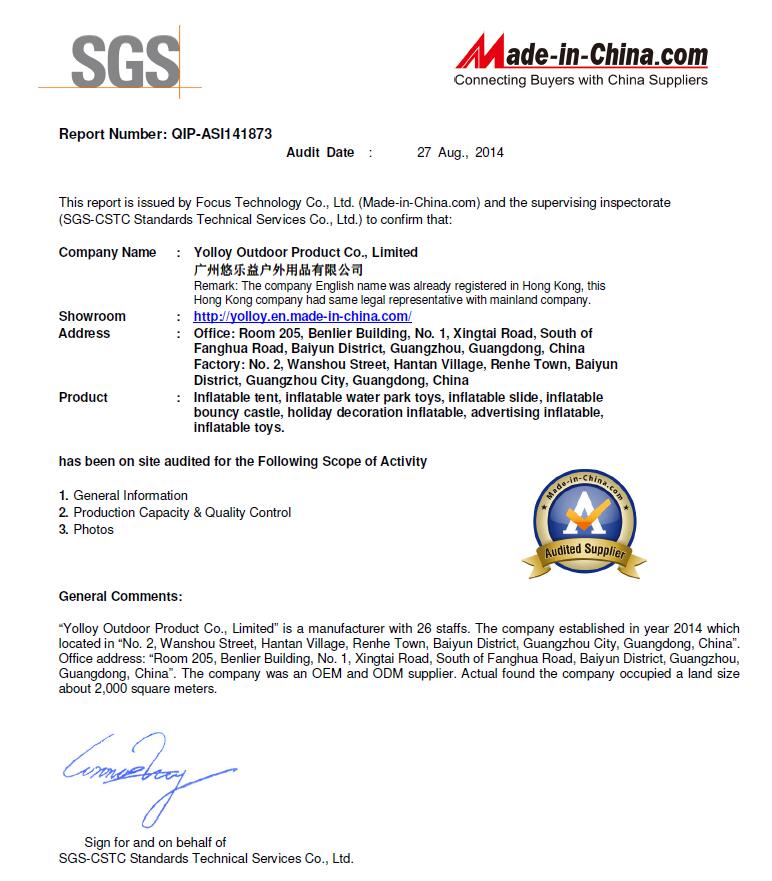
YOLLOY Outdoor Product Co., Limited, based in Guangzhou, China, is one such manufacturer. The company offers a full design-to-production workflow—from initial concept renderings based on sketches, photos, or site plans, through to factory production and global shipping. With a 95% on-time delivery rate, a stated minimum order quantity of one piece, and a product range that spans floating aqua parks, water slides, obstacle courses, and more, YOLLOY serves operators across Europe, Asia, South America, Africa, the Middle East, and Latin America.

Step 5: Safety, Staffing, and Operations

Safety is non-negotiable in the water attraction business. A single serious incident can shut down your operation and damage your reputation irreparably. Here are the essentials to get right:

  • Lifeguard staffing: Follow local regulations for lifeguard-to-guest ratios. Ensure all staff hold current certifications and conduct regular safety drills.
  • Equipment inspection: Inspect every inflatable unit before each use. Check for leaks, loose seams, damaged anchors, and worn D-rings. Use the repair kit that comes with each product for on-the-spot fixes.
  • Water quality: For pool-based attractions, maintain proper chemical balance and test water quality daily. Floating parks on natural water bodies should be positioned in clean, debris-free areas with stable depth.
  • Weather monitoring: Have a clear policy for closing the attraction during thunderstorms, high winds, or other unsafe conditions.
  • First aid and emergency plan: Keep well-stocked first aid kits on site, post emergency contact numbers, and make sure every staff member knows the evacuation procedure.

Investing in proper safety training and protocols is not just the right thing to do—it also builds trust with customers, reduces insurance costs, and protects your long-term business.

Step 6: Marketing and Driving Visitors

A great inflatable water park will not make money if no one knows it exists. Build a marketing plan that starts generating buzz well before opening day and keeps customers coming back all season long.

Some of the most effective channels for inflatable water park businesses include:

  • Social media: Post eye-catching photos and short videos on Instagram, TikTok, and Facebook. User-generated content from happy guests is particularly powerful.
  • Local partnerships: Team up with hotels, tourist information centers, restaurants, and schools for cross-promotion and package deals.
  • Online booking: Make it easy for customers to book tickets or reserve party packages through a simple website or booking platform.
  • Seasonal promotions: Early-bird discounts, group rates, family packages, and weekday specials help fill slower periods.
  • Community events: Sponsor local sports teams, participate in community festivals, and host charity days to build goodwill and brand recognition.

Do not underestimate the power of word of mouth. A clean, well-run attraction with friendly staff and a great guest experience will generate more referrals than any paid ad.

Step 7: Scaling and Expanding Your Business

Once your first season is up and running smoothly, you have several paths to growth. Many operators start by adding a new inflatable water slide or obstacle course to keep the lineup fresh and encourage repeat visits. Others expand by taking their inflatable attractions on the road to festivals, fairs, and corporate events, turning a single-location business into a multi-venue revenue generator.

Some operators eventually branch into complementary product categories, such as interactive sport games like inflatable football arenas, ziplines, and bumper balls. Others add inflatable advertising models for brand activation events. The modular nature of inflatable products means your business can evolve with market demand rather than being locked into a single concept.

Seasonal planning: In regions with distinct seasons, consider pairing your summer water park with cold-weather inflatable attractions such as snow globes, winter domes, or holiday decorations to generate year-round revenue.

Ready to Get Your Inflatable Water Park Business Off the Ground?

Launching an inflatable water park is one of the most accessible ways to enter the outdoor entertainment industry. With relatively low startup costs, fast deployment, and multiple revenue streams, it offers an attractive path for first-time entrepreneurs and established venue operators alike. The key to long-term success is partnering with a manufacturer that delivers quality, safety, and reliable support every step of the way.

YOLLOY Outdoor Product Co., Limited designs and manufactures a full range of commercial-grade inflatable water attractions, from floating aqua parks and giant slides to obstacle courses and swimming pools. With custom design services, EN-certified materials, a low minimum order quantity of one piece, and global shipping, YOLLOY helps operators of all sizes build water park businesses that draw crowds and generate revenue season after season.

Reach out to the YOLLOY team today to discuss your project, request a custom design rendering, and get a quote tailored to your venue and budget.

How to Launch a Profitable Inflatable Water Park Business in 2026: A Step-by-Step Guide

Author:yolloy Date:2026/8/4 20:46:56

Summer after summer, water-based entertainment draws crowds like nothing else. Families, teens, and corporate groups all seek ways to cool off, laugh, and make memories together—and that is exactly where a well-run inflatable water park shines. Unlike permanent water parks that demand millions in construction and years of permitting, an inflatable water attraction lets entrepreneurs enter the market at a fraction of the cost and start earning revenue within weeks. If you have been thinking about launching your own inflatable water park business in 2026, this step-by-step guide walks you through everything you need to know, from market research and product selection to safety standards and long-term profitability.

Step 1: Validate the Market and Define Your Niche

Before purchasing any equipment, take the time to understand who your customers will be and where they will come from. Inflatable water parks serve a surprisingly wide range of audiences, and picking the right niche shapes every other decision you make.

  • Resort and hotel operators add floating water features to upgrade the guest experience and justify higher nightly rates.
  • Municipal parks and campgrounds use inflatable attractions to increase visitor numbers during peak summer months.
  • Event rental companies offer inflatable water slides and obstacle courses for birthday parties, school fairs, and corporate team-building days.
  • Shopping centers and family entertainment centers install seasonal water attractions to drive foot traffic and extend dwell time.
  • Beach clubs and lakeside venues deploy floating aqua parks as their headline summer draw.

Spend a few weeks mapping out the competition in your target area. Check which venues already have water attractions, what they charge, and what seems to be missing. Often the best entry point is a gap in the market—for example, a city with several public pools but no dedicated inflatable aqua park, or a coastal area where only one operator offers floating water play.

Step 2: Choose the Right Product Mix for Your Venue

The product lineup you choose depends on your available space, target audience, and budget. A commercial inflatable water park is not a single item—it is a modular system of interconnected attractions that you can mix, match, and expand over time.

Here are the core product categories to consider:

  • Floating aqua parks: Interconnected climbing walls, balance beams, trampolines, and slides designed to be anchored on lakes, bays, or large pools. Ideal for lakeside resorts and beach destinations.
  • Inflatable water slides: Available in single-lane, double-lane, and multi-lane configurations. Some models are standalone units for dry-land pools, while others integrate into floating park systems.
  • Water obstacle courses: Race-style courses with multiple challenge stations that appeal to both children and adults, making them a top choice for competitive events and rentals.
  • Water balls and zorb balls: Transparent inflatable spheres that let people walk or roll on water. A classic crowd-pleaser for festivals and malls.
  • Floating platforms and pool bars: Relaxation-focused products such as swim platforms, inflatable loungers, and floating pool bars that complement more active attractions and extend guest stay time.
  • Inflatable swimming pools: Self-contained round or rectangular pools that can be set up on any flat surface, perfect for venues without natural water access.

Pro tip: Start with a core set of 3–5 high-impact attractions rather than buying a massive park all at once. Modular design means you can add more units each season as revenue grows, reducing your upfront risk.

Step 3: Budgeting and Revenue Planning

One of the biggest advantages of an inflatable water park business is the relatively low entry cost compared with permanent attractions. Still, you need a clear picture of both startup costs and ongoing expenses.

One-time startup costs include:

  • Inflatable products and blowers
  • Anchoring and safety equipment
  • Transportation and shipping
  • Business registration and insurance
  • Initial marketing and branding

Ongoing costs include:

  • Staff wages (lifeguards, attendants, maintenance)
  • Water supply and treatment (if applicable)
  • Electricity for blowers and lighting
  • Marketing and seasonal promotions
  • Repair and maintenance supplies
  • Storage during off-season months

On the revenue side, there are multiple income streams to tap into: general admission tickets, hourly rentals, birthday party packages, corporate event bookings, group discounts, season passes, food and beverage concessions, and merchandise sales. Many operators find that combining two or three revenue streams dramatically improves profitability compared with relying on ticket sales alone.

Step 4: Select a Reputable Manufacturer

Your manufacturer is the single most important partner in your business. Quality, safety, delivery time, and after-sales support all depend on who you buy from. When evaluating inflatable water park suppliers, look for the following markers of reliability:

  • Custom design capability: A manufacturer that can create custom layouts, sizes, and branded artwork gives you a competitive edge over operators who only stock off-the-shelf products.
  • Safety certifications: Products should meet EN 14960 for inflatable toys, EN 15649 for water park equipment, EN71, and RoHS material standards. Blowers should be CE or UL certified.
  • Material quality: Commercial-grade PVC tarpaulin is the industry standard for water park products because of its strength, UV resistance, and waterproof properties.
  • Production transparency: Clear timelines, pre-shipment inspection, and responsive communication within 24 hours are signs of a well-run factory.
  • Low minimum order quantity: A manufacturer that accepts orders of just one piece gives you flexibility to test new products without overcommitting.
  • After-sales support: Look for repair kits included with each product and a manufacturer that stands behind its work with clear warranty terms.

YOLLOY Outdoor Product Co., Limited, based in Guangzhou, China, is one such manufacturer. The company offers a full design-to-production workflow—from initial concept renderings based on sketches, photos, or site plans, through to factory production and global shipping. With a 95% on-time delivery rate, a stated minimum order quantity of one piece, and a product range that spans floating aqua parks, water slides, obstacle courses, and more, YOLLOY serves operators across Europe, Asia, South America, Africa, the Middle East, and Latin America.

Step 5: Safety, Staffing, and Operations

Safety is non-negotiable in the water attraction business. A single serious incident can shut down your operation and damage your reputation irreparably. Here are the essentials to get right:

  • Lifeguard staffing: Follow local regulations for lifeguard-to-guest ratios. Ensure all staff hold current certifications and conduct regular safety drills.
  • Equipment inspection: Inspect every inflatable unit before each use. Check for leaks, loose seams, damaged anchors, and worn D-rings. Use the repair kit that comes with each product for on-the-spot fixes.
  • Water quality: For pool-based attractions, maintain proper chemical balance and test water quality daily. Floating parks on natural water bodies should be positioned in clean, debris-free areas with stable depth.
  • Weather monitoring: Have a clear policy for closing the attraction during thunderstorms, high winds, or other unsafe conditions.
  • First aid and emergency plan: Keep well-stocked first aid kits on site, post emergency contact numbers, and make sure every staff member knows the evacuation procedure.

Investing in proper safety training and protocols is not just the right thing to do—it also builds trust with customers, reduces insurance costs, and protects your long-term business.

Step 6: Marketing and Driving Visitors

A great inflatable water park will not make money if no one knows it exists. Build a marketing plan that starts generating buzz well before opening day and keeps customers coming back all season long.

Some of the most effective channels for inflatable water park businesses include:

  • Social media: Post eye-catching photos and short videos on Instagram, TikTok, and Facebook. User-generated content from happy guests is particularly powerful.
  • Local partnerships: Team up with hotels, tourist information centers, restaurants, and schools for cross-promotion and package deals.
  • Online booking: Make it easy for customers to book tickets or reserve party packages through a simple website or booking platform.
  • Seasonal promotions: Early-bird discounts, group rates, family packages, and weekday specials help fill slower periods.
  • Community events: Sponsor local sports teams, participate in community festivals, and host charity days to build goodwill and brand recognition.

Do not underestimate the power of word of mouth. A clean, well-run attraction with friendly staff and a great guest experience will generate more referrals than any paid ad.

Step 7: Scaling and Expanding Your Business

Once your first season is up and running smoothly, you have several paths to growth. Many operators start by adding a new inflatable water slide or obstacle course to keep the lineup fresh and encourage repeat visits. Others expand by taking their inflatable attractions on the road to festivals, fairs, and corporate events, turning a single-location business into a multi-venue revenue generator.

Some operators eventually branch into complementary product categories, such as interactive sport games like inflatable football arenas, ziplines, and bumper balls. Others add inflatable advertising models for brand activation events. The modular nature of inflatable products means your business can evolve with market demand rather than being locked into a single concept.

Seasonal planning: In regions with distinct seasons, consider pairing your summer water park with cold-weather inflatable attractions such as snow globes, winter domes, or holiday decorations to generate year-round revenue.

Ready to Get Your Inflatable Water Park Business Off the Ground?

Launching an inflatable water park is one of the most accessible ways to enter the outdoor entertainment industry. With relatively low startup costs, fast deployment, and multiple revenue streams, it offers an attractive path for first-time entrepreneurs and established venue operators alike. The key to long-term success is partnering with a manufacturer that delivers quality, safety, and reliable support every step of the way.

YOLLOY Outdoor Product Co., Limited designs and manufactures a full range of commercial-grade inflatable water attractions, from floating aqua parks and giant slides to obstacle courses and swimming pools. With custom design services, EN-certified materials, a low minimum order quantity of one piece, and global shipping, YOLLOY helps operators of all sizes build water park businesses that draw crowds and generate revenue season after season.

Reach out to the YOLLOY team today to discuss your project, request a custom design rendering, and get a quote tailored to your venue and budget.