Products Category
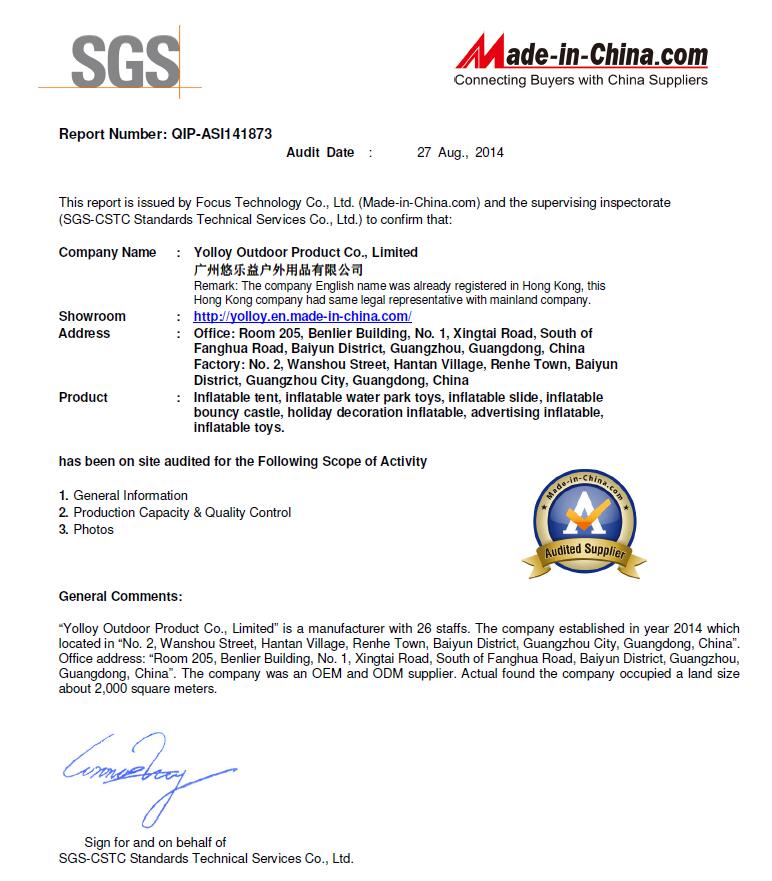
Certification

News

• New Order Successfully Finished for Long-Time Cooperated Japanese Client | YOLLOY Wins Full Client Recognition

• YOLLOY Custom Inflatable Pool Tent for Danish Client: Professional Pool Repair Shelter & Debris Protection

• Trusted Once Again! Greek Captain Re-orders Our Products After 4 Years

• Revolutionize Your Outdoors: The All-Terrain Inflatable Floating Tent for Land & Water

• Elevate Your Summer Fun: The Ultimate Inflatable Water Floating Volleyball Court Trampoline

• Innovative Inflatable Nightclub Tents & Pop-Up Bars: The Ultimate Solution for Portable Party Venues

Contact Us

Name: Sunny Yang
Tel: +86-20-8370 0771
Fax: +86-20-8370 0771
Mobile: 13570587575
E-mail: [email protected]
Add: No 5,Xiong wei Bo Nan Road,ZhongLuoTan Town,Baiyun district,Guangzhou,China
Friend me on Facebook Follow me on Twitter Add me to your circles Follow me on Pinterest Watch my channel on YouTube
News

How to choose inflatable stage cover for events?

Author:yolloy Date:2026/8/12 20:57:56

Outdoor events are unpredictable. One moment the sun is shining, and the next a sudden rainstorm threatens to cancel the entire show. For event organizers, rental companies, and production teams, having a reliable stage cover is not a luxury — it is a necessity. An inflatable stage cover offers a fast-deploying, portable, and highly customizable solution that protects performers, equipment, and stage setups from the elements. But how do you choose the right one? This guide walks you through every factor that matters.

What Is an Inflatable Stage Cover?

An inflatable stage cover is a cold-air structure supported by sealed fabric beams and arches. A continuous electric blower keeps the beams rigid under low pressure throughout the event. Unlike traditional metal-frame canopies, there is no steel skeleton — the frame itself is fabric and air. The defining feature is the open front, which faces the audience while the rear wall and optional side wings provide weather protection and branding space.

This design is fundamentally different from an enclosed inflatable event tent. A stage cover is meant to shed weather over performers and equipment, whereas a full tent seals the interior for exhibitions, weddings, or product launches. Understanding this distinction is the first step in choosing the right structure.

Key Factors to Consider When Choosing an Inflatable Stage Cover

1. Span and Clear Height

Span — the covered width — and clear height under the lowest beam are the two most critical dimensions. They determine what kind of performance your stage can host:

Size TierSpanClear HeightBest For
Small4–6 m~3–3.5 mSchool fairs, solo acts, acoustic sets, community events
Medium6–10 m~4–5 mFestivals, corporate events, municipal shows, band performances
Large10–15 m+~5–7 mMain-stage festivals, full production shows with backline storage

Always measure clear height under the lowest beam, not the overall peak height. That lowest point is what your lighting bars, banners, and tallest performer must clear comfortably.

2. Material and Build Quality

The durability of an inflatable stage cover depends on the materials and construction methods used. High-quality structures are made from commercial-grade PVC tarpaulin, which offers excellent tear resistance, waterproofing, and UV stability. Some applications may also use Oxford fabric, nylon, or TPU depending on specific requirements.

At the seams, look for high-temperature fusion welding for airtight sections and double-stitched, reinforced seams with waterproof nylon thread at load-bearing junctions. Quality manufacturers add extra reinforcement at high-stress areas such as beam junctions and anchor points. These details determine how many inflate-deflate cycles the structure can endure across seasons.

A reputable inflatable tent manufacturer will provide material certifications such as EN71, EN14960, and RoHS for their fabrics, and CE or UL certification for blowers. Always ask for the relevant compliance documentation before purchasing.

3. Setup Time and Portability

One of the strongest arguments for choosing an inflatable stage cover is the speed of setup. A mid-size canopy in the 6–10 m range can typically be raised by a two-to-four-person crew in 30 to 60 minutes. The process is straightforward: unroll the structure, connect the blower, inflate, and then anchor and dress the stage. Compare this to the hours of labor and specialized equipment needed for a rigid truss roof.

Striking the canopy is equally fast — deflate, fold, and pack. The entire structure fits into a compact transport volume, which means fewer vehicles, lower logistics costs, and faster load-out between events. For rental operations running multiple sites in a weekend, this efficiency is the core of the return on investment.

4. Weather Resistance: Rain and Wind

An outdoor stage cover earns its value in bad weather. Two failure modes demand attention:

Rain drainage: The roof must have a pitched or continuously curved profile so that water sheds to the sides and rear, never pooling on top. Pooling water adds dead weight that can deform beams and eventually dump onto the stage. On larger units, integrated gutter channels are a valuable feature that directs water away from the open front and performance area.

Wind anchoring: An inflated canopy is a large surface area, and wind — not rain — is the real threat to outdoor structures. Every unit must come with a complete anchoring system: ground stakes for grass surfaces and water or concrete ballast weights for hard standing. Every anchor point must be rigged every time, and venues should agree on a wind-speed shutdown threshold. A well-anchored canopy is safe; an under-ballasted one is a liability.

Never skip anchoring. Even on a calm day, a sudden gust can lift an unsecured canopy. D-ring and round metal anchor systems integrated into the design provide additional security for installation and wind resistance.

5. Lighting, Audio, and Load Limits

This is the most commonly misunderstood aspect of inflatable stage covers. The fabric beams are engineered to hold up the roof — they are not load-bearing rigid truss. You cannot fly heavy moving-head fixtures, line arrays, or full LED walls from them.

What is realistic: lightweight LED par cans, slim lighting bars, modest banners, and cabling — hung only from the manufacturer's designated attachment points, within the stated per-point load rating. For heavy production rigs, use free-standing ground-support towers or truss placed underneath the canopy. Let the inflatable structure handle weather protection while independent steel structures carry the heavy equipment.

6. Branding and Customization

The solid rear wall and side wings of a stage cover are prime branding real estate. A full-wrap dye-sublimation print turns the entire backdrop into sponsor branding, festival identity, or corporate livery — visible in every photograph and livestream shot. This transforms the stage cover from a purely functional item into a marketing asset.

Beyond printing, customization options include custom sizes, colors, and shapes. Customer logos and artwork can be printed directly onto the fabric. YOLLOY's design team prepares simulation renderings from customer proposals, allowing you to review and revise the design until approval before it enters production. This ensures that the final product matches your exact vision.

7. Blower Specifications

The blower is the heart of any inflatable structure. A continuous cold-air blower keeps the beams pressurized throughout the event. When choosing a stage cover, confirm that the blower matches your local power supply — quality suppliers offer blowers configured for 110V, 220V, or 380V requirements. The blower should carry CE or UL certification for safety and reliability.

Pre-Purchase Checklist

Before making a decision, run through this checklist:

  • Span and clear height matched to your largest expected act and lighting setup
  • Roof profile designed to shed water, with gutters on larger units
  • Complete anchor kit including stakes and ballast, with a published wind-shutdown threshold
  • Rated attachment points with honest per-point load figures for lighting and banners
  • Fire-rated, UV-stable fabric with relevant certifications (EN71, EN14960, RoHS)
  • Full-wrap print capability designed into the backdrop and wings from the start
  • Certified blower matching your local voltage requirements
  • Repair kit included with the purchase for on-site maintenance
  • Custom design support — can the supplier work from your sketch, photo, or site plan?
  • Production timeline and shipping — typical production is 6–15 days, with air and sea options available

Why Choose YOLLOY for Your Inflatable Stage Cover?

YOLLOY Outdoor Product Co., Limited is a China-based inflatable tent manufacturer with extensive experience in designing and producing custom inflatable structures for events, exhibitions, and commercial entertainment worldwide. The company offers a complete custom design-to-production service: from initial simulation renderings based on your proposal, through iterative design revisions, to factory production and quality inspection.

Every inflatable event tent and stage cover from YOLLOY is built with commercial-grade PVC tarpaulin, precision sewing equipment, reinforced seams, and high-temperature fusion welding for airtight sections. Products are inspected and tested before shipment, and a repair kit is supplied with each unit. With a stated minimum order quantity of just one piece, responsive service, and a 95% on-time delivery rate, YOLLOY makes it straightforward to get the right stage cover for your events.

Ready to spec your inflatable stage cover? Contact YOLLOY with your span, clear height, and typical wind exposure, and the design team will prepare a custom solution tailored to your needs. Email: [email protected] | Tel: +86-20-8370 0771

How to choose inflatable stage cover for events?

Author:yolloy Date:2026/8/12 20:57:56

Outdoor events are unpredictable. One moment the sun is shining, and the next a sudden rainstorm threatens to cancel the entire show. For event organizers, rental companies, and production teams, having a reliable stage cover is not a luxury — it is a necessity. An inflatable stage cover offers a fast-deploying, portable, and highly customizable solution that protects performers, equipment, and stage setups from the elements. But how do you choose the right one? This guide walks you through every factor that matters.

What Is an Inflatable Stage Cover?

An inflatable stage cover is a cold-air structure supported by sealed fabric beams and arches. A continuous electric blower keeps the beams rigid under low pressure throughout the event. Unlike traditional metal-frame canopies, there is no steel skeleton — the frame itself is fabric and air. The defining feature is the open front, which faces the audience while the rear wall and optional side wings provide weather protection and branding space.

This design is fundamentally different from an enclosed inflatable event tent. A stage cover is meant to shed weather over performers and equipment, whereas a full tent seals the interior for exhibitions, weddings, or product launches. Understanding this distinction is the first step in choosing the right structure.

Key Factors to Consider When Choosing an Inflatable Stage Cover

1. Span and Clear Height

Span — the covered width — and clear height under the lowest beam are the two most critical dimensions. They determine what kind of performance your stage can host:

Size TierSpanClear HeightBest For
Small4–6 m~3–3.5 mSchool fairs, solo acts, acoustic sets, community events
Medium6–10 m~4–5 mFestivals, corporate events, municipal shows, band performances
Large10–15 m+~5–7 mMain-stage festivals, full production shows with backline storage

Always measure clear height under the lowest beam, not the overall peak height. That lowest point is what your lighting bars, banners, and tallest performer must clear comfortably.

2. Material and Build Quality

The durability of an inflatable stage cover depends on the materials and construction methods used. High-quality structures are made from commercial-grade PVC tarpaulin, which offers excellent tear resistance, waterproofing, and UV stability. Some applications may also use Oxford fabric, nylon, or TPU depending on specific requirements.

At the seams, look for high-temperature fusion welding for airtight sections and double-stitched, reinforced seams with waterproof nylon thread at load-bearing junctions. Quality manufacturers add extra reinforcement at high-stress areas such as beam junctions and anchor points. These details determine how many inflate-deflate cycles the structure can endure across seasons.

A reputable inflatable tent manufacturer will provide material certifications such as EN71, EN14960, and RoHS for their fabrics, and CE or UL certification for blowers. Always ask for the relevant compliance documentation before purchasing.

3. Setup Time and Portability

One of the strongest arguments for choosing an inflatable stage cover is the speed of setup. A mid-size canopy in the 6–10 m range can typically be raised by a two-to-four-person crew in 30 to 60 minutes. The process is straightforward: unroll the structure, connect the blower, inflate, and then anchor and dress the stage. Compare this to the hours of labor and specialized equipment needed for a rigid truss roof.

Striking the canopy is equally fast — deflate, fold, and pack. The entire structure fits into a compact transport volume, which means fewer vehicles, lower logistics costs, and faster load-out between events. For rental operations running multiple sites in a weekend, this efficiency is the core of the return on investment.

4. Weather Resistance: Rain and Wind

An outdoor stage cover earns its value in bad weather. Two failure modes demand attention:

Rain drainage: The roof must have a pitched or continuously curved profile so that water sheds to the sides and rear, never pooling on top. Pooling water adds dead weight that can deform beams and eventually dump onto the stage. On larger units, integrated gutter channels are a valuable feature that directs water away from the open front and performance area.

Wind anchoring: An inflated canopy is a large surface area, and wind — not rain — is the real threat to outdoor structures. Every unit must come with a complete anchoring system: ground stakes for grass surfaces and water or concrete ballast weights for hard standing. Every anchor point must be rigged every time, and venues should agree on a wind-speed shutdown threshold. A well-anchored canopy is safe; an under-ballasted one is a liability.

Never skip anchoring. Even on a calm day, a sudden gust can lift an unsecured canopy. D-ring and round metal anchor systems integrated into the design provide additional security for installation and wind resistance.

5. Lighting, Audio, and Load Limits

This is the most commonly misunderstood aspect of inflatable stage covers. The fabric beams are engineered to hold up the roof — they are not load-bearing rigid truss. You cannot fly heavy moving-head fixtures, line arrays, or full LED walls from them.

What is realistic: lightweight LED par cans, slim lighting bars, modest banners, and cabling — hung only from the manufacturer's designated attachment points, within the stated per-point load rating. For heavy production rigs, use free-standing ground-support towers or truss placed underneath the canopy. Let the inflatable structure handle weather protection while independent steel structures carry the heavy equipment.

6. Branding and Customization

The solid rear wall and side wings of a stage cover are prime branding real estate. A full-wrap dye-sublimation print turns the entire backdrop into sponsor branding, festival identity, or corporate livery — visible in every photograph and livestream shot. This transforms the stage cover from a purely functional item into a marketing asset.

Beyond printing, customization options include custom sizes, colors, and shapes. Customer logos and artwork can be printed directly onto the fabric. YOLLOY's design team prepares simulation renderings from customer proposals, allowing you to review and revise the design until approval before it enters production. This ensures that the final product matches your exact vision.

7. Blower Specifications

The blower is the heart of any inflatable structure. A continuous cold-air blower keeps the beams pressurized throughout the event. When choosing a stage cover, confirm that the blower matches your local power supply — quality suppliers offer blowers configured for 110V, 220V, or 380V requirements. The blower should carry CE or UL certification for safety and reliability.

Pre-Purchase Checklist

Before making a decision, run through this checklist:

  • Span and clear height matched to your largest expected act and lighting setup
  • Roof profile designed to shed water, with gutters on larger units
  • Complete anchor kit including stakes and ballast, with a published wind-shutdown threshold
  • Rated attachment points with honest per-point load figures for lighting and banners
  • Fire-rated, UV-stable fabric with relevant certifications (EN71, EN14960, RoHS)
  • Full-wrap print capability designed into the backdrop and wings from the start
  • Certified blower matching your local voltage requirements
  • Repair kit included with the purchase for on-site maintenance
  • Custom design support — can the supplier work from your sketch, photo, or site plan?
  • Production timeline and shipping — typical production is 6–15 days, with air and sea options available

Why Choose YOLLOY for Your Inflatable Stage Cover?

YOLLOY Outdoor Product Co., Limited is a China-based inflatable tent manufacturer with extensive experience in designing and producing custom inflatable structures for events, exhibitions, and commercial entertainment worldwide. The company offers a complete custom design-to-production service: from initial simulation renderings based on your proposal, through iterative design revisions, to factory production and quality inspection.

Every inflatable event tent and stage cover from YOLLOY is built with commercial-grade PVC tarpaulin, precision sewing equipment, reinforced seams, and high-temperature fusion welding for airtight sections. Products are inspected and tested before shipment, and a repair kit is supplied with each unit. With a stated minimum order quantity of just one piece, responsive service, and a 95% on-time delivery rate, YOLLOY makes it straightforward to get the right stage cover for your events.

Ready to spec your inflatable stage cover? Contact YOLLOY with your span, clear height, and typical wind exposure, and the design team will prepare a custom solution tailored to your needs. Email: [email protected] | Tel: +86-20-8370 0771