Products Category
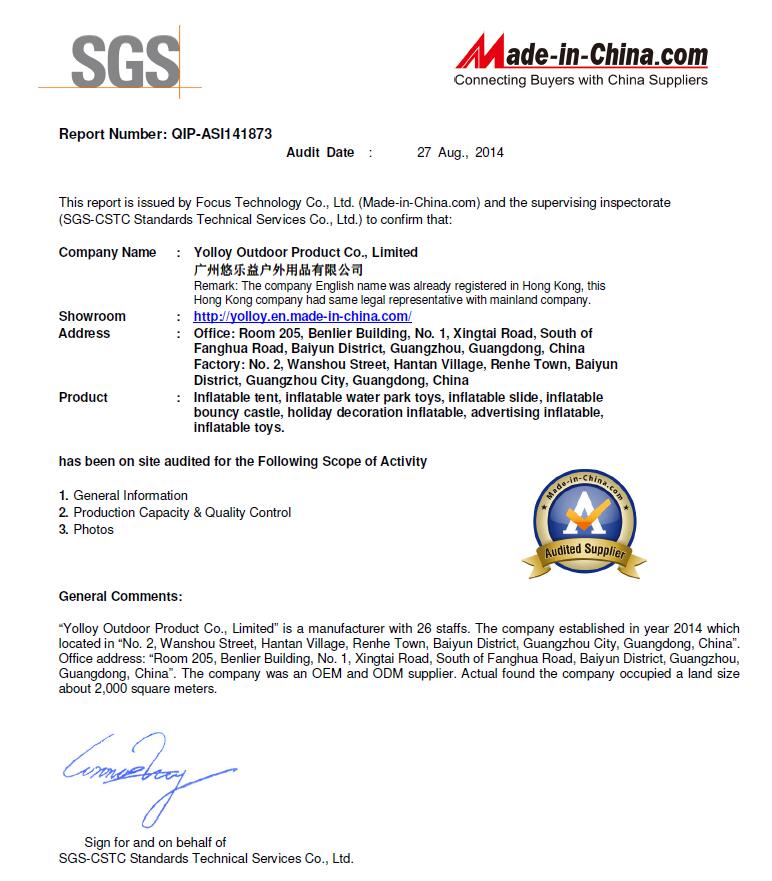
Certification

News

• New Order Successfully Finished for Long-Time Cooperated Japanese Client | YOLLOY Wins Full Client Recognition

• YOLLOY Custom Inflatable Pool Tent for Danish Client: Professional Pool Repair Shelter & Debris Protection

• Trusted Once Again! Greek Captain Re-orders Our Products After 4 Years

• Revolutionize Your Outdoors: The All-Terrain Inflatable Floating Tent for Land & Water

• Elevate Your Summer Fun: The Ultimate Inflatable Water Floating Volleyball Court Trampoline

• Innovative Inflatable Nightclub Tents & Pop-Up Bars: The Ultimate Solution for Portable Party Venues

Contact Us

Name: Sunny Yang
Tel: +86-20-8370 0771
Fax: +86-20-8370 0771
Mobile: 13570587575
E-mail: [email protected]
Add: No 5,Xiong wei Bo Nan Road,ZhongLuoTan Town,Baiyun district,Guangzhou,China
Friend me on Facebook Follow me on Twitter Add me to your circles Follow me on Pinterest Watch my channel on YouTube
News

What is the best inflatable tent for shelter emergencies?

Author:yolloy Date:2026/8/12 20:53:03

When disaster strikes or an emergency unfolds, the speed, reliability, and quality of temporary shelter can mean the difference between chaos and coordinated response. Inflatable tents have emerged as the go-to solution for emergency shelters, field hospitals, and rapid-deployment command centers. But with so many options on the market, what exactly makes one inflatable tent the best inflatable tent for shelter emergencies? This article examines the key factors that define a high-quality emergency inflatable tent and what to look for when sourcing from reliable inflatable tent manufacturers.

Why Inflatable Tents Excel in Emergency Situations

Traditional pole-frame tents require multiple people and significant time to erect. During a crisis, every minute counts. Inflatable air-beam shelters can be deployed by as few as two people in under ten minutes using a standard electric blower. The integrated air columns provide structural integrity the moment they are inflated, creating a "plug and play" shelter system that is mission-critical during the golden hour of disaster relief.

Beyond speed, inflatable tents offer a completely unobstructed interior space. Without metal poles, crossbars, or internal framework, the entire floor area is usable. This makes them ideal for medical triage stations that need to accommodate stretchers and equipment, command centers requiring desks and communication gear, or temporary housing where every square foot matters.

Key Advantage: A well-designed inflatable emergency tent can be set up in under 10 minutes by two people, compared to traditional frame tents that often require a team of four to six workers and significantly more time.

Critical Features of a High-Quality Emergency Shelter Tent

Not all inflatable tents are built to the same standard. When evaluating inflatable tents for emergency use, the following features are essential:

Material Quality and Weather Resistance

The fabric is the foundation of any shelter. Commercial-grade PVC tarpaulin is the industry standard for professional inflatable tents because it offers excellent waterproofing, tear resistance, and UV protection. For emergency applications, the material should be capable of withstanding heavy rain, strong winds, and temperature extremes. Some manufacturers also offer Oxford fabric, nylon, and TPU options depending on the specific deployment environment.

Equally important are the seams. Precision sewing equipment with reinforced seams and waterproof nylon thread ensures that the shelter remains intact even under stress. For airtight sections, high-temperature fusion welding equipment provides a seamless, leak-proof bond that holds up to repeated inflation and deflation cycles.

Certifications and Safety Compliance

A reputable manufacturer should provide documentation that their materials and products meet recognized safety standards. Look for certifications such as EN71 for toy safety, EN14960 for inflatable play equipment, and RoHS compliance for hazardous substance restrictions. For water park and aquatic inflatable products, EN15649 is the relevant standard. Blowers should carry CE or UL certification depending on the target market. These certifications are not just paperwork — they are independent verification that the product has been tested and meets rigorous safety requirements.

Anchoring and Stability

Even the toughest fabric is useless if the tent cannot stay in place. Quality emergency shelters incorporate D-ring or round metal anchor systems at multiple points around the base. Combined with robust ground stakes or weighted ballast systems, these anchor points keep the shelter stable in windy conditions and prevent shifting during use.

Blower and Power Compatibility

The blower is the heart of any inflatable tent system. Emergency shelters should be supplied with blowers that match the local power supply — typically 110V for North America, 220V for Europe and Asia, and 380V for industrial applications. A continuous-operation blower maintains consistent air pressure and compensates for minor air leaks, ensuring the structure remains rigid throughout its use.

Versatile Applications for Emergency Inflatable Tents

The best inflatable shelter tents serve multiple roles depending on the nature of the emergency. Their versatility makes them a smart investment for government agencies, relief organizations, and event management companies alike.

Application Key Requirements
Field Medical Station Unobstructed interior, easy to clean surfaces, space for beds and equipment
Disaster Relief Shelter Rapid deployment, weather resistance, comfortable living space
Command Center Large interior, stable structure, power and communication cable access
Temporary Housing Insulation, ventilation, privacy options, durable flooring
Isolation and Quarantine Sealed environment, air filtration compatibility, separate entry and exit

What to Look for When Sourcing Emergency Inflatable Tents

When searching for inflatable tents for sale, there are several factors beyond the product itself that deserve attention:

  • Customization capability: Can the manufacturer design the tent to your exact specifications? Emergency operations often require specific dimensions, layouts, or features like clear windows, partition walls, or equipment ports. A manufacturer that offers custom design from a description, drawing, or photograph gives you the flexibility to get exactly what you need.
  • Minimum order quantity: Some manufacturers require large bulk orders. For organizations testing a product or needing a single unit for evaluation, a supplier with a minimum order quantity of one piece is a significant advantage.
  • Production lead time: In emergency preparedness, timing is everything. A manufacturer that can produce a regular inflatable product in 6 to 15 days ensures you can replenish stock quickly when needed.
  • Quality control process: Ask whether products are inspected and tested before shipment. A manufacturer that performs pre-shipment inspection and provides a repair kit with each product demonstrates commitment to quality and customer support.
  • After-sales support: Does the supplier respond to inquiries within 24 hours? Do they offer guidance on setup, maintenance, and repair? Responsive communication is a strong indicator of a reliable partner.

Why YOLLOY Stands Out for Emergency Shelter Solutions

YOLLOY Outdoor Product Co., Limited, based in Guangzhou, China, is a professional inflatable product manufacturer with extensive experience designing and producing custom inflatable shelters for a wide range of applications. The company's approach combines design expertise, manufacturing precision, and a customer-first service model that makes them a strong choice for emergency shelter procurement.

YOLLOY's custom design-to-production workflow means that every emergency shelter project starts with your requirements — not a catalog template. The design team creates simulation renderings from your proposal, description, sketch, or site plan, and revises the design until you approve it. Only then does production begin. This ensures that the final product matches your operational needs exactly.

On the manufacturing side, YOLLOY uses commercial-grade PVC tarpaulin and other high-performance materials that have passed EN71, EN14960, and RoHS testing. Precision sewing equipment, reinforced seams, and waterproof nylon thread are standard across all products. Airtight sections are manufactured with high-temperature fusion welding equipment. Every product is inspected and tested before shipment, and a repair kit is supplied with each inflatable tent.

YOLLOY also offers practical advantages for procurement. The minimum order quantity is one piece, making it accessible for organizations that need to evaluate a product before committing to larger volumes. Production time for a regular inflatable product is typically 6 to 15 days. Blowers can be supplied for 110V, 220V, or 380V requirements. The company reports a 95% on-time delivery rate and guarantees that emails are answered within 24 hours.

Conclusion

The best inflatable tent for shelter emergencies is one that combines rapid deployment, durable construction, certified safety, and flexible customization — all backed by a manufacturer that communicates clearly and delivers on time. By focusing on material quality, certification standards, anchoring systems, and supplier reliability, procurement teams can make informed decisions that support effective emergency response. Whether you need a single shelter for evaluation or a fleet of tents for large-scale deployment, working with an experienced manufacturer like YOLLOY ensures that your emergency shelter solution is built to perform when it matters most.


What is the best inflatable tent for shelter emergencies?

Author:yolloy Date:2026/8/12 20:53:03

When disaster strikes or an emergency unfolds, the speed, reliability, and quality of temporary shelter can mean the difference between chaos and coordinated response. Inflatable tents have emerged as the go-to solution for emergency shelters, field hospitals, and rapid-deployment command centers. But with so many options on the market, what exactly makes one inflatable tent the best inflatable tent for shelter emergencies? This article examines the key factors that define a high-quality emergency inflatable tent and what to look for when sourcing from reliable inflatable tent manufacturers.

Why Inflatable Tents Excel in Emergency Situations

Traditional pole-frame tents require multiple people and significant time to erect. During a crisis, every minute counts. Inflatable air-beam shelters can be deployed by as few as two people in under ten minutes using a standard electric blower. The integrated air columns provide structural integrity the moment they are inflated, creating a "plug and play" shelter system that is mission-critical during the golden hour of disaster relief.

Beyond speed, inflatable tents offer a completely unobstructed interior space. Without metal poles, crossbars, or internal framework, the entire floor area is usable. This makes them ideal for medical triage stations that need to accommodate stretchers and equipment, command centers requiring desks and communication gear, or temporary housing where every square foot matters.

Key Advantage: A well-designed inflatable emergency tent can be set up in under 10 minutes by two people, compared to traditional frame tents that often require a team of four to six workers and significantly more time.

Critical Features of a High-Quality Emergency Shelter Tent

Not all inflatable tents are built to the same standard. When evaluating inflatable tents for emergency use, the following features are essential:

Material Quality and Weather Resistance

The fabric is the foundation of any shelter. Commercial-grade PVC tarpaulin is the industry standard for professional inflatable tents because it offers excellent waterproofing, tear resistance, and UV protection. For emergency applications, the material should be capable of withstanding heavy rain, strong winds, and temperature extremes. Some manufacturers also offer Oxford fabric, nylon, and TPU options depending on the specific deployment environment.

Equally important are the seams. Precision sewing equipment with reinforced seams and waterproof nylon thread ensures that the shelter remains intact even under stress. For airtight sections, high-temperature fusion welding equipment provides a seamless, leak-proof bond that holds up to repeated inflation and deflation cycles.

Certifications and Safety Compliance

A reputable manufacturer should provide documentation that their materials and products meet recognized safety standards. Look for certifications such as EN71 for toy safety, EN14960 for inflatable play equipment, and RoHS compliance for hazardous substance restrictions. For water park and aquatic inflatable products, EN15649 is the relevant standard. Blowers should carry CE or UL certification depending on the target market. These certifications are not just paperwork — they are independent verification that the product has been tested and meets rigorous safety requirements.

Anchoring and Stability

Even the toughest fabric is useless if the tent cannot stay in place. Quality emergency shelters incorporate D-ring or round metal anchor systems at multiple points around the base. Combined with robust ground stakes or weighted ballast systems, these anchor points keep the shelter stable in windy conditions and prevent shifting during use.

Blower and Power Compatibility

The blower is the heart of any inflatable tent system. Emergency shelters should be supplied with blowers that match the local power supply — typically 110V for North America, 220V for Europe and Asia, and 380V for industrial applications. A continuous-operation blower maintains consistent air pressure and compensates for minor air leaks, ensuring the structure remains rigid throughout its use.

Versatile Applications for Emergency Inflatable Tents

The best inflatable shelter tents serve multiple roles depending on the nature of the emergency. Their versatility makes them a smart investment for government agencies, relief organizations, and event management companies alike.

Application Key Requirements
Field Medical Station Unobstructed interior, easy to clean surfaces, space for beds and equipment
Disaster Relief Shelter Rapid deployment, weather resistance, comfortable living space
Command Center Large interior, stable structure, power and communication cable access
Temporary Housing Insulation, ventilation, privacy options, durable flooring
Isolation and Quarantine Sealed environment, air filtration compatibility, separate entry and exit

What to Look for When Sourcing Emergency Inflatable Tents

When searching for inflatable tents for sale, there are several factors beyond the product itself that deserve attention:

  • Customization capability: Can the manufacturer design the tent to your exact specifications? Emergency operations often require specific dimensions, layouts, or features like clear windows, partition walls, or equipment ports. A manufacturer that offers custom design from a description, drawing, or photograph gives you the flexibility to get exactly what you need.
  • Minimum order quantity: Some manufacturers require large bulk orders. For organizations testing a product or needing a single unit for evaluation, a supplier with a minimum order quantity of one piece is a significant advantage.
  • Production lead time: In emergency preparedness, timing is everything. A manufacturer that can produce a regular inflatable product in 6 to 15 days ensures you can replenish stock quickly when needed.
  • Quality control process: Ask whether products are inspected and tested before shipment. A manufacturer that performs pre-shipment inspection and provides a repair kit with each product demonstrates commitment to quality and customer support.
  • After-sales support: Does the supplier respond to inquiries within 24 hours? Do they offer guidance on setup, maintenance, and repair? Responsive communication is a strong indicator of a reliable partner.

Why YOLLOY Stands Out for Emergency Shelter Solutions

YOLLOY Outdoor Product Co., Limited, based in Guangzhou, China, is a professional inflatable product manufacturer with extensive experience designing and producing custom inflatable shelters for a wide range of applications. The company's approach combines design expertise, manufacturing precision, and a customer-first service model that makes them a strong choice for emergency shelter procurement.

YOLLOY's custom design-to-production workflow means that every emergency shelter project starts with your requirements — not a catalog template. The design team creates simulation renderings from your proposal, description, sketch, or site plan, and revises the design until you approve it. Only then does production begin. This ensures that the final product matches your operational needs exactly.

On the manufacturing side, YOLLOY uses commercial-grade PVC tarpaulin and other high-performance materials that have passed EN71, EN14960, and RoHS testing. Precision sewing equipment, reinforced seams, and waterproof nylon thread are standard across all products. Airtight sections are manufactured with high-temperature fusion welding equipment. Every product is inspected and tested before shipment, and a repair kit is supplied with each inflatable tent.

YOLLOY also offers practical advantages for procurement. The minimum order quantity is one piece, making it accessible for organizations that need to evaluate a product before committing to larger volumes. Production time for a regular inflatable product is typically 6 to 15 days. Blowers can be supplied for 110V, 220V, or 380V requirements. The company reports a 95% on-time delivery rate and guarantees that emails are answered within 24 hours.

Conclusion

The best inflatable tent for shelter emergencies is one that combines rapid deployment, durable construction, certified safety, and flexible customization — all backed by a manufacturer that communicates clearly and delivers on time. By focusing on material quality, certification standards, anchoring systems, and supplier reliability, procurement teams can make informed decisions that support effective emergency response. Whether you need a single shelter for evaluation or a fleet of tents for large-scale deployment, working with an experienced manufacturer like YOLLOY ensures that your emergency shelter solution is built to perform when it matters most.