Products Category
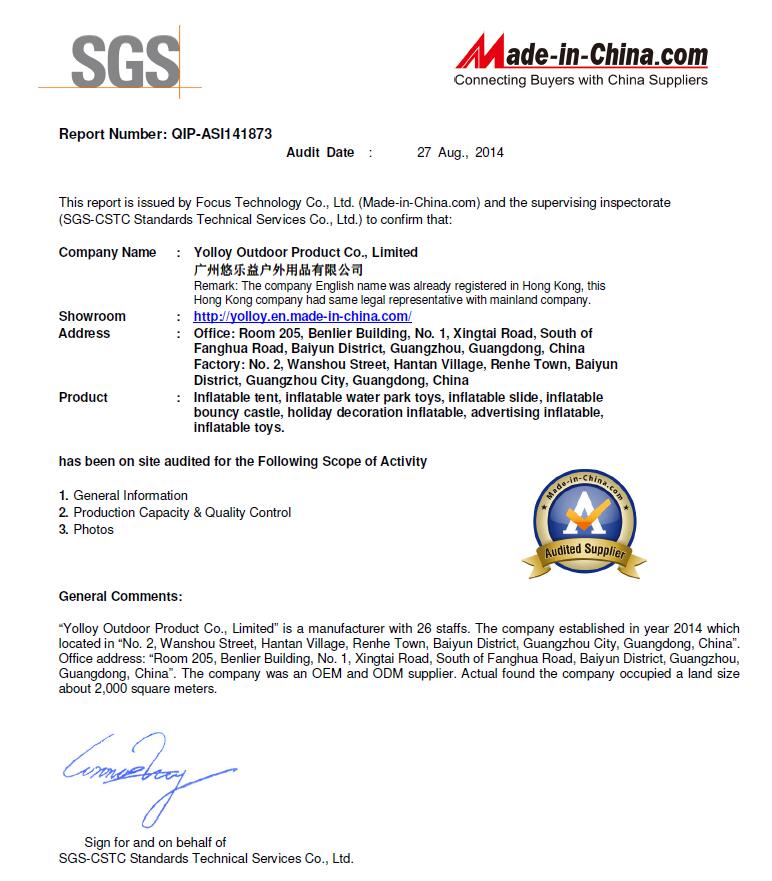
Certification

News

• New Order Successfully Finished for Long-Time Cooperated Japanese Client | YOLLOY Wins Full Client Recognition

• YOLLOY Custom Inflatable Pool Tent for Danish Client: Professional Pool Repair Shelter & Debris Protection

• Trusted Once Again! Greek Captain Re-orders Our Products After 4 Years

• Revolutionize Your Outdoors: The All-Terrain Inflatable Floating Tent for Land & Water

• Elevate Your Summer Fun: The Ultimate Inflatable Water Floating Volleyball Court Trampoline

• Innovative Inflatable Nightclub Tents & Pop-Up Bars: The Ultimate Solution for Portable Party Venues

Contact Us

Name: Sunny Yang
Tel: +86-20-8370 0771
Fax: +86-20-8370 0771
Mobile: 13570587575
E-mail: [email protected]
Add: No 5,Xiong wei Bo Nan Road,ZhongLuoTan Town,Baiyun district,Guangzhou,China
Friend me on Facebook Follow me on Twitter Add me to your circles Follow me on Pinterest Watch my channel on YouTube
News

What is a bouncey house?

Author:yolloy Date:2026/8/15 2:35:26

If you have ever searched for "what is a bouncey house," you are not alone. Parents, event organizers, school administrators, and first-time buyers ask this question when they want to add engaging, active entertainment to an event or backyard. A bouncey house — also commonly called a bounce house, bouncy castle, jump house, or moon bounce — is an inflatable play structure that uses a continuous flow of air to create a soft, springy surface for jumping and playing. It has become a staple at birthday parties, community fairs, school carnivals, and family gatherings around the world.

What Exactly Is a Bouncey House?

A bouncey house is a portable, air-supported play structure designed primarily for children to jump, bounce, and move freely inside a cushioned enclosure. Unlike rigid playground equipment made of metal or plastic, a bouncey house relies entirely on air pressure delivered by an electric blower. This blower runs continuously during use, keeping the walls upright and the floor firm yet springy enough for safe bouncing.

The term "bouncey house" is a casual, friendly variation of "bounce house." Both refer to the same product. The "bounce" part describes the elastic, low-impact jumping motion, while "house" refers to the enclosed shape with walls that keep children safely contained. Depending on where you live or who you speak with, you may also hear these names: inflatable bouncer, jumping castle, inflatable castle, moonwalk, or jumper. Despite the different names, the concept and function remain the same.

In short: A bouncey house is an inflatable structure that turns a continuous airflow into a safe, bouncy play zone — perfect for children's parties, events, and active outdoor play.

How Does a Bouncey House Work?

A bouncey house stays inflated through a constant airflow system, not by sealing air inside like a balloon. An electric blower pushes air into the structure through an inlet tube. Small gaps in the seams and fabric allow excess air to escape naturally, which prevents overinflation while maintaining stable internal pressure. This is why the blower must run the entire time the unit is in use.

When a child jumps on the surface, their weight compresses the air inside the floor chamber. The compressed air pushes back, creating a controlled rebound that is softer and lower-impact than a trampoline. This air-cushion effect distributes force across a wide area, reducing stress on joints and absorbing uneven landings. That is why bouncey houses are widely considered safer for younger children compared to spring-based trampolines.

High-quality bouncey houses use multiple internal air chambers rather than one large air bag. These chambers separate the jumping floor from the walls and help the structure maintain its shape even under uneven loads. If the blower stops, the unit deflates gradually — not suddenly — giving adults time to assist children out safely.

Common Types of Bouncey Houses

Not all bouncey houses are the same. They come in a wide range of sizes, shapes, and feature combinations. Understanding the main categories helps you choose the right one for your event, venue, and budget.

Type Description Best For
Standard Bounce House A simple rectangular or square jumping area with mesh walls for visibility and airflow. Small backyard parties, short events, basic entertainment.
Themed Bounce House Features castle, princess, superhero, cartoon, or sports-themed designs printed on the walls. Themed birthday parties, photo-friendly events.
Combo Bounce House Combines a bouncing area with extra features such as a slide, climbing wall, basketball hoop, or obstacle path. Larger parties, mixed-age groups, longer events.
Water Bounce House Adds splash features, water slides, or misting systems to a bounce or combo unit. Summer parties, poolside events, hot-weather outdoor celebrations.
Commercial Bounce House Made from heavier-grade materials, designed for frequent use by rental businesses, schools, and event companies. Rental operations, schools, churches, community centers, festivals.

For example, an inflatable bounce house with a Disney princess theme can turn a backyard into a fairy-tale castle, while a forest-themed unit brings a touch of adventure to any outdoor party. Combo units with built-in slides keep children entertained for hours without needing separate play equipment.

What Materials Are Used in a Bouncey House?

The quality of materials directly affects how long a bouncey house lasts, how safe it feels, and how well it performs under repeated use. Most bouncey houses are made from commercial-grade PVC tarpaulin, which is strong, puncture-resistant, and easy to clean. Some models also use Oxford fabric, nylon, or TPU depending on the specific design and application.

Key construction features of a well-made bouncey house include:

  • Reinforced seams — Precision sewing with waterproof nylon thread, with extra reinforcement at high-stress areas to prevent tearing.
  • High-temperature welding — For airtight sections, high-frequency fusion welding creates durable, leak-proof seals.
  • Mesh netting — Allows parents to see inside while providing ventilation and preventing children from falling out.
  • Anchor points — D-rings or metal rings for securing the unit with ground stakes or sandbags.
  • Blower compatibility — Designed to work with appropriately powered blowers, available for 110V, 220V, or 380V electrical systems.

When choosing an inflatable bounce house manufacturer, it is important to look for one that uses materials tested to meet international safety standards such as EN71, EN14960, and RoHS. These certifications indicate that the product has been evaluated for harmful substances and structural safety. A reputable factory will also inspect and test every product before shipping.

Safety: What You Need to Know

Safety should always come first with a bouncey house. While these inflatables are designed for fun, they are not risk-free. Following a few simple rules can make a big difference.

Supervision is essential. An adult should always be present and paying attention while children are inside the bouncey house. The supervisor should manage turns, stop rough play, and ensure that children of similar size and age use the unit together.

Anchor the unit properly. Use ground stakes on grass and weighted sandbags on hard surfaces. Never skip anchoring, even on calm days — a sudden gust of wind can create a dangerous situation if the unit is not secured.

Set clear rules for users. Children should remove shoes, glasses, and any sharp objects before entering. No food, drinks, flips, wrestling, or climbing on the walls. Keep the number of jumpers within the manufacturer's recommended capacity.

Watch the weather. Stop using the bouncey house if winds pick up, rain starts, or lightning is nearby. Wet surfaces become slippery, and wind can destabilize even a well-anchored unit.

Inspect before each use. Check seams, netting, anchor points, and the blower connection. A quick visual inspection takes only a few minutes and can prevent most common problems.

Where Are Bouncey Houses Used?

Bouncey houses are incredibly versatile. You will see them at a wide range of events and venues:

  • Backyard birthday parties and family celebrations
  • School carnivals, field days, and fundraisers
  • Church festivals and community gatherings
  • Daycare and summer camp activities
  • Corporate family days and brand activation events
  • Shopping mall promotions and indoor play centers
  • Sports banquets and team celebrations

Their appeal is simple: a bouncey house creates an instant activity center that keeps children engaged, active, and entertained. It requires minimal setup time — typically 15 to 30 minutes — and can be packed away just as quickly when the event is over.

Choosing a Quality Bouncey House Supplier

Whether you are a parent looking to buy one unit for your family or a business owner stocking a rental inventory, the quality of your supplier matters. A good china inflatable bounce house manufacturer should offer:

  • Custom design options — The ability to produce custom sizes, colors, and printed logos or artwork based on your specifications.
  • Quality materials — Commercial-grade PVC tarpaulin with reinforced seams and high-temperature welded joints.
  • Safety certifications — Materials tested to EN71, EN14960, and RoHS standards, with blowers meeting CE or UL requirements.
  • Low minimum order quantity — Some factories, like YOLLOY, accept orders starting from just one piece, which is ideal for small businesses or individual buyers.
  • Repair kit included — A repair kit should come with each inflatable product so you can handle minor punctures or seam issues on site.
  • Responsive communication — The supplier should respond to inquiries within 24 hours and provide clear production timelines — typically 6 to 15 days for a standard inflatable product.

YOLLOY Outdoor Product Co., Limited, based in Guangzhou, China, is one such manufacturer. They design and produce a full range of inflatable products, including themed bounce houses, combo units with slides, inflatable castles, and water bounce houses. Their design team works from customer proposals — sketches, photos, or site plans — to create custom renderings before production begins. All products are inspected and tested prior to shipment, and each unit ships with a repair kit and appropriately powered blower.

Renting vs. Buying a Bouncey House

If you only need a bouncey house once or twice a year, renting is usually the better choice. Rental companies handle delivery, setup, teardown, and maintenance. You simply choose the style and enjoy the event.

If you plan to use a bouncey house frequently — for example, as a party rental business, a school, a daycare center, or a community organization — buying makes more financial sense over time. Purchasing directly from a manufacturer gives you full control over the product quality, theme selection, and availability. It also eliminates the need to coordinate with rental schedules and delivery windows.

When buying, consider storage space, cleaning requirements, and blower maintenance. A quality bouncey house, when properly maintained, can serve reliably for years. Many manufacturers recommend a service life of around three years under normal use conditions, though this can vary based on usage frequency and care.

Final Thoughts

A bouncey house is more than just an inflatable toy — it is a carefully engineered play structure that brings joy, physical activity, and memorable moments to any event. Whether you call it a bounce house, bouncy castle, jump house, or moon bounce, the idea is the same: a safe, bouncy space where children can laugh, jump, and play. By understanding how these inflatables work, what materials go into them, and how to use them safely, you can make a confident choice — whether you are renting for a weekend party or buying from a trusted manufacturer for long-term use.


What is a bouncey house?

Author:yolloy Date:2026/8/15 2:35:26

If you have ever searched for "what is a bouncey house," you are not alone. Parents, event organizers, school administrators, and first-time buyers ask this question when they want to add engaging, active entertainment to an event or backyard. A bouncey house — also commonly called a bounce house, bouncy castle, jump house, or moon bounce — is an inflatable play structure that uses a continuous flow of air to create a soft, springy surface for jumping and playing. It has become a staple at birthday parties, community fairs, school carnivals, and family gatherings around the world.

What Exactly Is a Bouncey House?

A bouncey house is a portable, air-supported play structure designed primarily for children to jump, bounce, and move freely inside a cushioned enclosure. Unlike rigid playground equipment made of metal or plastic, a bouncey house relies entirely on air pressure delivered by an electric blower. This blower runs continuously during use, keeping the walls upright and the floor firm yet springy enough for safe bouncing.

The term "bouncey house" is a casual, friendly variation of "bounce house." Both refer to the same product. The "bounce" part describes the elastic, low-impact jumping motion, while "house" refers to the enclosed shape with walls that keep children safely contained. Depending on where you live or who you speak with, you may also hear these names: inflatable bouncer, jumping castle, inflatable castle, moonwalk, or jumper. Despite the different names, the concept and function remain the same.

In short: A bouncey house is an inflatable structure that turns a continuous airflow into a safe, bouncy play zone — perfect for children's parties, events, and active outdoor play.

How Does a Bouncey House Work?

A bouncey house stays inflated through a constant airflow system, not by sealing air inside like a balloon. An electric blower pushes air into the structure through an inlet tube. Small gaps in the seams and fabric allow excess air to escape naturally, which prevents overinflation while maintaining stable internal pressure. This is why the blower must run the entire time the unit is in use.

When a child jumps on the surface, their weight compresses the air inside the floor chamber. The compressed air pushes back, creating a controlled rebound that is softer and lower-impact than a trampoline. This air-cushion effect distributes force across a wide area, reducing stress on joints and absorbing uneven landings. That is why bouncey houses are widely considered safer for younger children compared to spring-based trampolines.

High-quality bouncey houses use multiple internal air chambers rather than one large air bag. These chambers separate the jumping floor from the walls and help the structure maintain its shape even under uneven loads. If the blower stops, the unit deflates gradually — not suddenly — giving adults time to assist children out safely.

Common Types of Bouncey Houses

Not all bouncey houses are the same. They come in a wide range of sizes, shapes, and feature combinations. Understanding the main categories helps you choose the right one for your event, venue, and budget.

Type Description Best For
Standard Bounce House A simple rectangular or square jumping area with mesh walls for visibility and airflow. Small backyard parties, short events, basic entertainment.
Themed Bounce House Features castle, princess, superhero, cartoon, or sports-themed designs printed on the walls. Themed birthday parties, photo-friendly events.
Combo Bounce House Combines a bouncing area with extra features such as a slide, climbing wall, basketball hoop, or obstacle path. Larger parties, mixed-age groups, longer events.
Water Bounce House Adds splash features, water slides, or misting systems to a bounce or combo unit. Summer parties, poolside events, hot-weather outdoor celebrations.
Commercial Bounce House Made from heavier-grade materials, designed for frequent use by rental businesses, schools, and event companies. Rental operations, schools, churches, community centers, festivals.

For example, an inflatable bounce house with a Disney princess theme can turn a backyard into a fairy-tale castle, while a forest-themed unit brings a touch of adventure to any outdoor party. Combo units with built-in slides keep children entertained for hours without needing separate play equipment.

What Materials Are Used in a Bouncey House?

The quality of materials directly affects how long a bouncey house lasts, how safe it feels, and how well it performs under repeated use. Most bouncey houses are made from commercial-grade PVC tarpaulin, which is strong, puncture-resistant, and easy to clean. Some models also use Oxford fabric, nylon, or TPU depending on the specific design and application.

Key construction features of a well-made bouncey house include:

  • Reinforced seams — Precision sewing with waterproof nylon thread, with extra reinforcement at high-stress areas to prevent tearing.
  • High-temperature welding — For airtight sections, high-frequency fusion welding creates durable, leak-proof seals.
  • Mesh netting — Allows parents to see inside while providing ventilation and preventing children from falling out.
  • Anchor points — D-rings or metal rings for securing the unit with ground stakes or sandbags.
  • Blower compatibility — Designed to work with appropriately powered blowers, available for 110V, 220V, or 380V electrical systems.

When choosing an inflatable bounce house manufacturer, it is important to look for one that uses materials tested to meet international safety standards such as EN71, EN14960, and RoHS. These certifications indicate that the product has been evaluated for harmful substances and structural safety. A reputable factory will also inspect and test every product before shipping.

Safety: What You Need to Know

Safety should always come first with a bouncey house. While these inflatables are designed for fun, they are not risk-free. Following a few simple rules can make a big difference.

Supervision is essential. An adult should always be present and paying attention while children are inside the bouncey house. The supervisor should manage turns, stop rough play, and ensure that children of similar size and age use the unit together.

Anchor the unit properly. Use ground stakes on grass and weighted sandbags on hard surfaces. Never skip anchoring, even on calm days — a sudden gust of wind can create a dangerous situation if the unit is not secured.

Set clear rules for users. Children should remove shoes, glasses, and any sharp objects before entering. No food, drinks, flips, wrestling, or climbing on the walls. Keep the number of jumpers within the manufacturer's recommended capacity.

Watch the weather. Stop using the bouncey house if winds pick up, rain starts, or lightning is nearby. Wet surfaces become slippery, and wind can destabilize even a well-anchored unit.

Inspect before each use. Check seams, netting, anchor points, and the blower connection. A quick visual inspection takes only a few minutes and can prevent most common problems.

Where Are Bouncey Houses Used?

Bouncey houses are incredibly versatile. You will see them at a wide range of events and venues:

  • Backyard birthday parties and family celebrations
  • School carnivals, field days, and fundraisers
  • Church festivals and community gatherings
  • Daycare and summer camp activities
  • Corporate family days and brand activation events
  • Shopping mall promotions and indoor play centers
  • Sports banquets and team celebrations

Their appeal is simple: a bouncey house creates an instant activity center that keeps children engaged, active, and entertained. It requires minimal setup time — typically 15 to 30 minutes — and can be packed away just as quickly when the event is over.

Choosing a Quality Bouncey House Supplier

Whether you are a parent looking to buy one unit for your family or a business owner stocking a rental inventory, the quality of your supplier matters. A good china inflatable bounce house manufacturer should offer:

  • Custom design options — The ability to produce custom sizes, colors, and printed logos or artwork based on your specifications.
  • Quality materials — Commercial-grade PVC tarpaulin with reinforced seams and high-temperature welded joints.
  • Safety certifications — Materials tested to EN71, EN14960, and RoHS standards, with blowers meeting CE or UL requirements.
  • Low minimum order quantity — Some factories, like YOLLOY, accept orders starting from just one piece, which is ideal for small businesses or individual buyers.
  • Repair kit included — A repair kit should come with each inflatable product so you can handle minor punctures or seam issues on site.
  • Responsive communication — The supplier should respond to inquiries within 24 hours and provide clear production timelines — typically 6 to 15 days for a standard inflatable product.

YOLLOY Outdoor Product Co., Limited, based in Guangzhou, China, is one such manufacturer. They design and produce a full range of inflatable products, including themed bounce houses, combo units with slides, inflatable castles, and water bounce houses. Their design team works from customer proposals — sketches, photos, or site plans — to create custom renderings before production begins. All products are inspected and tested prior to shipment, and each unit ships with a repair kit and appropriately powered blower.

Renting vs. Buying a Bouncey House

If you only need a bouncey house once or twice a year, renting is usually the better choice. Rental companies handle delivery, setup, teardown, and maintenance. You simply choose the style and enjoy the event.

If you plan to use a bouncey house frequently — for example, as a party rental business, a school, a daycare center, or a community organization — buying makes more financial sense over time. Purchasing directly from a manufacturer gives you full control over the product quality, theme selection, and availability. It also eliminates the need to coordinate with rental schedules and delivery windows.

When buying, consider storage space, cleaning requirements, and blower maintenance. A quality bouncey house, when properly maintained, can serve reliably for years. Many manufacturers recommend a service life of around three years under normal use conditions, though this can vary based on usage frequency and care.

Final Thoughts

A bouncey house is more than just an inflatable toy — it is a carefully engineered play structure that brings joy, physical activity, and memorable moments to any event. Whether you call it a bounce house, bouncy castle, jump house, or moon bounce, the idea is the same: a safe, bouncy space where children can laugh, jump, and play. By understanding how these inflatables work, what materials go into them, and how to use them safely, you can make a confident choice — whether you are renting for a weekend party or buying from a trusted manufacturer for long-term use.