Products Category
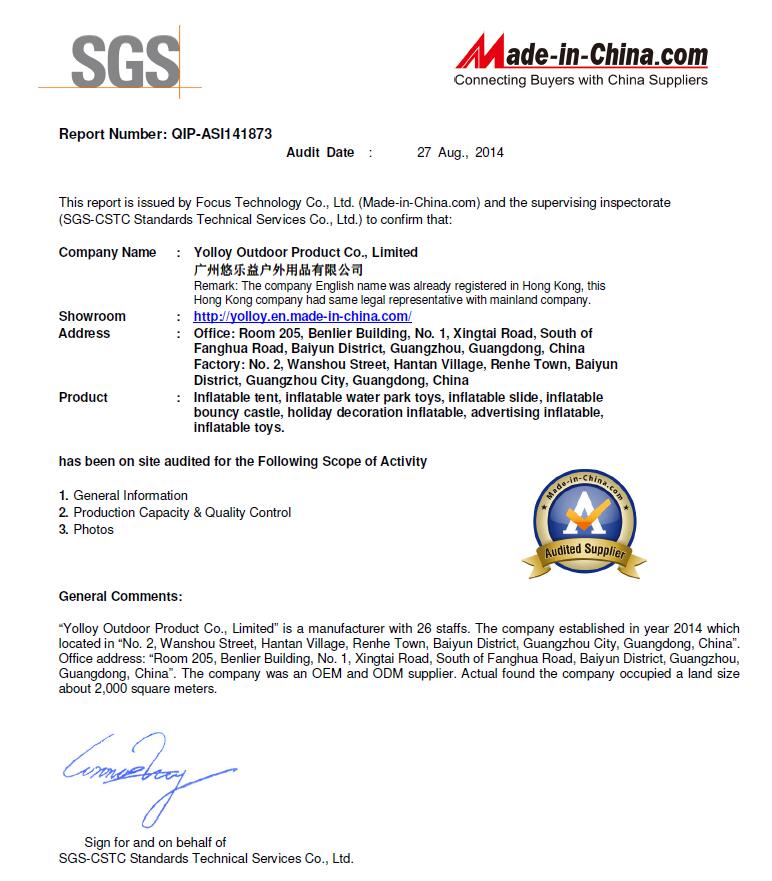
Certification

News

• New Order Successfully Finished for Long-Time Cooperated Japanese Client | YOLLOY Wins Full Client Recognition

• YOLLOY Custom Inflatable Pool Tent for Danish Client: Professional Pool Repair Shelter & Debris Protection

• Trusted Once Again! Greek Captain Re-orders Our Products After 4 Years

• Revolutionize Your Outdoors: The All-Terrain Inflatable Floating Tent for Land & Water

• Elevate Your Summer Fun: The Ultimate Inflatable Water Floating Volleyball Court Trampoline

• Innovative Inflatable Nightclub Tents & Pop-Up Bars: The Ultimate Solution for Portable Party Venues

Contact Us

Name: Sunny Yang
Tel: +86-20-8370 0771
Fax: +86-20-8370 0771
Mobile: 13570587575
E-mail: sales@yolloy.com
Add: No 5,Xiong wei Bo Nan Road,ZhongLuoTan Town,Baiyun district,Guangzhou,China
Friend me on Facebook Follow me on Twitter Add me to your circles Follow me on Pinterest Watch my channel on YouTube
News

How to Choose an Inflatable Water Park for Your Business: A Complete Buyer's Guide

Author:yolloy Date:2026/7/16 12:20:36

Everything resort owners, event planners, and water park operators need to know before investing in commercial inflatable water attractions.

Adding a water attraction to your property is one of the fastest ways to boost foot traffic and revenue. But traditional construction takes months, costs a fortune, and locks you into a permanent footprint. That's why more and more resort owners, municipal parks, and entertainment businesses are turning to inflatable water park solutions. They go up fast, scale to your budget, and can be taken down or reconfigured as your needs change.

This guide walks you through everything you need to know before making a purchase — from product types and material choices to manufacturer evaluation and after-sales support. We'll cut through the marketing noise and focus on the factors that actually affect your bottom line.

Why an Inflatable Water Park Makes Business Sense

The business case for inflatable water attractions is straightforward. Unlike concrete-and-steel water parks, an inflatable water park requires no excavation, no permanent foundations, and no lengthy permitting process. This means you can go from order to operation in weeks rather than months or years.

The numbers tell a compelling story. A typical inflatable water park installation costs a fraction of a permanent build — often 70-80% less in upfront investment. Operating costs are lower too. Modern blower systems are energy-efficient, and the modular nature of inflatable structures means you can repair or replace individual components without shutting down the entire attraction.

Flexibility is another major advantage. Seasonal businesses can set up and dismantle the park according to their operating calendar. If one attraction underperforms, you can swap it out for a different one. If you want to expand, you can add new modules without touching the existing installation. This kind of agility is simply impossible with permanent construction.

Types of Inflatable Water Park Products

Before you start shopping, it helps to understand the different product categories available. Each type serves a different purpose and appeals to a different audience segment.

Floating Water Parks

An inflatable floating water park is a modular system of interconnected inflatable elements anchored to a lake bed, reservoir, or calm sea area. These typically include climbing walls, trampolines, slides, balance beams, and obstacle courses. They are among the most popular attractions at lakeside resorts and summer camps because they turn an existing body of water into a revenue-generating asset.

Inflatable Swimming Pools

Above-ground inflatable pools range from small splash pools for toddlers to large commercial-grade pools that can accommodate dozens of guests. They are ideal for venues that lack permanent pool infrastructure or need a temporary aquatic space for events. High-quality commercial pools are built with multi-layer reinforced PVC and include integrated filtration systems.

Water Slides and Slip-and-Slides

Commercial inflatable water slides come in configurations ranging from single-lane straight slides to multi-lane racing slides with splash pools. Slip-and-slide models are popular for event rentals and temporary installations. The key differentiator between consumer-grade and commercial-grade slides is the material thickness, seam reinforcement, and blower power.

Floating Platforms and Leisure Decks

Inflatable floating platforms serve as lounging areas, yoga decks, or docking stations for boats and jet skis. These products use drop-stitch technology or double-wall fabric construction to create rigid, stable surfaces that can support substantial weight. They are popular add-ons for resorts looking to expand their waterfront amenities without permanent construction.

Water Balls and Zorb Balls

Inflatable water walking balls and zorb balls are classic attractions that appeal to children and families. While they are simpler products, quality matters enormously — a poorly sealed ball that leaks during use is both a safety hazard and a customer experience disaster.

Materials: What Your Water Park Should Be Made Of

The material used in your inflatable water park directly determines its lifespan, safety, and maintenance requirements. Most commercial-grade inflatables are made from PVC tarpaulin, but not all PVC is created equal.

TPU (Thermoplastic Polyurethane) is increasingly preferred for water-based products. Unlike standard PVC, TPU is non-toxic, odorless, and highly resistant to hydrolysis — meaning it won't degrade when exposed to water, sun, and chlorine over extended periods. It is also more environmentally friendly. For floating water parks and products that stay in the water for weeks at a time, TPU is worth the premium.

For above-water structures like slides and bounce elements, commercial-grade PVC tarpaulin with a density of 0.9mm or higher is the industry standard. The material should be UV-stabilized to prevent fading and brittleness, and fire-retardant to meet safety regulations. Always ask your supplier for material specification sheets and relevant test certificates.

Seam construction is equally important. High-quality products use reinforced, double-stitched seams with waterproof nylon thread, plus additional reinforcement at high-stress points. For airtight components, high-temperature fusion welding creates a stronger, more reliable seal than glue-based methods.

Safety Standards and Certifications

When you're operating a public attraction, safety is non-negotiable. Look for manufacturers whose products comply with relevant international standards. For inflatable water parks, EN 15649 is the key European standard governing safety requirements and test methods for floating leisure articles for use on and in the water. Inflatable toys should meet EN 14960, and blower systems should carry CE or UL certification.

A reputable China inflatable manufacturer will provide documentation showing that their materials have passed EN71, EN14960, and RoHS-related testing. These certifications are not just paperwork — they are your assurance that the product has been independently verified for safety, material quality, and environmental compliance.

Buyer's Tip

Always request copies of test certificates from the manufacturer before placing your order. A legitimate factory will be happy to provide them. If a supplier hesitates or makes excuses, treat that as a red flag.

Customization: Getting Exactly What You Need

One of the biggest advantages of working with a specialized manufacturer is the ability to customize. Unlike off-the-shelf products from mass-market retailers, custom-designed inflatables can be tailored to your specific site conditions, branding requirements, and target audience.

A capable commercial inflatable products manufacturer will work from your description, sketch, photograph, or site plan. The design process typically involves creating simulation renderings so you can see exactly what the finished product will look like before production begins. You can specify custom colors, printed logos and artwork, and non-standard dimensions to fit a particular space.

Customization also extends to technical specifications. Blowers can be supplied for 110V, 220V, or 380V requirements depending on your local electrical standards. Anchor systems can be configured for different ground conditions — sand, soil, concrete, or underwater. The key is finding a manufacturer with a genuine design-to-production workflow rather than one that simply stamps your logo on a standard template.

How to Evaluate a Manufacturer

Choosing the right manufacturing partner is arguably the most important decision in this process. Here are the criteria that matter most:

Production Capability and Quality Control

A good manufacturer should have both sewing and high-temperature welding/fusion equipment. Sewing is used for fabric-based products like tents, while welding is essential for airtight products. Ask about their quality inspection process — products should be individually inspected and tested before shipment, not just spot-checked from a batch.

Minimum Order Quantity and Production Time

Some manufacturers require large minimum order quantities, which can be a barrier for small businesses testing the market. Others accept orders as low as one piece. Typical production time for a standard inflatable product is 6-15 days, though complex custom orders may take longer. Always confirm lead times in writing before placing a deposit.

Packaging and Shipping

Inflatable products are bulky but relatively lightweight. Good packaging includes soft carpet protection, waterproof PVC bags, and outer PE film. Large items may ship on steel pallets. For international buyers, the manufacturer should offer both air freight (5-7 days transit) and sea freight (15-30+ days) options. A repair kit should be included with every product.

After-Sales Support

Even the best products occasionally need repairs. A manufacturer that stands behind its work will provide repair kits, spare parts, and responsive technical support. Look for companies that respond to inquiries within 24 hours and maintain clear communication throughout the production and shipping process.

Installation, Maintenance, and Longevity

Commercial inflatable water parks are designed for continuous use, but they still require proper care. With good maintenance, a well-made inflatable water park can serve reliably for three or more years of commercial operation.

Installation should always follow the manufacturer's guidelines. Floating water parks need proper anchoring systems — typically D-ring or round metal anchors — to stay secure against wind and water currents. The blower system should be protected from rain and positioned to avoid water ingress. Most manufacturers include detailed setup instructions and can provide remote guidance for first-time installations.

Daily inspection routines should include checking for air leaks, seam integrity, and anchor stability. Regular cleaning with mild soap and water prevents algae and mold buildup on water-contact surfaces. When not in use, products should be dried thoroughly before storage to prevent mildew. Most manufacturers provide a repair kit with each product, and common repairs like patching small punctures can be done in-house with basic training.

Maintenance Checklist

Inspect seams and anchor points daily during peak season. Clean surfaces weekly with mild detergent. Check blower filters monthly. Store dry and out of direct sunlight during the off-season. Keep your repair kit accessible — small punctures become big problems if left unattended.

Making the Final Decision

When you're ready to invest in an inflatable water park, start by defining your requirements clearly. What is your budget? What is your target age group? What is the size and depth of your water body? How many guests do you expect to serve daily? These answers will narrow down the product categories and configurations that make sense for your business.

Request detailed quotes from multiple manufacturers, but don't choose based on price alone. The cheapest option often costs more in the long run through repairs, downtime, and shorter lifespan. Consider the total cost of ownership — including shipping, installation, maintenance, and expected service life — rather than just the purchase price.

Finally, look for a manufacturer that treats you as a partner rather than a transaction. A company that takes the time to understand your business, provides design renderings for your approval, and maintains clear communication throughout the process is one you can build a long-term relationship with. As your business grows, having a reliable manufacturing partner becomes increasingly valuable.

Ready to Bring Your Water Park Vision to Life?

At YOLLOY, we specialize in designing and manufacturing custom commercial inflatable products for businesses worldwide. From floating obstacle courses and water slides to leisure platforms and zorb balls, we work with you from concept to completion. Our designers prepare simulation renderings based on your requirements, and we don't start production until you're fully satisfied with the design.

With materials tested to EN71 and EN14960 standards, CE/UL-certified blowers, and a 95% on-time delivery rate, we're committed to providing the quality and reliability your business depends on. Whether you need a single product or a complete water park installation, we're here to help. Contact us today to discuss your project and receive a custom quote.


How to Choose an Inflatable Water Park for Your Business: A Complete Buyer's Guide

Author:yolloy Date:2026/7/16 12:20:36

Everything resort owners, event planners, and water park operators need to know before investing in commercial inflatable water attractions.

Adding a water attraction to your property is one of the fastest ways to boost foot traffic and revenue. But traditional construction takes months, costs a fortune, and locks you into a permanent footprint. That's why more and more resort owners, municipal parks, and entertainment businesses are turning to inflatable water park solutions. They go up fast, scale to your budget, and can be taken down or reconfigured as your needs change.

This guide walks you through everything you need to know before making a purchase — from product types and material choices to manufacturer evaluation and after-sales support. We'll cut through the marketing noise and focus on the factors that actually affect your bottom line.

Why an Inflatable Water Park Makes Business Sense

The business case for inflatable water attractions is straightforward. Unlike concrete-and-steel water parks, an inflatable water park requires no excavation, no permanent foundations, and no lengthy permitting process. This means you can go from order to operation in weeks rather than months or years.

The numbers tell a compelling story. A typical inflatable water park installation costs a fraction of a permanent build — often 70-80% less in upfront investment. Operating costs are lower too. Modern blower systems are energy-efficient, and the modular nature of inflatable structures means you can repair or replace individual components without shutting down the entire attraction.

Flexibility is another major advantage. Seasonal businesses can set up and dismantle the park according to their operating calendar. If one attraction underperforms, you can swap it out for a different one. If you want to expand, you can add new modules without touching the existing installation. This kind of agility is simply impossible with permanent construction.

Types of Inflatable Water Park Products

Before you start shopping, it helps to understand the different product categories available. Each type serves a different purpose and appeals to a different audience segment.

Floating Water Parks

An inflatable floating water park is a modular system of interconnected inflatable elements anchored to a lake bed, reservoir, or calm sea area. These typically include climbing walls, trampolines, slides, balance beams, and obstacle courses. They are among the most popular attractions at lakeside resorts and summer camps because they turn an existing body of water into a revenue-generating asset.

Inflatable Swimming Pools

Above-ground inflatable pools range from small splash pools for toddlers to large commercial-grade pools that can accommodate dozens of guests. They are ideal for venues that lack permanent pool infrastructure or need a temporary aquatic space for events. High-quality commercial pools are built with multi-layer reinforced PVC and include integrated filtration systems.

Water Slides and Slip-and-Slides

Commercial inflatable water slides come in configurations ranging from single-lane straight slides to multi-lane racing slides with splash pools. Slip-and-slide models are popular for event rentals and temporary installations. The key differentiator between consumer-grade and commercial-grade slides is the material thickness, seam reinforcement, and blower power.

Floating Platforms and Leisure Decks

Inflatable floating platforms serve as lounging areas, yoga decks, or docking stations for boats and jet skis. These products use drop-stitch technology or double-wall fabric construction to create rigid, stable surfaces that can support substantial weight. They are popular add-ons for resorts looking to expand their waterfront amenities without permanent construction.

Water Balls and Zorb Balls

Inflatable water walking balls and zorb balls are classic attractions that appeal to children and families. While they are simpler products, quality matters enormously — a poorly sealed ball that leaks during use is both a safety hazard and a customer experience disaster.

Materials: What Your Water Park Should Be Made Of

The material used in your inflatable water park directly determines its lifespan, safety, and maintenance requirements. Most commercial-grade inflatables are made from PVC tarpaulin, but not all PVC is created equal.

TPU (Thermoplastic Polyurethane) is increasingly preferred for water-based products. Unlike standard PVC, TPU is non-toxic, odorless, and highly resistant to hydrolysis — meaning it won't degrade when exposed to water, sun, and chlorine over extended periods. It is also more environmentally friendly. For floating water parks and products that stay in the water for weeks at a time, TPU is worth the premium.

For above-water structures like slides and bounce elements, commercial-grade PVC tarpaulin with a density of 0.9mm or higher is the industry standard. The material should be UV-stabilized to prevent fading and brittleness, and fire-retardant to meet safety regulations. Always ask your supplier for material specification sheets and relevant test certificates.

Seam construction is equally important. High-quality products use reinforced, double-stitched seams with waterproof nylon thread, plus additional reinforcement at high-stress points. For airtight components, high-temperature fusion welding creates a stronger, more reliable seal than glue-based methods.

Safety Standards and Certifications

When you're operating a public attraction, safety is non-negotiable. Look for manufacturers whose products comply with relevant international standards. For inflatable water parks, EN 15649 is the key European standard governing safety requirements and test methods for floating leisure articles for use on and in the water. Inflatable toys should meet EN 14960, and blower systems should carry CE or UL certification.

A reputable China inflatable manufacturer will provide documentation showing that their materials have passed EN71, EN14960, and RoHS-related testing. These certifications are not just paperwork — they are your assurance that the product has been independently verified for safety, material quality, and environmental compliance.

Buyer's Tip

Always request copies of test certificates from the manufacturer before placing your order. A legitimate factory will be happy to provide them. If a supplier hesitates or makes excuses, treat that as a red flag.

Customization: Getting Exactly What You Need

One of the biggest advantages of working with a specialized manufacturer is the ability to customize. Unlike off-the-shelf products from mass-market retailers, custom-designed inflatables can be tailored to your specific site conditions, branding requirements, and target audience.

A capable commercial inflatable products manufacturer will work from your description, sketch, photograph, or site plan. The design process typically involves creating simulation renderings so you can see exactly what the finished product will look like before production begins. You can specify custom colors, printed logos and artwork, and non-standard dimensions to fit a particular space.

Customization also extends to technical specifications. Blowers can be supplied for 110V, 220V, or 380V requirements depending on your local electrical standards. Anchor systems can be configured for different ground conditions — sand, soil, concrete, or underwater. The key is finding a manufacturer with a genuine design-to-production workflow rather than one that simply stamps your logo on a standard template.

How to Evaluate a Manufacturer

Choosing the right manufacturing partner is arguably the most important decision in this process. Here are the criteria that matter most:

Production Capability and Quality Control

A good manufacturer should have both sewing and high-temperature welding/fusion equipment. Sewing is used for fabric-based products like tents, while welding is essential for airtight products. Ask about their quality inspection process — products should be individually inspected and tested before shipment, not just spot-checked from a batch.

Minimum Order Quantity and Production Time

Some manufacturers require large minimum order quantities, which can be a barrier for small businesses testing the market. Others accept orders as low as one piece. Typical production time for a standard inflatable product is 6-15 days, though complex custom orders may take longer. Always confirm lead times in writing before placing a deposit.

Packaging and Shipping

Inflatable products are bulky but relatively lightweight. Good packaging includes soft carpet protection, waterproof PVC bags, and outer PE film. Large items may ship on steel pallets. For international buyers, the manufacturer should offer both air freight (5-7 days transit) and sea freight (15-30+ days) options. A repair kit should be included with every product.

After-Sales Support

Even the best products occasionally need repairs. A manufacturer that stands behind its work will provide repair kits, spare parts, and responsive technical support. Look for companies that respond to inquiries within 24 hours and maintain clear communication throughout the production and shipping process.

Installation, Maintenance, and Longevity

Commercial inflatable water parks are designed for continuous use, but they still require proper care. With good maintenance, a well-made inflatable water park can serve reliably for three or more years of commercial operation.

Installation should always follow the manufacturer's guidelines. Floating water parks need proper anchoring systems — typically D-ring or round metal anchors — to stay secure against wind and water currents. The blower system should be protected from rain and positioned to avoid water ingress. Most manufacturers include detailed setup instructions and can provide remote guidance for first-time installations.

Daily inspection routines should include checking for air leaks, seam integrity, and anchor stability. Regular cleaning with mild soap and water prevents algae and mold buildup on water-contact surfaces. When not in use, products should be dried thoroughly before storage to prevent mildew. Most manufacturers provide a repair kit with each product, and common repairs like patching small punctures can be done in-house with basic training.

Maintenance Checklist

Inspect seams and anchor points daily during peak season. Clean surfaces weekly with mild detergent. Check blower filters monthly. Store dry and out of direct sunlight during the off-season. Keep your repair kit accessible — small punctures become big problems if left unattended.

Making the Final Decision

When you're ready to invest in an inflatable water park, start by defining your requirements clearly. What is your budget? What is your target age group? What is the size and depth of your water body? How many guests do you expect to serve daily? These answers will narrow down the product categories and configurations that make sense for your business.

Request detailed quotes from multiple manufacturers, but don't choose based on price alone. The cheapest option often costs more in the long run through repairs, downtime, and shorter lifespan. Consider the total cost of ownership — including shipping, installation, maintenance, and expected service life — rather than just the purchase price.

Finally, look for a manufacturer that treats you as a partner rather than a transaction. A company that takes the time to understand your business, provides design renderings for your approval, and maintains clear communication throughout the process is one you can build a long-term relationship with. As your business grows, having a reliable manufacturing partner becomes increasingly valuable.

Ready to Bring Your Water Park Vision to Life?

At YOLLOY, we specialize in designing and manufacturing custom commercial inflatable products for businesses worldwide. From floating obstacle courses and water slides to leisure platforms and zorb balls, we work with you from concept to completion. Our designers prepare simulation renderings based on your requirements, and we don't start production until you're fully satisfied with the design.

With materials tested to EN71 and EN14960 standards, CE/UL-certified blowers, and a 95% on-time delivery rate, we're committed to providing the quality and reliability your business depends on. Whether you need a single product or a complete water park installation, we're here to help. Contact us today to discuss your project and receive a custom quote.