An air dancer inflatable is one of the most effective tools for drawing attention to a storefront, event, or promotion. These tall, animated tubes wave and twist in the wind, turning a static corner into a moving billboard that drivers and pedestrians notice from blocks away. But not every air dancer performs the same way, and the difference between a display that lasts for years and one that fails after a few weeks usually comes down to a handful of decisions made before you order. This guide walks through the factors that matter most, so you can choose an air dancer inflatable that fits your site, your brand, and your budget.
Start with your location and visibility goals
Before thinking about colors or graphics, decide what the dancer needs to accomplish at your specific site. A business on a fast road where cars pass at highway speed needs a taller unit that can register at a distance, while a shop in a pedestrian-heavy street can get strong results from a more modest height that does not overwhelm the sidewalk. Walk the area and check the sightlines from the main approach, nearby parking, and crosswalks. If trees, signs, or building corners block the view, the dancer needs to clear those obstacles to earn its place.
Also check local rules before you commit to a size. Some municipalities limit the height of outdoor advertising elements or require permits for displays in certain zones. Confirming these details early avoids the frustration of ordering a unit you cannot legally use. When in doubt, a supplier with export experience can advise on common requirements in your market.
Match the size to the space
Air dancers are usually described by their inflated height, and the right choice depends on where the unit will stand. Compact models work well for indoor events, small storefronts, and covered areas where ceiling height is limited. Mid-size units suit most shop entrances and outdoor promotions, while taller versions are built for busy roads, fairs, and large public spaces where the display needs to be seen from far away. Measure the footprint as well as the height. The base must fit the available ground without blocking walkways, creating trip hazards, or crowding other displays.
If you plan to run multiple dancers, varying the heights creates a layered effect that adds depth and keeps the display interesting. Whatever size you choose, the unit should feel proportional to its surroundings rather than overpowering them.
Check the material and build quality
The fabric and stitching determine how long an air dancer survives sun, wind, and repeated use. Commercial-grade PVC tarpaulin is a common choice for advertising inflatables because it holds bright colors, resists tearing, and stands up to outdoor conditions. Look for reinforced seams and extra reinforcement at high-load areas such as the base and the points where the dancer connects to its blower or tethers. Airtight construction matters too: quality units are built with high-temperature welding or fusion so the seams stay sealed over many inflation cycles.
Ask the manufacturer about the materials and any testing the products have passed. Reputable suppliers can confirm whether their fabrics and finished goods meet relevant safety standards for your market, such as EN71, EN14960, or RoHS-related requirements. This is especially important if the dancer will be used where children or the public come into close contact with it.
Do not overlook the blower
The blower is the heart of the whole system. It keeps the dancer inflated and animated, and getting the sizing wrong causes most performance problems. A blower that is too weak lets the fabric sag and the dancer lose its lively motion; one that is far too strong can make the unit whip violently and stress the seams. Ask the supplier to match the blower to the dancer's size and material, and confirm the voltage you need. Most suppliers can provide blowers for common regional standards such as 110V, 220V, or 380V, so the unit works wherever you deploy it.
Noise is worth considering if the dancer will run near homes, inside venues, or in settings where customers expect a calmer atmosphere. Energy use matters for daily operation, so look for blowers with efficient motors and consider running the unit on a timer so it is not left on overnight. For outdoor use, confirm the blower meets the electrical requirements of your region and has the protection needed for weather exposure.
Plan your branding and graphics
An air dancer is a moving canvas, and the printing quality decides how professional it looks. Full-surface printing gives you room for a logo, a slogan, a phone number, or a full-color graphic, and it lets the message read from multiple angles. Put the primary message where it is most visible at eye level, and use the lower section for secondary details or repeating patterns that help the unit stand out from a distance.
A good supplier will work from your artwork and provide a design proof before production, so you can confirm colors and layout before anything is made. If you want a mascot, a character, or a shape that matches your brand, custom designs are usually available. This is where working with an experienced
air dancer inflatable manufacturer pays off: the design team can turn a rough idea or sketch into a production-ready unit, revise it until you are happy, and then release it for manufacturing.
Anchoring and wind safety
A tall inflatable is a sail, and anchoring is not optional. Quality units incorporate anchor points such as D-rings or round metal anchor systems so the dancer can be secured properly for wind resistance. Depending on your surface, you will use stakes, sandbags, or weights to hold the base down. In strong wind, take the unit down or deflate it rather than risking damage to the fabric or danger to people nearby. A little care during gusty weather extends the life of the display considerably.
Choose a supplier you can rely on
The cheapest quote is rarely the best value once you count durability, service, and delivery reliability. Look for an
inflatable advertising products manufacturer that can handle the whole process: design, sampling, production, and shipping. Ask about minimum order quantities, typical production times, and how the company responds to questions. A responsive supplier that answers within a day, ships on schedule, and stands behind its products is worth more than a slightly lower price from a company you cannot reach.
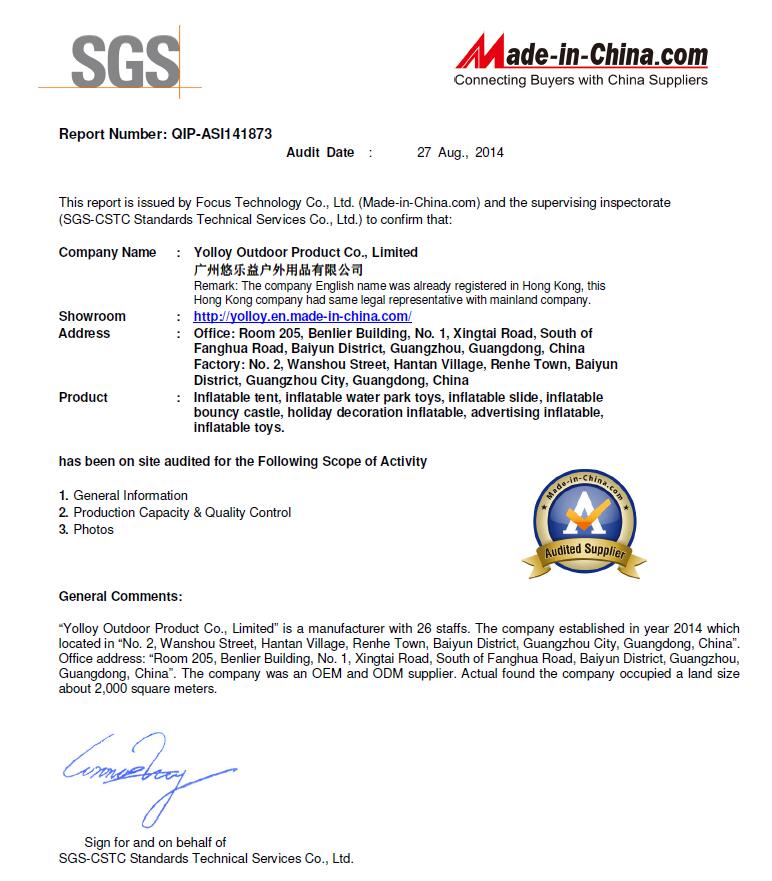
For example, YOLLOY, an inflatable manufacturer based in Guangzhou, China, follows a design-to-production workflow: its designers prepare simulation renderings from your proposal, revise the design until you approve it, and then move it into factory production. The company supplies blowers matched to each product, reports a 95% on-time delivery rate, and typically produces a regular inflatable in 6 to 15 days before transit. Every unit ships with a repair kit, and a three-year service life is expected when the product is used and maintained correctly. That kind of end-to-end service makes ordering a
custom air dancer inflatable straightforward, even for a first-time buyer.
Maintain it and it will last
Routine care keeps an air dancer looking sharp. Wipe the fabric down with a damp cloth and mild soap after heavy use, inspect the seams and anchor points regularly, and patch small tears early using the repair kit that comes with the unit. When the dancer is not in use, deflate it fully and store it in a dry, cool place out of direct sunlight. Avoid leaving it running in extreme weather, and take it down during storms. With this level of care, a well-made dancer keeps attracting attention season after season.
Choosing the right air dancer inflatable comes down to matching the size to your site, insisting on durable materials and a properly matched blower, planning your graphics, and working with a manufacturer you can trust. Get those basics right and your air dancer will do exactly what it is meant to do: stop people, and point them your way.