Over the past decade, inflatable water park attractions have evolved from simple backyard toys into serious commercial entertainment assets. Hotels, resorts, lakeside campgrounds, municipal recreation departments, and standalone water parks are all turning to inflatable structures as a flexible, cost-effective way to draw visitors and boost revenue. But building a water park that is safe, durable, and consistently profitable requires more than just picking a few floating obstacles off a catalog. It demands careful planning around component selection, material quality, customization, and long-term maintenance — and that is where a knowledgeable manufacturing partner makes all the difference.
Why Inflatable Water Parks Are Thriving
Traditional concrete-and-steel water parks come with enormous upfront capital costs, lengthy construction timelines, and rigid layouts that are expensive to modify. Inflatable solutions flip that equation. A well-designed inflatable floating water park can be installed on an existing body of water — a lake, reservoir, calm bay, or even a large swimming pool — in a fraction of the time and at a fraction of the cost of a permanent facility. The modular nature of these parks means operators can start small and expand season by season, swapping components to keep the experience fresh for repeat visitors.
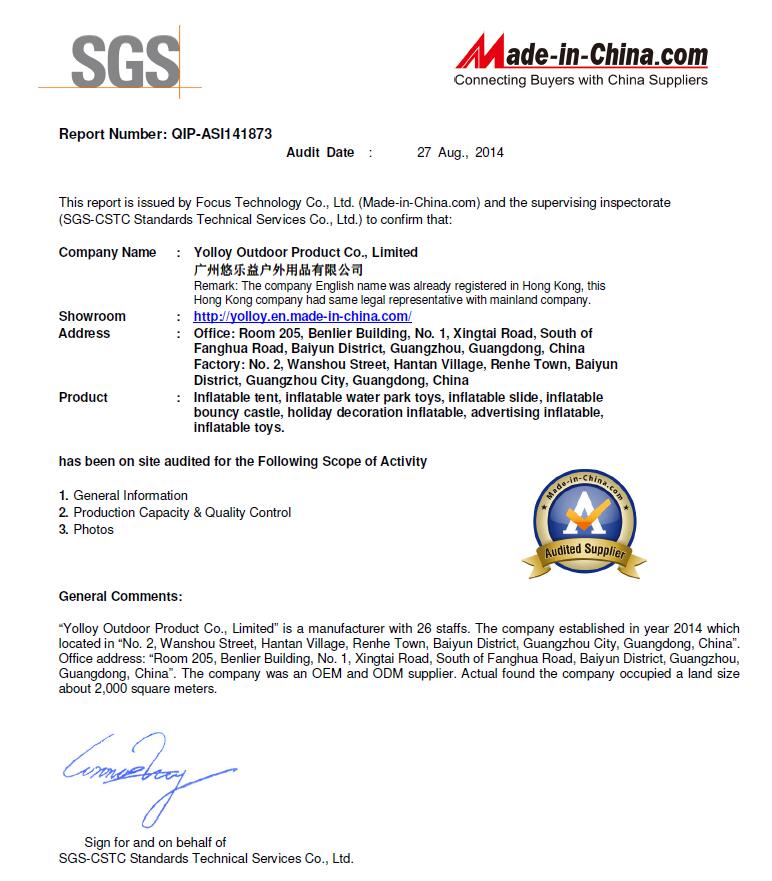
For resort owners and municipal park managers, the business case is straightforward: inflatable water attractions increase on-site dwell time, justify premium admission fees, and create a social-media-friendly experience that markets itself through guest photos and videos. A custom inflatable manufacturer China-based operation like Yolloy Outdoor Product Co., Limited has supplied these attractions to venues across Europe, Asia, South America, Africa, and the Middle East, demonstrating the truly global appetite for this kind of family entertainment.
Core Components of a Well-Rounded Water Park
An engaging inflatable water park is never a one-size-fits-all product. Successful parks combine several types of structures to cater to different age groups and thrill levels. Here are the components that operators typically consider when building out their attraction:
Floating obstacle courses and runways — These are the backbone of most parks. Visitors sprint, climb, and tumble across linked platforms, bridges, and balance beams set on the water surface. They appeal strongly to families and group bookings.
Water slides and free-fall drops — High-thrill features like commercial inflatable slides give older kids and adults a reason to choose your park over the competition. A double-lane slip slide with a splash pool at the end, for example, can handle high throughput while delivering an adrenaline rush.
Floating leisure platforms and loungers — Not every guest wants an adrenaline rush. Spacious floating islands with seating areas let adults relax on the water while keeping an eye on children. Some designs, such as teak-patterned air platforms, blend comfort with a premium look suitable for upscale resorts and yacht clubs.
Climbing walls and trampolines — Water-based climbing walls and inflatable trampolines add vertical excitement and encourage healthy competition among guests.
Water balls and zorb rollers — These individual-play items are low-cost crowd-pleasers that work in dedicated shallow zones, giving younger visitors a safe but memorable experience.
Material Quality: The Foundation of Safety and Longevity
The single biggest variable in an inflatable water park's lifespan is the material from which it is made. Parks that sit in open water are subjected to relentless UV exposure, fluctuating temperatures, wind stress, and constant physical wear. Inferior materials will fade, stiffen, and develop seam failures within a season or two.
Commercial-grade PVC tarpaulin, reinforced seams sewn with waterproof nylon thread, and high-temperature fusion welding at stress points are the marks of a product built for continuous commercial use. Look for manufacturers that can supply material certifications — Yolloy products, for instance, use materials that have passed EN71, EN14960, and RoHS-related testing, with blowers meeting CE or UL requirements.
Additionally, a proper anchoring system is non-negotiable. D-ring and round metal anchor points should be integrated into the design so that parks can be securely fastened with concrete blocks or ground stakes, keeping the entire structure stable even under wind load and heavy guest traffic.
Customization: Making Your Park Stand Out
In a crowded recreation market, a generic-looking water park blends into the background. Customization is what turns a collection of inflatables into a branded destination. A capable manufacturer should offer custom sizes, color schemes, and the ability to print your logo, mascot, or artwork directly onto the product surface.
Yolloy's design-to-production workflow illustrates how a good customization process works: you provide a description, sketch, photo, or site plan along with your budget, and their design team prepares simulation renderings. You review and revise until the design is exactly right, and only then does production begin. This collaborative approach ensures that the final product fits your available water area, matches your brand identity, and appeals to your specific target audience.
Installation, Daily Operation, and Maintenance
Even the best-made inflatable park will underperform if installed or maintained poorly. Before ordering, confirm that your site has the appropriate permits and that the water body meets local safety and environmental requirements. A reliable manufacturer will provide detailed setup instructions and can often recommend or supply the correct blowers — available in 110V, 220V, or 380V configurations to match your local power supply.
Day-to-day operation is straightforward. Continuous-air models run a blower during operating hours; sealed-air products are inflated once and stay pressurized. At the end of each day, a quick visual inspection of seams and anchor points takes minutes. Any minor tears or punctures can be repaired on the spot with the repair kit that should be supplied with every product. Yolloy, for example, includes a repair kit with each inflatable they ship, and their products are designed for a service life of approximately three years under proper use and regular maintenance.
For off-season storage, products should be cleaned, thoroughly dried, folded, and stored in a cool, dry location. Properly maintained, a quality inflatable water park can deliver multiple seasons of reliable operation, giving operators a strong return on their investment.
Selecting the Right Manufacturing Partner
When you are investing in equipment that will be used by hundreds or thousands of guests each season, the manufacturer behind the product matters as much as the product itself. Key questions to ask any supplier include:
What certifications do your materials and blowers carry? (EN14960, EN15649, CE, UL, RoHS are all good signs.)
Can you customize every aspect — size, color, branding, layout — and at what minimum order quantity?
What is your typical production lead time and shipping timeline?
Do you include a repair kit, and what is your after-sales support policy?
Can you provide references or case studies from similar commercial installations?
Yolloy Outdoor Product Co., Limited, based in Guangzhou, China, answers these questions clearly on their website. Their minimum order quantity is one piece, production typically takes 6 to 15 days per standard item, and they ship by both air (5–7 days transit) and sea (15–30+ days). With a reported 95% on-time delivery rate and a commitment to responding to inquiries within 24 hours, they offer the kind of reliability that commercial operators depend on.
Start Small, Think Big
One of the smartest strategies in the inflatable water park business is to start with a carefully chosen core package — perhaps a floating obstacle course, a slide, and a leisure platform — and then expand based on guest feedback and seasonal trends. Because inflatables are modular by nature, you can add a climbing wall, a trampoline, or a dedicated kids' zone in future seasons without disrupting your existing setup.
Whether you run a lakeside resort looking to add a signature attraction, a municipal recreation department aiming to boost summer attendance, or an entrepreneur planning a standalone water park, the key is to partner with a manufacturer that understands both the engineering demands of commercial inflatables and the business realities of running a visitor-facing attraction. With the right products and the right partner, an inflatable water park can become a high-margin, high-visibility centerpiece of your entertainment offering.
Ready to Build Your Inflatable Water Park?
Yolloy Outdoor Product Co., Limited designs and manufactures custom inflatable water parks, floating platforms, commercial slides, and interactive water toys for clients worldwide. Their team will work with you from initial concept through delivery to create an attraction that fits your space, your brand, and your budget.
Visit www.yolloy.net to browse the full product catalog, or contact [email protected] to start a conversation about your project.
Note: Product specifications, certifications, lead times, and warranty terms mentioned in this article are based on information published on yolloy.net as of mid-2026. Always confirm current details directly with the manufacturer before placing an order.