From floating playgrounds to poolside attractions, here is what operators and event planners need to know before investing in water-based inflatables.
Outdoor entertainment has shifted dramatically over the past decade. Resort owners, municipal park operators, and event companies are increasingly turning to
inflatable water park attractions to draw crowds, boost revenue, and offer experiences that traditional fixed installations cannot match. Unlike permanent structures, inflatable water parks offer flexibility they can be set up on a lake, at a beachfront, beside a hotel pool, or even on a flat grassy field with a splash pool. The appeal is straightforward: low upfront investment, quick deployment, and the ability to reconfigure or relocate as demand shifts.
What Makes an Inflatable Water Park a Smart Investment
The business case for inflatable water attractions rests on several practical advantages. First, they require no excavation, no concrete foundations, and no permanent construction permits a single inflatable platform or floating course can be inflated within minutes using a standard blower. Second, the modular nature of these products means you can start with a core setup say, a floating obstacle course and a couple of slides and expand over time as visitor numbers grow. Third, seasonal operators particularly benefit because the entire park can be deflated, packed, and stored during the off-season, protecting the equipment from weather damage and eliminating year-round maintenance costs.
An
inflatable floating water park takes this concept a step further by sitting directly on natural or artificial bodies of water. These floating aqua parks feature interconnected modules trampolines, climbing walls, balance beams, slides, and launch pads all anchored securely to the lakebed or seabed. The result is a high-energy attraction that requires no pool construction and makes use of waterfront real estate that would otherwise sit idle.
Key Product Categories to Consider
When building out a water park inventory, operators typically look across several product types. The selection depends on the target age group, available water surface area, and the overall theme of the venue. Below are the core categories that a well-rounded water park should include:
Floating obstacle courses and aqua sports platforms These are the centerpiece of most floating water parks, combining climbing, sliding, and jumping elements into a continuous circuit that keeps guests engaged for 30 to 60 minutes per session.
Inflatable swimming pools and splash zones Ideal for younger children or venues without direct access to a natural water body, standalone pools with built-in slides and spray features create a contained, safe play environment.
Water balls and zorb balls Transparent, human-sized inflatable spheres that let participants walk, run, or roll on water. These are popular add-ons that generate strong social media engagement.
Inflatable boats and floating loungers For venues that cater to a more relaxed crowd, floating platforms and loungers offer a premium leisure experience, often used for poolside bars, yacht clubs, and resort beaches.
Commercial water slides From slip-and-slide ramps to multi-lane racing slides, these deliver high-thrill experiences that appeal to teenagers and families alike.
Customization: Your Park, Your Brand
One of the most underrated advantages of working with a dedicated inflatable manufacturer is the ability to customize every aspect of the product. Beyond choosing sizes and colors, operators can have their logos, brand colors, and artwork printed directly onto the inflatable surfaces. A floating water park with consistent branding looks professional in photographs and videos, which in turn drives organic social media exposure. Custom designs are developed from a client''s description, drawing, sketch, or even a photograph and the manufacturer''s design team prepares simulation renderings for approval before production begins.
This level of customization extends to the blower systems as well. Since electrical standards vary by country, blowers can be supplied for 110V, 220V, or 380V requirements, ensuring that the equipment works out of the box regardless of where the park is located.
Material Quality and Safety Standards
Commercial-grade inflatables are built from heavy-duty PVC tarpaulin, with seams reinforced using waterproof nylon thread and precision sewing equipment. High-load areas receive additional reinforcement, and airtight sections are manufactured using high-temperature fusion welding. For floating water parks, the anchoring system is particularly critical D-ring or round metal anchor points are integrated into the design to ensure stability against wind and water currents.
When evaluating suppliers, look for material certifications that match the product''s intended use. Inflatable toys should comply with EN 14960, while water park products reference EN 15649. Blowers should carry CE or UL certification. Reputable manufacturers also supply a repair kit with every product and conduct pre-shipment inspection and testing, so you are not left dealing with defects after delivery.
Logistics, Lead Times, and Shipping
A typical production timeline for a standard inflatable product ranges from 6 to 15 days, though larger or highly customized orders may take longer. Once production is complete, shipping options include air freight (approximately 5 to 7 days transit) and sea freight (15 to 30 days or more). Products are packed with soft carpet protection, waterproof PVC bags, and an outer layer of PE film; large items may ship on steel pallets for added protection.
For operators planning a seasonal opening, timing the order is everything. A buffer of at least 4 to 6 weeks from order placement to delivery is advisable to account for production, quality inspection, and transit. Working with a supplier that maintains a 95% on-time delivery rate and responds to inquiries within 24 hours makes the procurement process significantly smoother.
Beyond Water Parks: The Broader Inflatable Opportunity
While water attractions are a strong category, many operators discover that diversifying their
commercial inflatable products portfolio opens additional revenue streams. Outdoor inflatable tents ranging from clear dome bubble tents and party tents to sports shelters and emergency structures serve the event rental, hospitality, and corporate sectors. Interactive sports games like inflatable football arenas, ziplines, and obstacle courses attract team-building groups and school outings. Bounce houses and commercial slides remain staples for children''s parties and family entertainment centers. By sourcing multiple product categories from a single manufacturer, buyers simplify logistics, consolidate shipping, and often negotiate better pricing.
Warranty and After-Sales Support
A well-maintained commercial inflatable can deliver a service life of approximately three years under normal use, though this varies by product type and usage intensity. Each product should come with a repair kit, and the supplier should be reachable for replacement parts and technical support. Before committing to an order, ask about the warranty terms, what is covered, and whether the manufacturer can supply replacement blowers, patch material, and anchor hardware on short notice.
Ready to Build Your Water Park?
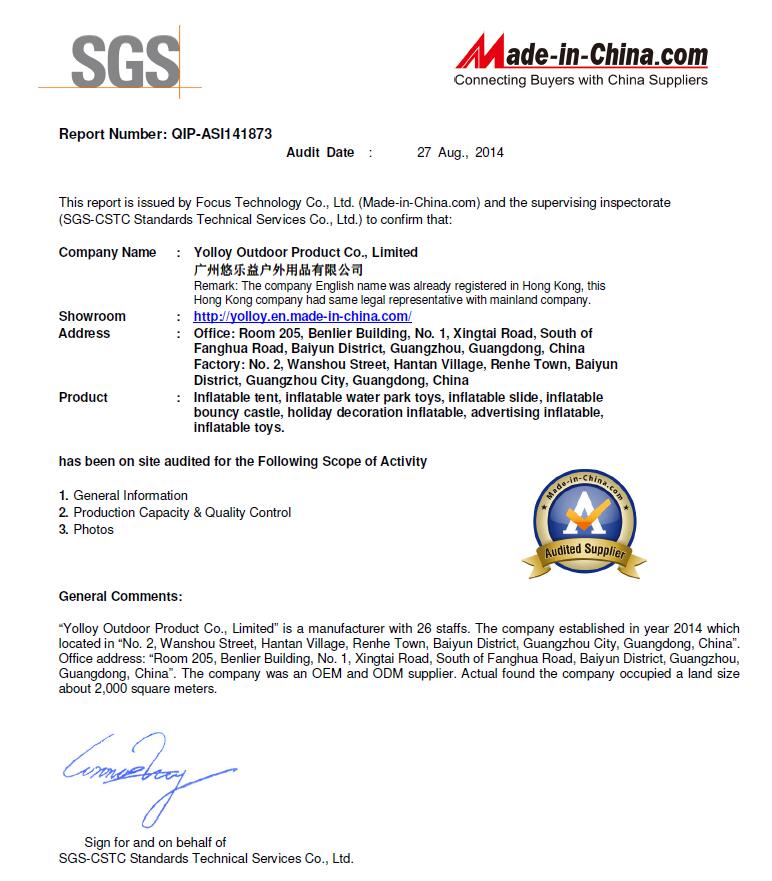
Whether you are launching a floating aqua park on a lake, adding a splash zone to a hotel pool, or creating a traveling water attraction for events, the right manufacturing partner makes all the difference. YOLLOY Outdoor Product Co., Limited designs and manufactures custom inflatable water parks, floating platforms, pools, slides, boats, and interactive water toys from its production base in Guangzhou, China. With a one-piece minimum order quantity, full customization options, and CE/UL-certified blowers, YOLLOY supports buyers from initial concept through delivery. Contact the team at
[email protected] or call
+86-20-8370 0771 to discuss your project requirements and request a design proposal.