Two event planners receive the same brief: host a 200-guest outdoor gala dinner in a coastal city, September. One hires a traditional marquee company — steel frames, canvas panels, a three-day build. The other orders a custom inflatable tent for events — delivered in two weeks, set up in under an hour by two people. Same venue, same budget. Completely different weekends.
Why Event Planners Are Switching to Inflatable Tents
The event industry has been quietly reshaped by a material revolution. The traditional marquee — heavy, slow to install, expensive to transport — is losing ground to a faster, more flexible alternative. An outdoor inflatable tent uses air beams instead of metal poles, inflating into a fully functional shelter in minutes with a standard electric blower. The difference is not cosmetic. It changes the entire economics of an outdoor event.
Event planners who have made the switch report three consistent advantages. First, setup time drops from hours or days to minutes. Second, transport costs shrink because the entire structure packs into a few carry bags. Third, the visual impact is stronger — inflatable tents have clean, modern lines that photograph well and create a sense of occasion that pole-frame tents rarely match.
Which Inflatable Tent Fits Your Event Type
Not all inflatable tents are built for the same purpose. The right choice depends on what you are hosting.
Weddings and gala dinners: A clear inflatable dome tent with transparent walls gives guests an uninterrupted view of the sunset, the skyline, or the garden. These structures are often chosen for their "wow factor" — the kind of setting that fills an Instagram feed without additional decoration.
Corporate product launches and brand activations: An inflatable party tent printed with the brand's logo and color palette turns an empty plaza into a branded environment. The tent surface itself becomes a billboard — no need for additional signage.
Trade shows and exhibitions: Cube and tunnel-style tents create defined booth spaces that are easy to transport between shows. Some event companies now own a fleet of inflatable tents and rotate them through a season of exhibitions, saving on rental fees across the year.
Festivals and community events: Large-capacity inflatable shelters provide shade, rain cover, and a central gathering point. Unlike rigid structures, they can be repositioned if the site layout changes at the last minute.
The Customization Advantage: Branding Without Compromise
A standard-issue tent sends a standard-issue message. When an event is designed to communicate a brand, a product, or a mood, the shelter should be part of that story — not a generic backdrop. This is where working with a custom inflatable tent manufacturer makes a measurable difference.
At Yolloy, the customization process starts with a conversation. A client provides a sketch, a photograph, a site plan, or even just a written description of the vision. The design team produces simulation renderings so the client can see the finished product before production begins. Colors, dimensions, printed logos, and artwork are all adjustable. The tent is not chosen from a catalog — it is built to the event.
This approach works for events of all sizes. A single-tent order is treated with the same attention as a fleet order for a national tour. The minimum order quantity is one piece, which means event planners can test a design before committing to a larger purchase.
Quick comparison: Traditional marquee vs. inflatable tent
Setup time: 4-8 hours (marquee) → 30-60 minutes (inflatable)
Transport: Truck with crew → Car trunk or van
Custom branding: Vinyl banners attached → Printed directly on tent surface
Weather resistance: Wind-rated frame → Anchored air-beam structure with reinforced seams
Reusability: Limited by wear on frame joints → Hundreds of inflation cycles with proper care
What to Look for in an Inflatable Tent Manufacturer
The gap between a well-made inflatable tent and a poorly made one is invisible in a product photo. It shows up six months later, at the third event, when a seam splits or a zipper jams. Choosing the right inflatable tent manufacturer is not about finding the lowest price — it is about finding a supplier whose production discipline matches the demands of professional event use.
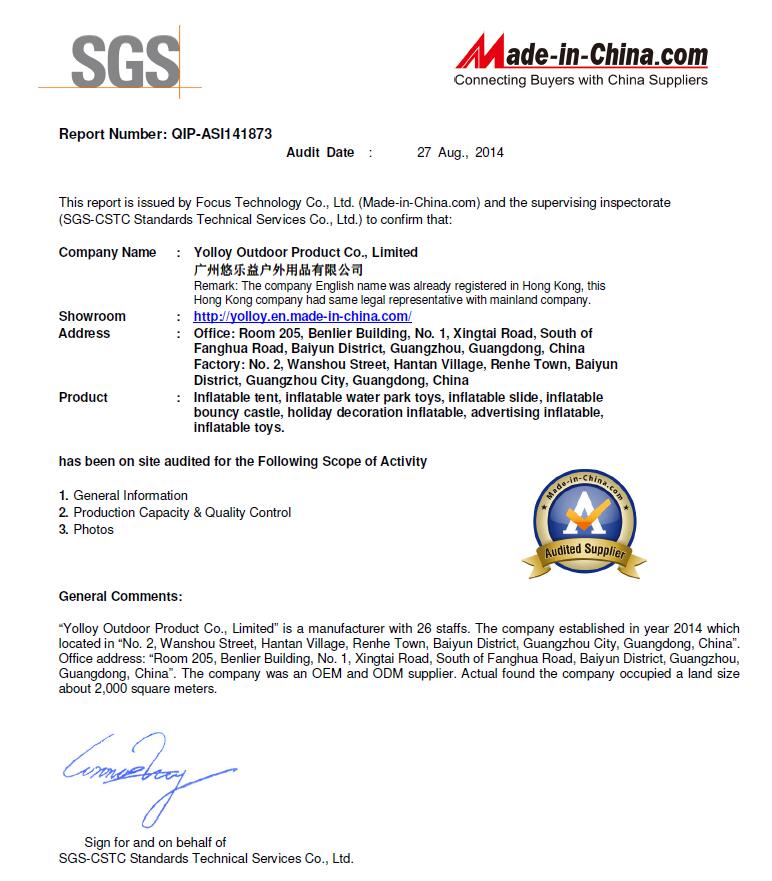
A few signals separate a reliable manufacturer from a reseller. The first is material transparency. A factory that can tell you exactly which grade of PVC tarpaulin, Oxford fabric, or TPU they use — and why — is a factory that controls its supply chain. Yolloy products are built with commercial-grade materials that have passed EN71, EN14960, and RoHS testing, depending on the product category.
The second signal is sewing quality. Inflatable tents that rely on air-beam structures place enormous stress on seams. Yolloy uses precision sewing equipment, waterproof nylon thread, and additional reinforcement at high-load areas. Airtight sections are manufactured with high-temperature fusion welding rather than adhesive bonding, which is a quieter but more critical quality decision than most buyers realize.
The third signal is the warranty and service response. A manufacturer that replies to emails within 24 hours, provides a repair kit with every product, and states a 95% on-time delivery rate is not guessing — they are measuring. These operational details matter more than the price list because they determine whether the tent arrives on time and stays functional.
Safety, Anchoring, and Weather Preparedness
An outdoor event tent is subject to wind, rain, and the weight of lighting equipment. Yolloy products incorporate D-ring and round metal anchor systems as standard, designed to hold the structure stable in variable conditions. The blowers supplied with each tent are matched to the structure's volume and are available in 110V, 220V, or 380V configurations depending on the event location's power supply. CE or UL-rated blowers come as standard.
Every inflatable product is inspected and tested before shipment. The company packages its tents with soft carpet protection, waterproof PVC bags, and outer PE film — large items ship on steel pallets. A repair kit is included so that minor punctures can be addressed on-site without waiting for a technician.
From Design to Delivery: How the Process Works
The typical production timeline for a regular inflatable tent is 6 to 15 days, excluding transit. Complex or large custom designs may take longer. Once the design is approved and production is complete, the tent is packed and shipped. Air freight takes approximately 5 to 7 days, while sea freight takes 15 to 30 days or more, depending on the destination.
Yolloy exports to Europe, Asia, South America, Africa, the Middle East, and Latin America. The company's contact person, Sunny Yang, handles inquiries by phone at +86-20-8370 0771 or by email at [email protected]. The Guangzhou factory is located in Baiyun District, with a full address available on the website.
Ready to plan your next outdoor event with a custom inflatable tent? Whether you need a single branded shelter for a wedding or a fleet of tents for a touring exhibition, Yolloy designs and manufactures inflatable products to your specifications. Visit yolloy.net to browse the full product range, or contact the team directly to discuss your project. A rendering of your design is the first step — and it costs nothing to start the conversation.