When you walk into a music festival, a community marathon, or a store's grand opening, there's one thing that immediately catches your eye—the tall, vibrant inflatable arch standing at the entrance. It's not just a decoration; it's a statement. It says, "This is where the fun happens." But have you ever stopped to think about what makes a good inflatable arch, especially one that can handle rain, wind, and scorching sun without falling apart? And how much does it actually cost to get a heavy-duty, weatherproof one that won't let you down mid-event?
If you're planning an outdoor event, whether it's a small local fair or a large commercial promotion, the inflatable arch is like the "face" of your event. A flimsy one that deflates in the wind or gets moldy after rain? That's a disaster. But a sturdy, weatherproof arch that stays bright and upright no matter the weather? That's the kind of reliability that makes your event memorable. Today, we're diving deep into everything you need to know about heavy-duty inflatable arches—from the materials that make them tough enough for the outdoors to the real costs behind them, and why choosing the right manufacturer matters more than you think.
Why Weatherproofing Matters More Than You Think
Let's start with the basics: outdoor events are at the mercy of Mother Nature. One minute it's sunny, the next a sudden downpour hits. Or maybe you're setting up in a coastal area where the wind never seems to stop. An inflatable arch that isn't built for these conditions isn't just a waste of money—it's a liability. Imagine your arch collapsing during a marathon because the fabric tore in the wind, or the colors fading after a week of summer sun, making your brand logo look dull and unprofessional.
Weatherproofing isn't just about "keeping water out." It's about
durability
. A truly weatherproof inflatable arch should handle:
-
Heavy rain
: No leaks, no water pooling that adds extra weight and weakens the structure.
-
Strong winds
: Reinforced seams and stable base design to prevent tipping or tearing.
-
UV rays
: Fabric that resists fading, even after months of outdoor use.
-
Extreme temperatures
: From hot summer days to chilly autumn mornings, the material shouldn't crack or lose elasticity.
And here's the thing: not all inflatable arches are created equal. Many cheap options on the market cut corners with thin, low-quality materials that might look good in the store but fail the first time the weather turns. That's why understanding what goes into a weatherproof design is key to avoiding those costly "oops" moments.
The Secret to Weatherproof Inflatable Arches: Materials That Stand the Test
When it comes to inflatable products, the material is everything. You could have the best design in the world, but if you skimp on materials, your arch won't last. Let's break down the materials that make a heavy-duty inflatable arch truly weatherproof—and why they matter for both performance and cost.
1. PVC: The Workhorse of Outdoor Inflatable Products
Most high-quality inflatable arches are made from
PVC
(polyvinyl chloride), but not just any PVC. We're talking about heavy-duty, waterproof, and even fire-resistant PVC that's built to handle the outdoors. For example, top manufacturers like Yolloy use PVC that's specifically designed for outdoor use, with a thickness of 0.4mm to 0.9mm (thicker than standard tarps) and a special coating that repels water and blocks UV rays.
What makes this PVC so reliable? It's all in the testing. Reputable manufacturers don't just say their materials are good—they back it up with certifications. Take the
EN71 safety standard
, for example. This is a strict European standard for toys and inflatable products, testing for things like toxicity, flammability, and mechanical strength. If a PVC passes EN71, you know it's safe (no harmful chemicals leaching) and tough enough to withstand rough use.
Another key feature?
Fire resistance
. Outdoor events often have grills, candles, or even fireworks nearby. A fire-resistant PVC arch won't catch fire easily, giving you peace of mind even in crowded settings.
2. TPU: When You Need Extra Flexibility (and Eco-Friendliness)
For some specialized inflatable arches—like those used near water or in eco-sensitive areas—manufacturers might use
TPU (thermoplastic polyurethane)
. TPU is softer and more flexible than PVC, which makes it great for arches that need to bend a little without tearing. But what really sets TPU apart is its eco-friendly credentials: it's non-toxic, odorless, and resistant to hydrolysis (that means it won't break down when exposed to water over time).
Think about it: if you're setting up an arch at a beach event or a water park, you don't want materials that leach chemicals into the water. TPU checks that box, making it a popular choice for outdoor arches in sensitive environments. It's a bit pricier than standard PVC, but the trade-off for flexibility and eco-safety is often worth it.
3. The "Little Things" That Make a Big Difference: Seams, Valves, and Reinforcements
Even the best fabric won't save an arch if the seams are shoddy. Imagine sewing a jacket with a weak stitch—one tug, and it rips. The same goes for inflatable arches. High-quality manufacturers use
heat-sealed seams
instead of just gluing or stitching. Heat-sealing melts the fabric edges together, creating a bond that's stronger than the fabric itself. It's like welding the seams shut, so water can't seep in and wind can't pull them apart.
Then there are the
valves
. A cheap valve might leak air slowly, meaning you're constantly re-inflating the arch. A good valve? It's airtight, easy to inflate/deflate, and made from durable plastic that won't crack in the cold or warp in the heat. Some manufacturers even add double valves—one for quick inflation and one for fine-tuning the pressure—so you can get the arch perfectly taut every time.
And let's not forget
reinforcements
. The base of the arch, where it meets the ground, and the top curve, which takes the most wind pressure, are often reinforced with extra layers of fabric or webbing. It's like adding steel beams to a building—these spots need extra support to handle the stress of outdoor use.
Breaking Down the Cost: Why Heavy-Duty Inflatable Arches Aren't "Cheap"—and Why They're Worth It
Let's get real: a heavy-duty, weatherproof inflatable arch isn't going to cost the same as a cheap pool float from the dollar store. But before you balk at the price tag, it's important to understand what goes into that cost. Spoiler: It's not just the materials—design, customization, and service play huge roles too.
1. Material Costs: You Get What You Pay For
The biggest chunk of the cost? The materials we just talked about. A standard inflatable arch (say, 6 meters wide and 4 meters tall) made from basic PVC might cost around $300-$500, but that's the "disposable" kind—think thin fabric, no reinforcements, and zero weatherproofing. It might work for a one-time event, but don't expect it to last through a rainstorm or two.
A heavy-duty version, though? Using EN71-certified, fire-resistant PVC with heat-sealed seams and reinforcements? That same size arch would start around $800-$1,200. Why the jump? Because the materials alone cost more. High-quality PVC is pricier than the cheap stuff, and adding features like fire resistance or UV protection adds to the material cost. But here's the math: if you buy a $300 arch that lasts one event, versus a $1,000 arch that lasts 5+ years, which is the better deal?
For larger arches (10+ meters wide) or those with custom shapes (like brand logos or unique curves), the material cost goes up even more. More fabric, more complex cutting, and more seams mean more labor and materials. But again—this is about investment, not expense.
2. Design and Customization: Making It "Yours"
Most people don't want a plain white inflatable arch. They want their brand colors, logos, or event themes printed on it. Customization adds cost, but it's what makes the arch effective as an advertising tool. Here's how that breaks down:
-
Artwork design
: If you don't have a print-ready logo, the manufacturer might charge for design services to adjust your artwork so it prints clearly on the fabric. Prices here can range from $50-$200, depending on how complex the design is.
-
Printing method
: The best inflatable arches use
digital sublimation printing
, which embeds the ink into the fabric (instead of just printing on top). This means the colors won't fade, crack, or peel—even after years of sun exposure. Sublimation is pricier than screen printing, but the longevity is worth it.
-
Shape customization
: Want an arch that's not just a basic curve? Maybe a star-shaped top or a arch that spells out your event name? Custom shapes require 3D modeling, prototype testing, and specialized cutting—all of which add to the design cost. Expect to pay $200-$500 extra for complex shapes.
But here's the good news: many manufacturers, like Yolloy, offer free design consultations. They'll work with you to tweak your ideas, create mockups, and make sure the final arch looks exactly how you want before production starts. That way, you don't waste money on a design that doesn't work.
3. Production and Quality Control: No Cutting Corners
You could have the best materials and design, but if the production process is sloppy, the arch will still fail. High-quality manufacturers don't rush production—they take time to ensure every seam is sealed, every valve is tight, and every print is crisp. This attention to detail adds to the cost, but it's what makes the arch reliable.
For example, Yolloy's production process includes multiple quality checks: the fabric is inspected for defects before cutting, the seams are tested for airtightness after sealing, and the finished arch is inflated for 24 hours to check for leaks. If any issue is found, it's fixed before shipping. This level of quality control takes time and labor, but it means you're not left with a defective product.
4. Service and Support: The "Hidden" Cost of Peace of Mind
Ever bought a cheap product online, had a problem, and tried to contact customer service—only to get no response? That's the opposite of what you want with an inflatable arch. A good manufacturer includes service in the cost, and that's worth every penny.
Here's what to look for:
-
24-hour response
: If you have a question or issue (like a missing part or a leak), you need help fast. Manufacturers like Yolloy pride themselves on responding to emails or faxes within 24 hours—no waiting days for a reply.
-
Clear communication
: From the moment you ask for a quote to the day the arch arrives, the manufacturer should keep you in the loop. Need to change the design halfway through production? They should confirm the changes in writing and update the timeline if needed.
-
Warranty and after-sales support
: A one-year warranty on materials and workmanship is standard for heavy-duty arches. Some manufacturers even offer repair kits for small tears or leaks, so you can fix minor issues yourself without buying a whole new arch.
These services aren't "free"—they require staff, systems, and time—but they're what turn a transaction into a partnership. When you know the manufacturer has your back, you can focus on your event, not worrying about the arch.
So, What's the Real Cost? A Breakdown Table
|
Arch Type
|
Size
|
Materials
|
Customization
|
Approx. Cost Range
|
Expected Lifespan
|
|
Basic (non-weatherproof)
|
6m wide x 4m tall
|
Thin PVC, no reinforcements
|
None (plain color)
|
$300-$500
|
1-2 events (not weatherproof)
|
|
Heavy-Duty Weatherproof
|
6m wide x 4m tall
|
EN71 PVC, heat-sealed seams, fire-resistant
|
Basic logo print (1-2 colors)
|
$800-$1,200
|
3-5 years (outdoor use)
|
|
Large Custom Arch
|
10m wide x 6m tall
|
Reinforced PVC/TPU, custom shape
|
Full-color print, custom shape
|
$2,000-$4,000
|
5+ years (with proper care)
|
As you can see, the cost varies widely based on what you need. But remember: the cheapest option is rarely the best value. A heavy-duty, weatherproof arch is an investment in your event's success and your brand's image.
Why Choosing the Right Manufacturer Matters: It's Not Just About the Arch
Okay, so you know what makes a good inflatable arch and how much it costs. Now, the next big question: where do you buy it? Choosing the right manufacturer is just as important as choosing the right arch—maybe even more so. Here's why, and what to look for.
1. Experience = Reliability
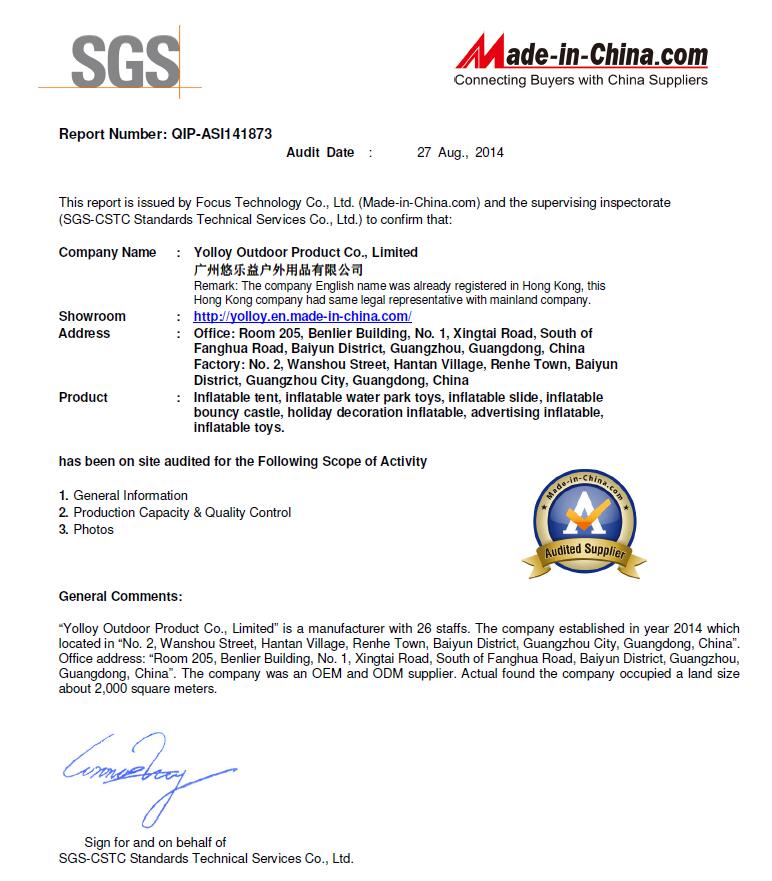
Inflatable arches might seem simple, but there's a lot of engineering that goes into making one that's both lightweight and strong. A manufacturer with years of experience (like Yolloy, which has been in the inflatable product game for over a decade) knows the common pitfalls: where seams fail, how to balance flexibility and strength, and how to design for different weather conditions.
For example, an experienced manufacturer will ask you about your event location: "Is it windy there? Do you need it to handle rain? Will it be used near water?" Then they'll recommend the right materials and design tweaks based on that info. A new, inexperienced manufacturer might just sell you a "one-size-fits-all" arch that doesn't work for your specific needs.
2. Service That Goes Beyond "Buy Now"
Ever ordered something online, and when it arrived damaged, the seller ghosted you? That's a nightmare when you're on a tight event timeline. The best manufacturers don't just sell you an arch—they support you from start to finish.
Here's what to expect from a top-tier manufacturer like Yolloy:
-
24-hour response
: Send an email or fax with a question, and you'll hear back within a day. No waiting around for answers when you're in a hurry.
-
Transparent communication
: They'll confirm every detail with you—from the design mockup to the delivery date—so there are no surprises. If there's a delay (which is rare, with a 95% on-time delivery rate), they'll tell you upfront and work to fix it.
-
After-sales support
: Need help inflating the arch for the first time? They'll send you a guide or even a video tutorial. Got a small tear a year later? They'll send you a repair kit or help you find a local repair service.
This level of service isn't just nice—it's critical. When you're planning an event, the last thing you need is stress over your inflatable arch. A manufacturer that communicates clearly and supports you after the sale takes that stress off your plate.
3. Innovation: Staying Ahead of the Curve
The inflatable product industry is always evolving. New materials, better printing techniques, and innovative designs are coming out all the time. A good manufacturer stays on top of these trends, so you get access to the latest and greatest technology.
For example, Yolloy is constantly expanding its product line with new innovations—like inflatable arches with built-in LED lights for night events, or arches made from recycled PVC for eco-conscious brands. These little touches can make your arch stand out and keep your event feeling fresh and modern.
FAQ: Everything You've Been Wondering About Heavy-Duty Inflatable Arches
We've covered a lot, but you probably still have questions. Let's answer some of the most common ones we hear from customers.
Q: How long does it take to inflate a heavy-duty arch?
A: Not long at all! Most arches come with an electric air pump (some manufacturers include it, others sell it separately). A standard 6m arch takes about 3-5 minutes to fully inflate. Just plug in the pump, attach it to the valve, and let it do the work. Deflating is even faster—open the valves, and it'll deflate in 2-3 minutes, then fold up small enough to fit in a carry bag (great for storage and transport!).
A: Absolutely—if it's made with weatherproof materials like PVC or TPU. The key is to dry it properly after use. After the event, deflate the arch, wipe off any dirt or water with a soft cloth, and let it air dry completely before folding and storing. If you do that, mold won't have a chance to grow. And since the fabric is waterproof, rain won't seep inside and damage the structure.
Q: What if the arch gets a hole? Can I repair it myself?
A: Yes! Most manufacturers include a repair kit with the arch, which has patches of the same fabric and strong adhesive. For small holes (smaller than a quarter), just clean the area, apply the patch, and let it dry for a few hours—good as new! For larger tears, you might need to contact the manufacturer for a professional repair, but those are rare if you take good care of the arch.
Q: How do I store the arch when I'm not using it?
A: Storage is easy, but it's important to do it right to extend the arch's life. First, make sure it's completely dry (no moisture = no mold). Then, fold it loosely (don't roll it too tight, as that can crease the fabric and weaken seams). Store it in a cool, dry place—avoid basements with high humidity or attics that get super hot. A carry bag (usually included) keeps it dust-free and easy to transport.
Q: Is it worth buying a custom-shaped arch, or should I stick with a standard design?
A: It depends on your goals. If the arch is just a basic entrance marker, a standard design might be enough. But if you want to make a big impression—like at a brand launch or a major event—a custom shape or printed design can make your arch unforgettable. Think about it: a standard arch blends in, but an arch shaped like your brand's mascot or with a full-color image? That's the kind of thing people take photos with and share online. It's an advertising tool, not just a decoration.
Final Thoughts: Invest in Reliability, Not Regret
At the end of the day, a heavy-duty, weatherproof inflatable arch is more than just a piece of equipment—it's a tool to make your event stand out, keep your guests safe, and showcase your brand in the best light. Yes, it costs more than a cheap, disposable arch, but the peace of mind, durability, and impact are worth every penny.
When you choose a manufacturer like Yolloy—one that uses top-quality materials (EN71 PVC, TPU), offers customization, and stands behind their products with great service—you're not just buying an arch. You're buying reliability. You're buying the confidence that no matter what the weather throws at you, your arch will stay standing, bright, and proud.
So, the next time you're shopping for an inflatable arch, remember: don't just look at the price tag. Look at the materials, the manufacturer's reputation, and the long-term value. Your event deserves the best—and a heavy-duty, weatherproof arch is the first step to making it unforgettable.
|