Products Category
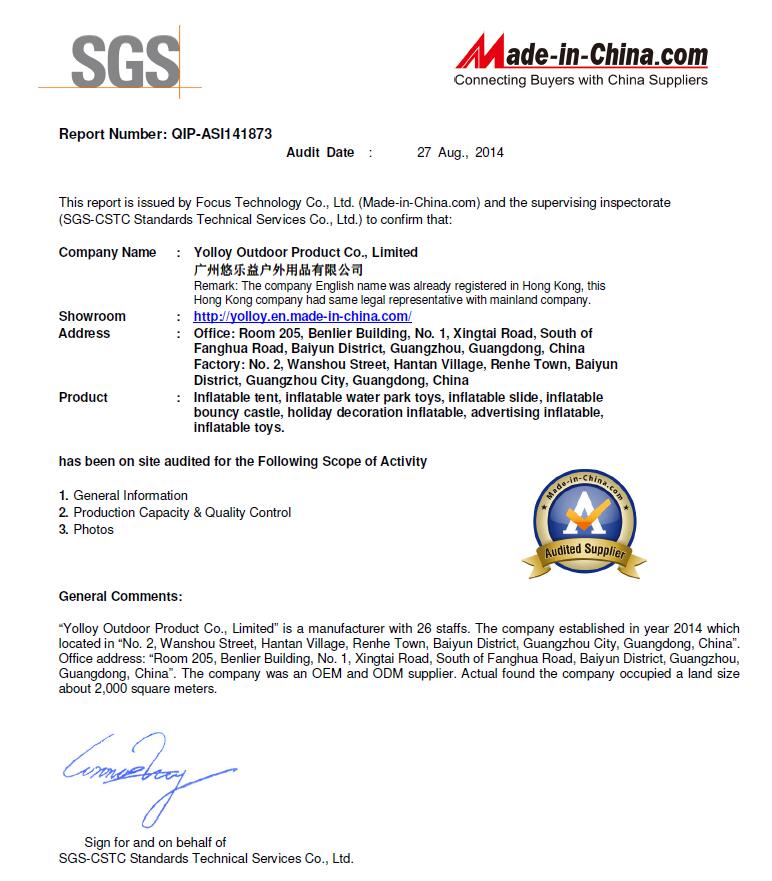
Certification

News

• Possess the Portable Planetarium dome, your life will be more vitality

• Inflatable golf club simulator training tent

• The white inflatable party tent in our life

• YOLLOY Unveils Space-Saving Inflatable Car Wash Mat: The Eco-Friendly Solution for Mess-Free Home Detailing

• Custom Snow-Resistant Inflatable Tunnel Tent to Korean Client

• YOLLOY Launches Innovative Inflatable Light Pillar to Revolutionize Advertising and Event Branding

Contact Us

Name: Sunny Yang
Tel: +86-20-8370 0771
Fax: +86-20-8370 0771
Mobile: 13570587575
E-mail: sales@yolloy.com
Add: No 5,Xiong wei Bo Nan Road,ZhongLuoTan Town,Baiyun district,Guangzhou,China
Friend me on Facebook Follow me on Twitter Add me to your circles Follow me on Pinterest Watch my channel on YouTube
News

Commercial Inflatable Water Slides: Eco-Friendly Production Process - Sustainable Materials

Author:yolloy Date:2025/12/19 5:48:48
Picture this: a sunny afternoon at a community water park, where kids laugh so hard their cheeks hurt, teenagers race down rainbow-colored slides, and parents relax on lounge chairs, sipping cold drinks as they watch the fun unfold. At the center of it all? A towering, vibrant commercial inflatable water slide—shiny, bouncy, and built to turn ordinary days into unforgettable memories. But have you ever stopped to wonder what goes into making that slide? Beyond the bright colors and thrilling curves, there's a story of innovation, responsibility, and a commitment to our planet. Today, we're diving deep into the world of commercial inflatable water slides, focusing on the eco-friendly production processes and sustainable materials that are shaping the future of this industry. Because when it comes to bringing joy to communities, we believe the fun shouldn't come at the cost of our environment.

The Shift to Sustainability: Why It Matters for Commercial Water Slides

Commercial inflatable water slides aren't just for backyard parties—they're workhorses. Found in water parks, resorts, event venues, and even corporate picnics, these slides are designed to withstand hundreds of users daily, harsh UV rays, and constant exposure to water. For years, the focus was on durability and cost, but as consumers and businesses alike grow more eco-conscious, the tide is turning. Now, the best inflatable water slide manufacturers are prioritizing sustainability without compromising on performance. Why? Because a slide that's kind to the planet is also kind to your bottom line: it lasts longer, requires fewer replacements, and appeals to the growing number of customers who choose brands with green values.

At the heart of this shift are two key elements: sustainable materials and eco-friendly production processes. Let's start with the building blocks—the materials that make these slides not just fun, but responsible.

Sustainable Materials: The Foundation of a Greener Slide

When you think of inflatable products, you might picture thin, plastic-like materials that tear easily. But modern commercial inflatable water slides are a far cry from that. Today's leading manufacturers are swapping traditional plastics for innovative, eco-friendly alternatives that check three boxes: safety, durability, and environmental friendliness. Let's take a closer look at the stars of the show.

Eco-Friendly TPU: The Gold Standard for Water Contact

Meet Thermoplastic Polyurethane, or TPU—a material that's revolutionizing the inflatable water slide industry. Unlike some traditional PVCs that rely on harmful plasticizers (chemicals that make materials flexible but can leach into the environment), TPU is a game-changer. Here's why:

  • Non-toxic and odor-free: TPU is free from phthalates and heavy metals, making it safe for kids (and adults!) who might accidentally come into contact with the slide's surface. No more harsh chemical smells or worries about skin irritation—just pure, clean fun.
  • (Hydrolysis-resistant): Water slides live in wet environments, so resistance to water damage is non-negotiable. TPU holds up against constant moisture, meaning the slide won't degrade or become brittle over time. This longevity reduces waste by cutting down on the need for frequent replacements.
  • Recyclable and biodegradable: While traditional plastics can take centuries to break down, TPU is designed to be more environmentally responsible. Some grades are fully recyclable, and even when they reach the end of their life, they break down into non-toxic components, leaving minimal trace in landfills.

Take, for example, the materials used by reputable china inflatable water slide manufacturers. Many now use food-grade TPU that meets strict safety standards, including EN71 (the European safety standard for toys), ensuring that every slide is not just fun, but safe for both people and the planet.

Fire and Water-Resistant PVC: Durability with a Green Twist

TPU isn't the only player in the sustainable materials game. PVC, a long-time staple in inflatable products, is getting a green makeover too. The key? fire and water-resistant PVC (flame-retardant and waterproof PVC tarpaulin) that's been reimagined for sustainability. How? By eliminating harmful additives and focusing on recyclability.

Modern PVC used in commercial inflatable water slides is treated to be fire-resistant (critical for safety in crowded venues) and waterproof (essential for withstanding constant water exposure). But unlike older versions, today's PVC is often free from lead and other heavy metals, and some manufacturers are even using recycled PVC content to reduce their carbon footprint. When combined with TPU for water-contact areas, this creates a slide that's tough, safe, and surprisingly eco-friendly.

Comparing Materials: Traditional vs. Sustainable

Still not convinced that sustainable materials make a difference? Let's put it side by side. The table below compares traditional inflatable slide materials with the eco-friendly options used by leading commercial inflatable water slide manufacturers today:

Feature Traditional Materials (Older PVC) Sustainable Materials (TPU + Green PVC)
Environmental Impact Contains phthalates and heavy metals; slow to biodegrade Non-toxic, recyclable, and free from harmful additives
Safety for Users May leach chemicals; strong plastic odor EN71 certified; odor-free and skin-safe
Durability Prone to cracking in UV light; hydrolyzes in water UV-resistant; (hydrolysis-resistant); lasts 2-3x longer
End-of-Life Disposal Often ends up in landfills; releases toxins when burned Recyclable or biodegradable; minimal environmental harm

Eco-Friendly Production Processes: From Design to Delivery

Materials are just the start. Even the most sustainable fabric can be undermined by wasteful production practices. That's why top inflatable water slide manufacturers are rethinking every step of the process—from the first sketch to the final delivery—to minimize their environmental impact. Let's walk through the journey of a commercial inflatable water slide, highlighting the eco-friendly choices that make a difference.

1. Smart Design: Less Waste, More Functionality

It all begins with design. Gone are the days of over-engineered slides with unnecessary frills that waste material. Today, manufacturers use 3D modeling software to create precise, efficient designs. For example, a slide's curves and angles are optimized to use the least amount of fabric possible while still ensuring a thrilling ride and maximum durability. This "right-sizing" reduces fabric waste by up to 15% compared to traditional design methods. Additionally, modular designs are becoming popular—slides that can be expanded or modified with add-ons (like splash pools or climbing walls) instead of requiring a whole new slide when needs change. This not only cuts down on waste but also makes the slide more versatile for businesses.

2. Precision Cutting: Minimizing Fabric Waste

Once the design is finalized, it's time to cut the fabric. In the past, this was done by hand, leading to uneven edges and excess scrap material. Now, advanced CNC cutting machines (computer numerical control) are used to slice through TPU and PVC with pinpoint accuracy. These machines follow the 3D design exactly, ensuring that every piece fits perfectly—no more guesswork, no more wasted fabric. The result? Scrap material is reduced by up to 20%, and what little waste is left is often recycled or repurposed into smaller inflatable accessories (like repair patches or storage bags).

3. Bonding: No Glue, No Harmful Chemicals

How do you turn flat fabric pieces into a 3D inflatable slide? Traditionally, manufacturers used industrial glues that contained volatile organic compounds (VOCs)—harmful chemicals that pollute the air and can linger in the finished product. Today, the best commercial inflatable water slide manufacturers use high-frequency welding instead. This process uses heat and pressure to melt the edges of the fabric together, creating a bond that's stronger than glue and completely free of VOCs. Not only is this better for the environment, but it also results in a slide that's more leak-resistant and longer-lasting—critical for commercial use.

4. Testing: Quality Over Quantity

You might think testing would be bad for the environment—after all, it involves inflating, deflating, and stress-testing the slide. But here's the twist: rigorous testing actually reduces waste in the long run. By subjecting slides to extreme conditions (high pressure, UV exposure, repeated use) before they leave the factory, manufacturers catch defects early, preventing slides from being returned or discarded later. This "test once, build right" approach saves energy, materials, and money. For example, a slide that passes a 500-hour UV test is less likely to degrade quickly in the sun, meaning it won't need to be replaced as soon as a poorly tested one. And when testing is done in-house (as it is with many china inflatable water slide manufacturers), it cuts down on transportation emissions from sending slides to external labs.

5. Packaging and Shipping: Reducing the Carbon Footprint

The final step—getting the slide from the factory to the customer—might seem small, but it adds up. Traditional inflatable products are often packaged in single-use plastic bags and shipped in oversized boxes filled with Styrofoam peanuts. Sustainable manufacturers are changing this by using recycled cardboard boxes, biodegradable packing peanuts (made from cornstarch, which dissolves in water), and even reusable storage bags for the slides themselves. Some are also optimizing shipping routes and using sea freight instead of air freight when possible to reduce carbon emissions. For example, a commercial inflatable water slide shipped from China to Europe via sea has a carbon footprint up to 90% lower than one sent by plane. It might take a few extra weeks, but for businesses that plan ahead, the environmental savings are well worth it.

Why Choose a Reputable Commercial Inflatable Water Slide Manufacturer?

So, you're sold on sustainable materials and eco-friendly production—now, how do you find a manufacturer that walks the walk? Not all inflatable water slide suppliers are created equal. The best ones don't just talk about sustainability; they prove it through certifications, transparency, and a commitment to continuous improvement. Here's what to look for:

Certifications That Matter

Look for manufacturers that hold certifications like EN71 (the European safety standard for toys, which includes strict chemical and durability tests) and ISO 14001 (an international standard for environmental management systems). These certifications mean the manufacturer has been audited by third parties and meets rigorous standards for safety and sustainability. For example, a slide made with EN71-certified TPU is guaranteed to be free from harmful chemicals, making it safe for kids to play on all day.

Transparency in the Supply Chain

The best manufacturers are open about where their materials come from and how their slides are made. They'll share details about their TPU and PVC suppliers, their production processes, and even their waste-reduction goals. Some even offer factory tours (virtual or in-person) so you can see the sustainability measures in action. When you ask an inflatable water slide wholesale supplier about their eco-friendly practices, they should be able to answer with specifics—not just vague claims like "we care about the environment."

A Focus on Long-Term Partnerships

Sustainability isn't a one-time project—it's a journey. Reputable manufacturers understand this and work with customers as partners, not just clients. They'll help you choose the right slide for your needs (whether it's a small backyard model or a giant water park centerpiece), offer maintenance tips to extend the slide's life, and even take back old slides for recycling when they're finally ready to retire. This "cradle-to-grave" approach ensures that the environmental impact is minimized at every stage.

The Future of Commercial Inflatable Water Slides: Greener, More Fun

As technology advances and sustainability becomes even more critical, the future of commercial inflatable water slides looks bright—literally and figuratively. Imagine slides made from 100% recycled TPU, or solar-powered inflation pumps that reduce energy use. Some manufacturers are already experimenting with biodegradable coatings for slide surfaces, and others are exploring ways to integrate renewable energy into their production facilities (like solar panels to power CNC cutting machines). The possibilities are endless, and the best part? These innovations don't just help the planet—they make slides more durable, safer, and more fun for everyone.

At the end of the day, commercial inflatable water slides are about joy. They're about the kid who conquers their fear of heights by sliding down for the first time, the family that bonds over a day at the water park, and the community that comes together for summer events. But joy shouldn't have a cost—certainly not to our planet. By choosing slides made with sustainable materials and produced through eco-friendly processes, we can keep the laughter flowing for generations to come. So whether you're a water park owner, an event planner, or just someone who loves a good slide, remember: the best fun is the kind that leaves the Earth a little better than we found it. And when you're ready to make that choice, look for a commercial inflatable water slide manufacturer that shares your values—because together, we can turn every splash into a step toward a greener future.


Commercial Inflatable Water Slides: Eco-Friendly Production Process - Sustainable Materials

Author:yolloy Date:2025/12/19 5:48:48

Picture this: a sunny afternoon at a community water park, where kids laugh so hard their cheeks hurt, teenagers race down rainbow-colored slides, and parents relax on lounge chairs, sipping cold drinks as they watch the fun unfold. At the center of it all? A towering, vibrant commercial inflatable water slide—shiny, bouncy, and built to turn ordinary days into unforgettable memories. But have you ever stopped to wonder what goes into making that slide? Beyond the bright colors and thrilling curves, there's a story of innovation, responsibility, and a commitment to our planet. Today, we're diving deep into the world of commercial inflatable water slides, focusing on the eco-friendly production processes and sustainable materials that are shaping the future of this industry. Because when it comes to bringing joy to communities, we believe the fun shouldn't come at the cost of our environment.

The Shift to Sustainability: Why It Matters for Commercial Water Slides

Commercial inflatable water slides aren't just for backyard parties—they're workhorses. Found in water parks, resorts, event venues, and even corporate picnics, these slides are designed to withstand hundreds of users daily, harsh UV rays, and constant exposure to water. For years, the focus was on durability and cost, but as consumers and businesses alike grow more eco-conscious, the tide is turning. Now, the best inflatable water slide manufacturers are prioritizing sustainability without compromising on performance. Why? Because a slide that's kind to the planet is also kind to your bottom line: it lasts longer, requires fewer replacements, and appeals to the growing number of customers who choose brands with green values.

At the heart of this shift are two key elements: sustainable materials and eco-friendly production processes. Let's start with the building blocks—the materials that make these slides not just fun, but responsible.

Sustainable Materials: The Foundation of a Greener Slide

When you think of inflatable products, you might picture thin, plastic-like materials that tear easily. But modern commercial inflatable water slides are a far cry from that. Today's leading manufacturers are swapping traditional plastics for innovative, eco-friendly alternatives that check three boxes: safety, durability, and environmental friendliness. Let's take a closer look at the stars of the show.

Eco-Friendly TPU: The Gold Standard for Water Contact

Meet Thermoplastic Polyurethane, or TPU—a material that's revolutionizing the inflatable water slide industry. Unlike some traditional PVCs that rely on harmful plasticizers (chemicals that make materials flexible but can leach into the environment), TPU is a game-changer. Here's why:

  • Non-toxic and odor-free: TPU is free from phthalates and heavy metals, making it safe for kids (and adults!) who might accidentally come into contact with the slide's surface. No more harsh chemical smells or worries about skin irritation—just pure, clean fun.
  • (Hydrolysis-resistant): Water slides live in wet environments, so resistance to water damage is non-negotiable. TPU holds up against constant moisture, meaning the slide won't degrade or become brittle over time. This longevity reduces waste by cutting down on the need for frequent replacements.
  • Recyclable and biodegradable: While traditional plastics can take centuries to break down, TPU is designed to be more environmentally responsible. Some grades are fully recyclable, and even when they reach the end of their life, they break down into non-toxic components, leaving minimal trace in landfills.

Take, for example, the materials used by reputable china inflatable water slide manufacturers. Many now use food-grade TPU that meets strict safety standards, including EN71 (the European safety standard for toys), ensuring that every slide is not just fun, but safe for both people and the planet.

Fire and Water-Resistant PVC: Durability with a Green Twist

TPU isn't the only player in the sustainable materials game. PVC, a long-time staple in inflatable products, is getting a green makeover too. The key? fire and water-resistant PVC (flame-retardant and waterproof PVC tarpaulin) that's been reimagined for sustainability. How? By eliminating harmful additives and focusing on recyclability.

Modern PVC used in commercial inflatable water slides is treated to be fire-resistant (critical for safety in crowded venues) and waterproof (essential for withstanding constant water exposure). But unlike older versions, today's PVC is often free from lead and other heavy metals, and some manufacturers are even using recycled PVC content to reduce their carbon footprint. When combined with TPU for water-contact areas, this creates a slide that's tough, safe, and surprisingly eco-friendly.

Comparing Materials: Traditional vs. Sustainable

Still not convinced that sustainable materials make a difference? Let's put it side by side. The table below compares traditional inflatable slide materials with the eco-friendly options used by leading commercial inflatable water slide manufacturers today:

Feature Traditional Materials (Older PVC) Sustainable Materials (TPU + Green PVC)
Environmental Impact Contains phthalates and heavy metals; slow to biodegrade Non-toxic, recyclable, and free from harmful additives
Safety for Users May leach chemicals; strong plastic odor EN71 certified; odor-free and skin-safe
Durability Prone to cracking in UV light; hydrolyzes in water UV-resistant; (hydrolysis-resistant); lasts 2-3x longer
End-of-Life Disposal Often ends up in landfills; releases toxins when burned Recyclable or biodegradable; minimal environmental harm

Eco-Friendly Production Processes: From Design to Delivery

Materials are just the start. Even the most sustainable fabric can be undermined by wasteful production practices. That's why top inflatable water slide manufacturers are rethinking every step of the process—from the first sketch to the final delivery—to minimize their environmental impact. Let's walk through the journey of a commercial inflatable water slide, highlighting the eco-friendly choices that make a difference.

1. Smart Design: Less Waste, More Functionality

It all begins with design. Gone are the days of over-engineered slides with unnecessary frills that waste material. Today, manufacturers use 3D modeling software to create precise, efficient designs. For example, a slide's curves and angles are optimized to use the least amount of fabric possible while still ensuring a thrilling ride and maximum durability. This "right-sizing" reduces fabric waste by up to 15% compared to traditional design methods. Additionally, modular designs are becoming popular—slides that can be expanded or modified with add-ons (like splash pools or climbing walls) instead of requiring a whole new slide when needs change. This not only cuts down on waste but also makes the slide more versatile for businesses.

2. Precision Cutting: Minimizing Fabric Waste

Once the design is finalized, it's time to cut the fabric. In the past, this was done by hand, leading to uneven edges and excess scrap material. Now, advanced CNC cutting machines (computer numerical control) are used to slice through TPU and PVC with pinpoint accuracy. These machines follow the 3D design exactly, ensuring that every piece fits perfectly—no more guesswork, no more wasted fabric. The result? Scrap material is reduced by up to 20%, and what little waste is left is often recycled or repurposed into smaller inflatable accessories (like repair patches or storage bags).

3. Bonding: No Glue, No Harmful Chemicals

How do you turn flat fabric pieces into a 3D inflatable slide? Traditionally, manufacturers used industrial glues that contained volatile organic compounds (VOCs)—harmful chemicals that pollute the air and can linger in the finished product. Today, the best commercial inflatable water slide manufacturers use high-frequency welding instead. This process uses heat and pressure to melt the edges of the fabric together, creating a bond that's stronger than glue and completely free of VOCs. Not only is this better for the environment, but it also results in a slide that's more leak-resistant and longer-lasting—critical for commercial use.

4. Testing: Quality Over Quantity

You might think testing would be bad for the environment—after all, it involves inflating, deflating, and stress-testing the slide. But here's the twist: rigorous testing actually reduces waste in the long run. By subjecting slides to extreme conditions (high pressure, UV exposure, repeated use) before they leave the factory, manufacturers catch defects early, preventing slides from being returned or discarded later. This "test once, build right" approach saves energy, materials, and money. For example, a slide that passes a 500-hour UV test is less likely to degrade quickly in the sun, meaning it won't need to be replaced as soon as a poorly tested one. And when testing is done in-house (as it is with many china inflatable water slide manufacturers), it cuts down on transportation emissions from sending slides to external labs.

5. Packaging and Shipping: Reducing the Carbon Footprint

The final step—getting the slide from the factory to the customer—might seem small, but it adds up. Traditional inflatable products are often packaged in single-use plastic bags and shipped in oversized boxes filled with Styrofoam peanuts. Sustainable manufacturers are changing this by using recycled cardboard boxes, biodegradable packing peanuts (made from cornstarch, which dissolves in water), and even reusable storage bags for the slides themselves. Some are also optimizing shipping routes and using sea freight instead of air freight when possible to reduce carbon emissions. For example, a commercial inflatable water slide shipped from China to Europe via sea has a carbon footprint up to 90% lower than one sent by plane. It might take a few extra weeks, but for businesses that plan ahead, the environmental savings are well worth it.

Why Choose a Reputable Commercial Inflatable Water Slide Manufacturer?

So, you're sold on sustainable materials and eco-friendly production—now, how do you find a manufacturer that walks the walk? Not all inflatable water slide suppliers are created equal. The best ones don't just talk about sustainability; they prove it through certifications, transparency, and a commitment to continuous improvement. Here's what to look for:

Certifications That Matter

Look for manufacturers that hold certifications like EN71 (the European safety standard for toys, which includes strict chemical and durability tests) and ISO 14001 (an international standard for environmental management systems). These certifications mean the manufacturer has been audited by third parties and meets rigorous standards for safety and sustainability. For example, a slide made with EN71-certified TPU is guaranteed to be free from harmful chemicals, making it safe for kids to play on all day.

Transparency in the Supply Chain

The best manufacturers are open about where their materials come from and how their slides are made. They'll share details about their TPU and PVC suppliers, their production processes, and even their waste-reduction goals. Some even offer factory tours (virtual or in-person) so you can see the sustainability measures in action. When you ask an inflatable water slide wholesale supplier about their eco-friendly practices, they should be able to answer with specifics—not just vague claims like "we care about the environment."

A Focus on Long-Term Partnerships

Sustainability isn't a one-time project—it's a journey. Reputable manufacturers understand this and work with customers as partners, not just clients. They'll help you choose the right slide for your needs (whether it's a small backyard model or a giant water park centerpiece), offer maintenance tips to extend the slide's life, and even take back old slides for recycling when they're finally ready to retire. This "cradle-to-grave" approach ensures that the environmental impact is minimized at every stage.

The Future of Commercial Inflatable Water Slides: Greener, More Fun

As technology advances and sustainability becomes even more critical, the future of commercial inflatable water slides looks bright—literally and figuratively. Imagine slides made from 100% recycled TPU, or solar-powered inflation pumps that reduce energy use. Some manufacturers are already experimenting with biodegradable coatings for slide surfaces, and others are exploring ways to integrate renewable energy into their production facilities (like solar panels to power CNC cutting machines). The possibilities are endless, and the best part? These innovations don't just help the planet—they make slides more durable, safer, and more fun for everyone.

At the end of the day, commercial inflatable water slides are about joy. They're about the kid who conquers their fear of heights by sliding down for the first time, the family that bonds over a day at the water park, and the community that comes together for summer events. But joy shouldn't have a cost—certainly not to our planet. By choosing slides made with sustainable materials and produced through eco-friendly processes, we can keep the laughter flowing for generations to come. So whether you're a water park owner, an event planner, or just someone who loves a good slide, remember: the best fun is the kind that leaves the Earth a little better than we found it. And when you're ready to make that choice, look for a commercial inflatable water slide manufacturer that shares your values—because together, we can turn every splash into a step toward a greener future.