Picture this: It's a sweltering July afternoon, and your resort's parking lot is packed with cars. Families pour in, kids clutching swimsuits and inflatable toys, parents already scanning the horizon for the next fun activity. Near the lake, a vibrant inflatable water park shimmers in the sun—slides twist like rainbow ribbons, a floating obstacle course buzzes with laughter, and a DWF floating is dotted with sunbathers sipping cold drinks. This isn't just a scene from a summer postcard; it's the reality of a business that's turned a smart investment into a year-round profit driver. If you're in hospitality, entertainment, or commercial leisure, a commercial inflatable water park might just be the game-changer your bottom line has been waiting for.
In recent years, the demand for outdoor water entertainment has skyrocketed. Families are ditching long-distance travel for local adventures, and businesses—from resorts and hotels to amusement parks and even campgrounds—are racing to meet that demand. But here's the problem: Traditional water parks require massive upfront investments, months (or years) of construction, and permanent infrastructure that ties you to one location. That's where inflatable water parks come in. Lightweight, customizable, and surprisingly durable, they're redefining what it means to create a profitable water-based attraction—without breaking the bank or locking you into a single spot.
Let's cut to the chase: You're in business to make money. So why should you sink funds into an inflatable water park instead of, say, a concrete pool or a traditional slide? The answer lies in three words:
flexibility, affordability, and scalability
.
|
Factor
|
Traditional Water Park
|
Commercial Inflatable Water Park
|
|
Initial Investment
|
$500,000–$2M+ (construction, permits, labor)
|
$30,000–$150,000 (depending on size/features)
|
|
Installation Time
|
6–12 months (weather-dependent)
|
2–4 days (2–3 people, no heavy machinery)
|
|
Seasonal Adaptability
|
Permanent; requires winterization (high maintenance)
|
Deflate, fold, store—free up space for winter events
|
|
Revenue Potential
|
High, but slow ROI (5–7 years)
|
Quick ROI (often 1–2 seasons with proper marketing)
|
Take a small lakeside resort in Florida, for example. They invested in a mid-sized inflatable water park last year—think a 40ft x 60ft setup with a giant slide, a floating trampoline, and a mini obstacle course. Within the first summer, they charged $15 per person for day passes, and with an average of 80 visitors daily over 90 summer days, they raked in $108,000. After covering the $65,000 cost of the park, they pocketed $43,000 in profit—
in one season
. By year two, they added a DWF floating for adults, boosting ticket sales by 30%. That's the kind of return that makes accountants smile.
What to Look for When Buying: It's Not Just About "Cheap"
So you're sold on the idea—great! Now, the next step is choosing the right inflatable water park. But here's a mistake many new buyers make: going for the lowest price tag without checking quality. Remember, this is a commercial investment. A flimsy park that tears after a month of use, or a supplier that ghosts you when you need repairs, will cost you far more in the long run than buying a slightly pricier, high-quality product.
1. Material Matters: Safety First, Durability Always
The best commercial inflatable water parks are built to withstand sun, saltwater, chlorine, and the roughhousing of excited kids (and let's be honest, adults too). Look for suppliers that use
environmental TPU material
—it's non-toxic, odor-free, and resistant to hydrolysis (that's the breakdown caused by water over time). Avoid cheap PVC that cracks in the sun or leaks after a few uses. At Yolloy, for example, all water products are made with this premium TPU, tested to meet EN71 safety standards—so you can rest easy knowing even the most energetic 8-year-old won't put a hole in it with a stray knee.
2. Customization: Your Park, Your Brand
No two businesses are the same. A hotel in the Caribbean might want a tropical-themed park with palm tree-shaped slides, while a city water park needs a compact setup that fits in a small lake. The right inflatable water park supplier will work with you to design a park that fits your space, your brand, and your audience. Maybe you want a giant logo on the main slide, or a unique obstacle course that becomes your "signature" attraction. Avoid one-size-fits-all parks—they'll make your business blend in, not stand out.
3. Support When You Need It: Because "Oops" Happens
Imagine it's the Saturday of a long weekend, and a storm rips a small tear in your slide. You need a replacement part
now
—not next week. That's why 24/7 customer support isn't a "nice-to-have"; it's a must. Look for suppliers with a track record of fast response times (like 24-hour email replies) and a clear process for repairs or replacements. And don't forget about delivery: A 95% on-time delivery rate means you won't be scrambling to explain to customers why the park isn't open on opening day.
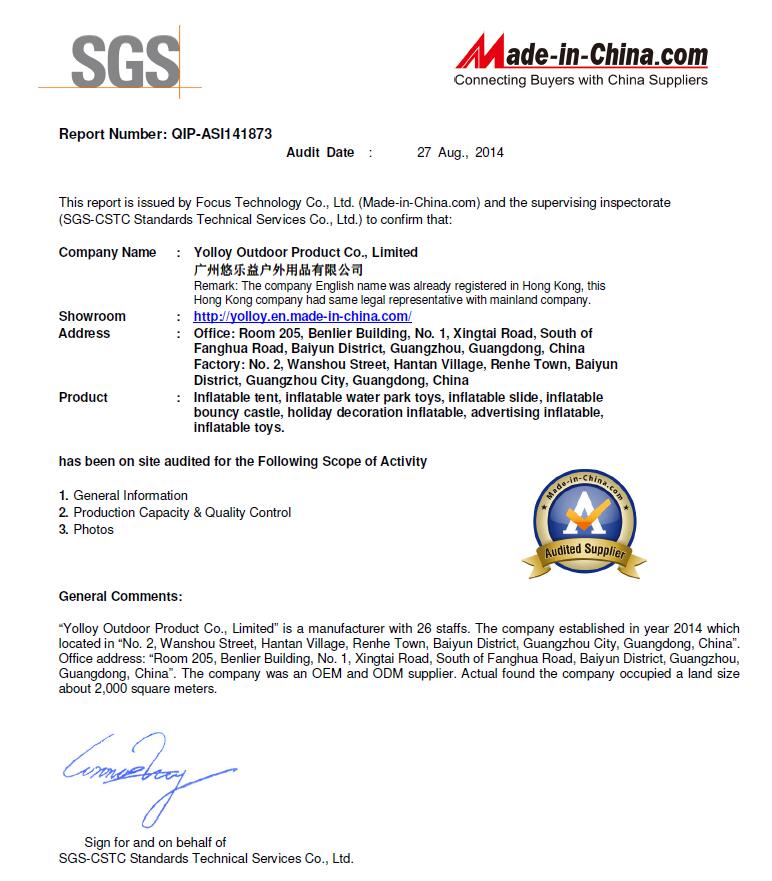
You've probably noticed: Many of the top inflatable water park manufacturers are based in China. Why? It's not just about cost (though that's a factor). China has decades of experience in inflatable product manufacturing, with access to specialized materials and skilled workers who understand the nuances of building products that last. But not all Chinese manufacturers are created equal. The best ones—like Yolloy—combine affordable pricing with strict quality control, making them the go-to for smart business owners worldwide.
-
Cost-Effective Innovation
: Chinese factories often have lower production costs, which translates to lower prices for you—without cutting corners on quality. This means you can invest in a larger park or add extra features (like that DWF floating you've been eyeing) without blowing your budget.
-
Global Safety Standards
: Reputable manufacturers don't just follow local regulations—they adhere to international standards like EN71 (for toys) and CE certification. Yolloy's products, for example, are tested for lead, phthalates, and other harmful substances, so you can sell to customers in Europe, North America, or anywhere else with confidence.
-
End-to-End Service
: From design to delivery, Chinese manufacturers often handle the entire process. Send them your dimensions, your brand colors, and your must-have features, and they'll send back a 3D mockup—no middlemen, no miscommunication, just a clear path from idea to installation.
"We were nervous about buying from China at first," says Maria, who runs a family campground in Canada. "But Yolloy walked us through every step—they sent material samples, updated us weekly on production, and even helped us find a local installer. The park was delivered on time, and it's been the hit of the summer. We're already planning to add a second slide next year."
From Purchase to Profit: What to Expect When You Buy
Buying a commercial inflatable water park isn't just about clicking "add to cart"—but it should be almost that easy. Here's how the process works with a top inflatable water park supplier:
Step 1: Consultation (1–3 Days)
You'll start by sharing your needs: How much space do you have? Who's your target audience (families? teens? resort guests)? What's your budget? A good supplier will ask questions to understand your goals, then suggest park layouts or features you might not have considered. Maybe you didn't realize a floating climbing wall could double as a team-building activity for corporate groups—that's where their expertise comes in.
Step 2: Design & Approval (1–2 Weeks)
Next, the supplier will create a 3D design of your park. This is your chance to tweak colors, rearrange features, or add that custom logo. Don't be shy about asking for revisions—this is your park, and it should be perfect. Once you sign off, production begins.
Step 3: Production & Quality Check (2–4 Weeks)
Your park is built from scratch, with each seam reinforced and every material tested for strength. Reputable manufacturers like Yolloy have strict quality checks at every stage—so you won't get a park that's "almost" right. They'll even send you photos of the finished product before shipping, just to be sure.
Step 4: Delivery & Setup (1–5 Days)
Most parks ship deflated and folded, so they fit into a compact package (no need for a giant truck). Once it arrives, setup is surprisingly simple: Unfold, connect the blower, and watch it inflate in under an hour. Most suppliers include clear instructions, and some even offer virtual setup support if you get stuck.
Step 5: Enjoy the Profits
Open the gates, and let the fun begin! With a well-designed park, you'll see repeat customers, positive reviews, and a steady stream of revenue. And when summer ends? Deflate it, fold it up, and store it in a closet—no need to pay for year-round maintenance or worry about winter damage.
Real Success Stories: Businesses That Hit the Jackpot
Still on the fence? Let's meet a few business owners who took the plunge—and never looked back.
Case Study 1: The Lakeside Resort That Doubled Bookings
A small resort in Thailand had a beautiful lake but struggled to attract families. They invested in a 600㎡ inflatable water park with slides, a floating trampoline, and a DWF floating. Within six months, family bookings were up 120%, and they added a "water park package" (room + park tickets) that became their top-selling offer. "We used to close in the rainy season," says the owner. "Now we keep the park open year-round—even in light rain, it's covered and safe. It's our best investment yet."
Case Study 2: The City Campground That Became a Local Hotspot
A campground in Germany, just outside Berlin, was losing customers to bigger, fancier sites. They installed a compact inflatable water park in their small pond, targeting day-trippers as well as campers. For €10 a day, locals could use the park, and campers got free access. Now, weekends are booked solid, and they've added food trucks and a mini café to capitalize on the crowds. "We thought it was a risk," admits the manager. "But now, parents tell us they come for the park and stay for the camping. It's changed everything."
Ready to Turn Your Summer Into a Profit Machine? Your Commercial Inflatable Water Park Awaits.
Investing in a commercial inflatable water park isn't just about adding a fun attraction—it's about growing your business, delighting your customers, and securing a steady revenue stream for years to come. With the right supplier, the right design, and the right materials, you'll have a park that stands out, lasts long, and keeps people coming back for more.
So why wait? The summer season is shorter than you think. Start designing your park today, and by next year, you'll be the one telling success stories.
|