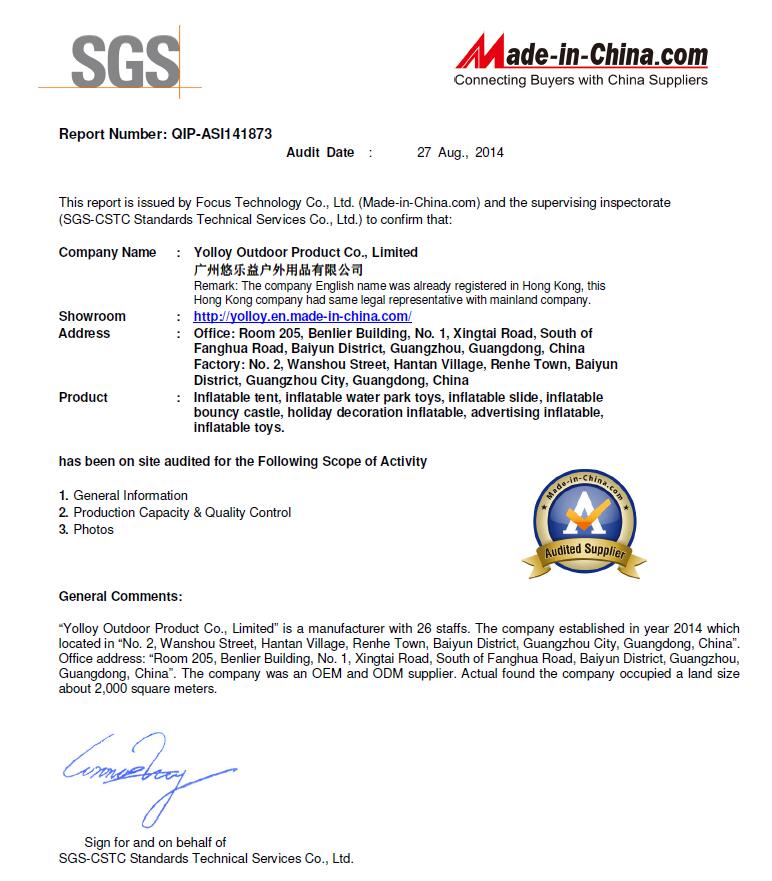
Yolloy Outdoor Product Co., Limited
If you have ever wrestled with a traditional tent — sorting through tangled poles, reading confusing setup instructions, and hoping the wind does not bring the whole thing down — you already understand why
inflatable tents for camping have captured the attention of outdoor enthusiasts, event planners, and business owners alike. The concept is simple: replace rigid metal or fiberglass poles with air-filled beams that inflate in minutes, creating a sturdy, spacious shelter without the heavy lifting. But the real question is not just how they work — it is what makes a quality inflatable tent worth your investment, and what to look for when sourcing from
inflatable tent manufacturers who can deliver on both quality and customization.
What Sets Inflatable Tents Apart from Traditional Shelters
The difference between an inflatable tent and a conventional pole tent starts long before you arrive at the campsite or event venue. A traditional tent demands patience: laying out the fabric, threading poles through narrow sleeves, clipping everything into place, and staking it down — a process that can easily take 20 to 40 minutes with two people. With an inflatable tent, you unroll the structure, connect the blower, and let the air do the work. Within minutes, the tent stands on its own, ready to use.
Beyond convenience, the structural integrity of a well-made inflatable tent often surpasses that of its pole-based counterparts. Because the air beams distribute stress evenly across the entire frame, there are no single points of failure — no bent poles, no snapped joints. When the wind picks up, an inflatable tent flexes and absorbs the pressure rather than resisting it rigidly. This makes inflatable designs especially appealing for beachfront events, open-field camping, and high-wind environments where traditional frames can buckle.
The portability factor is another significant advantage. A deflated tent packs into a compact bag that fits easily in a car trunk or shipping container, which is particularly relevant for event rental businesses that transport equipment between venues or for campers who value minimal packing volume.
Clear Inflatable Bubble Tents: An Outdoor Experience Like No Other
One of the most exciting innovations in the inflatable space is the
clear inflatable bubble tent. These transparent domes create a 360-degree panoramic view of your surroundings while providing full shelter from wind, rain, and insects. Imagine sleeping under a canopy of stars with nothing but clear PVC between you and the night sky — or hosting an outdoor dinner party where the landscape itself becomes the décor.
Clear bubble tents have found enthusiastic audiences in multiple markets. Glamping resorts use them to create luxury outdoor accommodations that feel connected to nature without sacrificing comfort. Wedding venues and event planners deploy them as unique ceremony backdrops or lounge spaces. Restaurants have used them for private outdoor dining pods, especially during seasons when guests want the fresh-air experience without exposure to the elements. Even backyard enthusiasts have embraced the bubble tent as a way to turn an ordinary garden into a memorable gathering space.
The key to a good bubble tent is material quality. High-grade PVC tarpaulin with UV resistance ensures the transparent panels stay clear over repeated use rather than yellowing or becoming brittle. Properly sealed seams prevent leaks, and well-designed ventilation ports manage airflow to avoid condensation buildup inside the dome. When sourced from a
custom inflatable tent manufacturer who understands these technical details, bubble tents become a reliable long-term asset rather than a novelty that degrades after a season.
Material Quality and Manufacturing Standards Matter
Not all inflatable products are created equal, and the difference often comes down to what you cannot see at first glance: the quality of the materials and the precision of the manufacturing process.
Commercial-grade PVC tarpaulin is the standard material for most inflatable tents and outdoor products, valued for its durability, waterproofing, and resistance to tearing. For tent applications that require different characteristics — such as lighter weight for backpacking or enhanced breathability for hot climates — manufacturers may also work with Oxford fabric, nylon, or TPU. The choice of material depends on the intended use case, and working with a factory that offers multiple material options means you get the right specification for your project rather than a one-size-fits-all solution.
Manufacturing technique is equally important. High-temperature fusion welding creates airtight seals that hold pressure consistently over time, while precision sewing with reinforced seams and waterproof nylon thread ensures structural durability at high-load areas — such as anchor points, zipper openings, and blower connections. Additional reinforcement at stress points prevents the gradual wear that leads to leaks or tears after repeated inflation cycles.
Quality inflatable products should come with material certifications that verify safety and performance standards. Look for manufacturers whose materials have passed EN71 (toy safety), EN14960 (inflatable play equipment), and RoHS (restriction of hazardous substances) testing. For water park products, EN 15649 compliance is the relevant benchmark. These certifications are not just paperwork — they reflect a manufacturer's commitment to producing products that meet international safety requirements.
Custom Manufacturing: Getting Exactly What You Need
One of the strongest arguments for working directly with an inflatable tent factory is the ability to customize. Off-the-shelf products work for simple needs, but many commercial buyers require specific dimensions to fit a venue footprint, branded colors and logos to match corporate identity, or design features that differentiate their rental inventory from competitors.
A full-service manufacturer can take your concept from a rough sketch, photograph, or written description and turn it into a production-ready design. The typical workflow involves a design team preparing simulation renderings based on the customer's proposal, revising the design through an approval process, and only then releasing it for factory production. This collaborative approach means the final product matches expectations before a single seam is welded.
Custom options extend beyond dimensions and colors. Buyers can specify blower voltage (110V, 220V, or 380V) to match local electrical standards, choose between different anchoring systems (D-ring or round metal anchors), and add features like removable sidewalls, mesh windows, printed graphics, or integrated LED lighting. For businesses building a brand around their inflatable inventory, this level of personalization is what turns a generic product into a signature offering.
More Than Just Tents: The Expanding World of Inflatables
While inflatable tents make up a significant portion of the market, the same manufacturing expertise extends to a broad range of inflatable products that serve different industries and audiences:
Inflatable water parks and floating platforms for lakeside resorts, water sports centers, and summer camp operators looking to add high-engagement attractions.
Commercial inflatable slides — from simple backyard units to multi-lane slip-and-slide installations — designed for water parks, rental businesses, and community events.
Interactive sports games including inflatable football arenas, obstacle courses, zorb balls, bumper balls, and ziplines, all of which have become staples at team-building events, school sports days, and family entertainment centers.
Inflatable bounce houses in themes ranging from classic castles to dinosaurs, pirate ships, and seasonal designs — a mainstay of the party rental industry.
Paintball and airsoft bunkers that allow field operators to quickly reconfigure arena layouts without permanent construction.
Advertising inflatables — air dancers, custom-shaped models, giant arches, and lighting decorations — used by retail stores, car dealerships, and event promoters to draw attention.
Portable planetarium domes and inflatable projection screens, serving schools, science museums, and mobile education programs that bring immersive learning experiences to communities.
Each of these product categories relies on the same core competencies — material selection, airtight welding, reinforced construction, and custom design capability — which means a manufacturer that excels in one area often has the technical foundation to deliver quality across all of them.
What to Look for When Choosing a Supplier
If you are in the market for inflatable products — whether for personal use, a rental business, a resort, or an event company — here are the practical factors that separate reliable suppliers from the rest:
Minimum Order Flexibility
Some factories require large minimum order quantities that can be prohibitive for small businesses testing a new product line. Look for manufacturers willing to start with a single piece — this signals confidence in their customer service and allows you to evaluate product quality before committing to a larger order.
Production and Delivery Transparency
A professional manufacturer should provide clear timelines. For a standard inflatable product, production typically takes 6 to 15 days, while larger or more complex custom designs naturally require more time. Shipping options matter too — air freight (5-7 days transit) versus sea freight (15-30 days or more) gives you flexibility based on urgency and budget.
After-Sales Support
Every inflatable product should ship with a repair kit, because even the best-made equipment can get punctured in the field. Beyond that, look for manufacturers who respond to inquiries within 24 hours, stand behind their products with a clear warranty policy, and can supply replacement parts like blowers when needed.
Quality Control Evidence
Ask about inspection and testing procedures. Products should be checked before shipping — this includes verifying seam integrity, inflation performance, and correct blower compatibility. A manufacturer that tests each unit before dispatch is one that takes long-term customer relationships seriously.
Making the Right Investment
Inflatable products represent a growing segment of the outdoor recreation, event, and commercial entertainment markets — and for good reason. They are portable, quick to set up, visually striking, and increasingly sophisticated in design and material quality. Whether you are a camper looking to upgrade from a pole tent, an event planner seeking unique venue solutions, or a business owner expanding an inflatable rental inventory, the key is finding a manufacturing partner who understands your requirements and has the technical capability to execute them.
Yolloy Outdoor Product Co., Limited, based in Guangzhou, China, designs and manufactures custom inflatable products across ten major categories — from camping tents and clear dome tents to water parks, obstacle courses, slides, bounce houses, and advertising models. With materials certified to EN71, EN14960, and RoHS standards, CE/UL-compliant blowers, and a minimum order quantity of just one piece, Yolloy serves buyers across Europe, Asia, South America, Africa, the Middle East, and Latin America who need reliable, customized inflatable solutions at competitive factory-direct pricing.
Ready to Discuss Your Inflatable Project?
Whether you have a detailed design brief or just a rough idea, Yolloy's team can help bring it to life. Contact us today to discuss your requirements, request a quote, or learn more about our custom manufacturing capabilities. We respond to all inquiries within 24 hours.
Get in Touch with Yolloy