Products Category
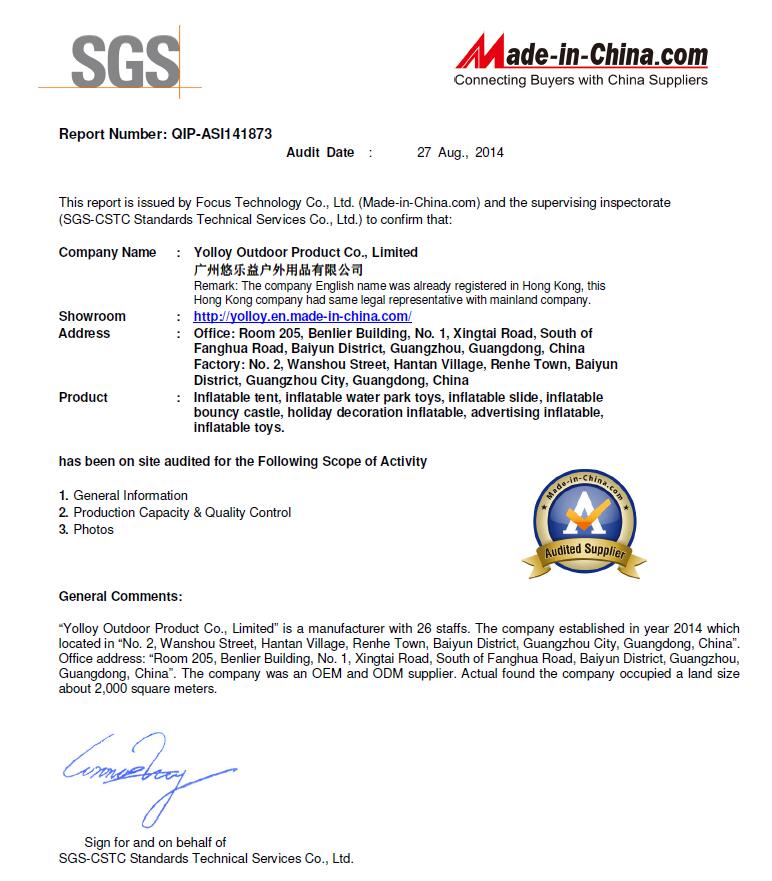
Certification

News

• New Order Successfully Finished for Long-Time Cooperated Japanese Client | YOLLOY Wins Full Client Recognition

• YOLLOY Custom Inflatable Pool Tent for Danish Client: Professional Pool Repair Shelter & Debris Protection

• Trusted Once Again! Greek Captain Re-orders Our Products After 4 Years

• Revolutionize Your Outdoors: The All-Terrain Inflatable Floating Tent for Land & Water

• Elevate Your Summer Fun: The Ultimate Inflatable Water Floating Volleyball Court Trampoline

• Innovative Inflatable Nightclub Tents & Pop-Up Bars: The Ultimate Solution for Portable Party Venues

Contact Us

Name: Sunny Yang
Tel: +86-20-8370 0771
Fax: +86-20-8370 0771
Mobile: 13570587575
E-mail: [email protected]
Add: No 5,Xiong wei Bo Nan Road,ZhongLuoTan Town,Baiyun district,Guangzhou,China
Friend me on Facebook Follow me on Twitter Add me to your circles Follow me on Pinterest Watch my channel on YouTube
News

Why Inflatable Tents Are the Future of Outdoor Shelter: A Complete Guide

Author:yolloy Date:2026/8/8 14:00:46
Why Inflatable Tents Are the Future of Outdoor Shelter: A Complete Guide
From weekend camping trips to large-scale commercial events, inflatable tents are changing how we think about portable shelter.
Setting up a traditional tent has long been one of the most frustrating parts of any outdoor experience. Threading poles through fabric sleeves, wrestling with guy lines, and hoping the entire structure holds up against an unexpected gust of wind — it is a process that can test anyone's patience. Over the past few years, inflatable tents for camping have emerged as a compelling alternative, offering a faster setup, stronger structure, and far more design flexibility than their pole-based counterparts. Whether you are planning a glamping weekend, organizing a corporate event, or launching a rental business, understanding what makes inflatable tents different is the first step toward a smarter investment.
How Inflatable Tents Actually Work
Instead of relying on metal or fiberglass poles, inflatable tents use air-filled beams — often called air tubes or air beams — as their structural framework. These beams are made from high-strength materials such as commercial-grade PVC tarpaulin, Oxford fabric, nylon, or TPU, depending on the intended use. Once inflated with an electric pump, the beams become rigid enough to support the entire tent structure. The result is a shelter that stands firm without a single pole to thread or snap into place.
The inflation process itself is remarkably simple. An electric blower, matched to the correct voltage requirements (110V, 220V, or 380V), fills the air beams in a matter of minutes. For a typical camping tent, this means going from packed bag to fully pitched shelter in under five minutes. Larger commercial models may take slightly longer, but even a 20-person inflatable party tent can be ready well within the time it would take a team to assemble a traditional frame tent of the same size.
Key Advantages Over Traditional Pole Tents
The benefits of inflatable tents go well beyond convenience. Here is what sets them apart in real-world use:
Faster setup and takedown. A single person can often set up a mid-sized inflatable tent without assistance. Deflation is just as straightforward — open the valve, let the air out, roll the tent up, and pack it away. There are no separate poles to keep track of or lose.
Superior wind resistance. The thick-diameter air beams in an inflatable tent create a structure that flexes rather than breaks under wind load. While a traditional tent pole can bend or snap in a storm, an inflatable beam absorbs the force and returns to shape. This makes inflatable tents particularly well-suited for exposed event sites, beachfront weddings, and mountainous terrain.
Easier and cheaper to repair. A puncture in an air beam can be patched in much the same way as a bicycle inner tube — locate the hole, apply a patch, and reinflate. Most quality inflatable tents ship with a repair kit included. By contrast, a broken tent pole usually means ordering a replacement part, which can be expensive and slow to arrive.
Design flexibility. Without the constraints of rigid poles, inflatable tents can take on shapes that are simply impossible for traditional designs. Dome tents, tunnel tents, cube tents, and even transparent bubble tents are all achievable with inflatable construction, opening up creative possibilities for event planners, hospitality businesses, and outdoor retailers.
Beyond Camping: Commercial and Event Applications
While inflatable tents first gained popularity in the camping market, their commercial applications have expanded dramatically. Today, inflatable structures are used for:
  • Weddings and private parties — A well-designed inflatable dome or cube tent creates an elegant, weatherproof venue that can be customized with lighting, flooring, and decor.
  • Corporate events and product launches — Branded inflatable tents with printed logos and custom colors serve as eye-catching exhibition spaces at trade shows, festivals, and outdoor markets.
  • Glamping resorts and eco-lodges — Transparent inflatable bubble tents offer guests a 360-degree view of the surrounding landscape, combining the comfort of a hotel room with the immersion of sleeping under the stars.
  • Sports and emergency services — Inflatable sport tents, medical shelters, and command posts can be deployed rapidly at marathons, disaster relief sites, and military training grounds.
  • Automotive and industrial use — Inflatable spray booths, car detailing tents, and portable workshops provide controlled environments for painting, repairs, and maintenance in the field.
What to Look for in an Inflatable Tent Manufacturer
Not all inflatable tents are built to the same standard. When sourcing from inflatable tent manufacturers, there are several factors that separate a reliable supplier from a risky one.
Material quality and certifications. The fabric and air beams should meet recognized safety and quality standards. Look for materials that have passed EN71, EN14960, or RoHS testing for inflatable products, and CE or UL certification for electric blowers. These certifications are not just paperwork — they indicate that the products have been independently verified for safety, durability, and environmental compliance.
Customization capabilities. A good manufacturer should be able to work from a description, sketch, photograph, or site plan. Custom sizes, colors, and printed logos should all be available. The ability to tailor products to specific requirements — whether that means a particular voltage for the blower, a unique tent shape, or a branded artwork — is a sign of genuine manufacturing expertise rather than simple reselling.
Production quality control. Reinforced seams, waterproof nylon thread, and additional reinforcement at high-load areas are essential for products that will be used repeatedly. High-temperature fusion welding equipment should be used for airtight sections. Every product should be inspected and tested before it leaves the factory.
Minimum order quantity and lead time. Some manufacturers require large bulk orders, while others accept single-piece orders — an important consideration for businesses testing a new product line. Typical production times range from 6 to 15 days for a standard inflatable product, with complex or oversized custom items taking longer. Shipping by air (5–7 days) or sea (15–30+ days) affects both cost and delivery timeline.
After-sales support. A repair kit should be supplied with each inflatable product. The manufacturer should also offer responsive communication — ideally responding to inquiries within 24 hours — and stand behind their products with a reasonable warranty period.
The Clear Bubble Tent: A Category of Its Own
One of the most visually striking innovations in the inflatable tent market is the clear bubble tent. Made from transparent PVC material, these spherical or dome-shaped structures provide a completely unobstructed view of the outdoors while keeping occupants protected from wind, rain, and insects. They have become especially popular in the hospitality sector, where hotels and resorts use them as outdoor dining pods, stargazing suites, and Instagram-worthy glamping accommodations.
A clear inflatable bubble tent typically includes a blower system that maintains constant air pressure, keeping the structure rigid and the interior fresh. Some models feature integrated LED lighting for nighttime use, while others can be customized with printed branding for commercial applications. The combination of transparency, portability, and weather resistance makes the bubble tent one of the most versatile products in the inflatable shelter category.
Are There Any Downsides?
Inflatable tents do come with a few considerations. They tend to be more expensive upfront than a basic pole tent of comparable size, reflecting the higher material and manufacturing standards involved in the air beam construction. Setup on a windy day can also be trickier — once one air beam is inflated, it can catch the wind before the rest of the tent is anchored, so having a second person to assist is recommended in breezy conditions.
That said, for anyone who uses a tent regularly — whether for personal camping, commercial rental, or event production — the time saved on setup and the durability gains over traditional tents typically outweigh the higher initial cost. When sourced from a factory-direct manufacturer, the price gap narrows considerably, making inflatable tents a viable option even for budget-conscious buyers.
Making the Right Choice
The inflatable tent market has matured significantly. What was once a niche product is now a mainstream category with proven reliability across camping, events, hospitality, sports, and industrial applications. The key to a successful purchase is partnering with the right manufacturer — one that offers certified materials, genuine customization, consistent quality control, and responsive after-sales support.
Yolloy Outdoor Product Co., Limited, based in Guangzhou, China, designs and manufactures a comprehensive range of inflatable tents, including cube tents, tunnel tents, dome tents, clear bubble tents, party tents, sport tents, car tents, and more. Their products are built with commercial-grade PVC tarpaulin and other durable materials, with materials tested to EN71, EN14960, and RoHS standards. Custom sizes, colors, and logo printing are available, and the stated minimum order quantity is just one piece — making Yolloy accessible to businesses of all sizes. With CE/UL-certified blowers, reinforced seams, repair kits included with every order, and a 95% on-time delivery record, Yolloy has built a reputation for safety, durability, and responsive service across Europe, Asia, South America, Africa, the Middle East, and beyond.
Ready to explore inflatable tent options for your business or event? Visit Yolloy's website to browse the full product range, or contact their team directly at [email protected] to discuss custom requirements. Whether you need a single camping tent or a fleet of branded event domes, a factory-direct solution is just a message away.


Why Inflatable Tents Are the Future of Outdoor Shelter: A Complete Guide

Author:yolloy Date:2026/8/8 14:00:46

Why Inflatable Tents Are the Future of Outdoor Shelter: A Complete Guide
From weekend camping trips to large-scale commercial events, inflatable tents are changing how we think about portable shelter.
Setting up a traditional tent has long been one of the most frustrating parts of any outdoor experience. Threading poles through fabric sleeves, wrestling with guy lines, and hoping the entire structure holds up against an unexpected gust of wind — it is a process that can test anyone's patience. Over the past few years, inflatable tents for camping have emerged as a compelling alternative, offering a faster setup, stronger structure, and far more design flexibility than their pole-based counterparts. Whether you are planning a glamping weekend, organizing a corporate event, or launching a rental business, understanding what makes inflatable tents different is the first step toward a smarter investment.
How Inflatable Tents Actually Work
Instead of relying on metal or fiberglass poles, inflatable tents use air-filled beams — often called air tubes or air beams — as their structural framework. These beams are made from high-strength materials such as commercial-grade PVC tarpaulin, Oxford fabric, nylon, or TPU, depending on the intended use. Once inflated with an electric pump, the beams become rigid enough to support the entire tent structure. The result is a shelter that stands firm without a single pole to thread or snap into place.
The inflation process itself is remarkably simple. An electric blower, matched to the correct voltage requirements (110V, 220V, or 380V), fills the air beams in a matter of minutes. For a typical camping tent, this means going from packed bag to fully pitched shelter in under five minutes. Larger commercial models may take slightly longer, but even a 20-person inflatable party tent can be ready well within the time it would take a team to assemble a traditional frame tent of the same size.
Key Advantages Over Traditional Pole Tents
The benefits of inflatable tents go well beyond convenience. Here is what sets them apart in real-world use:
Faster setup and takedown. A single person can often set up a mid-sized inflatable tent without assistance. Deflation is just as straightforward — open the valve, let the air out, roll the tent up, and pack it away. There are no separate poles to keep track of or lose.
Superior wind resistance. The thick-diameter air beams in an inflatable tent create a structure that flexes rather than breaks under wind load. While a traditional tent pole can bend or snap in a storm, an inflatable beam absorbs the force and returns to shape. This makes inflatable tents particularly well-suited for exposed event sites, beachfront weddings, and mountainous terrain.
Easier and cheaper to repair. A puncture in an air beam can be patched in much the same way as a bicycle inner tube — locate the hole, apply a patch, and reinflate. Most quality inflatable tents ship with a repair kit included. By contrast, a broken tent pole usually means ordering a replacement part, which can be expensive and slow to arrive.
Design flexibility. Without the constraints of rigid poles, inflatable tents can take on shapes that are simply impossible for traditional designs. Dome tents, tunnel tents, cube tents, and even transparent bubble tents are all achievable with inflatable construction, opening up creative possibilities for event planners, hospitality businesses, and outdoor retailers.
Beyond Camping: Commercial and Event Applications
While inflatable tents first gained popularity in the camping market, their commercial applications have expanded dramatically. Today, inflatable structures are used for:
  • Weddings and private parties — A well-designed inflatable dome or cube tent creates an elegant, weatherproof venue that can be customized with lighting, flooring, and decor.
  • Corporate events and product launches — Branded inflatable tents with printed logos and custom colors serve as eye-catching exhibition spaces at trade shows, festivals, and outdoor markets.
  • Glamping resorts and eco-lodges — Transparent inflatable bubble tents offer guests a 360-degree view of the surrounding landscape, combining the comfort of a hotel room with the immersion of sleeping under the stars.
  • Sports and emergency services — Inflatable sport tents, medical shelters, and command posts can be deployed rapidly at marathons, disaster relief sites, and military training grounds.
  • Automotive and industrial use — Inflatable spray booths, car detailing tents, and portable workshops provide controlled environments for painting, repairs, and maintenance in the field.
What to Look for in an Inflatable Tent Manufacturer
Not all inflatable tents are built to the same standard. When sourcing from inflatable tent manufacturers, there are several factors that separate a reliable supplier from a risky one.
Material quality and certifications. The fabric and air beams should meet recognized safety and quality standards. Look for materials that have passed EN71, EN14960, or RoHS testing for inflatable products, and CE or UL certification for electric blowers. These certifications are not just paperwork — they indicate that the products have been independently verified for safety, durability, and environmental compliance.
Customization capabilities. A good manufacturer should be able to work from a description, sketch, photograph, or site plan. Custom sizes, colors, and printed logos should all be available. The ability to tailor products to specific requirements — whether that means a particular voltage for the blower, a unique tent shape, or a branded artwork — is a sign of genuine manufacturing expertise rather than simple reselling.
Production quality control. Reinforced seams, waterproof nylon thread, and additional reinforcement at high-load areas are essential for products that will be used repeatedly. High-temperature fusion welding equipment should be used for airtight sections. Every product should be inspected and tested before it leaves the factory.
Minimum order quantity and lead time. Some manufacturers require large bulk orders, while others accept single-piece orders — an important consideration for businesses testing a new product line. Typical production times range from 6 to 15 days for a standard inflatable product, with complex or oversized custom items taking longer. Shipping by air (5–7 days) or sea (15–30+ days) affects both cost and delivery timeline.
After-sales support. A repair kit should be supplied with each inflatable product. The manufacturer should also offer responsive communication — ideally responding to inquiries within 24 hours — and stand behind their products with a reasonable warranty period.
The Clear Bubble Tent: A Category of Its Own
One of the most visually striking innovations in the inflatable tent market is the clear bubble tent. Made from transparent PVC material, these spherical or dome-shaped structures provide a completely unobstructed view of the outdoors while keeping occupants protected from wind, rain, and insects. They have become especially popular in the hospitality sector, where hotels and resorts use them as outdoor dining pods, stargazing suites, and Instagram-worthy glamping accommodations.
A clear inflatable bubble tent typically includes a blower system that maintains constant air pressure, keeping the structure rigid and the interior fresh. Some models feature integrated LED lighting for nighttime use, while others can be customized with printed branding for commercial applications. The combination of transparency, portability, and weather resistance makes the bubble tent one of the most versatile products in the inflatable shelter category.
Are There Any Downsides?
Inflatable tents do come with a few considerations. They tend to be more expensive upfront than a basic pole tent of comparable size, reflecting the higher material and manufacturing standards involved in the air beam construction. Setup on a windy day can also be trickier — once one air beam is inflated, it can catch the wind before the rest of the tent is anchored, so having a second person to assist is recommended in breezy conditions.
That said, for anyone who uses a tent regularly — whether for personal camping, commercial rental, or event production — the time saved on setup and the durability gains over traditional tents typically outweigh the higher initial cost. When sourced from a factory-direct manufacturer, the price gap narrows considerably, making inflatable tents a viable option even for budget-conscious buyers.
Making the Right Choice
The inflatable tent market has matured significantly. What was once a niche product is now a mainstream category with proven reliability across camping, events, hospitality, sports, and industrial applications. The key to a successful purchase is partnering with the right manufacturer — one that offers certified materials, genuine customization, consistent quality control, and responsive after-sales support.
Yolloy Outdoor Product Co., Limited, based in Guangzhou, China, designs and manufactures a comprehensive range of inflatable tents, including cube tents, tunnel tents, dome tents, clear bubble tents, party tents, sport tents, car tents, and more. Their products are built with commercial-grade PVC tarpaulin and other durable materials, with materials tested to EN71, EN14960, and RoHS standards. Custom sizes, colors, and logo printing are available, and the stated minimum order quantity is just one piece — making Yolloy accessible to businesses of all sizes. With CE/UL-certified blowers, reinforced seams, repair kits included with every order, and a 95% on-time delivery record, Yolloy has built a reputation for safety, durability, and responsive service across Europe, Asia, South America, Africa, the Middle East, and beyond.
Ready to explore inflatable tent options for your business or event? Visit Yolloy's website to browse the full product range, or contact their team directly at [email protected] to discuss custom requirements. Whether you need a single camping tent or a fleet of branded event domes, a factory-direct solution is just a message away.