July 29, 2026
Setting up a traditional pole tent can be a frustrating experience 鈥?tangled poles, confusing instructions, and the sinking feeling when you realize a piece is missing. Now imagine walking onto a campsite or event ground, pressing a button on an electric pump, and watching your shelter rise into shape within minutes. That is the reality of an inflatable camping tent, and it is changing how people think about outdoor shelter.
Whether you are planning a weekend camping trip, hosting a wedding reception, running a commercial event rental business, or setting up a mobile spray booth for automotive work, inflatable tents offer a level of speed, reliability, and versatility that traditional frame tents simply cannot match. In this article, we explore why inflatable tents have become the go-to choice for a growing range of applications and what to look for when sourcing one.
What Sets Inflatable Tents Apart from Traditional Tents
The core difference lies in the structural support system. Instead of rigid metal or fiberglass poles, an inflatable tent uses air-filled beams 鈥?typically made from high-strength TPU or PVC-coated fabric 鈥?to create a self-supporting frame. A single electric blower or hand pump inflates the entire structure in a matter of minutes, and the air pressure keeps the tent rigid and stable even in challenging weather.
This design eliminates the most common pain points of conventional tents. No more sorting through pole segments, no more struggling to thread poles through sleeves in the dark, and no risk of snapping a pole under tension. When it is time to pack up, opening the deflation valve releases the air quickly, and the tent folds down into a compact carrying bag.
For event organizers, this speed translates directly into lower labor costs and faster turnaround between bookings. A single person can set up a large inflatable dome tent in under ten minutes, a task that would typically require two or three people with a traditional frame tent.
Types of Inflatable Tents and Their Applications
The inflatable tent market has expanded far beyond basic camping shelters. Today, manufacturers produce specialized designs for a wide range of commercial and recreational uses:
- Inflatable dome tents 鈥?Popular for glamping sites, outdoor dining, and event spaces. Their curved profile sheds wind effectively and provides a spacious interior with no center pole obstruction.
- Inflatable cube tents 鈥?Square or rectangular designs ideal for trade show booths, medical stations, and temporary storage. The straight walls maximize usable floor space.
- Inflatable tunnel tents 鈥?Long, connected structures used for sports facilities, exhibition halls, and emergency field hospitals. Multiple units can be linked to create extended covered walkways.
- Clear inflatable bubble tents 鈥?Transparent PVC domes that have become a sensation in the hospitality industry, offering guests panoramic views while dining or lounging in a climate-controlled environment.
- Inflatable party tents and event tents 鈥?Available in various sizes and shapes, these cater to weddings, corporate events, festivals, and private celebrations.
- Specialized commercial tents 鈥?Including inflatable spray booths for automotive painting, golf simulator enclosures, and portable planetarium domes for educational institutions.
Key Factors to Consider When Sourcing an Inflatable Tent
Not all inflatable tents are built to the same standard. When evaluating options, pay close attention to the following factors:
Material quality. Commercial-grade PVC tarpaulin is the industry standard for durable inflatable tents. For certain applications, Oxford fabric, nylon, or TPU may be more appropriate. The material should be waterproof, UV-resistant, and fire-retardant. Look for products whose materials have passed recognized safety testing such as EN71 and EN14960.
Seam construction. The seams are the most vulnerable points on any inflatable structure. High-quality tents use precision sewing equipment with waterproof nylon thread and reinforced stitching at high-load areas. For airtight products, high-temperature fusion welding creates a bond that is stronger than the surrounding fabric.
Blower system. The blower is the heart of an inflatable tent. It should be appropriately matched to the tent's air volume and pressure requirements. Confirm that blowers are available for your local voltage 鈥?110V, 220V, or 380V 鈥?and that they carry CE or UL certification where applicable.
Anchor system. Even a well-designed inflatable tent needs proper anchoring. D-ring or round metal anchor points, combined with heavy-duty stakes or weights, ensure the structure remains stable in windy conditions.
Customization capability. If you need branded tents for your business, confirm that the manufacturer can print your logo and artwork. A custom inflatable tent with your company's branding turns a practical shelter into a powerful marketing tool at every event.
Did you know? A well-constructed inflatable tent from a reputable manufacturer can last three years or more with proper use and maintenance. Many manufacturers also include a repair kit with each product, so minor punctures can be fixed on-site without professional help.
Why YOLLOY Stands Out Among Inflatable Tent Manufacturers
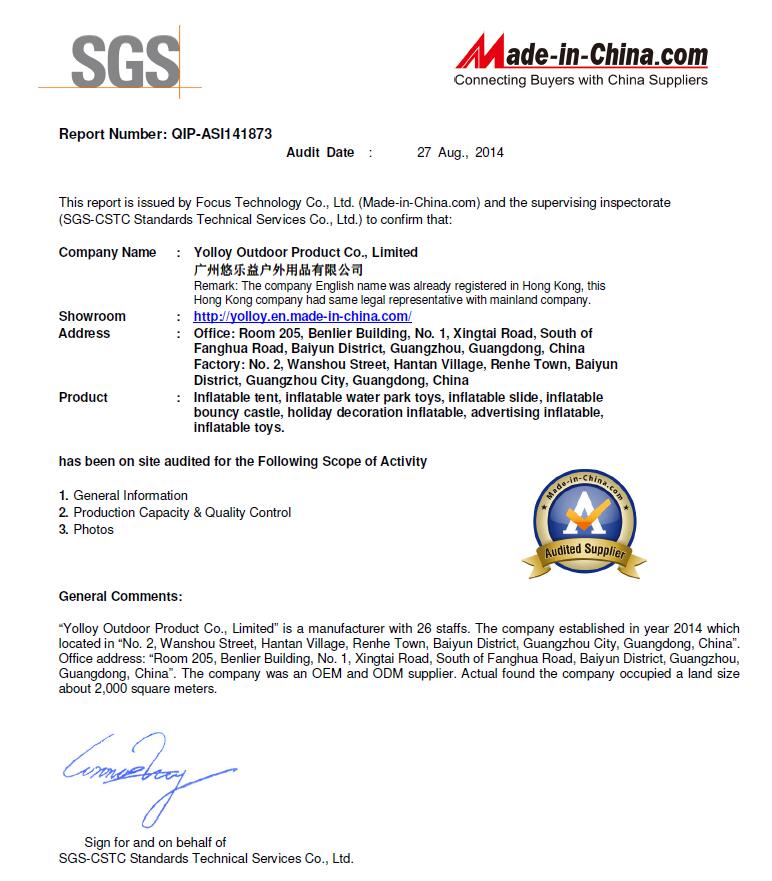
Based in Guangzhou, China, YOLLOY Outdoor Product Co., Limited has built a reputation as a reliable inflatable tent manufacturers serving clients across Europe, Asia, South America, Africa, the Middle East, and Latin America. What sets the company apart is not just its product range 鈥?which spans outdoor inflatable tents, clear dome tents, planetarium domes, water park products, interactive sports games, commercial slides, bounce houses, paintball bunkers, air mattresses, and advertising inflatables 鈥?but also its approach to production and service.
YOLLOY operates on a custom design-to-production model. The process begins with a client's concept 鈥?whether it is a detailed drawing, a rough sketch, a photograph, or simply a written description of the intended use and budget. The in-house design team then creates simulation renderings for client review. Revisions continue until the design is approved, at which point it moves to the factory floor for production.
This flexibility means that YOLLOY can accommodate orders as small as a single piece, making it an accessible option for startups, small event businesses, and individual buyers who do not want to commit to large minimum order quantities. Production time for a standard inflatable product typically ranges from 6 to 15 days, with larger or more complex custom designs taking additional time.
Quality control is woven into every stage of production. Materials are selected for safety and durability, with relevant certifications including EN71, EN14960, and RoHS for material testing. Finished products undergo inspection and testing before shipment. The company reports a 95% on-time delivery rate, and every inflatable product ships with a repair kit for field maintenance.
Practical Tips for Getting the Most Out of Your Inflatable Tent
- Choose a level setup surface 鈥?Clear the area of sharp objects, rocks, and debris before laying out the tent. An uneven surface can create uneven pressure distribution in the air beams.
- Anchor before inflating fully 鈥?Stake down the base corners first, then inflate the tent. This prevents the structure from shifting or lifting during setup.
- Do not overinflate 鈥?Follow the manufacturer's recommended pressure. Overinflation stresses seams and can cause premature wear. Most blowers are designed to maintain the correct pressure automatically.
- Ventilate during use 鈥?Open mesh windows and vents to allow airflow. This reduces condensation inside the tent and keeps the interior comfortable, especially in warmer weather.
- Clean and dry before storage 鈥?After each use, wipe down the tent with a mild soap solution and allow it to dry completely before packing. Storing a damp tent can lead to mildew and material degradation.
- Inspect regularly 鈥?Check seams, zippers, and air beams for signs of wear before each use. Address minor issues with the included repair kit to prevent them from becoming major problems.
Shipping and Delivery: What to Expect
When ordering from an overseas manufacturer, shipping logistics are an important consideration. YOLLOY offers both air and sea freight options. Air shipping typically takes 5 to 7 days, making it suitable for urgent orders, while sea freight takes 15 to 30 days or more depending on the destination port. Products are carefully packed with soft carpet protection, waterproof PVC bags, and an outer layer of PE film. Large items may be shipped on steel pallets for additional protection during transit.
Before committing to an order, it is worth confirming the shipping method, estimated transit time, and any import duties or customs clearance requirements specific to your country. YOLLOY states that emails and inquiries are typically answered within 24 hours, so you can expect responsive communication throughout the ordering process.
Ready to Find Your Inflatable Tent?
Whether you need a single tent for personal camping trips or a fleet of branded event shelters for your rental business, choosing the right manufacturer makes all the difference. YOLLOY combines custom design capabilities, international safety certifications, and a track record of on-time delivery to bring your inflatable tent project to life.
Browse the full product range, request a custom design consultation, or get a quote for your project. Visit the official website today to explore the options and start a conversation with the YOLLOY team.
Visit YOLLOY Official Website