The global inflatable tent market reached approximately USD 1.13 billion in 2024 and is projected to grow to USD 1.61 billion by 2031, with a compound annual growth rate of 5.2%. As outdoor events, glamping experiences, and temporary venue solutions continue to gain traction worldwide, the inflatable dome tent has emerged as one of the most versatile and practical choices for event planners, rental businesses, and venue operators. Whether you are hosting a wedding, a corporate gathering, or a festival, understanding what makes a quality inflatable structure can save you time, money, and headaches.
What Makes Inflatable Dome Tents Stand Out
Unlike traditional pole-and-canvas tents that require hours of setup and a team of workers, an inflatable dome tent can be erected in a fraction of the time. The structure relies on pressurized air beams rather than rigid metal frames, which means faster installation, fewer components to lose or damage, and a striking modern silhouette that naturally draws attention. These tents are popular for glamping sites, outdoor dining spaces, pop-up retail, and even as temporary sports facilities.
The key advantage is portability. When deflated, an inflatable tent packs down into a compact bundle that fits in the trunk of a car. When inflated, it provides a spacious, weather-resistant enclosure that can accommodate dozens of guests. This combination of portability and presence is what makes the category so appealing to event rental companies.
Choosing the Right Inflatable Party Tent for Your Business
When sourcing an inflatable party tent for commercial use, several factors deserve careful attention. First, consider the material. Commercial-grade PVC tarpaulin offers excellent durability and weather resistance for frequent use, while Oxford fabric and TPU may be suitable for lighter applications. Products that have passed EN71, EN14960, and RoHS testing provide an extra layer of assurance regarding material safety and compliance.
Second, evaluate the anchoring system. A well-designed inflatable tent should include D-ring or round metal anchor points distributed around the base, allowing secure installation even in moderate wind conditions. Third, check the blower specifications. The blower is the heart of any inflatable structure, and it should match the voltage requirements of your region — 110V, 220V, or 380V options should all be available from a qualified supplier.
Key takeaway: A commercial-grade inflatable tent should use reinforced seams with waterproof nylon thread, additional reinforcement at high-load areas, and high-temperature fusion welding for airtight sections. Always ask your supplier about their quality control inspection process before shipment.
Why Work Directly with an Inflatable Tent Factory
Sourcing directly from an inflatable tent factory offers several advantages over buying through middlemen or generic online marketplaces. Direct factory relationships typically mean lower prices, faster communication about custom requirements, and better after-sales support. When you deal with the factory, design changes — such as adjusting dimensions, adding your logo, or selecting custom colors — can be discussed and implemented without the delays of a third-party chain.
A reputable factory should be able to produce a design from a simple description, sketch, photograph, or site plan. They should also offer a low minimum order quantity — ideally starting from just one piece — so you can test a product before committing to a larger order. Production timelines for standard inflatable products typically range from 6 to 15 days, though large or complex custom designs may take longer. Ask about packaging too: quality factories use soft carpet protection, waterproof PVC bags, and outer PE film, with steel pallets for larger items.
Customization: Making Your Tent Uniquely Yours
One of the biggest advantages of working with a specialized manufacturer is the ability to create a custom inflatable tent tailored to your exact needs. Custom sizes and colors are available, and company logos and artwork can be printed directly onto the fabric. This is particularly valuable for event rental businesses that want to build brand recognition, or for corporate clients who need a branded hospitality space at trade shows and festivals.
The design process typically follows a clear workflow: the manufacturer's design team prepares simulation renderings based on your proposal, revises the design until you approve it, and then releases it for factory production. A complete setup includes the appropriately powered blower, a repair kit for on-site maintenance, and detailed installation instructions.
What to Look for in Warranty and After-Sales Support
When investing in commercial inflatable equipment, the warranty and support package matters as much as the product itself. Look for a manufacturer that offers a reasonable service life expectation — typically around three years when products are used and maintained correctly. Each inflatable product should come with a repair kit, and the supplier should respond to inquiries within 24 hours.
Shipping is another practical consideration. Air freight typically takes 5 to 7 days, while sea freight may take 15 to 30 days or more. A reliable supplier should offer both options and help you choose the most cost-effective solution based on your order size and timeline. A 95 percent on-time delivery rate is a strong indicator of a well-organized operation.
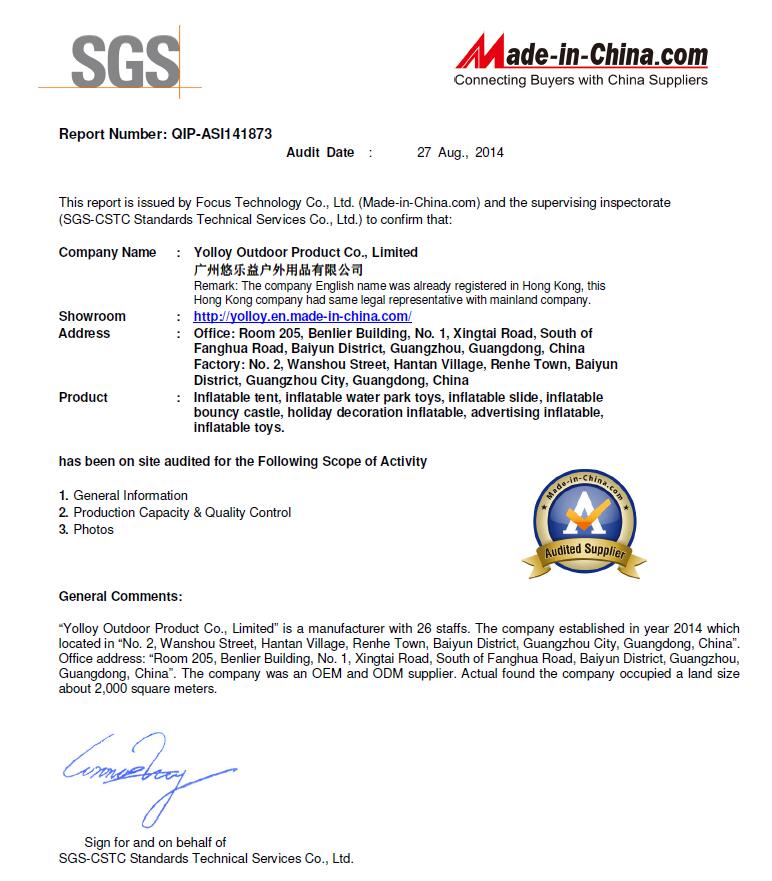
Ready to explore inflatable dome tents and party tents for your business? YOLLOY Outdoor Product Co., Limited is a Guangzhou-based inflatable product manufacturer offering custom design-to-production services for tents, domes, water parks, slides, bounce houses, and more. With a minimum order quantity of just one piece, EN71 and EN14960-compliant materials, and a 95 percent on-time delivery rate, YOLLOY makes it easy to get started. Contact Sunny Yang at [email protected] or call +86-20-8370 0771 to discuss your project today.
|