Planning an outdoor wedding or corporate event comes with a long list of logistical headaches. The venue, the weather, the timeline — and at the center of it all, the tent. For decades, event organizers have defaulted to traditional pole-and-canvas marquees, accepting their slow setup, bulky transport requirements, and limited aesthetic appeal as unavoidable costs of doing business. But a quiet revolution is reshaping the outdoor event industry. A growing number of wedding planners, corporate event directors, and venue operators are turning to
inflatable canvas tent structures — and the reasons go far beyond novelty.
The
inflatable wedding tent market has grown substantially in recent years, driven by demand for faster setup, better aesthetics, and more flexible venue options. An inflatable structure can be deployed in under 15 minutes with a single electric blower, compared to the hours of labor required for a traditional frame tent. For wedding planners operating on tight schedules — often with multiple events on the same weekend — this speed difference is not just convenient; it is transformative.
The Canvas Advantage: Durability Meets Elegance
When event professionals hear the word "inflatable," they sometimes picture lightweight plastic beach toys. A commercial-grade
inflatable canvas tent is built to an entirely different standard. These structures use heavy-duty PVC tarpaulin, Oxford fabric, nylon, or TPU — materials that have passed EN71, EN14960, and RoHS testing standards. Seams are reinforced with waterproof nylon thread and precision sewing equipment, with additional reinforcement at high-load areas. Unlike consumer camping gear, these are engineered structures designed to withstand repeated commercial use across multiple event seasons.
The canvas or fabric exterior offers a refined, textured look that photographs beautifully — a critical consideration for wedding and corporate event photography. The matte finish of quality canvas-like materials avoids the glossy, plastic appearance that can undermine the elegance of a high-end event. Combined with the smooth, curved architectural lines of inflatable dome, cube, and tunnel designs, the result is a structure that looks more like a boutique venue than a temporary shelter.
Key Material Standards: Commercial-grade PVC tarpaulin with EN71, EN14960, EN15649, and RoHS certifications. Blowers meet CE or UL requirements. D-ring and round metal anchor systems provide wind resistance and installation stability.
Wedding Applications: From Ceremony to Reception
An
inflatable wedding tent can serve multiple functions throughout a wedding day. For the ceremony, a clear inflatable dome tent — often called a bubble tent — provides a 360-degree view of gardens, vineyards, or waterfront settings while protecting guests from wind, rain, or excessive sun. For the reception, larger cube and tunnel tents create connected dining and dancing areas that feel open and airy. The ability to link multiple tent modules together allows planners to design custom floor plans that match the exact flow of the event.
Customization is where these tents truly excel. Event planners can specify exact dimensions to fit a particular site plan. Brand colors can be matched precisely. Logos, monograms, and custom artwork can be printed directly onto the tent panels. The design process typically begins with a client submitting a concept — a sketch, photograph, or written description — and the manufacturer producing simulation renderings for approval before production begins. The result is a one-of-a-kind structure that reflects the couple's or company's identity.
Corporate Events: Brand Impact and Operational Efficiency
For corporate events, an
inflatable event tent delivers two things that matter most to brand managers: visual impact and logistical efficiency. The distinctive architectural profile of an inflatable structure — whether a sleek dome, a clean-lined cube, or an arched tunnel — serves as a natural attention magnet at trade shows, product launches, and outdoor brand activations. Passersby are drawn to the unusual form, and the spacious, column-free interior provides an unobstructed canvas for displays, demo stations, and hospitality areas.
The operational advantages are equally compelling. A conventional marquee requires a team of workers, tools, and hours of assembly. An inflatable equivalent needs only to be unrolled, connected to a blower, and staked down. Setup time drops from hours to under 15 minutes. Takedown is equally fast — deflate, fold, and pack into a compact carrying case. For event rental companies managing multiple bookings per weekend, this speed means more events per season with the same crew. For corporate event teams, it means fewer vendor coordination headaches and more time to focus on the attendee experience.
Party Tents and Social Events
The versatility of an
inflatable party tent extends well beyond formal occasions. Birthday celebrations, anniversary parties, garden gatherings, and community festivals all benefit from the quick deployment and striking appearance of inflatable structures. A party tent can be set up in a backyard, park, or beach — locations where traditional marquees would be impractical or impossible to erect. The ability to customize colors and print graphics also makes these tents ideal for themed parties, where the tent itself becomes part of the decoration.
Comparing Inflatable Tents to Traditional Frame Tents
| Feature |
Inflatable Canvas Tent |
Traditional Frame Tent |
| Setup Time |
Under 15 minutes |
1–4 hours, depending on size |
| Crew Required |
1–2 people |
3–6 people |
| Transport Volume |
Compact; deflates to a fraction of inflated size |
Bulky; requires truck or trailer for large sizes |
| Aesthetic Options |
Smooth curves, dome/cube/tunnel shapes, full-color printing |
Angular, limited to pole-and-canvas look |
| Customization |
Custom size, color, logo, and artwork printing |
Limited to standard sizes and colors |
| Interior Space |
Column-free; air beams provide unobstructed interior |
Interior poles and frame members reduce usable space |
| Wind Resistance |
D-ring and metal anchor systems; flexible structure absorbs gusts |
Rigid frame; requires heavy ballasting |
| Durability |
Commercial-grade PVC with reinforced seams; 3-year service life |
Varies; frame corrosion and canvas wear over time |
The Custom Design Process
One of the strongest advantages of choosing a
custom inflatable tent is the design flexibility it offers. Unlike off-the-shelf products with fixed dimensions and limited color choices, a custom tent is built to the client's exact specifications. The workflow typically follows a straightforward path: the client submits a proposal — which can be a description, a rough sketch, a photograph of a desired look, or a site plan with dimensions. The design team creates simulation renderings showing how the finished tent will look. The client reviews and requests revisions until the design is perfect. Once approved, the design moves into production.
This process is particularly valuable for wedding planners and corporate brand managers who need the tent to align with a specific visual identity. The manufacturer can print company logos, wedding monograms, or custom artwork directly onto the tent panels. Color matching ensures the tent complements the event's color palette. Even the blower can be configured for the local voltage — 110V, 220V, or 380V — ensuring compatibility with the power supply at any venue worldwide.
What to Look for in a Supplier
Not all inflatable tent suppliers are created equal. When evaluating potential partners, event professionals should consider several critical factors. Material quality and safety certifications are non-negotiable — look for commercial-grade PVC tarpaulin or Oxford fabric backed by EN71, EN14960, or RoHS testing, with blowers carrying CE or UL certification. Customization capability is equally important: can the supplier produce tents in custom sizes and colors, print logos, and design from a concept rather than a catalog?
Minimum order quantity matters for businesses testing a new product line. Some manufacturers accept orders as small as one piece, which allows event companies to try a tent before committing to a larger inventory. Production and delivery timelines should be clearly communicated — typical production takes 6 to 15 days for a regular inflatable product, with air shipping adding 5 to 7 days and sea shipping adding 15 to 30 days or more. A repair kit should be included with every order, and a three-year service life expectation is a reasonable benchmark for properly maintained products.
Finally, consider the supplier's global export experience. Manufacturers that have shipped to Europe, Asia, South America, Africa, the Middle East, and Latin America understand the logistics, documentation, and compliance requirements of different markets. This experience translates into smoother transactions and fewer customs delays.
The Bottom Line: Investment That Pays for Itself
The upfront cost of a commercial-grade inflatable canvas tent is higher than a basic pole tent, but the return on investment tells a different story. Labor savings alone can be substantial: a tent that inflates in 15 minutes rather than taking 90 minutes to assemble saves 75 minutes of crew time per event. Over a season of 40 events, that adds up to 50 hours of labor saved — enough to cover additional bookings or reduce staffing costs. Reduced transport volume lowers shipping and storage expenses. And the durability of commercial-grade materials means fewer replacements over time.
For wedding venues, a distinctive inflatable tent becomes a selling point — a unique venue feature that differentiates the property from competitors and justifies premium pricing. For corporate event teams, the combination of striking visuals and fast deployment makes inflatable tents an ideal solution for brand activations and pop-up experiences. For event rental businesses, the ability to offer a premium product with faster turnaround times creates a competitive advantage in a crowded market.
Ready to Elevate Your Next Outdoor Event?
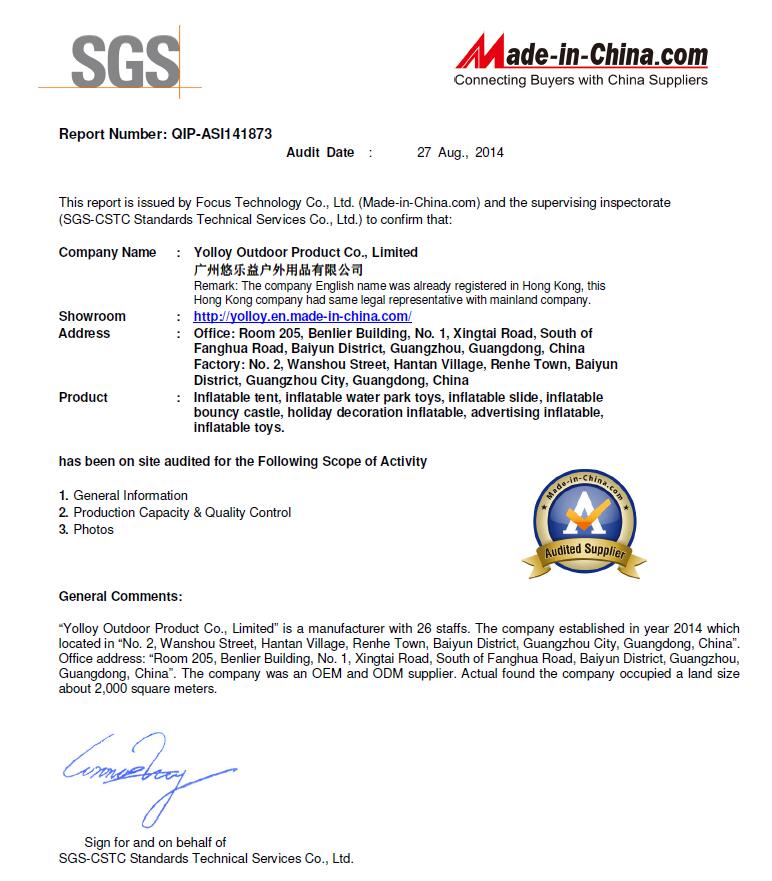
Whether you are planning a wedding, organizing a corporate activation, or building an event rental inventory, the right inflatable tent partner can make all the difference. YOLLOY Outdoor Product Co., Limited designs and manufactures custom inflatable canvas tents, clear domes, party tents, and event structures from its production base in Guangzhou, China. With a minimum order quantity of just one piece, a 95% on-time delivery rate, and export experience spanning Europe, Asia, the Americas, and beyond, YOLLOY provides the quality and reliability that event professionals demand. Every order includes a repair kit and blower configured for your local voltage. For inquiries about custom designs, pricing, or lead times, contact the team at
[email protected] or call
+86-20-8370 0771.