Products Category
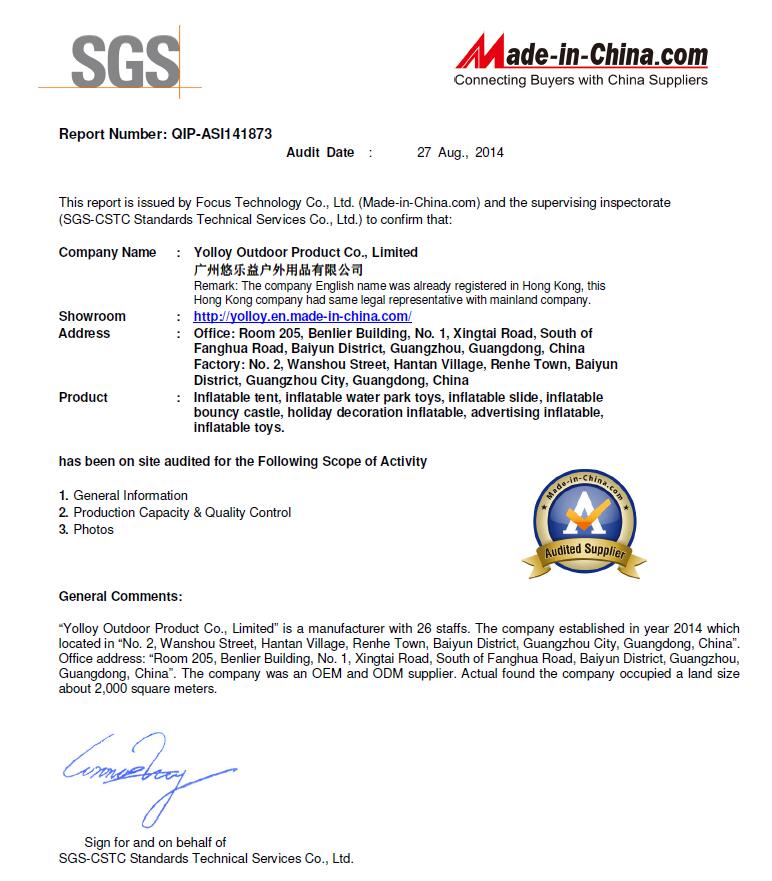
Certification

News

• New Order Successfully Finished for Long-Time Cooperated Japanese Client | YOLLOY Wins Full Client Recognition

• YOLLOY Custom Inflatable Pool Tent for Danish Client: Professional Pool Repair Shelter & Debris Protection

• Trusted Once Again! Greek Captain Re-orders Our Products After 4 Years

• Revolutionize Your Outdoors: The All-Terrain Inflatable Floating Tent for Land & Water

• Elevate Your Summer Fun: The Ultimate Inflatable Water Floating Volleyball Court Trampoline

• Innovative Inflatable Nightclub Tents & Pop-Up Bars: The Ultimate Solution for Portable Party Venues

Contact Us

Name: Sunny Yang
Tel: +86-20-8370 0771
Fax: +86-20-8370 0771
Mobile: 13570587575
E-mail: sales@yolloy.com
Add: No 5,Xiong wei Bo Nan Road,ZhongLuoTan Town,Baiyun district,Guangzhou,China
Friend me on Facebook Follow me on Twitter Add me to your circles Follow me on Pinterest Watch my channel on YouTube
News

Why Inflatable Camping Tents Are Revolutionizing Outdoor Adventures

Author:yolloy Date:2026/8/5 5:27:39
Why Inflatable Camping Tents Are Revolutionizing Outdoor Adventures
Discover how modern air-inflated shelter technology is changing the way campers, event planners, and outdoor businesses think about portable structures.
Camping has come a long way from wrestling with aluminum poles in the dark. If you have ever spent 30 minutes trying to thread a pole through a sleeve only to have it snap back in your face, you already know the pain. Today, a growing number of campers, event organizers, and outdoor hospitality operators are switching to inflatable camping tent designs that go up in minutes with little more than an electric pump. The shift is not just about convenience — it is about rethinking what a tent can be.
What Makes an Inflatable Tent Different?
Traditional tents rely on a framework of rigid poles — usually fiberglass or aluminum — that must be assembled piece by piece. An inflatable tent replaces those poles with air-filled tubes, typically made from high-strength PVC tarpaulin, Oxford fabric, or TPU-coated materials. Instead of building a skeleton, you simply stake the base, connect a blower, and let the air do the work. Within minutes, the structure stands firm and ready to use.
The air beams are not like pool toys. They are engineered to hold pressure under load, and many commercial-grade models use reinforced seams with waterproof nylon thread and additional reinforcement at high-stress areas. The result is a shelter that can withstand wind, rain, and repeated use far better than most people expect.
Setup Speed: Minutes, Not Hours
The most immediate advantage of an inflatable tent for camping is the setup time. A single person can inflate a family-sized tent in under five minutes using a standard electric pump. Taking it down is even faster — open the deflation valves, and the air beams collapse almost instantly. This speed matters whether you are arriving at a campsite after sunset, setting up a vendor booth at a weekend market, or deploying emergency shelter on short notice.
For commercial operators — rental businesses, event companies, glamping resorts — the labor savings multiply quickly. A crew that needs an hour to pitch a fleet of pole tents can set up the same number of inflatables in a fraction of the time. Fewer hours on setup means lower staffing costs and faster turnaround between bookings.
Durability and Weather Resistance
A common misconception is that inflatable structures are fragile. In practice, the air beams in a quality inflatable tent flex under wind load rather than resisting it rigidly — similar to how a tree bends in a storm rather than snapping. This flexibility makes them surprisingly resilient in gusty conditions. When paired with proper D-ring or metal anchor systems, a well-made inflatable tent can hold its ground in weather that would crack a fiberglass pole.
Material quality is the deciding factor. Commercial-grade PVC tarpaulin, precision welding at seams, and high-temperature fusion bonding all contribute to long-term durability. Look for tents that use materials tested to recognized standards — EN71 for toy safety, EN14960 for inflatable play equipment, and RoHS for restricted substances — as indicators of manufacturing quality.
Versatility Across Use Cases
Inflatable tents are not just for family camping trips. The same air-beam technology powers a wide range of structures used across different industries:
Glamping and hospitality: clear inflatable bubble tent designs with transparent walls offer guests an immersive stargazing experience. These dome-style structures have become popular at eco-resorts, luxury campsites, and outdoor dining venues.
Events and exhibitions: An inflatable party tent can serve as a branded activation space, a pop-up retail store, or a VIP lounge at a festival. Custom logos and graphics can be printed directly on the fabric.
Sports and recreation: Inflatable golf simulator enclosures, portable planetarium domes, and inflatable projection screens all rely on the same air-beam structure for quick deployment and portability.
Commercial and industrial: Inflatable spray booths, mobile car detailing tents, and temporary workshop shelters provide ventilated, weatherproof workspaces that can be relocated as needed.
What to Look for When Choosing a Manufacturer
With the growing popularity of inflatable tents, the number of suppliers has also grown — and not all of them deliver the same level of quality. When evaluating inflatable tent manufacturers, consider these factors:
Factor What to Ask
Material quality Does the manufacturer use commercial-grade PVC tarpaulin, Oxford fabric, or TPU? Are materials tested to EN71, EN14960, RoHS, or equivalent standards?
Customization Can sizes, colors, logos, and artwork be tailored to your needs? Can the manufacturer design from a sketch, photo, or site plan?
Blower compatibility Are blowers available for 110V, 220V, or 380V requirements? Do they meet CE or UL standards?
Production time What is the typical lead time for a regular product versus a custom order?
Minimum order Is there a minimum order quantity, or can you order a single unit for testing?
After-sales support Does the supplier include a repair kit? What warranty or service life is offered?
The Case for Custom Inflatable Tents
Off-the-shelf tents work for basic needs, but many businesses discover that a custom inflatable tent delivers a stronger return on investment. Customization goes beyond picking a color — it means getting a tent built to your exact specifications. If you operate a glamping site with unusual terrain, a custom footprint ensures the tent fits perfectly. If you run a branded event series, a tent printed with your logo and brand colors becomes a mobile billboard.
The design process with a full-service manufacturer typically starts with a proposal — a description, drawing, or even a photograph of what you want. From there, the design team prepares a 3D rendering for your approval. Once the design is finalized, production begins. The best manufacturers can turn around a custom inflatable tent in as little as 6 to 15 days for standard products, though complex or especially large projects may take longer.
Caring for Your Inflatable Tent
With proper care, a commercial-grade inflatable tent can last for years. Most manufacturers include a repair kit with each purchase — typically containing PVC patches, adhesive, and basic tools for field repairs. After each use, clean the tent with mild soap and water, allow it to dry completely before storage, and keep it in a cool, dry place away from direct sunlight. Check the blower regularly, and inspect seams and anchor points for signs of wear. Simple maintenance habits dramatically extend the service life of your investment.
Why More Businesses Are Choosing Inflatable Tents
The market for inflatable structures is growing, driven by demand from the hospitality, events, and outdoor recreation sectors. An inflatable dome tent can transform a standard campsite into a premium glamping destination. A branded inflatable event tent can turn a trade show booth into a memorable experience. A portable inflatable workshop can give a mobile business the flexibility to operate anywhere.
For businesses sourcing these products, working directly with a manufacturer rather than through distributors often means better pricing, more customization options, and clearer communication about lead times and quality standards. Look for manufacturers with a track record of on-time delivery and responsive customer service — ideally, those who answer inquiries within 24 hours and can provide references from previous international clients.
Looking for a reliable inflatable tent manufacturer? YOLLOY Outdoor Product Co., Limited, based in Guangzhou, China, specializes in custom inflatable tents, clear dome tents, planetarium domes, water park products, commercial slides, bounce houses, and advertising inflatables. With a design-to-production workflow that starts from your concept, materials tested to EN71, EN14960, and RoHS standards, and a stated minimum order quantity of just one piece, YOLLOY makes it straightforward to get the inflatable tent you need. Contact their team at sales@yolloy.com or call +86-20-8370 0771 to discuss your project. Visit yolloy.net to explore the full product range.

Why Inflatable Camping Tents Are Revolutionizing Outdoor Adventures

Author:yolloy Date:2026/8/5 5:27:39

Why Inflatable Camping Tents Are Revolutionizing Outdoor Adventures
Discover how modern air-inflated shelter technology is changing the way campers, event planners, and outdoor businesses think about portable structures.
Camping has come a long way from wrestling with aluminum poles in the dark. If you have ever spent 30 minutes trying to thread a pole through a sleeve only to have it snap back in your face, you already know the pain. Today, a growing number of campers, event organizers, and outdoor hospitality operators are switching to inflatable camping tent designs that go up in minutes with little more than an electric pump. The shift is not just about convenience — it is about rethinking what a tent can be.
What Makes an Inflatable Tent Different?
Traditional tents rely on a framework of rigid poles — usually fiberglass or aluminum — that must be assembled piece by piece. An inflatable tent replaces those poles with air-filled tubes, typically made from high-strength PVC tarpaulin, Oxford fabric, or TPU-coated materials. Instead of building a skeleton, you simply stake the base, connect a blower, and let the air do the work. Within minutes, the structure stands firm and ready to use.
The air beams are not like pool toys. They are engineered to hold pressure under load, and many commercial-grade models use reinforced seams with waterproof nylon thread and additional reinforcement at high-stress areas. The result is a shelter that can withstand wind, rain, and repeated use far better than most people expect.
Setup Speed: Minutes, Not Hours
The most immediate advantage of an inflatable tent for camping is the setup time. A single person can inflate a family-sized tent in under five minutes using a standard electric pump. Taking it down is even faster — open the deflation valves, and the air beams collapse almost instantly. This speed matters whether you are arriving at a campsite after sunset, setting up a vendor booth at a weekend market, or deploying emergency shelter on short notice.
For commercial operators — rental businesses, event companies, glamping resorts — the labor savings multiply quickly. A crew that needs an hour to pitch a fleet of pole tents can set up the same number of inflatables in a fraction of the time. Fewer hours on setup means lower staffing costs and faster turnaround between bookings.
Durability and Weather Resistance
A common misconception is that inflatable structures are fragile. In practice, the air beams in a quality inflatable tent flex under wind load rather than resisting it rigidly — similar to how a tree bends in a storm rather than snapping. This flexibility makes them surprisingly resilient in gusty conditions. When paired with proper D-ring or metal anchor systems, a well-made inflatable tent can hold its ground in weather that would crack a fiberglass pole.
Material quality is the deciding factor. Commercial-grade PVC tarpaulin, precision welding at seams, and high-temperature fusion bonding all contribute to long-term durability. Look for tents that use materials tested to recognized standards — EN71 for toy safety, EN14960 for inflatable play equipment, and RoHS for restricted substances — as indicators of manufacturing quality.
Versatility Across Use Cases
Inflatable tents are not just for family camping trips. The same air-beam technology powers a wide range of structures used across different industries:
Glamping and hospitality: clear inflatable bubble tent designs with transparent walls offer guests an immersive stargazing experience. These dome-style structures have become popular at eco-resorts, luxury campsites, and outdoor dining venues.
Events and exhibitions: An inflatable party tent can serve as a branded activation space, a pop-up retail store, or a VIP lounge at a festival. Custom logos and graphics can be printed directly on the fabric.
Sports and recreation: Inflatable golf simulator enclosures, portable planetarium domes, and inflatable projection screens all rely on the same air-beam structure for quick deployment and portability.
Commercial and industrial: Inflatable spray booths, mobile car detailing tents, and temporary workshop shelters provide ventilated, weatherproof workspaces that can be relocated as needed.
What to Look for When Choosing a Manufacturer
With the growing popularity of inflatable tents, the number of suppliers has also grown — and not all of them deliver the same level of quality. When evaluating inflatable tent manufacturers, consider these factors:
Factor What to Ask
Material quality Does the manufacturer use commercial-grade PVC tarpaulin, Oxford fabric, or TPU? Are materials tested to EN71, EN14960, RoHS, or equivalent standards?
Customization Can sizes, colors, logos, and artwork be tailored to your needs? Can the manufacturer design from a sketch, photo, or site plan?
Blower compatibility Are blowers available for 110V, 220V, or 380V requirements? Do they meet CE or UL standards?
Production time What is the typical lead time for a regular product versus a custom order?
Minimum order Is there a minimum order quantity, or can you order a single unit for testing?
After-sales support Does the supplier include a repair kit? What warranty or service life is offered?
The Case for Custom Inflatable Tents
Off-the-shelf tents work for basic needs, but many businesses discover that a custom inflatable tent delivers a stronger return on investment. Customization goes beyond picking a color — it means getting a tent built to your exact specifications. If you operate a glamping site with unusual terrain, a custom footprint ensures the tent fits perfectly. If you run a branded event series, a tent printed with your logo and brand colors becomes a mobile billboard.
The design process with a full-service manufacturer typically starts with a proposal — a description, drawing, or even a photograph of what you want. From there, the design team prepares a 3D rendering for your approval. Once the design is finalized, production begins. The best manufacturers can turn around a custom inflatable tent in as little as 6 to 15 days for standard products, though complex or especially large projects may take longer.
Caring for Your Inflatable Tent
With proper care, a commercial-grade inflatable tent can last for years. Most manufacturers include a repair kit with each purchase — typically containing PVC patches, adhesive, and basic tools for field repairs. After each use, clean the tent with mild soap and water, allow it to dry completely before storage, and keep it in a cool, dry place away from direct sunlight. Check the blower regularly, and inspect seams and anchor points for signs of wear. Simple maintenance habits dramatically extend the service life of your investment.
Why More Businesses Are Choosing Inflatable Tents
The market for inflatable structures is growing, driven by demand from the hospitality, events, and outdoor recreation sectors. An inflatable dome tent can transform a standard campsite into a premium glamping destination. A branded inflatable event tent can turn a trade show booth into a memorable experience. A portable inflatable workshop can give a mobile business the flexibility to operate anywhere.
For businesses sourcing these products, working directly with a manufacturer rather than through distributors often means better pricing, more customization options, and clearer communication about lead times and quality standards. Look for manufacturers with a track record of on-time delivery and responsive customer service — ideally, those who answer inquiries within 24 hours and can provide references from previous international clients.
Looking for a reliable inflatable tent manufacturer? YOLLOY Outdoor Product Co., Limited, based in Guangzhou, China, specializes in custom inflatable tents, clear dome tents, planetarium domes, water park products, commercial slides, bounce houses, and advertising inflatables. With a design-to-production workflow that starts from your concept, materials tested to EN71, EN14960, and RoHS standards, and a stated minimum order quantity of just one piece, YOLLOY makes it straightforward to get the inflatable tent you need. Contact their team at sales@yolloy.com or call +86-20-8370 0771 to discuss your project. Visit yolloy.net to explore the full product range.