The outdoor event industry has undergone a quiet transformation over the past decade. Walk through any major trade show, music festival, or wedding expo today, and you will notice something different: fewer traditional pole-and-canvas marquees and more sleek, air-supported structures that seem to rise from the ground in minutes. These are commercial inflatable tents, and they are reshaping how event organizers, rental companies, and brand marketers think about temporary outdoor spaces.
Unlike conventional tents that require a crew, heavy hardware, and hours of assembly, inflatable tents use air-filled beams to create self-supporting structures that can be set up by one or two people in under ten minutes. For businesses that need to move fast, look professional, and adapt to changing venues, that speed is a competitive advantage. But speed is only the beginning. The real story lies in the versatility, branding potential, and cost-effectiveness that inflatable tent manufacturers are bringing to the commercial market.
What Makes Commercial Inflatable Tents Different
A commercial inflatable tent replaces rigid metal or fiberglass poles with air beams — typically TPU or PVC tubes encased in reinforced fabric sleeves. These beams are inflated to a specified pressure using an electric or manual pump, creating a sturdy frame that can support the tent's weight and withstand outdoor conditions. The result is a structure that flexes with wind rather than resisting it, and that packs down to a fraction of its deployed size for transport and storage.
The market offers a wide range of configurations, each suited to different use cases. Dome tents provide a striking visual profile for VIP lounges and brand activations. Cube and tunnel tents offer generous rectangular floor plans ideal for trade show booths and dining areas. Party tents, sport tents, and shelter tents address specific event needs, while clear inflatable bubble tents and snow globes create unforgettable guest experiences for luxury weddings and glamping resorts.
Key Advantages for Event Businesses and Rental Companies
Rapid Deployment, Minimal Labor
Time is money in the event business. A traditional marquee can take a team of four or five workers an hour or more to assemble, depending on size and ground conditions. An inflatable tent of comparable dimensions typically goes up in five to ten minutes with one or two staff members. The pump does the heavy lifting, and there are no poles to thread, no complex frame systems to wrestle into place. This speed translates directly into lower labor costs, faster turnover between events, and the ability to handle more bookings in a single weekend.
Custom Branding That Commands Attention
One of the most powerful features of a custom inflatable tent is the ability to print logos, artwork, and brand messaging directly onto the structure. The entire tent surface becomes a billboard. For sponsors activating at a sports event, a beverage brand hosting a festival lounge, or a corporate client launching a product, the visual impact is immediate and impossible to miss. Custom colors and themed designs allow event companies to match client branding with precision, creating a cohesive experience that extends from the invitation to the physical space.
Weather Resilience and Structural Integrity
A well-designed inflatable tent handles wind differently than a rigid-frame tent. The air beams flex and rebound rather than resisting the force, which reduces the risk of catastrophic failure in gusty conditions. When properly anchored with D-ring or round metal anchor systems, these structures stay stable even in challenging weather. Commercial-grade materials — PVC tarpaulin, Oxford fabric, nylon, or TPU — are selected for durability and waterproofing, and reinforced seams with waterproof nylon thread ensure the tent holds up across repeated use.
Portability and Storage Efficiency
When deflated, an inflatable tent collapses into a compact package that fits in the trunk of a standard vehicle. This portability is a game-changer for rental companies that need to transport equipment between venues, event organizers running multi-city tours, and businesses that set up at seasonal markets and fairs. The packed size is a fraction of what a comparable pole tent would occupy, which means lower transportation costs and less warehouse space required.
Quality and Safety: What to Demand from a Supplier
Not all inflatable tents are built to the same standard. When sourcing a high quality inflatable tent, buyers should look for several key indicators of manufacturing excellence. Material certifications matter: EN71 testing for mechanical and physical properties, EN14960 for inflatable play equipment safety, and RoHS compliance for restricted substances are all signals that a manufacturer takes quality control seriously. Blowers should carry CE or UL certification, confirming they meet electrical safety standards for the intended market.
Production methods also tell a story. High-temperature fusion welding equipment produces airtight seams that will not delaminate under pressure. Precision sewing equipment with reinforced stitching at high-load areas prevents seam failure. Products should be individually inspected and tested before shipment, and a repair kit should be included with every unit — a small detail that signals a manufacturer's confidence in their product and their commitment to long-term customer support.
Commercial Applications Across Industries
The versatility of inflatable tents extends far beyond the camping trips that most consumers associate with the category. Here are some of the most common commercial use cases:
| Weddings & Private Events |
Reception halls, ceremony backdrops, cocktail lounges |
Clear bubble tents, dome tents, party tents |
| Corporate & Brand Activations |
Product launches, pop-up stores, promotional booths |
Custom cube tents, advertising inflatables |
| Trade Shows & Exhibitions |
Exhibition booths, demo areas, meeting rooms |
Tunnel tents, dome tents, shelter tents |
| Nightlife & Entertainment |
Pop-up nightclubs, festival VIP areas, DJ booths |
Dome tents, party tents, clear bubble tents |
| Sports & Outdoor Recreation |
Golf simulator enclosures, event lounges, first-aid stations |
Sport tents, car tents, workshop tents |
| Emergency & Military |
Field hospitals, command posts, temporary shelters |
Shelter tents, cube tents, tunnel tents |
The Customization Process: From Concept to Delivery
One of the most valuable services a professional inflatable tent manufacturer offers is end-to-end custom design. The process typically begins with the customer providing a description, sketch, photograph, or even a rough site plan and budget. The manufacturer's design team then prepares simulation renderings — digital previews of how the finished tent will look — and iterates on the design based on customer feedback. This collaborative approach ensures that the final product matches the client's vision before a single piece of fabric is cut.
Once the design is approved, production begins. A typical custom inflatable tent takes 6 to 15 days to manufacture, depending on size and complexity. The minimum order quantity can be as low as one piece, which makes custom manufacturing accessible to small businesses and first-time buyers — not just large-scale importers. After production, the tent is inspected, packed with protective materials, and shipped by air or sea according to the customer's timeline and budget.
What Sets YOLLOY Apart in the Inflatable Tent Market
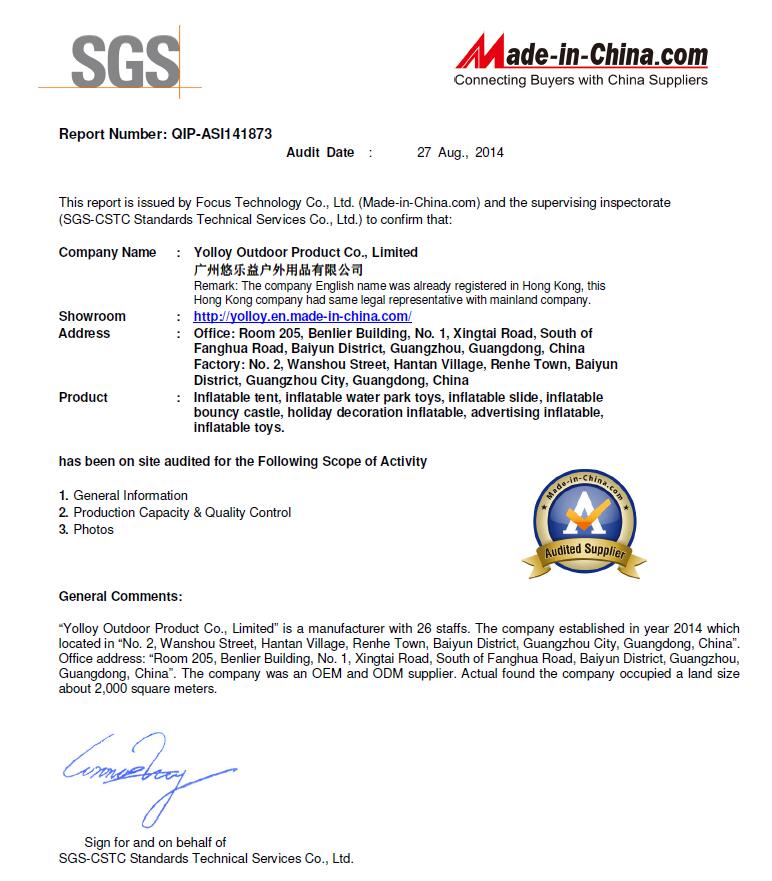
YOLLOY Outdoor Product Co., Limited, based in Guangzhou, China, has established itself as a reliable source for commercial inflatable products across multiple categories. The company's inflatable tent range includes outdoor tents (cube, tunnel, dome, shelter, car, party, sport, workshop), clear inflatable dome tents and bubble tents, portable planetarium domes, and inflatable projection screens. Products are exported to markets across Europe, Asia, South America, Africa, the Middle East, and Latin America.
Why Event Professionals Choose YOLLOY
- Custom sizes, colors, and logo printing available on every order
- One-piece minimum order quantity — no large upfront commitment required
- Production completed in 6 to 15 days for standard products
- Materials tested to EN71, EN14960, EN15649, and RoHS standards
- Blowers supplied in 110V, 220V, or 380V with CE/UL certification
- 95% on-time delivery rate with air and sea shipping options
- Three-year expected service life with proper use and maintenance
- Repair kit included with every inflatable product
- 24-hour response time on email inquiries
Practical Tips for Getting the Most from Your Inflatable Tent
Even the best-built inflatable tent performs better with proper handling. Always use a groundsheet or footprint to protect the floor from abrasion and punctures. Clear the setup area of sharp objects, sticks, and stones before inflation. In windy conditions, stake down the corners and key guy lines before fully inflating, so the tent does not catch the wind like a sail. Check the air pressure after significant temperature changes — cold weather causes air to contract, and a quick top-up with the pump restores full rigidity.
After an event, allow the tent to dry completely before packing it away for storage. Moisture trapped in folded fabric can lead to mold and material degradation over time. If a small leak does develop, most repairs are straightforward with the included patch kit and adhesive. Addressing minor issues early prevents them from becoming major problems during a live event.
Ready to elevate your next outdoor event? Whether you need a single custom inflatable tent for a flagship activation or a bulk order for your rental fleet, YOLLOY's design team is ready to bring your vision to life. Contact YOLLOY today at [email protected] or call +86-20-8370 0771 to discuss your project requirements. Visit www.yolloy.net to browse the full product catalog and request a custom quote.
|