Products Category
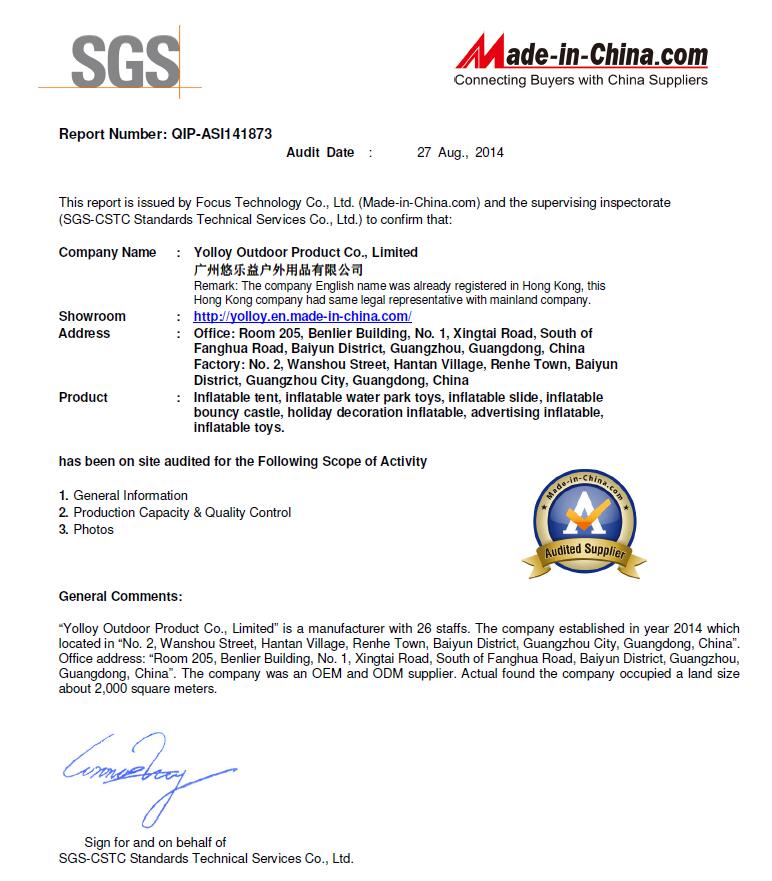
Certification

News

• New Order Successfully Finished for Long-Time Cooperated Japanese Client | YOLLOY Wins Full Client Recognition

• YOLLOY Custom Inflatable Pool Tent for Danish Client: Professional Pool Repair Shelter & Debris Protection

• Trusted Once Again! Greek Captain Re-orders Our Products After 4 Years

• Revolutionize Your Outdoors: The All-Terrain Inflatable Floating Tent for Land & Water

• Elevate Your Summer Fun: The Ultimate Inflatable Water Floating Volleyball Court Trampoline

• Innovative Inflatable Nightclub Tents & Pop-Up Bars: The Ultimate Solution for Portable Party Venues

Contact Us

Name: Sunny Yang
Tel: +86-20-8370 0771
Fax: +86-20-8370 0771
Mobile: 13570587575
E-mail: sales@yolloy.com
Add: No 5,Xiong wei Bo Nan Road,ZhongLuoTan Town,Baiyun district,Guangzhou,China
Friend me on Facebook Follow me on Twitter Add me to your circles Follow me on Pinterest Watch my channel on YouTube
News

Why an Inflatable Canopy Tent Outperforms Traditional Event Shelters for Outdoor Branding and Hospitality

Author:yolloy Date:2026/7/31 18:13:15

Outdoor events demand structures that are easy to move, quick to set up, and visually commanding. Whether you are running a product sampling activation, a wedding reception, a trade show booth, or a corporate hospitality lounge, the shelter you choose shapes how guests experience your brand. For years, event teams have relied on traditional pole tents or heavy frame marquees. But a growing number of organizers are switching to the inflatable canopy tent, a category that combines portability, speed, and a distinctive visual presence in one package. This article walks through what makes an inflatable canopy tent different, how it compares to conventional options, and what to look for when sourcing from a manufacturer.

What Makes an Inflatable Canopy Tent Different

A traditional event tent relies on a rigid frame—usually aluminum or steel poles—that must be assembled piece by piece, often requiring a team of two to four people and a significant amount of time. An inflatable canopy tent replaces that frame with air-filled beams. Instead of connecting poles and securing joints, you stake the tent in position, connect a blower, and let the structure rise on its own within minutes. The result is a covered, branded space that stands up without any rigid framework to haul or assemble.

This design shift changes the entire event workflow. Fewer hard components mean less weight to transport and fewer parts to lose or damage. Setup can be handled by one or two people, which is especially valuable for mobile marketing teams, lean event crews, and rental businesses that deploy multiple setups in a single day. The inflated beams also give the tent a curved, modern silhouette that naturally draws attention on a crowded event field.

Where Inflatable Canopy Tents Excel

Inflatable canopy tents are not a one-size-fits-all solution, but they shine in several specific scenarios where traditional tents show their limitations.

Frequent Event Programs

For teams that run recurring activations—weekend markets, seasonal sampling tours, sports hospitality tents, mobile retail pop-ups—the speed of inflation-based setup cuts down the time between arrival and go-live. There is no frame to unfold, no leg-locking to check, and no canopy to tension across a skeleton of poles. The blower does the structural work, leaving the crew free to handle branding, product placement, lighting, and guest flow.

Brand Visibility and Differentiation

At a busy outdoor expo or festival, rows of square pop-up canopies can blur into a sea of sameness. An inflatable canopy tent breaks that pattern with a curved, sculptural profile that stands taller and reads differently from a distance. When the tent itself is printed with custom graphics and logos, it becomes a three-dimensional brand asset rather than just a shelter. That kind of presence can be the difference between a passerby glancing past your booth and stopping to take a closer look.

Lean Crews and Solo Operators

Many inflatable canopy tents are designed for single-person setup. For a rental business owner who delivers and installs multiple units per day, or a brand ambassador traveling solo to regional events, eliminating the need for a second pair of hands is a practical advantage that directly affects the bottom line.

Key Considerations Before You Buy

Not every inflatable tent on the market is built to the same standard. If you are sourcing for a business—whether for rental inventory, corporate events, or resale—there are several factors worth examining before you commit.

Material Quality

The fabric used in the tent body determines how it holds up under sun, wind, rain, and repeated inflation cycles. Commercial-grade PVC tarpaulin is a common choice for durability and weather resistance. For certain applications, manufacturers may also use Oxford fabric, nylon, or TPU. Look for materials that have been tested against recognized safety standards. YOLLOY, for example, states that its relevant materials have passed EN71, EN14960, and RoHS-related testing, with blowers meeting CE or UL requirements. Ask your supplier for documentation rather than taking claims at face value.

Construction and Reinforcement

The seams are where inflatable products either last or fail. High-quality manufacturing uses precision sewing equipment with waterproof nylon thread and additional reinforcement at stress points. Airtight sections should be assembled with high-temperature fusion welding rather than adhesive alone. Ground anchoring systems—typically D-rings or round metal anchors—are essential for wind resistance and should be included as part of the structure, not offered as an afterthought.

The Blower System

The blower is the engine of any inflatable tent. It needs to be appropriately powered for the tent's air volume and available in the voltage your market requires—110V, 220V, or 380V. A blower that is undersized leads to sagging and instability; one that is oversized consumes unnecessary power and generates excess noise. A reliable supplier will match the blower to the tent rather than shipping a generic unit.

Customization Capabilities

A custom inflatable tent should reflect your brand identity, not just carry a logo slapped on a stock design. Full customization means the manufacturer can work from your description, concept sketch, photograph, or site plan—and prepare simulation renderings for your approval before production begins. Custom sizes, colors, and printed artwork should all be available. If you have a specific theme, event layout, or spatial constraint, the ability to design from scratch is far more valuable than choosing from a catalog of pre-configured options.

Why Source from a Specialized Manufacturer

When you are buying inflatable tents for commercial use, the relationship with the manufacturer matters as much as the product itself. A specialized manufacturer offers more than a transaction—it provides design consultation, quality control, and after-sales support that generic marketplaces cannot match.

YOLLOY, based in Guangzhou, China, operates as a custom inflatable solution provider rather than a catalog reseller. The company's workflow starts with designers preparing simulation renderings from customer proposals, revising until the design is approved, and then releasing it for factory production. Each product is inspected and tested before shipment, and every inflatable ships with a repair kit. The company reports a 95% on-time delivery rate and commits to answering inquiries within 24 hours.

For businesses buying in volume, commercial inflatable tent wholesale sourcing from a factory-direct manufacturer removes intermediary markups and gives you direct access to the design team. The minimum order quantity at YOLLOY is one piece, which means you can order a single sample for evaluation before committing to a larger production run. Typical production time for a regular inflatable product is 6 to 15 days, with air shipping available in 5 to 7 days and sea freight in 15 to 30 days or more.

What Else Can an Inflatable Manufacturer Supply

One advantage of working with a full-range inflatable manufacturer is that the relationship can extend beyond canopy tents. YOLLOY's product catalog spans outdoor inflatable tents in cube, tunnel, dome, shelter, party, and sports configurations; clear inflatable dome tents and bubble tents; portable planetarium domes and projection screens; inflatable water parks, floating platforms, and water play equipment; interactive sports games and obstacle courses; commercial slides and bounce houses; paintball bunkers; air mattresses; and inflatable advertising models including arches, sky dancers, and seasonal decorations. If your event business or rental inventory covers multiple categories, consolidating supply with a single manufacturer simplifies logistics, quality expectations, and communication.

Questions to Ask Before Ordering

Before placing an order, run through a short checklist with your supplier:

What materials are used, and can you provide test reports for the relevant standards?

What is the typical production lead time for a custom design?

Does the price include a blower matched to the tent's specifications?

What anchoring system is included, and is it suitable for the wind conditions at my event sites?

Is a repair kit included, and what warranty or service-life expectation does the manufacturer provide?

Can you produce a single sample before a bulk order, and what is the MOQ?

What shipping methods are available, and what are the indicative transit times?

A manufacturer that answers these questions clearly and promptly is one that treats its customers as long-term partners. YOLLOY states that its products are designed for a three-year service life under correct use and maintenance, and that the company ships to Europe, Asia, South America, Africa, the Middle East, Latin America, and other markets. The team is reachable by phone, email, and fax, with a stated commitment to responsive communication.

If you are planning your next outdoor event activation, expanding your rental inventory, or looking for a reliable manufacturing partner for custom inflatable structures, YOLLOY offers design-to-delivery service with a focus on safety, durability, and on-time performance. Reach out to the team at sales@yolloy.com or call +86-20-8370 0771 to discuss your project. Visit www.yolloy.net to browse the full product range, including outdoor tents, clear domes, water park equipment, interactive games, slides, bounce houses, and advertising inflatables.


Why an Inflatable Canopy Tent Outperforms Traditional Event Shelters for Outdoor Branding and Hospitality

Author:yolloy Date:2026/7/31 18:13:15

Outdoor events demand structures that are easy to move, quick to set up, and visually commanding. Whether you are running a product sampling activation, a wedding reception, a trade show booth, or a corporate hospitality lounge, the shelter you choose shapes how guests experience your brand. For years, event teams have relied on traditional pole tents or heavy frame marquees. But a growing number of organizers are switching to the inflatable canopy tent, a category that combines portability, speed, and a distinctive visual presence in one package. This article walks through what makes an inflatable canopy tent different, how it compares to conventional options, and what to look for when sourcing from a manufacturer.

What Makes an Inflatable Canopy Tent Different

A traditional event tent relies on a rigid frame—usually aluminum or steel poles—that must be assembled piece by piece, often requiring a team of two to four people and a significant amount of time. An inflatable canopy tent replaces that frame with air-filled beams. Instead of connecting poles and securing joints, you stake the tent in position, connect a blower, and let the structure rise on its own within minutes. The result is a covered, branded space that stands up without any rigid framework to haul or assemble.

This design shift changes the entire event workflow. Fewer hard components mean less weight to transport and fewer parts to lose or damage. Setup can be handled by one or two people, which is especially valuable for mobile marketing teams, lean event crews, and rental businesses that deploy multiple setups in a single day. The inflated beams also give the tent a curved, modern silhouette that naturally draws attention on a crowded event field.

Where Inflatable Canopy Tents Excel

Inflatable canopy tents are not a one-size-fits-all solution, but they shine in several specific scenarios where traditional tents show their limitations.

Frequent Event Programs

For teams that run recurring activations—weekend markets, seasonal sampling tours, sports hospitality tents, mobile retail pop-ups—the speed of inflation-based setup cuts down the time between arrival and go-live. There is no frame to unfold, no leg-locking to check, and no canopy to tension across a skeleton of poles. The blower does the structural work, leaving the crew free to handle branding, product placement, lighting, and guest flow.

Brand Visibility and Differentiation

At a busy outdoor expo or festival, rows of square pop-up canopies can blur into a sea of sameness. An inflatable canopy tent breaks that pattern with a curved, sculptural profile that stands taller and reads differently from a distance. When the tent itself is printed with custom graphics and logos, it becomes a three-dimensional brand asset rather than just a shelter. That kind of presence can be the difference between a passerby glancing past your booth and stopping to take a closer look.

Lean Crews and Solo Operators

Many inflatable canopy tents are designed for single-person setup. For a rental business owner who delivers and installs multiple units per day, or a brand ambassador traveling solo to regional events, eliminating the need for a second pair of hands is a practical advantage that directly affects the bottom line.

Key Considerations Before You Buy

Not every inflatable tent on the market is built to the same standard. If you are sourcing for a business—whether for rental inventory, corporate events, or resale—there are several factors worth examining before you commit.

Material Quality

The fabric used in the tent body determines how it holds up under sun, wind, rain, and repeated inflation cycles. Commercial-grade PVC tarpaulin is a common choice for durability and weather resistance. For certain applications, manufacturers may also use Oxford fabric, nylon, or TPU. Look for materials that have been tested against recognized safety standards. YOLLOY, for example, states that its relevant materials have passed EN71, EN14960, and RoHS-related testing, with blowers meeting CE or UL requirements. Ask your supplier for documentation rather than taking claims at face value.

Construction and Reinforcement

The seams are where inflatable products either last or fail. High-quality manufacturing uses precision sewing equipment with waterproof nylon thread and additional reinforcement at stress points. Airtight sections should be assembled with high-temperature fusion welding rather than adhesive alone. Ground anchoring systems—typically D-rings or round metal anchors—are essential for wind resistance and should be included as part of the structure, not offered as an afterthought.

The Blower System

The blower is the engine of any inflatable tent. It needs to be appropriately powered for the tent's air volume and available in the voltage your market requires—110V, 220V, or 380V. A blower that is undersized leads to sagging and instability; one that is oversized consumes unnecessary power and generates excess noise. A reliable supplier will match the blower to the tent rather than shipping a generic unit.

Customization Capabilities

A custom inflatable tent should reflect your brand identity, not just carry a logo slapped on a stock design. Full customization means the manufacturer can work from your description, concept sketch, photograph, or site plan—and prepare simulation renderings for your approval before production begins. Custom sizes, colors, and printed artwork should all be available. If you have a specific theme, event layout, or spatial constraint, the ability to design from scratch is far more valuable than choosing from a catalog of pre-configured options.

Why Source from a Specialized Manufacturer

When you are buying inflatable tents for commercial use, the relationship with the manufacturer matters as much as the product itself. A specialized manufacturer offers more than a transaction—it provides design consultation, quality control, and after-sales support that generic marketplaces cannot match.

YOLLOY, based in Guangzhou, China, operates as a custom inflatable solution provider rather than a catalog reseller. The company's workflow starts with designers preparing simulation renderings from customer proposals, revising until the design is approved, and then releasing it for factory production. Each product is inspected and tested before shipment, and every inflatable ships with a repair kit. The company reports a 95% on-time delivery rate and commits to answering inquiries within 24 hours.

For businesses buying in volume, commercial inflatable tent wholesale sourcing from a factory-direct manufacturer removes intermediary markups and gives you direct access to the design team. The minimum order quantity at YOLLOY is one piece, which means you can order a single sample for evaluation before committing to a larger production run. Typical production time for a regular inflatable product is 6 to 15 days, with air shipping available in 5 to 7 days and sea freight in 15 to 30 days or more.

What Else Can an Inflatable Manufacturer Supply

One advantage of working with a full-range inflatable manufacturer is that the relationship can extend beyond canopy tents. YOLLOY's product catalog spans outdoor inflatable tents in cube, tunnel, dome, shelter, party, and sports configurations; clear inflatable dome tents and bubble tents; portable planetarium domes and projection screens; inflatable water parks, floating platforms, and water play equipment; interactive sports games and obstacle courses; commercial slides and bounce houses; paintball bunkers; air mattresses; and inflatable advertising models including arches, sky dancers, and seasonal decorations. If your event business or rental inventory covers multiple categories, consolidating supply with a single manufacturer simplifies logistics, quality expectations, and communication.

Questions to Ask Before Ordering

Before placing an order, run through a short checklist with your supplier:

What materials are used, and can you provide test reports for the relevant standards?

What is the typical production lead time for a custom design?

Does the price include a blower matched to the tent's specifications?

What anchoring system is included, and is it suitable for the wind conditions at my event sites?

Is a repair kit included, and what warranty or service-life expectation does the manufacturer provide?

Can you produce a single sample before a bulk order, and what is the MOQ?

What shipping methods are available, and what are the indicative transit times?

A manufacturer that answers these questions clearly and promptly is one that treats its customers as long-term partners. YOLLOY states that its products are designed for a three-year service life under correct use and maintenance, and that the company ships to Europe, Asia, South America, Africa, the Middle East, Latin America, and other markets. The team is reachable by phone, email, and fax, with a stated commitment to responsive communication.

If you are planning your next outdoor event activation, expanding your rental inventory, or looking for a reliable manufacturing partner for custom inflatable structures, YOLLOY offers design-to-delivery service with a focus on safety, durability, and on-time performance. Reach out to the team at sales@yolloy.com or call +86-20-8370 0771 to discuss your project. Visit www.yolloy.net to browse the full product range, including outdoor tents, clear domes, water park equipment, interactive games, slides, bounce houses, and advertising inflatables.