When you are sourcing a
custom inflatable tent for your next event, activation, or commercial project, the manufacturer you choose makes all the difference. A well-built inflatable tent can serve your team for years across hundreds of events — but a poorly constructed one can turn into a logistics headache after just a few uses. This guide walks through the key factors to evaluate when selecting an
inflatable tent manufacturer, from materials and customization to certifications and after-sales support.
Why Material Quality Comes First
The foundation of any durable inflatable tent is the fabric. Commercial-grade PVC tarpaulin is the industry standard for heavy-duty applications, offering excellent tear resistance, waterproofing, and UV stability. For lighter-weight structures or specialized environments, materials like Oxford fabric, nylon, or TPU may be more appropriate.
A manufacturer that offers multiple material options — and can explain which one fits your specific use case — is a sign of genuine production expertise. Beyond the base fabric, pay attention to the construction details: are the seams reinforced with waterproof nylon thread? Are high-load areas given extra stitching or welding? Do airtight products use high-temperature fusion equipment rather than just adhesive bonding?
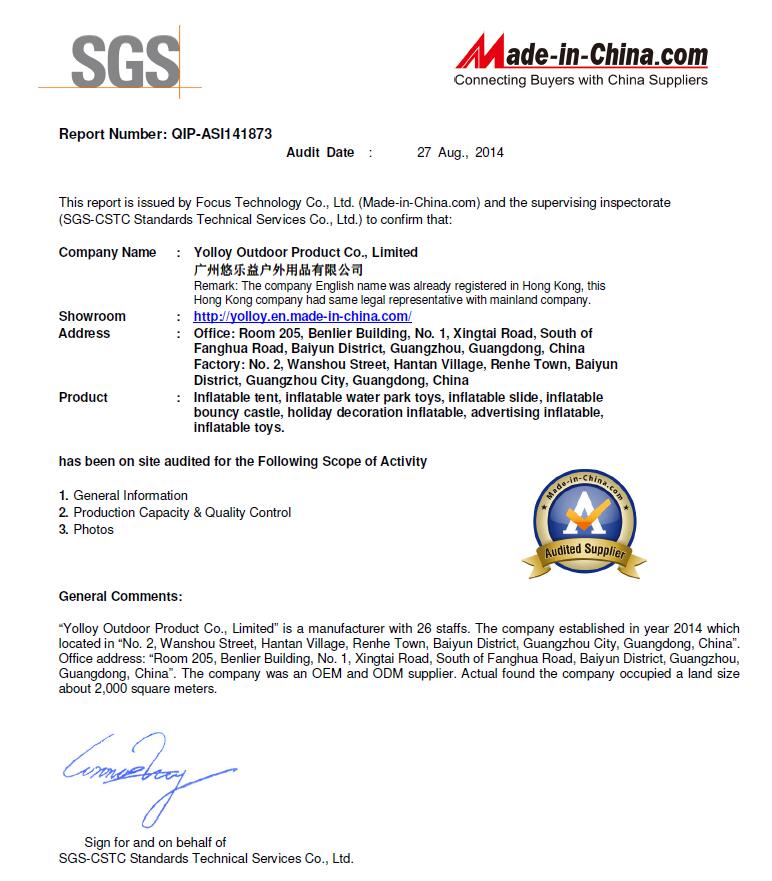
These are the kinds of manufacturing practices that separate a reliable supplier from a price-driven factory. YOLLOY, for instance, uses precision sewing equipment for stitched products and high-temperature fusion welding for airtight structures, with additional reinforcement at all stress points. This attention to build quality directly affects how long your tent will last and how well it performs under real-world conditions.
Customization: More Than Just a Logo
A
custom inflatable tent should reflect your brand, your event requirements, and your functional needs. The best manufacturers offer far more than just slapping a logo onto a standard template.
Look for a partner that can work from your description, drawing, sketch, photograph, or even a site plan and budget. This design-to-production approach means the manufacturer's in-house designers prepare simulation renderings based on your proposal, revise the design until you are satisfied, and only then release it for production. This workflow eliminates guesswork and ensures the final product matches your expectations.
Customization should also extend to practical specifications: custom sizes, custom colors, custom artwork printing, and voltage-specific blowers (110V, 220V, or 380V). Whether you need a single piece or a bulk order, a manufacturer that accepts a minimum order quantity of one piece gives you the flexibility to prototype before committing to larger volumes.
Product Range and Versatility
While you may be shopping for a tent today, a manufacturer with a broad product lineup often signals deeper engineering capability and supply chain maturity. Beyond standard outdoor inflatable tents, a full-service inflatable manufacturer should be able to produce:
Clear inflatable dome tents and bubble tents — increasingly popular for glamping, hospitality, and unique event experiences
Portable planetarium domes and projection screens — for educational and entertainment applications
Inflatable water park products — including floating platforms, pools, boats, and aquatic play structures
Interactive sports games — inflatable arenas, obstacle courses, bumper balls, and more
Commercial slides and bounce houses — for family entertainment centers and rental businesses
Inflatable paintball bunkers — for tactical gaming venues
Advertising inflatables — arches, sky dancers, seasonal decorations, and custom models
A manufacturer that produces across these categories has likely invested in a wider range of equipment, material knowledge, and quality control processes. When you need an
inflatable dome tent for one project and an
inflatable tent for events for another, working with one capable supplier simplifies logistics, communication, and quality assurance.
Certifications and Safety Standards
Inflatable products used in commercial or public settings must meet recognized safety standards. Before committing to a manufacturer, verify that their materials and finished products have passed relevant testing.
For inflatable toys and play structures, EN 14960 is the key European standard. For inflatable water park products, EN 15649 applies. Materials should also be tested for harmful substances — RoHS compliance is a good baseline. Blowers should carry CE or UL certification depending on your target market.
These certifications are not just paperwork. They represent third-party verification that the products have been tested for structural integrity, material safety, and electrical compliance. A manufacturer that proactively lists these certifications on their website — rather than only producing them when asked — is more likely to have them embedded in their production workflow.
Production Timeline and Delivery
Lead time matters, especially when you are planning around an event date. A typical production time for a regular inflatable product is 6 to 15 days, though complex or large custom orders may take longer. Make sure your manufacturer communicates this clearly upfront rather than promising unrealistic timelines.
Shipping is another critical factor. Air freight generally takes 5 to 7 days, while sea freight ranges from 15 to 30 days or more depending on the destination. A manufacturer that offers both options and can advise on the best route for your order size and deadline is a more valuable partner.
Also worth checking: what is the manufacturer's on-time delivery rate? A track record of 95% or higher is a strong indicator of reliable production planning and logistics management.
Packaging, Warranty, and After-Sales Support
How your tent arrives matters. Look for packaging that includes soft carpet protection, waterproof PVC bags, and outer PE film. For large or heavy products, steel pallets may be used to prevent transit damage.
Every inflatable product should come with a repair kit — this is a small but important detail that signals the manufacturer expects you to use the product long-term and wants to support that. A stated service life or warranty expectation (typically around three years with proper use and maintenance) gives you a baseline for evaluating the product's durability.
Responsive communication is equally important. A manufacturer that commits to answering emails within 24 hours and has a clear point of contact is easier to work with when you have questions about setup, maintenance, or reordering.
Pricing and Value
Price should not be the only factor, but it should be transparent. The lowest quote often comes with hidden costs: thinner materials, skipped reinforcement, no repair kit, or longer lead times. Ask for a detailed breakdown of what is included — the tent, the blower, the repair kit, the packaging, and any customization fees.
A manufacturer that positions itself on safety, durability, responsive service, on-time delivery, and honest communication is usually worth the investment over a supplier that competes on price alone. The cost of a failed product at an event far exceeds any savings on the initial purchase.
Making Your Decision
Choosing the right
custom inflatable tent manufacturer comes down to a few key questions: Does the manufacturer have the material expertise and production capability to build what you need? Do they offer genuine design-to-production customization? Are their products certified to relevant safety standards? Do they provide clear timelines, reliable packaging, and after-sales support?
When you find a supplier that checks all these boxes — one that can handle everything from a single promotional tent to a full suite of
commercial inflatable products — you have found a partner worth keeping.
Ready to Start Your Custom Inflatable Tent Project?
Reach out to YOLLOY today to discuss your project requirements and receive a custom design proposal tailored to your brand and budget. Contact us at
[email protected] or visit
www.yolloy.net to explore our full product range.