Products Category
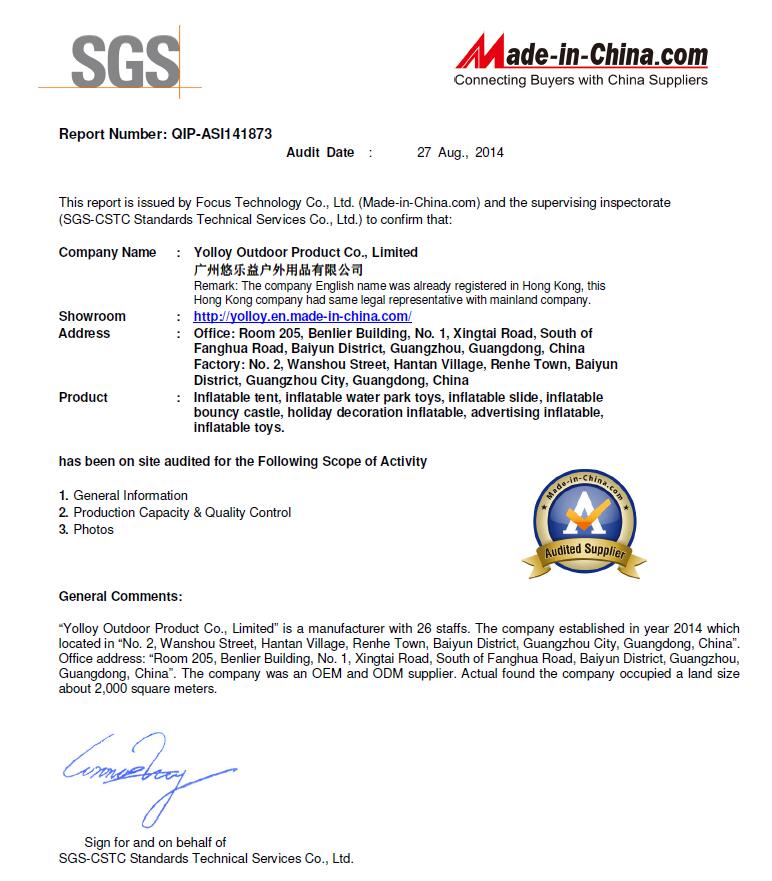
Certification

News

• New Order Successfully Finished for Long-Time Cooperated Japanese Client | YOLLOY Wins Full Client Recognition

• YOLLOY Custom Inflatable Pool Tent for Danish Client: Professional Pool Repair Shelter & Debris Protection

• Trusted Once Again! Greek Captain Re-orders Our Products After 4 Years

• Revolutionize Your Outdoors: The All-Terrain Inflatable Floating Tent for Land & Water

• Elevate Your Summer Fun: The Ultimate Inflatable Water Floating Volleyball Court Trampoline

• Innovative Inflatable Nightclub Tents & Pop-Up Bars: The Ultimate Solution for Portable Party Venues

Contact Us

Name: Sunny Yang
Tel: +86-20-8370 0771
Fax: +86-20-8370 0771
Mobile: 13570587575
E-mail: [email protected]
Add: No 5,Xiong wei Bo Nan Road,ZhongLuoTan Town,Baiyun district,Guangzhou,China
Friend me on Facebook Follow me on Twitter Add me to your circles Follow me on Pinterest Watch my channel on YouTube
News

What Makes a High Quality Inflatable Tent: A Complete Guide to Materials, Construction, and Custom Solutions

Author:yolloy Date:2026/8/6 9:39:50
Understanding the key factors that separate durable commercial inflatable tents from low-cost alternatives
Inflatable tents have transformed the way businesses, event organizers, and outdoor enthusiasts approach temporary shelter. Unlike traditional pole-and-frame tents that require heavy metal components and lengthy assembly, a high quality inflatable tent goes up in minutes with nothing more than an electric blower. This speed and simplicity have made inflatable tents the go-to solution for trade shows, corporate events, wedding receptions, emergency response, military operations, and even luxury glamping experiences. But not all inflatable tents are built to the same standard. The difference between a tent that lasts through dozens of deployments and one that fails after its first season comes down to a handful of critical factors: the materials used in production, the manufacturing techniques employed, the quality control systems in place, and the level of customization available. This guide breaks down each of these elements so you can make an informed decision when sourcing your next inflatable tent.
1. Material Quality: The Foundation of a Durable Inflatable Tent
The single most important factor in determining tent longevity is the fabric. Reputable inflatable tent manufacturers use commercial-grade PVC tarpaulin as the primary material for inflatable structures. This material offers a unique combination of strength, flexibility, and weather resistance that consumer-grade alternatives simply cannot match. High-quality PVC tarpaulin resists tearing, withstands prolonged UV exposure without degrading, and maintains its airtight integrity across a wide temperature range, typically from -30 degrees Celsius to +70 degrees Celsius.
Beyond the base material, the thread used in sewn seams plays an equally important role. Waterproof nylon thread is the industry standard for commercial inflatable tents because it does not rot, stretch, or weaken when exposed to moisture. At YOLLOY, every seam is reinforced with double stitching, and high-load areas such as anchor points and door corners receive additional reinforcement layers to prevent stress-related failures over time. For airtight products that require a completely sealed structure, high-temperature fusion welding equipment is used instead of sewing, creating bonds that are actually stronger than the surrounding fabric.
Depending on the specific application, alternative materials may also be appropriate. Oxford fabric offers a lighter weight option for portable or backpacking-style tents, while nylon and TPU (thermoplastic polyurethane) provide specialized properties for extreme weather conditions or medical-grade applications. The key is working with a manufacturer who can recommend the right material for your specific use case rather than applying a one-size-fits-all approach.
2. Construction Methods: Sewing vs. Welding
The way an inflatable tent is put together directly affects its air retention, structural stability, and overall lifespan. There are two primary construction methods used in the industry, and each has its place depending on the tent design.
Precision Sewing
For large-format tents such as event domes, party tents, and exhibition shelters, high-precision industrial sewing machines are used to join fabric panels. The machines employed by professional manufacturers operate at controlled stitch densities that ensure consistent seam strength across the entire structure. Operators with years of experience guide the fabric through the machines, maintaining even tension and alignment. After sewing, each seam is inspected for gaps, loose threads, or uneven stitching before the tent advances to the next production stage.
High-Temperature Fusion Welding
For airtight designs such as sealed cube tents, spray booths, and certain clear dome structures, high-frequency welding is the preferred method. This process uses electromagnetic energy to fuse two layers of PVC material at the molecular level, creating a bond that is completely airtight and remarkably strong. Welded seams do not rely on thread or adhesive, which means there is nothing to degrade over time. When properly executed, a welded seam can outlast the fabric itself.
3. Safety Certifications and Testing Standards
A high quality inflatable tent should be backed by recognized safety certifications that verify the materials and construction meet international standards. These certifications are not just paperwork — they represent independent laboratory testing that confirms the product is safe for its intended use.
Key Certifications to Look For
  • EN71 — European standard for toy safety, relevant for inflatable products used by children, such as bounce houses and interactive play structures.
  • EN14960 — European standard specifically for inflatable play equipment, covering structural integrity, anchoring, and material safety.
  • EN15649 — European standard for floating leisure articles, applicable to inflatable water parks and floating platforms.
  • RoHS — Restriction of Hazardous Substances, ensuring that materials used in the product do not contain harmful levels of restricted chemicals.
  • CE / UL — Certification for electrical components, particularly important for blowers that power the inflatable structure.
Beyond certifications, the manufacturer should conduct in-house testing on every product before it leaves the factory. This includes full inflation tests to verify air retention, pressure tests to confirm structural integrity under load, and visual inspections of all seams, zippers, and anchor points. A manufacturer that invests in comprehensive quality control is far more likely to deliver a product that performs reliably in the field.
4. Types of High Quality Inflatable Tents
The term "inflatable tent" covers a remarkably diverse range of products, each designed for specific applications. Understanding the different types helps you narrow down your options and communicate your requirements clearly to a manufacturer.
Event and Party Tents
From inflatable cube tents and tunnel tents to large dome structures, event tents are designed to make an impression. They are commonly used for corporate functions, wedding receptions, product launches, and VIP hospitality areas. These tents prioritize visual appeal alongside structural performance, with customizable colors, branded printing, and optional lighting integrations.
Clear Inflatable Dome Tents
Also known as bubble tents or snow globes, clear dome tents have become a phenomenon in the hospitality and events industry. Their transparent walls offer an immersive outdoor experience with the comfort of an enclosed, climate-controlled space. They are widely used for outdoor dining, glamping resorts, and seasonal pop-up installations.
Commercial and Industrial Tents
These heavy-duty structures serve professional applications such as mobile spray painting booths, inflatable car detailing tents, golf simulator enclosures, and temporary workshop shelters. They require robust materials, precise ventilation design, and often incorporate features like filtered air intake systems and specialized flooring.
Emergency and Military Shelters
Designed for rapid deployment in challenging conditions, these tents prioritize speed of setup, durability, and portability. They are used by disaster relief organizations, military field operations, and temporary medical facilities.
5. Customization: Getting a Tent That Fits Your Exact Needs
One of the most significant advantages of working directly with a manufacturer is the ability to customize nearly every aspect of the tent. Rather than settling for a stock product that almost meets your requirements, you can specify exactly what you need.
Customization options typically include size and dimensions, color schemes, printed logos and artwork, door and window placement, ventilation configurations, and anchoring systems. Some manufacturers can even design a completely new tent from a rough sketch, photograph, or site plan. The minimum order quantity for a custom custom inflatable tent is often as low as a single piece, making customization accessible even for small businesses and one-off events.
When requesting a custom design, provide as much detail as possible: the intended use of the tent, the number of people it needs to accommodate, the typical weather conditions at the deployment site, any branding requirements, and your budget range. A good manufacturer will use this information to create a simulation rendering for your review before production begins, allowing you to make adjustments until the design is exactly right.
6. What to Look for in an Inflatable Tent Manufacturer
Choosing the right manufacturer is just as important as choosing the right tent. Here are the key factors to evaluate when comparing suppliers.
Production Capability and Lead Times
A well-organized manufacturer should be able to provide clear production timelines. For a standard inflatable tent, typical production takes 6 to 15 days, though complex custom designs or unusually large orders may require additional time. Ask about their on-time delivery rate — a figure above 90% indicates reliable production scheduling.
Quality Control Process
Inquire about the manufacturer's inspection procedures. Do they test every product before shipping? What specific checks are performed? A manufacturer that conducts full inflation testing, seam inspection, and pressure verification on each unit is demonstrably committed to quality.
Warranty and After-Sales Support
A confident manufacturer stands behind their products. Look for a warranty that covers materials and workmanship for a reasonable period, typically two to three years under normal use conditions. Additionally, check whether the manufacturer includes a repair kit with each product and whether they maintain responsive communication channels — replies within 24 hours are a good benchmark.
Shipping and Packaging
How a tent is packed says a lot about the manufacturer's attention to detail. Quality packaging should include soft carpet protection for the fabric, waterproof PVC bags to prevent moisture damage during transit, and an outer layer of PE film. For larger products, steel pallets provide additional protection during sea freight. The manufacturer should offer both air shipping (typically 5 to 7 days) and sea shipping (15 to 30 days or more) to accommodate different budgets and timelines.
7. Blowers and Anchoring: The Supporting Cast
An inflatable tent is only as good as the blower that keeps it standing and the anchors that keep it in place. The blower should be correctly sized for the tent's volume and pressure requirements. It should also be available in the voltage standard required at the deployment location — 110V for North America, 220V for Europe and Asia, or 380V for industrial applications. Blowers should carry CE or UL certification to confirm electrical safety compliance.
Anchoring systems are equally critical, particularly for outdoor installations where wind is a factor. D-ring anchor points and round metal anchor systems are common in commercial inflatable tents. These should be strategically placed around the structure and fabricated from corrosion-resistant materials. The tent's wind resistance rating should be clearly stated by the manufacturer, and you should always follow the recommended anchoring protocol for your specific site conditions.
8. Maintenance and Longevity
Even the highest quality inflatable tent requires proper care to reach its full service life. The good news is that maintenance is straightforward. After each use, the tent should be cleaned and thoroughly dried before folding and storage to prevent mildew growth. Repair kits supplied with the tent allow for quick field fixes of minor punctures. For larger repairs, the manufacturer should be able to provide guidance or replacement parts.
With proper use and maintenance, a well-built commercial inflatable tent can serve reliably for three years or more. Regular drying of the fabric, inspection of seams and anchor points, and proper storage in a cool, dry environment will all contribute to maximizing the tent's operational lifespan.
Looking for a high quality inflatable tent built to your exact specifications? YOLLOY Outdoor Product Co., Limited specializes in custom inflatable tents for commercial events, hospitality, industrial applications, and emergency response. Every tent is manufactured in our Guangzhou facility using commercial-grade PVC tarpaulin, precision sewing and welding equipment, and rigorous quality control procedures. We offer complete customization — from size and color to printed branding and specialized features — with a minimum order quantity of just one piece. Materials meet EN71, EN14960, and RoHS standards, and each product is fully tested before shipment. Contact us today at [email protected] or call +86-20-8370 0771 to discuss your project requirements and receive a tailored quotation.

What Makes a High Quality Inflatable Tent: A Complete Guide to Materials, Construction, and Custom Solutions

Author:yolloy Date:2026/8/6 9:39:50

Understanding the key factors that separate durable commercial inflatable tents from low-cost alternatives
Inflatable tents have transformed the way businesses, event organizers, and outdoor enthusiasts approach temporary shelter. Unlike traditional pole-and-frame tents that require heavy metal components and lengthy assembly, a high quality inflatable tent goes up in minutes with nothing more than an electric blower. This speed and simplicity have made inflatable tents the go-to solution for trade shows, corporate events, wedding receptions, emergency response, military operations, and even luxury glamping experiences. But not all inflatable tents are built to the same standard. The difference between a tent that lasts through dozens of deployments and one that fails after its first season comes down to a handful of critical factors: the materials used in production, the manufacturing techniques employed, the quality control systems in place, and the level of customization available. This guide breaks down each of these elements so you can make an informed decision when sourcing your next inflatable tent.
1. Material Quality: The Foundation of a Durable Inflatable Tent
The single most important factor in determining tent longevity is the fabric. Reputable inflatable tent manufacturers use commercial-grade PVC tarpaulin as the primary material for inflatable structures. This material offers a unique combination of strength, flexibility, and weather resistance that consumer-grade alternatives simply cannot match. High-quality PVC tarpaulin resists tearing, withstands prolonged UV exposure without degrading, and maintains its airtight integrity across a wide temperature range, typically from -30 degrees Celsius to +70 degrees Celsius.
Beyond the base material, the thread used in sewn seams plays an equally important role. Waterproof nylon thread is the industry standard for commercial inflatable tents because it does not rot, stretch, or weaken when exposed to moisture. At YOLLOY, every seam is reinforced with double stitching, and high-load areas such as anchor points and door corners receive additional reinforcement layers to prevent stress-related failures over time. For airtight products that require a completely sealed structure, high-temperature fusion welding equipment is used instead of sewing, creating bonds that are actually stronger than the surrounding fabric.
Depending on the specific application, alternative materials may also be appropriate. Oxford fabric offers a lighter weight option for portable or backpacking-style tents, while nylon and TPU (thermoplastic polyurethane) provide specialized properties for extreme weather conditions or medical-grade applications. The key is working with a manufacturer who can recommend the right material for your specific use case rather than applying a one-size-fits-all approach.
2. Construction Methods: Sewing vs. Welding
The way an inflatable tent is put together directly affects its air retention, structural stability, and overall lifespan. There are two primary construction methods used in the industry, and each has its place depending on the tent design.
Precision Sewing
For large-format tents such as event domes, party tents, and exhibition shelters, high-precision industrial sewing machines are used to join fabric panels. The machines employed by professional manufacturers operate at controlled stitch densities that ensure consistent seam strength across the entire structure. Operators with years of experience guide the fabric through the machines, maintaining even tension and alignment. After sewing, each seam is inspected for gaps, loose threads, or uneven stitching before the tent advances to the next production stage.
High-Temperature Fusion Welding
For airtight designs such as sealed cube tents, spray booths, and certain clear dome structures, high-frequency welding is the preferred method. This process uses electromagnetic energy to fuse two layers of PVC material at the molecular level, creating a bond that is completely airtight and remarkably strong. Welded seams do not rely on thread or adhesive, which means there is nothing to degrade over time. When properly executed, a welded seam can outlast the fabric itself.
3. Safety Certifications and Testing Standards
A high quality inflatable tent should be backed by recognized safety certifications that verify the materials and construction meet international standards. These certifications are not just paperwork — they represent independent laboratory testing that confirms the product is safe for its intended use.
Key Certifications to Look For
  • EN71 — European standard for toy safety, relevant for inflatable products used by children, such as bounce houses and interactive play structures.
  • EN14960 — European standard specifically for inflatable play equipment, covering structural integrity, anchoring, and material safety.
  • EN15649 — European standard for floating leisure articles, applicable to inflatable water parks and floating platforms.
  • RoHS — Restriction of Hazardous Substances, ensuring that materials used in the product do not contain harmful levels of restricted chemicals.
  • CE / UL — Certification for electrical components, particularly important for blowers that power the inflatable structure.
Beyond certifications, the manufacturer should conduct in-house testing on every product before it leaves the factory. This includes full inflation tests to verify air retention, pressure tests to confirm structural integrity under load, and visual inspections of all seams, zippers, and anchor points. A manufacturer that invests in comprehensive quality control is far more likely to deliver a product that performs reliably in the field.
4. Types of High Quality Inflatable Tents
The term "inflatable tent" covers a remarkably diverse range of products, each designed for specific applications. Understanding the different types helps you narrow down your options and communicate your requirements clearly to a manufacturer.
Event and Party Tents
From inflatable cube tents and tunnel tents to large dome structures, event tents are designed to make an impression. They are commonly used for corporate functions, wedding receptions, product launches, and VIP hospitality areas. These tents prioritize visual appeal alongside structural performance, with customizable colors, branded printing, and optional lighting integrations.
Clear Inflatable Dome Tents
Also known as bubble tents or snow globes, clear dome tents have become a phenomenon in the hospitality and events industry. Their transparent walls offer an immersive outdoor experience with the comfort of an enclosed, climate-controlled space. They are widely used for outdoor dining, glamping resorts, and seasonal pop-up installations.
Commercial and Industrial Tents
These heavy-duty structures serve professional applications such as mobile spray painting booths, inflatable car detailing tents, golf simulator enclosures, and temporary workshop shelters. They require robust materials, precise ventilation design, and often incorporate features like filtered air intake systems and specialized flooring.
Emergency and Military Shelters
Designed for rapid deployment in challenging conditions, these tents prioritize speed of setup, durability, and portability. They are used by disaster relief organizations, military field operations, and temporary medical facilities.
5. Customization: Getting a Tent That Fits Your Exact Needs
One of the most significant advantages of working directly with a manufacturer is the ability to customize nearly every aspect of the tent. Rather than settling for a stock product that almost meets your requirements, you can specify exactly what you need.
Customization options typically include size and dimensions, color schemes, printed logos and artwork, door and window placement, ventilation configurations, and anchoring systems. Some manufacturers can even design a completely new tent from a rough sketch, photograph, or site plan. The minimum order quantity for a custom custom inflatable tent is often as low as a single piece, making customization accessible even for small businesses and one-off events.
When requesting a custom design, provide as much detail as possible: the intended use of the tent, the number of people it needs to accommodate, the typical weather conditions at the deployment site, any branding requirements, and your budget range. A good manufacturer will use this information to create a simulation rendering for your review before production begins, allowing you to make adjustments until the design is exactly right.
6. What to Look for in an Inflatable Tent Manufacturer
Choosing the right manufacturer is just as important as choosing the right tent. Here are the key factors to evaluate when comparing suppliers.
Production Capability and Lead Times
A well-organized manufacturer should be able to provide clear production timelines. For a standard inflatable tent, typical production takes 6 to 15 days, though complex custom designs or unusually large orders may require additional time. Ask about their on-time delivery rate — a figure above 90% indicates reliable production scheduling.
Quality Control Process
Inquire about the manufacturer's inspection procedures. Do they test every product before shipping? What specific checks are performed? A manufacturer that conducts full inflation testing, seam inspection, and pressure verification on each unit is demonstrably committed to quality.
Warranty and After-Sales Support
A confident manufacturer stands behind their products. Look for a warranty that covers materials and workmanship for a reasonable period, typically two to three years under normal use conditions. Additionally, check whether the manufacturer includes a repair kit with each product and whether they maintain responsive communication channels — replies within 24 hours are a good benchmark.
Shipping and Packaging
How a tent is packed says a lot about the manufacturer's attention to detail. Quality packaging should include soft carpet protection for the fabric, waterproof PVC bags to prevent moisture damage during transit, and an outer layer of PE film. For larger products, steel pallets provide additional protection during sea freight. The manufacturer should offer both air shipping (typically 5 to 7 days) and sea shipping (15 to 30 days or more) to accommodate different budgets and timelines.
7. Blowers and Anchoring: The Supporting Cast
An inflatable tent is only as good as the blower that keeps it standing and the anchors that keep it in place. The blower should be correctly sized for the tent's volume and pressure requirements. It should also be available in the voltage standard required at the deployment location — 110V for North America, 220V for Europe and Asia, or 380V for industrial applications. Blowers should carry CE or UL certification to confirm electrical safety compliance.
Anchoring systems are equally critical, particularly for outdoor installations where wind is a factor. D-ring anchor points and round metal anchor systems are common in commercial inflatable tents. These should be strategically placed around the structure and fabricated from corrosion-resistant materials. The tent's wind resistance rating should be clearly stated by the manufacturer, and you should always follow the recommended anchoring protocol for your specific site conditions.
8. Maintenance and Longevity
Even the highest quality inflatable tent requires proper care to reach its full service life. The good news is that maintenance is straightforward. After each use, the tent should be cleaned and thoroughly dried before folding and storage to prevent mildew growth. Repair kits supplied with the tent allow for quick field fixes of minor punctures. For larger repairs, the manufacturer should be able to provide guidance or replacement parts.
With proper use and maintenance, a well-built commercial inflatable tent can serve reliably for three years or more. Regular drying of the fabric, inspection of seams and anchor points, and proper storage in a cool, dry environment will all contribute to maximizing the tent's operational lifespan.
Looking for a high quality inflatable tent built to your exact specifications? YOLLOY Outdoor Product Co., Limited specializes in custom inflatable tents for commercial events, hospitality, industrial applications, and emergency response. Every tent is manufactured in our Guangzhou facility using commercial-grade PVC tarpaulin, precision sewing and welding equipment, and rigorous quality control procedures. We offer complete customization — from size and color to printed branding and specialized features — with a minimum order quantity of just one piece. Materials meet EN71, EN14960, and RoHS standards, and each product is fully tested before shipment. Contact us today at [email protected] or call +86-20-8370 0771 to discuss your project requirements and receive a tailored quotation.