If you have been shopping for an inflatable shelter, you have almost certainly come across the terms inflatable winter tent and four season inflatable tent used almost interchangeably. On the surface the two sound like the same product, and in many cases the words do overlap. But for buyers who actually plan to camp, host events, or run an operation in cold weather, the difference matters. This guide breaks down how an inflatable winter tent and a four season inflatable tent really differ, what each excels at, and how to decide which one fits your needs.
Defining the two concepts
A four season inflatable tent is engineered to work across spring, summer, autumn, and winter. Its job is to be a balanced, dependable shelter in changing weather: it keeps you dry in rain, stable in wind, ventilated in heat, and reasonably warm when temperatures drop. It is a general-purpose design that performs acceptably in most climates without being extreme in any one direction.
An inflatable winter tent, by contrast, is a specialist. It is built with one clear priority: holding up in severe cold, heavy snow, and strong winter winds. Every design choice leans toward heat retention, snow-load strength, and wind resistance. In mild weather a winter tent often feels overbuilt and can trap too much heat, but when the thermometer heads below freezing it becomes the far more comfortable option.
The short version: a four-season tent is a flexible all-rounder, while a winter tent is purpose-built for harshest conditions.
Where the two tents actually differ
1. Design goal. The four-season inflatable tent balances ventilation for summer with insulation for winter. The winter inflatable tent sacrifices summertime comfort entirely in exchange for maximum cold-weather performance.
2. Insulation and fabric. Because it prioritises warmth, an inflatable winter tent typically uses thicker, insulated inner linings, a reinforced floor, and fewer breathable mesh panels that would let heat escape. A four-season model usually keeps more mesh so the tent stays usable on warm days. When a buyer is having either type custom built, fabric choice becomes the decisive factor.
3. Ventilation management. Every good cold-weather shelter still needs airflow, otherwise condensation builds up and moisture freezes inside the tent. Winter tents handle this with controllable vents and, in some designs, a stove-jack port for a wood stove. Four-season tents rely on adjustable top and bottom vents that suit both warm and cold conditions. In both cases, getting ventilation and heat retention to work together is what separates a comfortable shelter from a genuinely cold one.
4. Strength under snow and wind. A four-season inflatable tent already handles snow load, strong gusts, and heavy rain. A winter-specific inflatable tent goes further, with sturdier anchoring points and profile shapes that shed snow easily. Because both types use pressurised air beams instead of poles, neither is at risk of a snapped frame, which is one of the biggest reasons inflatable structures gained popularity for all-season use in the first place.
5. Weight and portability. The extra insulation and heavier fabric of a winter tent make it bulkier and heavier than a comparable four-season model. If you transport your shelter on foot or pack it tightly, a four-season inflatable tent may be the easier carry. If you drive a vehicle or set it up at a fixed site, the extra weight of a winter tent is rarely a concern.
Which one should you choose
Start with the places you will actually use the tent. Camp, host, or operate year-round under mild-to-cold weather? A four season inflatable tent gives you one shelter that works in every season. Do you need a shelter specifically for deep winter, heavy snowfall, or strong cold-season winds? Choose a dedicated inflatable winter tent and you get the best possible performance exactly when conditions are worst.
Think too about how often you will use it. A winter tent used mostly in summer becomes a hot, heavy burden. A four-season tent used mostly for winter trips leaves warmth and snow-handling on the table. Match the shelter to your dominant use case and you will be far happier with the purchase.
Getting the right inflatable tent custom built
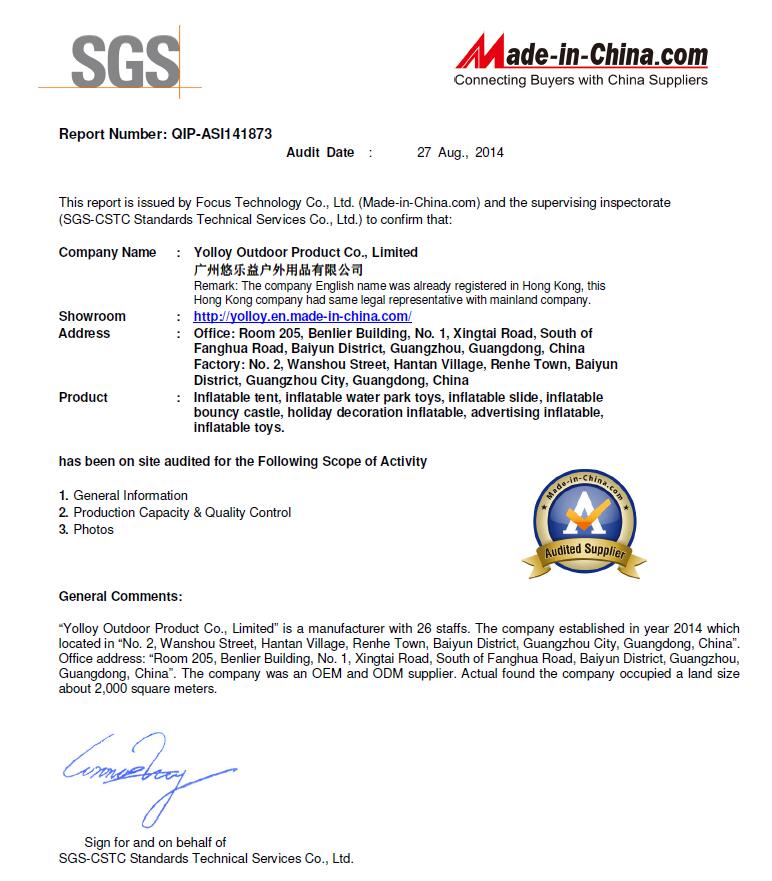
Because the difference between a winter tent and a four-season tent comes down to materials and construction, a custom manufacturer is often the best route when standard retail models do not fit your requirements. YOLLOY is an inflatable-product manufacturer based in Guangzhou, China, that produces commercial-grade outdoor inflatable tents along with clear domes, water parks, slides, and event structures.
For winter or all-season tent projects, YOLLOY works with commercial-grade PVC tarpaulin and can use Oxford fabric, nylon, or TPU depending on the demands of the project. Custom sizes, colours, and printed logos are available, and products are designed from a description, drawing, sketch, photograph, site plan, or budget before production begins. Each inflatable is supplied with an appropriately powered blower, sized for your voltage requirements, and every product is inspected and tested before shipment.
YOLLOY also supports what matters most after delivery: a repair kit is supplied with each product, and the company reports a 95 percent on-time delivery rate, with emails and faxes answered within 24 hours. If you have a specific tent size, insulation requirement, or climate in mind, sending that brief to a custom inflatable tent supplier like YOLLOY is the most reliable way to get exactly the winter or four-season shelter you need.
Final thoughts
An inflatable winter tent and a four season inflatable tent both use the same clever air-beam technology, and both are excellent shelters. The real difference lies in intent: one is built to handle all four seasons reasonably well, and the other is built to dominate harsh winter conditions. Decide where your tent will spend most of its time, weigh insulation, ventilation, weight, and wind resistance accordingly, and you will pick the right one every time.