Outdoor shelters have come a long way from the days of wrestling with fiberglass poles and deciphering cryptic assembly instructions in the dark. Today, an
inflatable camping tent can be pitched in minutes by a single person — no poles, no frustration, no wasted time. Whether you are planning a weekend camping trip, organizing a corporate outdoor event, or launching a glamping business, inflatable tents offer a combination of speed, durability, and flexibility that traditional pole tents simply cannot match.
The technology behind these structures is elegantly simple: air-filled beams replace rigid poles, and a continuous-flow blower keeps the frame rigid while the tent is in use. The result is a shelter that goes up fast, handles wind better than pole-based designs, and packs down into a compact bag when deflated. This guide walks you through everything you need to know — from tent types and materials to sourcing from reliable
inflatable tent manufacturers.
What Makes an Inflatable Tent Different?
A traditional tent relies on a rigid pole framework — typically aluminum or fiberglass — that must be threaded through fabric sleeves and tensioned into place. The process is rarely quick, often requires two people, and can fail dramatically when a pole snaps under wind load.
An inflatable tent replaces every pole with an air beam. These beams are manufactured from high-strength TPU or reinforced PVC tarpaulin and are permanently integrated into the tent body. When connected to an electric blower, the beams inflate to working pressure and hold the structure upright. The distributed air pressure across the frame means the tent flexes rather than breaks in gusty conditions — a significant safety advantage.
Setup is straightforward: stake the tent at the corners, attach the blower, and switch it on. Most models reach full inflation in under five minutes. Deflation is even faster — simply open the valve and the air escapes, leaving the tent ready to fold and pack.
Key Advantages Over Traditional Pole Tents
Setup Speed
The single most compelling reason to switch to inflatable is time. A solo operator can have a full-size inflatable tent standing and ready in under five minutes, compared to 15–30 minutes for a comparable pole tent. For event companies setting up multiple structures per day, the labour savings alone can justify the investment.
Structural Stability
Air beams absorb and redistribute wind load across the entire frame, unlike rigid poles that concentrate stress at connection points. This makes inflatable tents remarkably stable in challenging weather — they bend, they do not break. The continuous blower system maintains consistent pressure throughout use, so the structure stays rigid even as external conditions change.
Spacious Interiors
Without internal poles cluttering the living space, inflatable tents offer more usable floor area. Many models feature near-vertical walls that maximize headroom from edge to edge, making them ideal for commercial applications where usable square footage directly impacts revenue.
Portability and Storage
When deflated, the tent compresses into a fraction of its deployed volume. The elimination of rigid poles means less weight and bulk to transport — a critical factor for businesses that move equipment between venues regularly.
Types of Inflatable Tents and Their Applications
The inflatable tent market has expanded far beyond the classic dome. Understanding the range of available designs helps you match the right structure to your specific use case.
Inflatable Dome Tents
The classic rounded profile offers excellent aerodynamics and wind resistance. Available in sizes from compact two-person camping models to large event domes that accommodate dozens of guests. The curved shape naturally sheds rain and snow, making these reliable across all seasons.
Inflatable Cube Tents
With vertical walls and generous headroom, cube designs maximize interior volume. They are popular for family camping, glamping resorts, and commercial applications where a boxy footprint is more practical for furniture layout and branding display.
Clear Inflatable Bubble Tents
Transparent PVC domes that offer 360-degree views of the surrounding landscape. These have become a favorite for luxury camping, stargazing experiences, outdoor dining, and brand activations where visual impact matters. The see-through walls create an immersive connection with the outdoors while maintaining climate control.
Inflatable Party and Event Tents
Larger structures purpose-built for weddings, corporate events, trade shows, and festivals. These can be customized with printed logos, branded colors, and modular layouts. Many event tents feature removable sidewalls, integrated lighting channels, and wide entryways for high-traffic access.
Inflatable Tunnel and Shelter Tents
Extended layouts with separate zones for different activities. Tunnel designs are ideal for exhibitions, medical triage, emergency response, and temporary workshops. Their modular nature allows linking multiple units together for expanded coverage.
Inflatable Car and Garage Tents
Portable shelters for vehicles, including spray painting booths, detailing tents, and temporary garages. These are particularly popular in automotive and marine industries where mobile workspace is needed at different locations.
Materials and Quality: What to Look For
When evaluating the
best inflatable tent for your needs, materials and construction quality should be your primary focus. The difference between a tent that lasts one season and one that serves reliably for years often comes down to these details.
● Fabric: Commercial-grade PVC tarpaulin is the industry standard for durability. For lighter camping models, Oxford fabric, nylon, and TPU are common alternatives. The right material choice depends on your intended use frequency and environmental conditions.
● Certifications: Look for EN71, EN14960, and RoHS compliance, which confirm that materials have passed relevant safety and environmental testing. For water park applications, EN 15649 certification is the relevant standard.
● Seam Construction: Reinforced, double-stitched seams with waterproof nylon thread prevent leaks and extend product life. High-load areas should receive additional reinforcement.
● Blower Quality: CE or UL-certified blowers are essential for reliable operation. Blowers should be available in 110V, 220V, or 380V configurations to match regional power standards.
● Anchor Systems: D-ring or round metal anchors provide secure installation and wind resistance. These should be integrated into the design rather than added as an afterthought.
Why Choose YOLLOY as Your Inflatable Tent Manufacturer
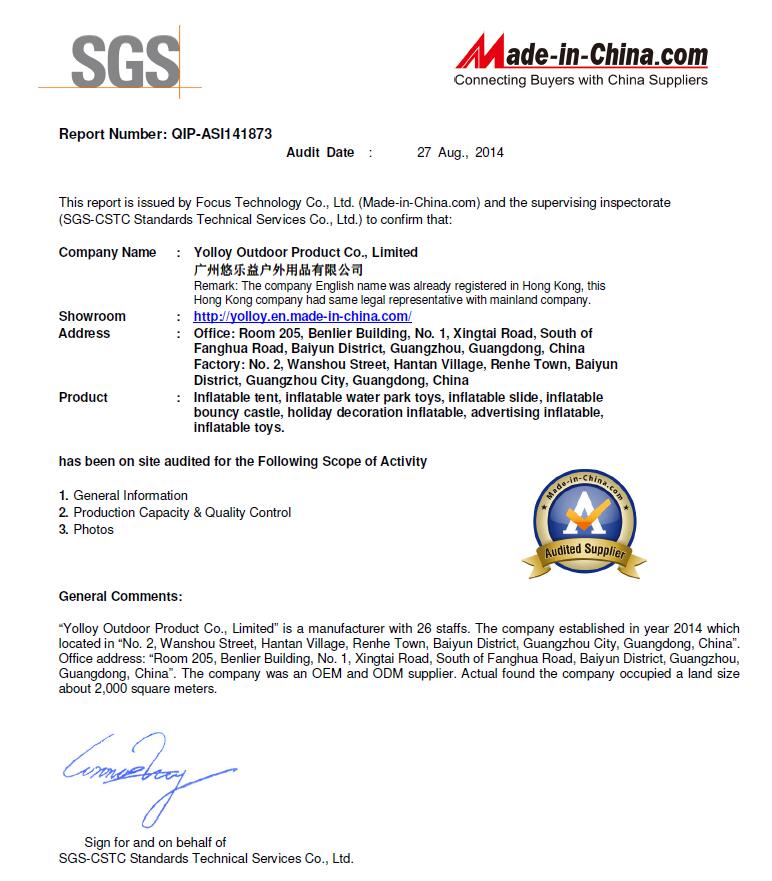
Sourcing from the right partner determines whether your inflatable tent investment delivers long-term value. YOLLOY Outdoor Product Co., Limited, based in Guangzhou, China, has built a reputation as a trusted supplier of custom inflatable solutions for clients across Europe, Asia, South America, Africa, the Middle East, and Latin America.
Custom Design-to-Production Workflow
YOLLOY's process begins with your concept. Their design team prepares simulation renderings from your specifications — whether that is a detailed drawing, a rough sketch, a photograph, or a site plan with a budget. They revise the design until you approve every detail, and only then release it for factory production. This collaborative approach eliminates guesswork and ensures the final product matches your expectations precisely.
Full Customization with No Minimum Order Barrier
Custom sizes, colors, and configurations are available. Customer logos and artwork can be printed directly on the products. The stated minimum order quantity is just one piece, making YOLLOY accessible to startups, event rental businesses testing a new market, and large distributors alike.
Certified Production and Quality Control
All materials have passed EN71, EN14960, and RoHS-related testing. Blowers meet CE or UL requirements. Products are manufactured using precision sewing equipment with reinforced seams and waterproof nylon thread, while airtight products are produced with high-temperature fusion and welding equipment. Every product is inspected and tested before shipment.
Fast Turnaround and Global Logistics
Typical production time is 6–15 days for a standard inflatable product, excluding transit. Air shipping delivers in 5–7 days, while sea freight takes 15–30 days or more depending on the destination. YOLLOY maintains a 95% on-time delivery rate, and each product ships with a repair kit for field maintenance.
After-Sales Support
YOLLOY stands behind its products with a three-year service life expectation when products are used and maintained correctly. The company responds to emails within 24 hours, and products are packed with soft carpet protection, waterproof PVC bags, and outer PE film — with steel pallets used for large items — to ensure they arrive in factory-fresh condition.
Ready to Bring Your Inflatable Tent Project to Life?
Whether you need a single custom inflatable tent for a specific event or a container order for a growing rental business, the right manufacturing partner makes all the difference. YOLLOY combines design expertise, certified materials, and global logistics to deliver inflatable tents that perform reliably in the field — from compact camping shelters to large-scale commercial event structures.
Contact YOLLOY today to discuss your requirements. Their team will prepare a design proposal and quotation tailored to your specifications, with no obligation.
Request a Quote