Products Category
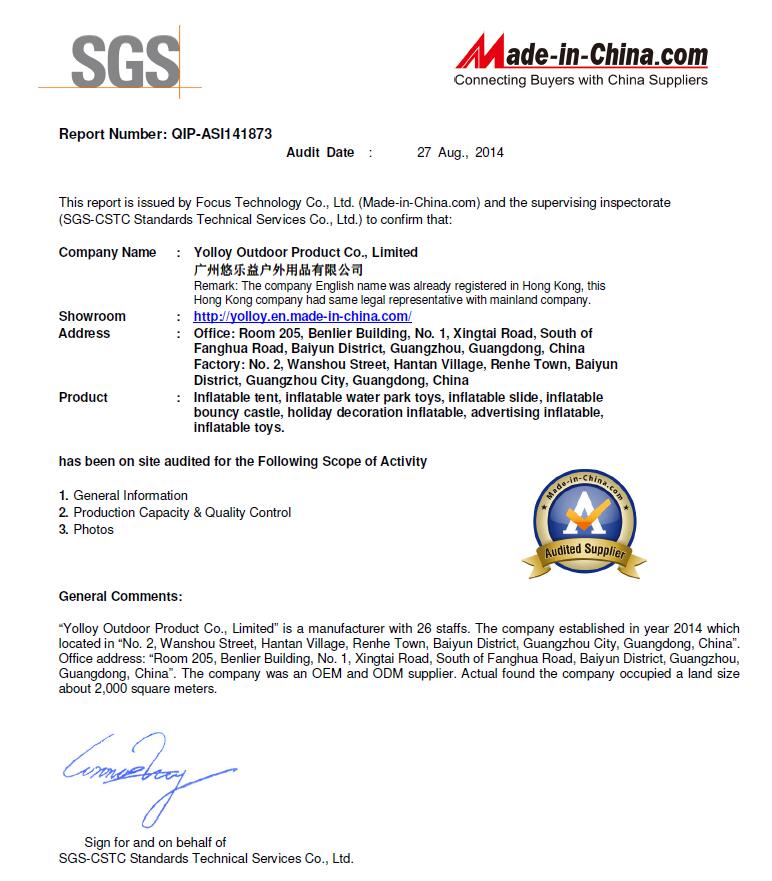
Certification

News

• New Order Successfully Finished for Long-Time Cooperated Japanese Client | YOLLOY Wins Full Client Recognition

• YOLLOY Custom Inflatable Pool Tent for Danish Client: Professional Pool Repair Shelter & Debris Protection

• Trusted Once Again! Greek Captain Re-orders Our Products After 4 Years

• Revolutionize Your Outdoors: The All-Terrain Inflatable Floating Tent for Land & Water

• Elevate Your Summer Fun: The Ultimate Inflatable Water Floating Volleyball Court Trampoline

• Innovative Inflatable Nightclub Tents & Pop-Up Bars: The Ultimate Solution for Portable Party Venues

Contact Us

Name: Sunny Yang
Tel: +86-20-8370 0771
Fax: +86-20-8370 0771
Mobile: 13570587575
E-mail: sales@yolloy.com
Add: No 5,Xiong wei Bo Nan Road,ZhongLuoTan Town,Baiyun district,Guangzhou,China
Friend me on Facebook Follow me on Twitter Add me to your circles Follow me on Pinterest Watch my channel on YouTube
News

The Complete Guide to Inflatable Projection Screens: From Backyard Movie Nights to Planetarium Domes

Author:yolloy Date:2026/7/13 21:05:29

Picture this: a warm summer evening, a group of friends gathered on the lawn, and a crisp, bright image floating in the darkness — all made possible by a structure that rolls up into a carrying bag when the night is over. This is what an inflatable projection screen brings to the table. Whether you are planning outdoor cinema events, setting up an immersive planetarium experience for a school, or looking for a portable display for corporate presentations, inflatable projection screens have quietly become one of the most versatile tools in the event and education industries.

What Exactly Is an Inflatable Projection Screen?

An inflatable projection screen is a purpose-built structure that uses air pressure — delivered by a continuously running blower — to hold its shape. Unlike a traditional tripod screen that needs a rigid frame, an inflatable screen stands upright because air is constantly pumped into its chambers. The projection surface itself is typically made from a white or light-grey PVC-coated fabric that has been stretched taut by the air pressure, creating a flat, wrinkle-free canvas for your projector.

The real advantage here is portability and speed. A traditional rigid screen large enough for a crowd of a hundred people would require scaffolding, multiple crew members, and hours of assembly. An outdoor inflatable projection screen of the same size can be set up by one or two people in a matter of minutes. When you deflate it, the entire unit packs down into a storage bag that fits in the trunk of a car.

Where Inflatable Projection Screens Shine

These screens are not a one-trick pony. Their use cases span a surprisingly wide range, which is part of why demand has grown steadily across event rental businesses, educational institutions, and hospitality venues.

Outdoor Cinema and Community Events

The most familiar application is the backyard or community movie night. Parks departments, libraries, and neighborhood associations around the world use inflatable screens to host free film screenings. The screen goes up in minutes on a grassy field, the projector fires up, and suddenly a public space becomes a shared living room. For rental businesses, this is a straightforward revenue stream: the equipment is durable, reusable, and clients love the novelty.

Planetariums and Immersive Education

This is where things get especially interesting. A inflatable planetarium dome tent functions differently from a standard flat screen. Instead of projecting onto a vertical surface, the dome encloses the audience and projects imagery onto the interior ceiling — creating a 360-degree immersive environment. Schools use portable planetarium domes to teach astronomy, museums use them for special exhibitions, and science centers deploy them as traveling outreach tools. Because the dome is inflatable, one unit can visit dozens of schools in a single month, packing up and moving between locations with minimal effort.

Corporate Events, Trade Shows, and Advertising

At a trade show, capturing attention is half the battle. A giant inflatable projection screen rising above the booth floor does exactly that. Companies use them for product launch videos, branded content loops, and live social media feeds. Because the screen surface can be customized with printed logos or border designs, the display doubles as a branding asset even when no video is playing.

Drive-In Theaters and Sports Screenings

The drive-in format has seen a notable resurgence, and inflatable screens are a natural fit. A screen large enough to be visible from dozens of parked cars can be erected in a parking lot or open field without permanent infrastructure. The same applies to live sports broadcasts: a bar patio, a festival ground, or a public square can transform into a fan zone with nothing more than a projector and an inflatable screen.

What to Look for When Choosing a Screen

Not all inflatable projection screens are built the same way, and a few key factors separate a screen that lasts for years from one that develops leaks after a season. Here is what matters most.

Material Quality

The fabric is everything. Commercial-grade PVC tarpaulin is the standard for durable outdoor screens because it withstands wind, sun exposure, and repeated setup cycles without tearing. Some manufacturers also offer Oxford fabric or TPU options depending on the specific use case — for instance, a dome that will be used primarily indoors may benefit from a lighter-weight material. Ask your supplier what fabrics they use and whether the material has been tested against relevant safety standards. For inflatable products intended for public use, certifications like EN71 (toy safety), EN14960 (inflatable play equipment), and RoHS compliance are relevant indicators that the manufacturer takes material safety seriously.

Construction and Seams

The seams are where most inflatable products fail. A well-built screen uses precision sewing equipment with reinforced, double-stitched seams and waterproof nylon thread. High-stress areas — around anchor points, blower connection ports, and corners — should have additional reinforcement layers. For airtight products like sealed projection domes, high-temperature fusion welding equipment produces stronger bonds than stitching alone. Before buying, ask your supplier about their seam construction method and whether they reinforce load-bearing zones.

Blower and Power Compatibility

The blower is the heart of any inflatable screen. It needs to deliver enough continuous airflow to keep the structure rigid without being so loud that it distracts from the movie or presentation. Reputable manufacturers supply appropriately powered blowers matched to each screen model, available in 110V, 220V, or 380V configurations depending on your region's electrical standards. Blowers that carry CE or UL certification are a strong signal of electrical safety compliance.

Anchoring and Wind Resistance

An outdoor screen faces wind, and wind is the number one enemy of any inflatable structure. Look for screens that come with sturdy D-ring or round metal anchor points built into the structure, not just tacked on as an afterthought. The number and placement of anchor points should match the screen's size and expected wind load. If you are buying for commercial use, ask the manufacturer for their wind-rating guidance.

Why Working with a Manufacturer Matters

There is a meaningful difference between buying a generic inflatable screen off a marketplace listing and sourcing one directly from a manufacturer that specializes in custom inflatable products. A marketplace listing gives you a fixed size and a fixed design. A manufacturer gives you options.

YOLLOY Outdoor Product Co., Limited, based in Guangzhou, China, is a manufacturer that builds inflatable projection screens, portable planetarium dome structures, and a wide range of other inflatable products to order. The company’s workflow is built around customization: a client sends a description, sketch, or site plan, and YOLLOY’s design team prepares a simulation rendering for approval before any fabric is cut. This means the screen’s dimensions, color, logo placement, and border design can all be tailored to the buyer’s specific needs.

Customization is not limited to aesthetics. Blower voltage can be specified for local electrical standards. Anchor systems can be adapted for different ground conditions. Even the projection surface can be adjusted — some clients prefer a matte white finish for high color accuracy, while others opt for a slightly grey surface to improve contrast in ambient light conditions. When you source from a factory rather than a reseller, these conversations happen directly with the team that will build your product.

Key advantages of working with a direct manufacturer like YOLLOY:

Custom sizes, colors, and printed artwork — not limited to standard catalog options

Minimum order quantity of just one piece, making custom projects accessible

Typical production time of 6 to 15 days for a standard inflatable product

Materials tested to EN71, EN14960, and RoHS standards where applicable

CE/UL-compliant blowers supplied to match your voltage requirements

Every product includes a repair kit for field maintenance

What About Durability and After-Sales Support?

Inflatable products live outdoors, get dragged across grass, bumped into by excited children, and folded up damp when an unexpected rainstorm rolls through. They need to be built for abuse, and they need a manufacturer that stands behind their work.

YOLLOY states a three-year service life expectation for products that are used and maintained correctly, though actual longevity depends on usage frequency and care. The company packs each product with soft carpet protection, waterproof PVC bags, and outer PE film before shipping — a packaging approach that reduces the risk of transit damage. Larger items ship on steel pallets for additional protection. Air and sea freight options are available, with indicative transit times of 5 to 7 days by air and 15 to 30 days by sea.

A repair kit is included with every inflatable product, which is worth paying attention to. Even the best-built inflatable can develop a small puncture from a sharp stone or a stray tent stake. Having the right patch material and adhesive on hand means you can fix minor damage on site and keep the event running. The manufacturer reports responding to emails and fax inquiries within 24 hours and maintains a 95% on-time delivery rate.

Making the Right Choice for Your Needs

Before you place an order, take a step back and clarify what you actually need the screen to do. The answers to a few practical questions will guide your specification:

Audience size and viewing distance: A screen that looks massive in a showroom may feel undersized when 200 people are spread across a soccer field. Think about how many people will be watching and from how far away.

Indoor versus outdoor use: Outdoor screens need better anchoring and UV-resistant materials. Indoor screens may require specific fire-retardant certifications depending on local building codes.

Flat screen or dome: If you want a traditional cinema experience, a flat inflatable screen is the answer. If you want 360-degree immersion for planetarium content or experiential marketing, a dome is the better choice.

Setup crew and storage space: Larger screens are heavier and take longer to set up. Be realistic about who will be doing the setup and where the screen will be stored between uses.

Frequency of use: A screen used once a month can be a different investment than one deployed every weekend. Higher usage frequency justifies investing in higher-grade materials and construction.

Ready to Bring Your Vision to Life?

Whether you are a rental business looking to add outdoor cinema to your service menu, a school district planning a mobile planetarium program, or an event company that needs a custom-branded projection screen for the upcoming season, the right manufacturing partner makes the difference between a product that performs reliably and one that sits in storage waiting for repairs.

YOLLOY works with clients across Europe, Asia, South America, Africa, the Middle East, and Latin America, supplying custom inflatable projection screens and domes designed to each buyer's specifications. To discuss your project, request a quote, or ask about material certifications and shipping options, reach out directly through the YOLLOY website or contact sales@yolloy.com.

The Complete Guide to Inflatable Projection Screens: From Backyard Movie Nights to Planetarium Domes

Author:yolloy Date:2026/7/13 21:05:29

Picture this: a warm summer evening, a group of friends gathered on the lawn, and a crisp, bright image floating in the darkness — all made possible by a structure that rolls up into a carrying bag when the night is over. This is what an inflatable projection screen brings to the table. Whether you are planning outdoor cinema events, setting up an immersive planetarium experience for a school, or looking for a portable display for corporate presentations, inflatable projection screens have quietly become one of the most versatile tools in the event and education industries.

What Exactly Is an Inflatable Projection Screen?

An inflatable projection screen is a purpose-built structure that uses air pressure — delivered by a continuously running blower — to hold its shape. Unlike a traditional tripod screen that needs a rigid frame, an inflatable screen stands upright because air is constantly pumped into its chambers. The projection surface itself is typically made from a white or light-grey PVC-coated fabric that has been stretched taut by the air pressure, creating a flat, wrinkle-free canvas for your projector.

The real advantage here is portability and speed. A traditional rigid screen large enough for a crowd of a hundred people would require scaffolding, multiple crew members, and hours of assembly. An outdoor inflatable projection screen of the same size can be set up by one or two people in a matter of minutes. When you deflate it, the entire unit packs down into a storage bag that fits in the trunk of a car.

Where Inflatable Projection Screens Shine

These screens are not a one-trick pony. Their use cases span a surprisingly wide range, which is part of why demand has grown steadily across event rental businesses, educational institutions, and hospitality venues.

Outdoor Cinema and Community Events

The most familiar application is the backyard or community movie night. Parks departments, libraries, and neighborhood associations around the world use inflatable screens to host free film screenings. The screen goes up in minutes on a grassy field, the projector fires up, and suddenly a public space becomes a shared living room. For rental businesses, this is a straightforward revenue stream: the equipment is durable, reusable, and clients love the novelty.

Planetariums and Immersive Education

This is where things get especially interesting. A inflatable planetarium dome tent functions differently from a standard flat screen. Instead of projecting onto a vertical surface, the dome encloses the audience and projects imagery onto the interior ceiling — creating a 360-degree immersive environment. Schools use portable planetarium domes to teach astronomy, museums use them for special exhibitions, and science centers deploy them as traveling outreach tools. Because the dome is inflatable, one unit can visit dozens of schools in a single month, packing up and moving between locations with minimal effort.

Corporate Events, Trade Shows, and Advertising

At a trade show, capturing attention is half the battle. A giant inflatable projection screen rising above the booth floor does exactly that. Companies use them for product launch videos, branded content loops, and live social media feeds. Because the screen surface can be customized with printed logos or border designs, the display doubles as a branding asset even when no video is playing.

Drive-In Theaters and Sports Screenings

The drive-in format has seen a notable resurgence, and inflatable screens are a natural fit. A screen large enough to be visible from dozens of parked cars can be erected in a parking lot or open field without permanent infrastructure. The same applies to live sports broadcasts: a bar patio, a festival ground, or a public square can transform into a fan zone with nothing more than a projector and an inflatable screen.

What to Look for When Choosing a Screen

Not all inflatable projection screens are built the same way, and a few key factors separate a screen that lasts for years from one that develops leaks after a season. Here is what matters most.

Material Quality

The fabric is everything. Commercial-grade PVC tarpaulin is the standard for durable outdoor screens because it withstands wind, sun exposure, and repeated setup cycles without tearing. Some manufacturers also offer Oxford fabric or TPU options depending on the specific use case — for instance, a dome that will be used primarily indoors may benefit from a lighter-weight material. Ask your supplier what fabrics they use and whether the material has been tested against relevant safety standards. For inflatable products intended for public use, certifications like EN71 (toy safety), EN14960 (inflatable play equipment), and RoHS compliance are relevant indicators that the manufacturer takes material safety seriously.

Construction and Seams

The seams are where most inflatable products fail. A well-built screen uses precision sewing equipment with reinforced, double-stitched seams and waterproof nylon thread. High-stress areas — around anchor points, blower connection ports, and corners — should have additional reinforcement layers. For airtight products like sealed projection domes, high-temperature fusion welding equipment produces stronger bonds than stitching alone. Before buying, ask your supplier about their seam construction method and whether they reinforce load-bearing zones.

Blower and Power Compatibility

The blower is the heart of any inflatable screen. It needs to deliver enough continuous airflow to keep the structure rigid without being so loud that it distracts from the movie or presentation. Reputable manufacturers supply appropriately powered blowers matched to each screen model, available in 110V, 220V, or 380V configurations depending on your region's electrical standards. Blowers that carry CE or UL certification are a strong signal of electrical safety compliance.

Anchoring and Wind Resistance

An outdoor screen faces wind, and wind is the number one enemy of any inflatable structure. Look for screens that come with sturdy D-ring or round metal anchor points built into the structure, not just tacked on as an afterthought. The number and placement of anchor points should match the screen's size and expected wind load. If you are buying for commercial use, ask the manufacturer for their wind-rating guidance.

Why Working with a Manufacturer Matters

There is a meaningful difference between buying a generic inflatable screen off a marketplace listing and sourcing one directly from a manufacturer that specializes in custom inflatable products. A marketplace listing gives you a fixed size and a fixed design. A manufacturer gives you options.

YOLLOY Outdoor Product Co., Limited, based in Guangzhou, China, is a manufacturer that builds inflatable projection screens, portable planetarium dome structures, and a wide range of other inflatable products to order. The company’s workflow is built around customization: a client sends a description, sketch, or site plan, and YOLLOY’s design team prepares a simulation rendering for approval before any fabric is cut. This means the screen’s dimensions, color, logo placement, and border design can all be tailored to the buyer’s specific needs.

Customization is not limited to aesthetics. Blower voltage can be specified for local electrical standards. Anchor systems can be adapted for different ground conditions. Even the projection surface can be adjusted — some clients prefer a matte white finish for high color accuracy, while others opt for a slightly grey surface to improve contrast in ambient light conditions. When you source from a factory rather than a reseller, these conversations happen directly with the team that will build your product.

Key advantages of working with a direct manufacturer like YOLLOY:

Custom sizes, colors, and printed artwork — not limited to standard catalog options

Minimum order quantity of just one piece, making custom projects accessible

Typical production time of 6 to 15 days for a standard inflatable product

Materials tested to EN71, EN14960, and RoHS standards where applicable

CE/UL-compliant blowers supplied to match your voltage requirements

Every product includes a repair kit for field maintenance

What About Durability and After-Sales Support?

Inflatable products live outdoors, get dragged across grass, bumped into by excited children, and folded up damp when an unexpected rainstorm rolls through. They need to be built for abuse, and they need a manufacturer that stands behind their work.

YOLLOY states a three-year service life expectation for products that are used and maintained correctly, though actual longevity depends on usage frequency and care. The company packs each product with soft carpet protection, waterproof PVC bags, and outer PE film before shipping — a packaging approach that reduces the risk of transit damage. Larger items ship on steel pallets for additional protection. Air and sea freight options are available, with indicative transit times of 5 to 7 days by air and 15 to 30 days by sea.

A repair kit is included with every inflatable product, which is worth paying attention to. Even the best-built inflatable can develop a small puncture from a sharp stone or a stray tent stake. Having the right patch material and adhesive on hand means you can fix minor damage on site and keep the event running. The manufacturer reports responding to emails and fax inquiries within 24 hours and maintains a 95% on-time delivery rate.

Making the Right Choice for Your Needs

Before you place an order, take a step back and clarify what you actually need the screen to do. The answers to a few practical questions will guide your specification:

Audience size and viewing distance: A screen that looks massive in a showroom may feel undersized when 200 people are spread across a soccer field. Think about how many people will be watching and from how far away.

Indoor versus outdoor use: Outdoor screens need better anchoring and UV-resistant materials. Indoor screens may require specific fire-retardant certifications depending on local building codes.

Flat screen or dome: If you want a traditional cinema experience, a flat inflatable screen is the answer. If you want 360-degree immersion for planetarium content or experiential marketing, a dome is the better choice.

Setup crew and storage space: Larger screens are heavier and take longer to set up. Be realistic about who will be doing the setup and where the screen will be stored between uses.

Frequency of use: A screen used once a month can be a different investment than one deployed every weekend. Higher usage frequency justifies investing in higher-grade materials and construction.

Ready to Bring Your Vision to Life?

Whether you are a rental business looking to add outdoor cinema to your service menu, a school district planning a mobile planetarium program, or an event company that needs a custom-branded projection screen for the upcoming season, the right manufacturing partner makes the difference between a product that performs reliably and one that sits in storage waiting for repairs.

YOLLOY works with clients across Europe, Asia, South America, Africa, the Middle East, and Latin America, supplying custom inflatable projection screens and domes designed to each buyer's specifications. To discuss your project, request a quote, or ask about material certifications and shipping options, reach out directly through the YOLLOY website or contact sales@yolloy.com.