The Night Before the Hike: Why Your "Bed" Matters More Than You Think
Let's be real—camping is all about the little joys: the crackle of the campfire, the smell of pine in the morning, the way the stars seem brighter when there's no city light. But here's the unglamorous truth that veteran campers know too well: a bad night's sleep can turn those joys into a slog. I've been there. I once spent a weekend shivering on a thin foam pad that felt like sleeping on a rock, only to stumble through a 5-mile hike the next day with a crick in my neck and zero energy to enjoy the view. That's when it hit me: your outdoor sleeping setup isn't just gear—it's the foundation of whether your trip feels like an adventure or a punishment.
These days, the outdoor market is flooded with options, but two stand out for car campers and casual adventurers: the classic sleeping pad and the inflatable mattress. They both promise a better night's sleep than the ground, but they're as different as a tent and a cabin. So how do you choose? Let's break it down—not with jargon, but with the stuff that actually matters when you're unrolling your gear at sunset: comfort, portability, durability, and whether it'll keep you warm when the temperature drops.
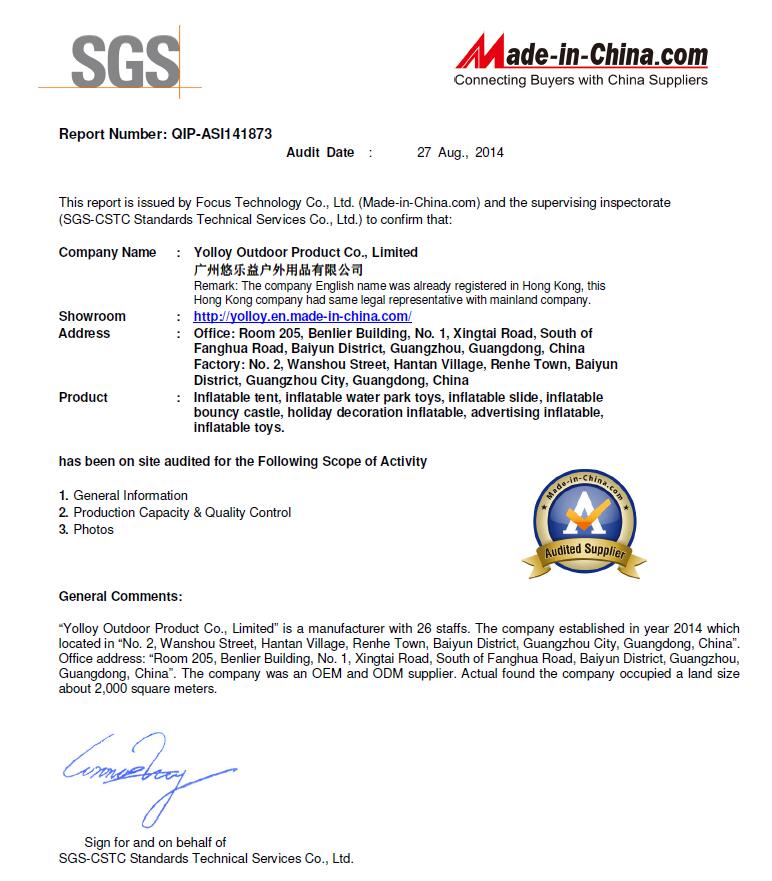
And hey, if we're talking about inflatable gear, it's worth mentioning that companies like Yolloy—who've built their reputation on crafting everything from snow globe tents to water park inflatables—know a thing or two about what makes a good inflatable product. Their tents use heavy-duty, waterproof PVC tarpaulin that stands up to snow and rain, and their water gear relies on eco-friendly TPU material that's non-toxic and built to last. That same attention to detail? It applies to sleeping gear too. Because when you're talking about something that separates you from the cold, hard ground, quality isn't just a nice-to-have—it's non-negotiable.
First Things First: What Even
Is
a Sleeping Pad? And How Is It Different from an Inflatable Mattress?
Let's start with basics. A sleeping pad is the lightweight, packable cousin in the family. Think of it as a high-tech foam mat or a thin, inflatable pad that rolls up to the size of a water bottle. They're designed for backpackers and anyone who needs to keep weight down—solo travelers, hikers, or folks who hike in and set up camp far from the car. Most sleeping pads are either closed-cell foam (the squishy, lightweight kind that doesn't inflate) or self-inflating (they have an open-cell foam core that expands when you open the valve, then you top it off with a few breaths). They're thin—usually 1 to 3 inches thick—and prioritize warmth and weight over luxury.
An inflatable mattress, on the other hand, is like bringing a slice of your bedroom to the woods. These are the thicker, softer options—often 4 to 8 inches thick—with a design that mimics a traditional mattress. They're almost always inflatable (no foam core here) and require a pump (manual or electric) to fill up. They're roomier, softer, and feel more "home-like." But all that comfort comes with a trade-off: they're bulkier, heavier, and take longer to set up. You'll rarely see a backpacker toting one, but they're a staple for family car camping, glamping trips, or anyone who wants to wake up without feeling like they slept on a root.
Real Talk:
I tested both last fall on a trip with my brother. He's a die-hard minimalist who swears by his 1.5-inch self-inflating sleeping pad ("It's light, it packs small, and I don't care about 'softness'"), while I brought a 6-inch inflatable mattress I'd borrowed. By midnight, the temperature dropped to 40°F. He spent the night shivering (his pad had a low warmth rating), while I slept like a log—until I rolled over and the mattress deflated halfway. Oops. Moral of the story? There's no "perfect" option—only the right one for
your
trip.
The Big Showdown: Key Differences That'll Make or Break Your Trip
Let's dive into the details. Below, we'll compare sleeping pads and inflatable mattresses across the categories that matter most when you're outdoors. I've even thrown in a handy table to summarize—because sometimes, you just need the facts at a glance.
1. Comfort: "I Slept Like a Rock" vs. "I Forgot I Was Camping"
Comfort is subjective, but let's be honest—most of us prioritize it. Inflatable mattresses win here, hands down. Their thickness (4–8 inches) and soft, bouncy feel mean you're not feeling every bump in the ground. They're great for side sleepers (no more waking up with a numb shoulder) and anyone who struggles to sleep on hard surfaces. My friend Sarah, who has chronic back pain, refuses to camp without her inflatable mattress: "I've tried sleeping pads, but they're just too thin. With the mattress, I wake up ready to hike, not hobble."
Sleeping pads, though? They're more about "adequate" comfort. The foam ones are firm—think "firm mattress at a budget hotel"—and the inflatable ones (called "air pads") are better, but still thin. They're designed to insulate and cushion, not coddle. That said, newer models (like some self-inflating pads) have better cushioning than older versions. My brother swears his 3-inch air pad is "fine," but I've seen him wake up with grass stains on his cheek from pressing into the ground all night. To each their own.
2. Portability: "Can I Carry This 5 Miles?" vs. "Does It Fit in the Trunk?"
Here's where sleeping pads shine. A typical foam sleeping pad weighs 1–2 pounds and rolls up to the size of a rolled-up yoga mat. An inflatable sleeping pad (air pad) is even better—some weigh as little as 12 ounces and pack down to the size of a can of soda. That's why backpackers love them: they add minimal weight to your pack and don't take up precious space.
Inflatable mattresses? They're the opposite. A full-size inflatable mattress can weigh 10–15 pounds and, even when deflated, takes up as much space as a large duffel bag. They're perfect for car camping—toss 'em in the trunk and forget about 'em—but if you're hiking more than a quarter-mile to your campsite, you'll regret bringing one. I once tried to carry an inflatable mattress a mile into the woods for a "glamping" trip. By the time I got there, I was sweating through my shirt and questioning all my life choices. Lesson learned: inflatable mattresses are car campers only.
3. Warmth: "Will I Freeze?" vs. "Just Right, Even When It's Cold"
Warmth is non-negotiable in the outdoors. The ground sucks heat from your body like a sponge, and even in summer, temperatures can drop at night. This is where sleeping pads have a secret weapon: their insulation. Most sleeping pads are rated by "R-value," which measures how well they resist heat loss. The higher the R-value, the warmer the pad. Foam pads and air pads with insulation (like down or synthetic fill) can have R-values as high as 8, which is enough for below-freezing temperatures.
Inflatable mattresses? They're not designed with insulation in mind. Their thick air chambers trap some heat, but without specialized insulation, they're more like a barrier than a heater. A typical inflatable mattress has an R-value of 1–3, which is fine for summer camping but risky if the temperature dips below 50°F. Remember my brother's shivering incident? His sleeping pad had an R-value of 2, and the inflatable mattress I used? Also R-2. But here's the twist: some companies (yes, like Yolloy) are starting to make inflatable mattresses with insulated layers, borrowing tech from their cold-weather tents. Yolloy's snow globe tents, for example, use a double-layered PVC design to trap heat—imagine applying that to a mattress. Now
that
could be a game-changer.
4. Durability: "Can It Survive a Pine Cone?" vs. "Tough, But Not Indestructible"
Outdoor gear takes a beating. Rocks, roots, pine cones, and overzealous kids (or dogs) can all spell disaster for inflatable gear. So how do these two stack up?
Sleeping pads are the workhorses here. Foam pads are nearly indestructible—you can drag them over rocks, let your dog chew on them (not recommended, but possible), and they'll keep on going. Air pads are more delicate (they can puncture), but most come with a repair kit, and their tough outer shells (often made of ripstop nylon) hold up well to normal use. I've had my air pad for 5 years, and the only damage is a small patch from when I accidentally stepped on it with hiking boots.
Inflatable mattresses are more fragile. Their soft, stretchy material (often PVC or TPU) is prone to punctures from sharp objects. Drop a knife on one, and you're in for a deflated night. That said, higher-quality models (like those made with Yolloy's waterproof, fire-resistant PVC) are more durable. Yolloy's tents, for example, use PVC tarpaulin that's tested to withstand abrasion and tearing—if they made a mattress with that material, it'd probably survive a small earthquake. Still, even the toughest inflatable mattress needs a groundsheet underneath to protect it from sticks and stones.
5. Inflation: "30 Seconds" vs. "I'm Sweating Before I Even Start"
Let's talk about the elephant in the tent: inflating the darn thing. Sleeping pads (the self-inflating kind) are the easiest—open the valve, walk away for 5–10 minutes, and they inflate themselves. Some need a few breaths to top off, but that's it. Foam pads? No inflation required—just unroll and go. Perfect for when you're tired, it's dark, or you forgot the pump.
Inflatable mattresses? They're a mixed bag. Manual pumps take forever (I'm talking 5–10 minutes of huffing and puffing), and electric pumps are easier but require batteries or a car adapter. That's where
inflatable mattress with inbuilt pump
models come in—press a button, and it inflates in 2 minutes. Game-changer, right? But they're heavier and more expensive. My cousin has one, and he swears by it: "No more fighting with a pump after a long drive. I just plug it in, and by the time I've set up the tent, it's ready." The downside? If the pump breaks, you're stuck manually inflating it (or sleeping on the ground).
6. Price: "Budget-Friendly" vs. "Investment Piece"
Sleeping pads are generally cheaper. Basic foam pads start at $20, and even high-end self-inflating models top out around $200. Inflatable mattresses? They range from $50 (basic, thin models) to $300+ (thick, insulated, built-in pump versions). Is the extra cost worth it? If you car camp often and value comfort, yes. But if you're a casual camper or backpacker, a sleeping pad will save you cash and space.
|
Category
|
Sleeping Pad
|
Inflatable Mattress
|
|
Weight
|
0.5–3 lbs (ultra-light for backpacking)
|
5–15 lbs (too heavy for hiking)
|
|
Packed Size
|
Can fit in a backpack (size of a water bottle to a rolled yoga mat)
|
Large (size of a duffel bag or suitcase)
|
|
Comfort
|
Firm, minimal cushioning (good for back sleepers)
|
Soft, bouncy, thick (great for side sleepers, back pain)
|
|
Warmth (R-Value)
|
1–8 (excellent for cold weather with high R-values)
|
1–3 (poor for cold weather; some insulated models go up to 5)
|
|
Durability
|
Very durable (foam pads) or durable with repair kits (air pads)
|
Delicate (prone to punctures); high-quality materials (like Yolloy's PVC) improve this
|
|
Inflation Time
|
0–5 minutes (self-inflating or foam)
|
2–10 minutes (manual pump) or 2 minutes (built-in pump)
|
|
Best For
|
Backpacking, solo camping, cold weather, lightweight trips
|
Car camping, family trips, glamping, casual outdoor stays
|
When to Choose Which: Scenarios That'll Help You Decide
Still on the fence? Let's map it out with real-world scenarios. Chances are, one of these sounds like your next trip.
Scenario 1: You're Going Solo Backpacking for a Weekend
You're hiking 8 miles to a remote lake, carrying everything on your back. Weight and pack size are your top priorities. Go with a sleeping pad—specifically an air pad or self-inflating pad with a high R-value (3+ if it's cool). Look for one that packs down to the size of a Nalgene bottle and weighs under 2 lbs. Trust me, your shoulders will thank you.
Scenario 2: You're Car Camping with the Family (Kids, Dogs, Cooler, the Whole Shebang)
You're driving to a campground, and space in the car isn't an issue. You want the kids (and yourself) to sleep well so no one's grumpy in the morning. An inflatable mattress is the way to go—preferably a
self inflating air mattresses
or one with a built-in pump. Pro tip: Get a double-size mattress if you're sharing—more room to spread out (and avoid tiny feet in your face).
Scenario 3: You're Camping in Winter (Or Cold Weather)
Temperatures drop below freezing at night. Warmth is non-negotiable. A sleeping pad with an R-value of 5+ is your best bet—foam or insulated air pad. If you
must
use an inflatable mattress, look for one with added insulation (like Yolloy's TPU material, which retains heat better than standard PVC). Pair it with a sleeping bag rated for cold weather, and you'll stay toasty.
Scenario 4: You Want Gear That Does Double Duty
Maybe you camp occasionally but also need something for guests at home. A self-inflating sleeping pad folds up small for storage and works as a guest bed. An inflatable mattress is bulkier but more comfortable for overnight visitors. It's a toss-up—go with the one that fits your storage space.
Quick note on materials: Companies like Yolloy set the bar high when it comes to durability. Their inflatable tents use EN71-certified PVC, which is tested for safety and resilience, and their TPU water products are non-toxic and resistant to hydrolysis (fancy term for "won't break down when wet"). When shopping for inflatable gear, look for similar certifications—they're a sign the product is built to last, even outdoors.
The Wildcard: What About "Hybrid" Options?
If you're still torn, good news: the outdoor industry is innovating. Some brands now make "hybrid" pads that combine the best of both worlds—thicker than a standard sleeping pad but lighter than an inflatable mattress. For example, there are 4-inch air pads with built-in insulation and self-inflating technology. They're pricier (around $200–$300), but they're a solid middle ground for backpackers who want a bit more comfort or car campers who hate bulk.
Yolloy, known for pushing the envelope with inflatable designs (remember their transparent bubble lawn tent? It's like camping in a snow globe), might just be onto something here. If they applied their expertise in lightweight, durable materials to a hybrid pad, we could see something that's thin enough for backpacking but cushy enough for family trips. A girl can dream, right?
Final Verdict: It's All About Your "Why"
At the end of the day, choosing between a sleeping pad and an inflatable mattress comes down to three questions:
-
How are you getting to your campsite? (Car vs. hiking?)
-
What's the weather like? (Warm summer nights vs. freezing winter?)
-
What's non-negotiable for you? (Weight? Comfort? Warmth?)
Sleeping pads are for minimalists, backpackers, and cold-weather campers. They're light, durable, and warm—perfect for when the journey matters as much as the destination. Inflatable mattresses are for car campers, families, and anyone who wants to bring a little luxury to the outdoors. They're soft, roomy, and (with a built-in pump) easy to set up—ideal for when the goal is to relax, not rough it.
And hey, if you're in the market for other inflatable gear—like a tent to go with your new sleeping setup—companies like Yolloy are worth checking out. Their focus on quality materials (waterproof PVC, eco-friendly TPU), safety standards (EN71 certification), and customer service (24-hour response times, 95% on-time delivery) means you're not just buying gear—you're buying peace of mind. After all, the best outdoor trips are the ones where you don't have to worry about your equipment failing. You're too busy staring at the stars, anyway.
So go ahead—grab your gear, hit the road, and sleep well. The great outdoors is waiting, and now you're armed with the knowledge to choose the setup that'll make your trip unforgettable (for all the right reasons).