Picture this: you've spent a glorious day paddling through serene waters, exploring hidden coves, and feeling the sun on your face. As dusk settles, you pull your kayak onto a secluded beach. The only thing left between you and a perfect day is a restful night's sleep under the stars. But this is where the adventure can either continue beautifully or take a turn for the uncomfortable. Your choice of sleeping surface is, without a doubt, one of the most critical gear decisions for any kayak camper.
The core debate often boils down to two contenders: the minimalist sleeping pad versus the comfort-promising inflatable mattress. For kayak camping, this isn't just about comfort; it's a complex equation involving packability, weight, durability, and, most importantly, resistance to water. You're surrounded by it, after all. A damp sleeping bag on a soggy mattress is a recipe for a miserable, shivery night.
This guide is here to help you navigate that choice. We'll dive deep into the pros and cons of each, specifically through the lens of a kayaker. We'll explore what makes a product truly "waterproof" and how a company's dedication to quality materials can transform your camping experience from merely surviving the night to truly thriving in the wild.
The Unspoken Challenge: Why Sleep is Your Most Important Gear
Before we get into the nitty-gritty of R-values and denier ratings, let's talk about why this matters so much. Kayaking is physically demanding. You're using your core, back, and arms for hours. Proper recovery isn't a luxury; it's a necessity for safety and enjoyment. A night spent tossing and turning on a lumpy, cold, or damp surface will leave you sore, fatigued, and less sharp for the next day's paddle.
The kayak camper faces a unique set of challenges:
-
Space is Gold:
Your kayak's hatches are not a TARDIS. Every inch of storage is precious. Bulky gear can mean leaving behind other essentials (or that extra bag of trail mix).
-
The Pervasive Damp:
From spray and splashes to morning dew and unexpected rain, moisture is a constant companion. Your gear needs to be able to handle it without turning into a science experiment.
-
Imperfect Ground:
You won't always find a perfectly flat, soft patch of grass. Your sleeping surface needs to cushion you from rocks, roots, and uneven terrain.
Solving this sleep puzzle is key to unlocking the full potential of your adventures. So, let's dissect your options.
The Minimalist's Choice: A Deep Dive into Sleeping Pads
For decades, the trusty sleeping pad has been the go-to for backpackers and, by extension, many kayak campers. They are celebrated for their light weight and compact nature. But "sleeping pad" is a broad term. Let's break it down.
1. Closed-Cell Foam Pads
Think of the classic, roll-up or folding foam mats. They're made of dense foam with tiny closed air pockets.
-
Pros:
They are practically indestructible. You can't puncture them. They're incredibly lightweight and completely waterproof—water simply can't soak into the closed cells. They also offer decent insulation.
-
Cons:
They are the least comfortable option, offering minimal cushioning. More significantly for a kayaker, they are very bulky. Strapping a big foam roll to your deck might be feasible, but fitting it into a hatch is often impossible.
2. Self-Inflating Pads
These are a clever hybrid. They consist of open-cell foam inside an airtight shell with a valve. When you open the valve, the foam expands, sucking in air. A few extra puffs of your own breath can firm it up.
-
Pros:
They offer a great balance of comfort, insulation, and convenience. They pack down smaller than foam pads and provide more cushioning. Even if they get a small puncture, the foam inside still offers some insulation and support.
-
Cons:
They are generally heavier and bulkier than modern air pads. They can still be punctured, and a saturated open-cell foam interior would be a nightmare to dry out on the trail. Their "self-inflation" can be slow in cold weather.
3. Air Pads (Non-Insulated and Insulated)
These are essentially lightweight, miniature air mattresses. You inflate them fully with your breath or a small pump sack. They rely entirely on air for cushioning.
-
Pros:
Unbeatable packability and light weight. They can pack down to the size of a water bottle. When inflated, they can be incredibly thick and comfortable, conforming to your body and smoothing out rough ground. Insulated versions add reflective materials or synthetic fills to provide excellent warmth.
-
Cons:
Puncture is the enemy. A hole means you're sleeping on the hard, cold ground. Field repairs can be tricky. They offer zero insulation if they deflate. Also, blowing them up can introduce moisture from your breath, which can lead to mold or reduced performance in freezing temperatures.
For kayak camping, the air pad often seems like the winner due to its pack size. However, the constant fear of a puncture and its vulnerability to total failure in a damp environment are significant drawbacks.
The Comfort Seeker's Dream: The Inflatable Mattress
When you hear "inflatable mattress," you might picture the cumbersome, heavy beast from your guest room. But the camping world has its own breed of inflatable mattresses, designed to be more portable while still prioritizing comfort above all else. They are typically thicker, wider, and plusher than any sleeping pad.
For a kayak camper, the allure is obvious: a truly luxurious night's sleep. Waking up feeling genuinely refreshed, without the hip and shoulder pain that can come from side-sleeping on a thin pad, is a powerful motivator. The added height also gets you further from the cold, damp ground.
However, the traditional cons are magnified for a kayaker:
-
Bulk & Weight:
Even camping versions are significantly larger and heavier than any sleeping pad. Fitting one in a hatch can be a serious game of Tetris.
-
Inflation Hassle:
They require a pump, which is another item to pack, power, and keep dry.
-
Catastrophic Failure:
Like an air pad, a puncture is a trip-ruiner, but on a grander scale. The larger surface area means more potential for leaks.
-
Material Roulette:
Many consumer-grade air mattresses are made from simple, thin PVC that can become brittle in the cold, is easily punctured, and often has a strong chemical smell. They are not built for the rigors of the outdoors.
But what if you could have the comfort of an inflatable mattress without the traditional weaknesses? What if the materials and construction were so robust that the fear of punctures and water damage simply melted away? This is where looking beyond standard camping stores and toward professional inflatable manufacturers makes a world of difference.
The Yolloy Difference: Redefining "Durable" and "Waterproof"
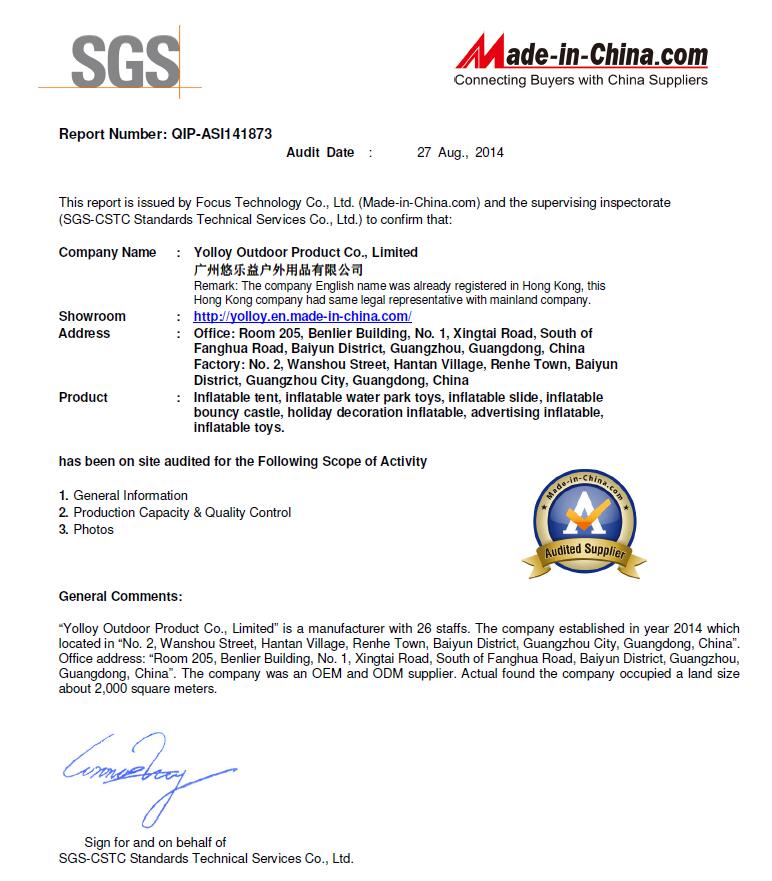
When you're choosing gear that your safety and comfort depend on, it pays to look at companies that live and breathe high-performance inflatables. Yolloy is a prime example. Their business isn't just making a single product; it's mastering the science of inflatable technology. Their slogan,
"Provide customers with professional and qualified products,"
isn't just a marketing line; it's a philosophy embedded in their materials and processes.
While you might not find a "kayak mattress" listed directly between their commercial products, understanding what they build with tells you everything you need to know about their capability to create an unbeatable sleeping solution.
It All Starts with Professional-Grade Materials
This is the secret sauce. A cheap air mattress from a big-box store and a professional inflatable product might both hold air, but that's where the similarity ends.
Yolloy, for instance, uses materials like
heavy-duty, waterproof, and fire-resistant PVC Tarpaulin
in many of their products. This isn't the thin vinyl of a pool toy. This is the same kind of rugged material used to build an industrial
inflatable tent
designed for outdoor work sites or car detailing. It's built to withstand abrasion, UV rays, and extreme weather. It passes stringent EN71 safety standards. Imagine a sleeping surface with that level of toughness. A stray rock or twig on the ground wouldn't be a cause for panic. A damp pack or a tent leak wouldn't even register. The seams are welded, not just glued, creating a monolithic, airtight, and waterproof bond.
For their water-based products, they go a step further, often using
eco-friendly TPU (Thermoplastic Polyurethane)
. This material is renowned for being non-toxic, odorless, and, crucially,
highly resistant to hydrolysis
. Hydrolysis is the process where materials break down from prolonged contact with water. A mattress made from TPU wouldn't just repel water; it would be completely unfazed by it. It's the same material they trust to build a massive
floating platform
or a luxury yacht pool, items that live in the water 24/7. Can you imagine a higher standard of "waterproof" for your sleeping gear?
A Legacy of Durability in Demanding Environments
Trust is built on proof. The proof of a company's quality is in the products they're already known for. A company like Yolloy doesn't just make small, simple items. They engineer complex structures that need to be flawlessly reliable.
Think about the forces acting on a
jet ski dock
. It's constantly battered by waves, enduring the weight of a heavy machine, and exposed to sun and saltwater. The welds, valves, and materials have to be perfect. Or consider a giant inflatable water park, with hundreds of people jumping and sliding on it all day. The internal baffles, the seams, and the material itself must be engineered for incredible stress.
When a company operates at that level, applying that same expertise to a sleeping mattress is second nature. They understand air pressure dynamics, stress points, and abrasion resistance in a way a simple consumer-goods company never could. Their rigorous production process, from design mock-ups to final quality checks, ensures that what the customer wants is what the customer gets—a product that performs. Their 95% on-time delivery rate and 24-hour response commitment are just outward signs of an internal culture of precision and reliability.
The Verdict: A Comparison for the Modern Kayaker
So, where does this leave us? The choice isn't just between Pad vs. Mattress. It's between Good, Better, and Best-in-Class. Let's lay it all out.
|
Feature
|
Sleeping Pad (Air Pad)
|
Standard Inflatable Mattress
|
Professional-Grade Inflatable (Yolloy-Standard)
|
|
Comfort
|
Good, but can be narrow and bouncy. Thickness is limited.
|
Excellent. Plush, thick, and raises you far off the ground.
|
Exceptional. The stability of high-quality construction combined with plush comfort. Often uses internal baffles for a flatter, more supportive surface.
|
|
Packability
|
Excellent. Often packs to the size of a 1L water bottle. The clear winner here.
|
Poor. Typically very bulky and heavy, challenging for kayak hatches.
|
Good. While larger than a sleeping pad, advanced materials and design focus on efficient packing. Far more manageable than a standard mattress.
|
|
Durability
|
Fair to Poor. Highly susceptible to punctures. Thin materials.
|
Poor. Made with cheap PVC, easily punctured, seams can fail. Not for outdoor use.
|
Excellent. Built with commercial-grade, puncture-resistant materials (PVC Tarpaulin/TPU). Welded seams designed for high stress.
|
|
Waterproofness
|
Surface is waterproof, but punctures and valve leaks are a risk.
|
Surface is waterproof, but material is not hydrolysis-resistant and can degrade.
|
Exceptional. Uses materials like hydrolysis-resistant TPU. Not just water-repellent, but engineered for constant water exposure.
|
|
Peace of Mind
|
Low. The constant, nagging fear of a puncture can be stressful.
|
Very Low. Not a question of if it will fail, but when.
|
High. Knowing your sleep system is built with the same toughness as industrial equipment lets you relax and enjoy the trip.
|
The final choice is deeply personal and depends on your priorities.
-
If you are an
ultralight purist
and every single ounce and cubic inch matters more than anything else, the high-end air pad remains a viable, albeit risky, option.
-
If you are
car camping
, a standard inflatable mattress offers great comfort for a low price, but it should never be relied upon for a remote trip like kayak camping.
-
If you are a
dedicated kayak camper
who values restorative sleep, gear reliability, and long-term value, the answer becomes clear. Investing in a professional-grade inflatable product is the smartest move. It bridges the gap between the packability of a pad and the comfort of a mattress, but crucially, it eliminates the durability weaknesses of both.
Conclusion: Invest in Your Adventure
Your nights are as much a part of your kayak camping adventure as your days on the water. A good night's sleep isn't a luxury—it's what fuels your paddle strokes, keeps you safe, and allows you to fully immerse yourself in the beauty of your surroundings.
The debate between a sleeping pad and an inflatable mattress is transformed when you introduce a third option: a professionally engineered inflatable solution. By choosing gear built with superior materials and a manufacturing ethos of quality and durability—the kind of philosophy championed by specialists like Yolloy—you're not just buying a product. You're buying confidence. You're buying peace of mind. You're making a choice to ensure that every moment of your hard-earned adventure, whether you're awake or asleep, is the best it can be.