









Transform your vision of a vibrant, laughter-filled aquatic playground into a stunning reality. This guide walks you through every step of professionally installing a commercial inflatable water park, backed by the expertise of a leading industry innovator.
Introduction: From a Dream to a Splash-Tastic Reality
Picture it: a sun-drenched shoreline, the sound of happy shouts echoing across the water, and a brightly colored, sprawling aquatic playground teeming with delighted guests. For entrepreneurs and resort managers, this isn't just a pleasant daydream; it's a powerful business vision. An inflatable water park is more than an attraction; it's a destination, a magnet for families, and a driver of unforgettable summer memories.
But how do you bridge the gap between this exciting concept and a safe, successful, and profitable operation? The answer lies in choosing the right partner and understanding the process. While many people know us, Yolloy, for our iconic and imaginative creations like a giant, magical `inflatable snow globe tent`, our core expertise extends deep into the world of complex, commercial-grade installations. Our slogan, "Provide customers with professional and qualified products," isn't just a marketing line; it's the foundation of everything we do, from designing a simple inflatable to engineering a massive, multi-part water park.
This guide is designed to demystify the installation process. We're pulling back the curtain to show you exactly what it takes to set up an `inflatable floating water sports park` safely and efficiently. Proper installation is not just about getting the pieces in the water; it's the most critical step in ensuring the safety of your patrons, the longevity of your investment, and the overall success of your business. Let's dive in and explore how to build your aquatic empire, one secure connection at a time.
Part 1: The Foundation - Why Your Choice of Supplier Matters
Before a single piece of equipment touches the water, the most important decision has already been made: your choice of supplier. This choice dictates the quality of your product, the safety of your guests, and the level of support you'll receive. A premier supplier doesn't just sell you products; they partner with you for success.
The Material Difference: Safety and Durability Woven In
An inflatable water park is constantly exposed to the elements: sun, water, salt, and the enthusiastic energy of hundreds of users. Its ability to withstand these forces comes down to the materials it's made from. This is an area where compromise is not an option. At Yolloy, our commitment to quality is uncompromising. For our water products, we insist on using a premium, **eco-friendly TPU material**.
Why is this so important? Unlike cheaper alternatives, TPU (Thermoplastic Polyurethane) is non-toxic and has no unpleasant chemical odor, ensuring a better experience for your guests. More critically, it is highly resistant to hydrolysis, meaning it won't break down or become brittle when submerged in water for long periods. This translates to a longer lifespan for your park and, most importantly, a safer playing surface. This same dedication to material science is seen across our product lines, whether it's the waterproof fireproof PVC tarpaulin used in our commercial tents or the specialized fabrics for our upcoming 2025 innovations. Quality is a consistent thread.
Beyond the Catalog: The Power of Custom Design
Your location is unique. Your brand is unique. Your water park should be, too. Cookie-cutter solutions rarely create a "wow" factor. This is where a supplier's design capabilities become a game-changer. The ability to create a **custom design** transforms your park from a collection of inflatables into a cohesive, branded experience.
We believe in a collaborative process. Our designers work directly with you to understand your vision, your target audience, and the specific constraints of your site. We then create detailed mock-up drawings, allowing you to see exactly how your park will look and function. Want to add a high-thrill catapult next to a challenging obstacle run? Need a specific color scheme to match your resort's branding? We adjust and refine the design until it's perfect, ensuring that what you see in the simulation is what you get in reality. This meticulous pre-production planning guarantees that the final product is not just an inflatable park, but *your* inflatable park.
Service as a Safety Feature
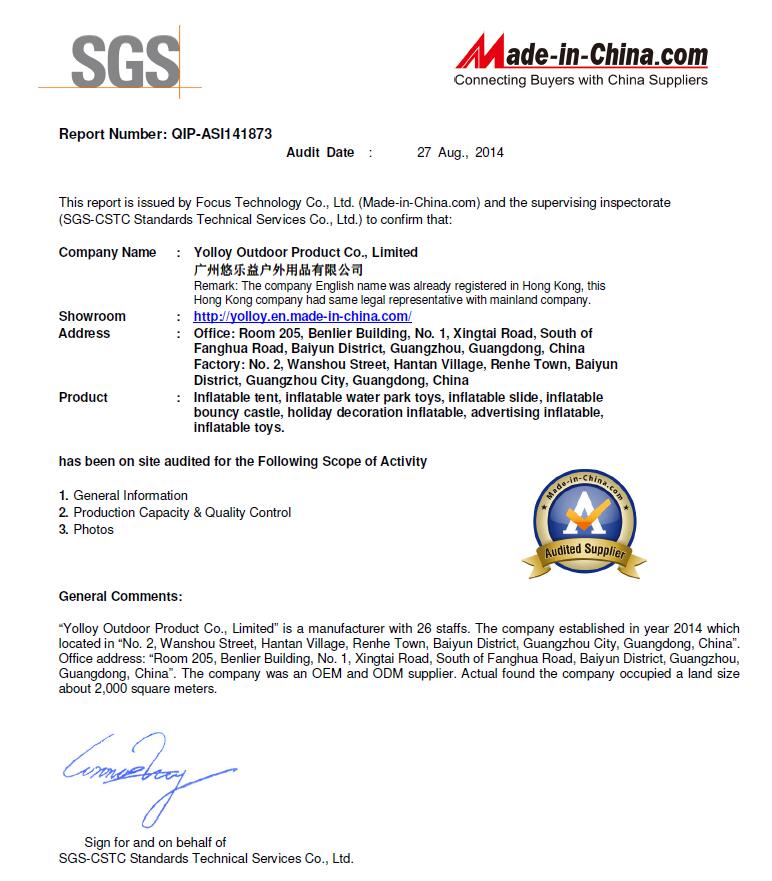
Excellent service isn't just about being friendly; it's a crucial component of a safe and smooth operation. Imagine having a critical question during installation and not being able to get a response. At Yolloy, we've built our reputation on reliability. Our guarantee to respond to emails within 24 hours and our industry-leading 95% on-time delivery rate are testaments to our commitment. We keep you informed at every stage, from design confirmation to production and shipping. This transparency and reliability mean you can plan your launch with confidence, knowing your partner has your back.
Part 2: The Ultimate Installation Guide - Step-by-Step to Success
With your high-quality, custom-designed park from a trusted supplier in hand, it's time for the main event: installation. This process is methodical and requires attention to detail. We've broken it down into three manageable phases: Pre-Installation Planning, On-Site Assembly, and Deployment.
Phase 1: Pre-Installation Planning (The Blueprint for Success)
Flawless execution begins with meticulous planning. What you do before the inflatables are even unrolled will determine the safety and efficiency of the entire project.
- Site Selection and Analysis: Not all bodies of water are created equal. You need a location with a suitable depth (typically at least 2.5-3 meters or 8-10 feet), clear of underwater hazards like rocks, sharp debris, or strong currents. Assess the seabed composition (sand, mud, gravel) as this will dictate your anchoring strategy. Also, consider accessibility for your guests and for the installation team.
- Anchoring System Design: This is arguably the most critical safety element of your entire park. An improperly anchored park can drift, creating a serious hazard. Your anchoring plan must be engineered for your specific site. This involves calculating the number of anchor points needed based on the park's size, shape, and expected wind/wave load. You must choose the right type of anchors for your seabed – heavy concrete blocks (dead weight), manta-ray or screw-in anchors are common choices. Always over-engineer this part; you can't be too safe.
- Layout and Flow: Using the 3D mock-ups from your custom design process, finalize the on-water layout. Think about the user experience. Where do guests enter and exit? How do they flow from one obstacle to the next? Create a mix of high-intensity and lower-intensity zones to cater to different ages and abilities. Ensure there are clear sightlines for lifeguards from their designated stations.
Pro Tip: Before you finalize anything, create a detailed site map that overlays your park layout, anchor points, lifeguard stations, and designated swim zones. This document will become the bible for your installation and operations teams.
| Pre-Installation Checklist Item | Key Considerations | Status (Example) |
|---|---|---|
| Site Permit & Regulations | Have all local, regional, and national permits been obtained? (Environmental, commercial, etc.) | Completed |
| Water Depth Sounding | Map the entire operational area to ensure minimum depth is met everywhere. | Completed |
| Seabed Analysis | Identify composition (sand, mud, rock) to select correct anchors. Check for debris. | Completed |
| Anchor System Engineering | Finalize anchor types, weights, quantities, and placement plan. | In Progress |
| Staffing Plan | Determine number of certified lifeguards and installation crew needed. | Completed |
| Emergency Action Plan (EAP) | Develop protocols for weather events, medical emergencies, and equipment failure. | Drafted |
Phase 2: On-Site Preparation & Assembly
With your plan in place, it's time to get hands-on. The goal of this phase is to prepare and connect the modules on land before deploying them into the water.
- Receiving and Inventory: When your shipment from Yolloy arrives, resist the urge to immediately start inflating. First, carefully unbox everything and check it against your packing list. Inspect each piece for any potential shipping damage. This is much easier to do on land than in the water.
- Set Up a Staging Area: Find a large, clean, and flat area on shore. A grassy field or a large parking lot is ideal. Lay down ground tarps to protect the inflatables from punctures or abrasion. This will be your workshop for the next few steps.
- Inflation: Using the professional-grade air pumps provided, begin to inflate each module. Inflate them to about 80-90% of their full capacity. This leaves them firm but with enough give to make connecting them easier. Once connected, you will top them off to the recommended PSI. Check every valve to ensure it's sealed correctly after inflation.
- Connecting the Modules: This step requires precision and teamwork. Lay out the modules on the staging area according to your layout plan. Yolloy's parks use a robust system of heavy-duty straps, stainless steel D-rings, and overlapping safety flaps. The goal is to create a seamless and incredibly strong connection. Each strap must be threaded correctly and pulled tight. The overlapping flap then covers the connection point, preventing any gaps where a user could potentially get a foot or hand trapped. Think of the precision required for a **sealed spray booth**, where every seam must be perfectly airtight. Here, every connection must be perfectly gap-free and secure for user safety. Take your time and double-check every single connection.
Phase 3: Deployment and Anchoring
This is where your park comes to life. Moving the assembled sections into the water and securing them is the final, and most rewarding, part of the installation.
- Launching the Sections: Depending on the size of your connected sections, you'll need a team of people to carefully carry or slide them into the water. Launch them from a beach or a boat ramp if possible. Take care not to drag the material over sharp or abrasive surfaces.
- On-Water Assembly: If your park is very large, you may need to connect some of the larger sections in the water. This is more challenging but entirely manageable with a trained team. Use a small boat or jet ski to maneuver sections into place.
- Connecting to the Anchoring System: This is a two-part process. First, a team on a boat will deploy the anchors according to your pre-defined map, using GPS for accuracy. Each anchor will have a line with a buoy attached. Once the anchors are set, you will maneuver the park into position and connect the park's designated D-rings to the corresponding anchor lines. Adjust the lines to have the correct tension—not too tight to strain the park, but not so loose that it can drift excessively.
- The Final Walkthrough: The park is in the water, inflated, and anchored. Now for the most important check. Go over the entire park one last time. Top off the air pressure in each module to the recommended PSI. Physically pull on every connection strap. Swim the perimeter and inspect every anchor line. Have a few team members run and jump on the course to simulate user activity, watching how the park responds. Only when you are 100% confident in its safety and stability is the installation complete.
Part 3: Post-Installation - The Keys to Longevity
Installation is a milestone, not the finish line. Proper daily operations and long-term maintenance are essential to protect your investment and ensure it remains a safe, attractive destination for years to come.
Daily Operations and Safety Checks
Before you open to the public each day, your team must perform a series of checks. This should become a non-negotiable routine.
- Pressure Check: Air pressure can fluctuate with temperature changes. Check the firmness of each module and top off with air as needed.
- Anchor and Connection Inspection: Have a lifeguard swim the perimeter to visually inspect all anchor lines for frays and ensure they are secure. On the park itself, visually and physically check the key connection points.
- Surface Scan: Walk the entire park looking for any new damage, debris, or areas that need cleaning.
Cleaning and Long-Term Care
Keeping your park clean is crucial for both aesthetics and hygiene. The high-quality **eco-friendly TPU material** we use is relatively easy to clean. Use fresh water and a mild, environmentally-friendly soap with soft-bristle brushes. Avoid harsh chemicals or abrasive cleaners that could damage the material.
In the unfortunate event of a puncture, don't panic. Our parks come with professional repair kits. The process is straightforward: clean and dry the area, apply the special adhesive, place the patch, and allow it to cure fully. A properly applied patch is incredibly strong and will not compromise the safety of the module.
Off-Season Storage
How you store your park in the off-season will have a massive impact on its lifespan. The process must be thorough:
- Thorough Cleaning: Remove the park from the water and give it the most thorough cleaning of the year. Remove all salt, algae, and grime.
- Complete Drying: This is critical. The park must be 100% dry before storage. Inflate it on land and let it dry in the sun, wiping down any crevices. Any trapped moisture can lead to mold and mildew, which can degrade the material.
- Proper Folding and Storage: Deflate the sections and fold them carefully, avoiding sharp creases. Store them in the provided storage bags in a clean, dry, rodent-free location that is not subject to extreme temperatures.
Conclusion: Your Partner in Fun and Success
Building an inflatable water park is an exciting venture, and as you've seen, success lies in the details. It's a journey that begins with choosing a supplier committed to quality, continues with a meticulous and professional installation, and is sustained through diligent maintenance.
At Yolloy, we see ourselves as more than just a manufacturer. We are your partners in bringing joy to thousands of people. Our commitment to using the best materials, offering deep customization, and providing unwavering support is designed to ensure your project is not just successful, but spectacular. From the initial spark of an idea to the final safety check, we are here to provide the professional, qualified products and the expert guidance you need to make a splash in the world of aquatic entertainment.