Picture this: you need a spacious, weather-resistant shelter that can be set up in under 10 minutes, holds its shape without a single metal pole, and packs down small enough to fit in the trunk of a car. That is the reality of modern outdoor inflatable tents — and it is why event planners, rental businesses, emergency responders, and outdoor enthusiasts are making the switch from traditional frame tents to air-supported structures.
Whether you are sourcing a tent for a wedding reception, a corporate expo, a field hospital, or a weekend camping getaway, choosing the right inflatable tent manufacturers is the single most important decision you will make. This guide walks you through everything you need to know — from tent types and material standards to what separates a reliable factory from the rest.
Why Outdoor Inflatable Tents Are Replacing Traditional Frame Tents
Traditional pole-and-canvas tents have served the events industry for decades, but they come with well-known drawbacks: heavy metal frames, hours of assembly time, large storage footprints, and a crew of several people required for setup. Outdoor inflatable tents solve all of these problems at once.
An inflatable tent uses air-filled beams or columns instead of rigid poles. A continuous-flow blower keeps the structure inflated and stable. Once the blower is connected, the tent rises to its full shape within minutes — often with just one or two people handling the entire process. The curved, aerodynamic shape naturally sheds wind and rain, while the absence of internal poles means the full interior space is usable for seating, displays, or equipment.
For businesses that rely on frequent setup and takedown — rental companies, event agencies, exhibition teams — this speed translates directly into lower labor costs and faster turnaround between events. It also means fewer crew members on-site, which is a significant advantage when working in remote locations or tight urban spaces.
Types of Outdoor Inflatable Tents and Their Best Uses
Not all inflatable tents are built the same. The best type for your project depends on the event format, the number of guests, the terrain, and the weather conditions you expect to face. Here is a breakdown of the most popular categories and what each one does best:
Cube and Tunnel Tents
Cube and tunnel-shaped inflatable tents are the workhorses of the event world. Their rectangular or arched interiors provide generous, unobstructed floor space that can be arranged for dining, exhibitions, product displays, or medical stations. Tunnel tents are particularly popular for sports events, marathons, and outdoor trade shows because they can be linked together to create extended covered passageways or segmented zones. These tents are also widely used as field command posts and temporary workshops during emergency relief operations.
Dome Tents
The dome shape is one of the most structurally efficient designs in architecture, and inflatable dome tents take full advantage of this geometry. They distribute wind load evenly across the entire surface, making them exceptionally stable in gusty conditions. Dome tents work well for glamping setups, VIP lounges at festivals, pop-up restaurants, and planetarium-style projection experiences. Their rounded profile also makes them highly photogenic — a bonus for social-media-driven events.
Party Tents
An inflatable party tent is designed with entertainment in mind. These tents often feature larger door openings, optional sidewall windows for ventilation, and bright, customizable exterior colors. They are a go-to choice for weddings, birthday celebrations, corporate galas, and music festivals. Many party tents can be branded with company logos or event themes, turning the structure itself into a marketing asset. Because they inflate quickly, they are also ideal for venues where setup time is limited.
Specialty Tents: Car, Garage, and Shelter Tents
Beyond events, inflatable tents have found practical applications in the automotive and industrial sectors. Inflatable car tents serve as portable garages, protecting vehicles from sun, rain, and hail at outdoor shows or remote work sites. Inflatable shelter tents provide temporary housing, storage, or workspace in construction, agriculture, and disaster relief. Some models are designed specifically as spray booths for auto detailing and painting, with integrated ventilation ports and airtight construction to contain fumes and overspray.
What to Look for When Choosing Inflatable Tent Manufacturers
The quality of your inflatable tent depends almost entirely on the manufacturer behind it. A tent that looks good in a product photo may fail in the field if the factory cuts corners on materials, stitching, or quality control. Here is what to check before placing an order:
Material Selection. Commercial-grade PVC tarpaulin is the standard for most inflatable tents, offering a proven combination of tensile strength, waterproofing, and UV resistance. For certain applications, Oxford fabric, nylon, or TPU may be more appropriate. A knowledgeable manufacturer will recommend the right material based on your specific use case rather than applying a one-size-fits-all approach.
Manufacturing Standards. Look for a factory whose materials have been tested to recognized standards. EN71 and EN14960 cover inflatable product safety, while EN15649 applies to water-related items. RoHS compliance ensures that materials are free from restricted hazardous substances. Blowers should carry CE or UL certification for the voltage of your target market — 110V, 220V, or 380V.
Seam Construction. This is where many inflatable products fail. Quality manufacturers use precision sewing equipment with waterproof nylon thread, reinforced seams, and additional reinforcement at high-load points. For airtight products, high-temperature fusion welding ensures a consistent seal that will not leak over time.
Customization Capability. The custom inflatable tent process should start with your vision — not a catalog. A good manufacturer works from your description, drawing, sketch, photograph, or site plan. Designers prepare simulation renderings for your approval before production begins. Custom sizes, colors, and logo printing should be standard offerings, not premium add-ons. Importantly, the minimum order quantity should be flexible — many reputable factories accept orders starting from just one piece.
Quality Control. Every tent should be inspected and tested before it leaves the factory. This includes checking seam integrity, blower compatibility, anchor attachment points, and overall dimensional accuracy. A repair kit should be included with each product, and the manufacturer should be able to provide clear guidance on maintenance and storage.
The Practical Side: Production, Shipping, and Setup
Understanding the logistics behind your order helps you plan realistically. For a regular inflatable product, production time typically ranges from 6 to 15 days. Complex or very large custom tents may take longer. Once production is complete, you have two main shipping options: air freight, which takes approximately 5 to 7 days, or sea freight, which takes 15 to 30 days or more depending on the destination port.
On the delivery front, a best inflatable tent supplier will track and report their on-time delivery performance. A rate of 95% or above signals a well-organized production and logistics operation. Equally important is communication — emails and inquiries should be answered within 24 hours, and you should never feel left in the dark about your order status.
When your tent arrives, setup is refreshingly simple. Unfold the tent on a flat surface, connect the blower, and watch it rise. Most tents reach full rigidity within minutes. D-ring or round metal anchor points are built into the structure for securing it against wind. The blower runs continuously at low power — comparable to a household fan — to maintain the internal air pressure. Each tent ships with a repair kit, and with proper care and storage in a dry environment, a well-made inflatable tent can serve reliably for years.
Applications That Go Beyond the Obvious
While events and camping are the most visible uses of inflatable tents, the technology has quietly expanded into several specialized fields:
Golf Simulators: Portable inflatable enclosures allow golf enthusiasts and training facilities to set up simulators anywhere — from backyards to trade show floors.
Automotive Spray Booths: Airtight inflatable tents with ventilation systems provide a controlled environment for car painting and detailing, eliminating the need for a permanent spray booth.
Altitude Training: Specialized inflatable chambers simulate high-altitude conditions for athletic training, giving sports teams a portable hypoxic training solution.
Emergency Response: Rapid-deployment shelter tents serve as field hospitals, triage centers, and command posts during natural disasters and humanitarian crises.
Outdoor Classrooms: Schools and educational programs use inflatable tents as temporary learning spaces for outdoor education, science camps, and field research stations.
Why Your Choice of Supplier Matters
The inflatable tent market is global, and prices vary widely. It can be tempting to go with the lowest quote, but the true cost of a tent is measured over its service life — not just at the point of purchase. A tent that delaminates after one season, leaks at the seams, or comes with a blower that fails mid-event will cost far more in replacements, lost bookings, and damaged reputation than the savings on the initial invoice.
A reliable inflatable tent manufacturers partner brings more than just a product. They bring design expertise, material knowledge, production consistency, and after-sales support. They answer your questions promptly, keep you updated on production progress, and stand behind their work with a reasonable warranty. When you find a supplier that checks all of these boxes, you have found a long-term partner for your business — not just a one-time vendor.
Ready to Start Your Inflatable Tent Project?
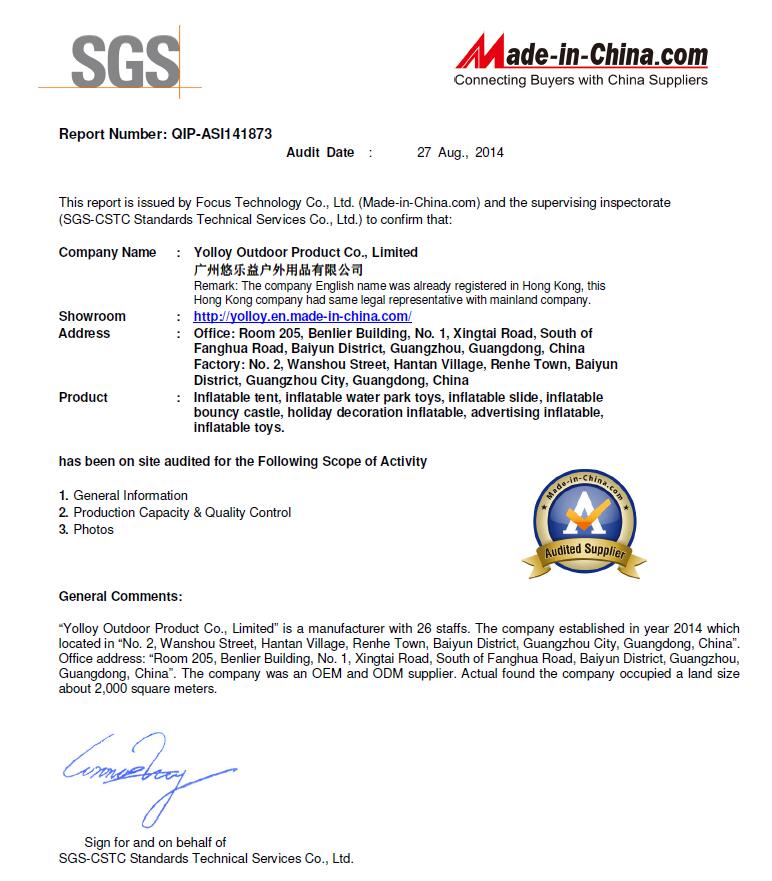
Whether you need a single custom tent for a special event or a full container of tents for your rental fleet, YOLLOY Outdoor Product Co., Limited delivers quality, reliability, and responsive service from our factory in Guangzhou, China. Our team works with your concept — a sketch, a photo, a site plan, or just a description — and turns it into a finished product that meets your exact specifications.
Browse our full range of outdoor inflatable tents, or contact us directly at [email protected] to discuss your requirements. Your vision, our expertise — let us build something great together.