Inflatable Winter Tents: The Smart Choice for Cold-Weather Events and Outdoor Operations
How inflatable shelters outperform traditional tents in winter conditions — and what to look for when sourcing from a reliable manufacturer
When temperatures drop and snow starts falling, most event planners and outdoor business operators face a familiar problem: traditional tents are cumbersome to set up, struggle against heavy wind loads, and offer limited insulation. An
inflatable winter tent changes that equation entirely. Unlike pole-and-frame structures that rely on dozens of rigid components, inflatable tents use air-filled beams to create a self-supporting shelter that goes up in minutes — even on frozen ground or uneven terrain.
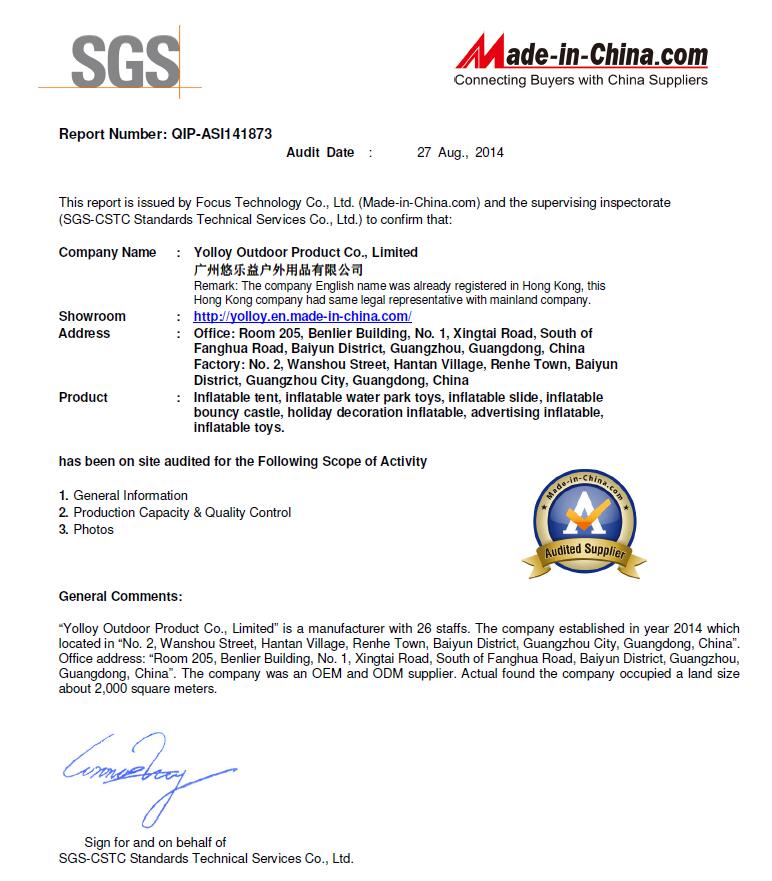
YOLLOY, a Guangzhou-based inflatable product manufacturer, has seen growing demand for cold-weather inflatable shelters across Europe, North America, and other regions where winter events are a year-round business reality. This article covers what makes an inflatable tent suitable for winter use, the key commercial applications, and how to evaluate a manufacturer before you place an order.
What Makes an Inflatable Tent Winter-Ready
Not every inflatable tent is built for snow and sub-zero temperatures. A genuine
four season inflatable tent needs to check several boxes at the material and design level.
Material matters first. Commercial-grade PVC tarpaulin — the kind used in YOLLOY's outdoor tent range — provides inherent waterproofing, wind resistance, and UV protection. For winter-specific applications, the fabric thickness and seam construction determine how well the tent holds up under snow load. YOLLOY uses high-temperature fusion welding for airtight sections and reinforced nylon-thread stitching with additional reinforcement at high-load points. Fabrics can also be selected from Oxford cloth, TPU, or nylon depending on the specific thermal and durability requirements of the project.
Structural design counts. The dome and tunnel shapes popular in inflatable tent design naturally shed snow — steep angles prevent accumulation on the roof, reducing the risk of collapse. D-ring and round metal anchor systems, standard on YOLLOY tents, allow secure ground fixing even when the soil is frozen or covered in snow. For larger installations, multiple anchor points distribute wind loads evenly across the structure.
Blower systems need cold-weather compatibility. Continuous-air blowers keep the tent's beams pressurized throughout use. YOLLOY supplies blowers rated for 110V, 220V, or 380V, and units that meet CE or UL requirements. In freezing conditions, having a backup blower on site is a practical precaution — something YOLLOY can include in the order at the customer's request.
Commercial Applications That Benefit from Winter Tents
The versatility of an inflatable winter tent goes well beyond camping. Businesses across multiple sectors are adopting them for cold-weather operations.
Winter markets and holiday festivals. Christmas markets, New Year celebrations, and winter food festivals need heated, weatherproof vendor spaces that can be deployed quickly and taken down just as fast. Inflatable tents with transparent side panels — available as clear PVC options from YOLLOY — let natural light in during short winter days while keeping the cold out.
Outdoor dining and hospitality. Restaurants and bars looking to extend their outdoor seating season into the colder months use inflatable domes and cube tents as heated private dining pods. These structures create an intimate atmosphere while protecting guests from wind and snow. YOLLOY's clear inflatable dome tents are particularly popular for this use case, offering 360-degree views of winter scenery.
Emergency response and field operations. When disaster response teams or military units need rapid-deployment shelter in winter conditions, inflatable tents offer a significant advantage over traditional canvas tents. Setup takes minutes rather than hours, and the structure can be anchored securely on snow, ice, or mud. YOLLOY produces inflatable shelters, emergency tents, and workshop tents designed for exactly these demanding environments.
Sports events and training facilities. Winter sports competitions, ski resort base camps, and cold-weather training programs need temporary covered spaces for equipment storage, athlete warm-up areas, and spectator zones. Inflatable sport tents provide large, unobstructed interior spaces without internal poles getting in the way.
How to Choose the Right Inflatable Winter Tent
Before contacting an
inflatable tent manufacturer, have a clear picture of your requirements. Here are the key factors to consider:
Size and capacity. Measure the available site area and determine how many people or how much equipment the tent needs to accommodate. YOLLOY offers custom sizing — you are not limited to off-the-shelf dimensions.
Expected snow load and wind speed. Communicate the worst-case weather conditions in your region. This determines fabric grade, beam diameter, and anchoring requirements. YOLLOY's design team can adjust specifications accordingly.
Insulation and heating. For prolonged winter use, discuss wall material options. Solid PVC walls provide basic insulation, while additional thermal linings or double-layer construction can be specified for extreme cold. Heating equipment can be integrated into the tent's layout.
Flooring requirements. Frozen ground is uncomfortable underfoot. Options include raised flooring systems, insulated groundsheets, or modular decking — all of which YOLLOY can incorporate into the project scope.
Branding and customization. Winter events are marketing opportunities. YOLLOY can print logos, artwork, and brand colors directly onto the tent fabric, turning the shelter itself into a visible advertisement.
Winter Maintenance: Keeping Your Inflatable Tent in Top Shape
A well-maintained inflatable tent will serve reliably through multiple winter seasons. Here are practical tips drawn from real-world experience:
Snow Removal
Clear accumulated snow from the roof regularly. Use a soft-bristled brush or a plastic snow rake — never metal tools, which can scratch or puncture the PVC surface. The dome shape of most inflatable tents helps snow slide off naturally, but heavy wet snow should still be removed promptly.
Anchor Checks
Inspect all anchor points and tie-downs before and after storms. Frozen ground can shift, loosening stakes. YOLLOY equips every tent with D-ring or round metal anchor systems, and checking these regularly takes only a few minutes but prevents major issues.
Blower Protection
Keep the blower unit sheltered from direct snow and ice. A simple cover or enclosure protects the motor without restricting airflow. In extreme cold, consider running a backup blower on a separate circuit — YOLLOY can supply matching spare units with your order.
Storage Between Seasons
When winter ends, clean the tent thoroughly and let it dry completely before packing. Store in a dry, cool place away from direct sunlight. YOLLOY includes a repair kit with every inflatable product, and the company's PVC materials are designed to resist yellowing and performance degradation over years of use.
What to Look for in an Inflatable Tent Manufacturer
The difference between a tent that lasts three winters and one that fails in the first storm often comes down to who built it. When evaluating potential suppliers, pay attention to these factors:
Custom design capability. Can the manufacturer work from your description, sketch, or site plan? YOLLOY's design team prepares simulation renderings from customer proposals, revises until approval, and only then releases the design for production. The minimum order quantity is one piece — you do not need to commit to bulk orders to get a custom solution.
Material certifications. Ask about material testing. YOLLOY's fabrics have passed EN71, EN14960, and RoHS-related testing. Blowers meet CE or UL requirements. These certifications are not just paperwork — they confirm the materials will perform as expected in real conditions.
Production and delivery timeline. YOLLOY's typical production time is 6 to 15 days for a regular inflatable product, with air shipping taking 5 to 7 days and sea freight 15 to 30 days or more. The company reports a 95% on-time delivery rate, and emails are answered within 24 hours.
After-sales support. Every YOLLOY product ships with a repair kit. The company describes a three-year service life expectation when products are used and maintained correctly, subject to product type and actual terms. Knowing you can reach someone when a zipper breaks or a seam needs patching matters more than a flashy warranty certificate.
Ready to Equip Your Winter Operation?
YOLLOY has been designing and manufacturing custom inflatable tents from its factory in Guangzhou, China, serving clients across Europe, Asia, the Americas, the Middle East, and Africa. Whether you need a single heated dome for a restaurant patio, a fleet of shelters for a winter festival circuit, or a specialized emergency-response tent, the company's design-to-production workflow starts with your requirements — not a catalog.
Contact YOLLOY at
[email protected] or call
+86-20-8370 0771 to discuss your project. You can also browse the full product range at
www.yolloy.net.