Inflatable Canvas Tents vs. Traditional Event Tents: Which One Delivers Better ROI for Your Business?
A practical comparison for event planners, rental business owners, and venue operators looking to maximize value and minimize headaches.
If you run an event rental business, operate an outdoor venue, or organize corporate gatherings, you know the drill: hours of assembling aluminum frames, threading poles, and wrestling with heavy canvas covers — all before the first guest arrives. Then comes the breakdown, which can eat up another hour or more. Multiply that across dozens of events each season, and the labor costs alone can erode your margins.
This is why more event professionals are turning to the
inflatable canvas tent as a practical alternative to traditional frame and pole tents. But is the switch worth it for your business? Let us break down the real-world differences so you can make an informed decision.
Setup Speed: Minutes vs. Hours
A traditional event tent requires a trained crew to assemble the frame, secure the canopy, and anchor everything properly. For a mid-sized 6m x 6m frame tent, a team of two to three people typically needs 45 to 90 minutes for a complete setup. In contrast, an
inflatable event tent can be fully deployed in under 10 minutes using an electric blower. The air beams inflate simultaneously, lifting the structure into position without any manual frame assembly.
For rental businesses handling multiple setups per weekend, this speed advantage translates directly into lower labor costs and the ability to serve more clients in a single day. One operator can often manage an inflatable tent setup alone, whereas a traditional tent frequently demands a crew.
Durability and Weather Resistance
A common misconception is that inflatable structures are less durable than rigid-frame tents. In practice, a well-built
inflatable party tent made from commercial-grade PVC tarpaulin or Oxford fabric can withstand strong winds and heavy rain better than many pole tents. The air beams act as shock absorbers — when wind gusts hit, the structure flexes and returns to shape rather than bending or snapping like aluminum poles. Commercial-grade inflatable tents from experienced manufacturers use reinforced seams, waterproof nylon thread, and additional reinforcement at high-load areas. D-ring and round metal anchor systems are integrated into the design for secure installation and wind resistance.
Material Quality: What to Look For
Not all inflatable tents are created equal. The material choice has a direct impact on longevity, appearance, and performance. High-quality
custom inflatable tent options are typically constructed from one of the following:
Commercial-grade PVC tarpaulin — waterproof, UV-resistant, and easy to clean; ideal for long-term outdoor use and frequent setups.
Oxford fabric — lightweight yet durable, with a more premium textile appearance suitable for upscale events, weddings, and corporate functions.
Canvas — a classic look with excellent breathability; often chosen for weddings, garden parties, and brand activations where aesthetics matter.
TPU (Thermoplastic Polyurethane) — transparent, flexible, and highly resistant to abrasion; the preferred material for clear bubble tents and snow globe designs.
When sourcing from a manufacturer, confirm that the materials have passed relevant safety testing. Reputable suppliers provide documentation showing compliance with standards such as EN71, EN14960, and RoHS, and supply blowers that meet CE or UL requirements.
Portability and Storage
Traditional frame tents are heavy and bulky. Even a modest-sized unit requires a truck or large van for transport, and the disassembled poles and panels take up considerable storage space. An inflatable tent, once deflated, rolls into a compact package that can fit in the trunk of a standard car. For businesses with limited storage facilities or those that travel between event sites, this portability is a significant operational advantage. The single-unit design also means there are no loose poles, connectors, or small hardware pieces to misplace.
Customization: Branding and Design Flexibility
One area where inflatable tents truly outshine traditional options is customization. Because inflatable structures are manufactured from scratch to order, you can specify exact dimensions, colors, and printed artwork. Customer logos, brand messaging, and themed designs can be printed directly onto the fabric during production. This makes inflatable tents a powerful branding tool for corporate events, product launches, and trade shows. Traditional tents, by comparison, usually require additional printing or banner attachments to achieve a branded look, adding cost and setup time.
Manufacturers with a design-to-production workflow can take your concept — whether it is a rough sketch, a photograph, or a site plan — and produce simulation renderings for your approval before manufacturing begins. This level of customization is simply not available with off-the-shelf frame tents.
Cost Comparison: Short-Term vs. Long-Term
It is true that a quality inflatable tent carries a higher upfront cost than a basic frame tent of similar size. However, when you factor in reduced labor, faster turnover between events, lower transport costs, and the elimination of replacement parts like bent poles or torn connectors, the total cost of ownership often favors the inflatable option over a two-to-three-year period. Additionally, many manufacturers supply a repair kit with each product, and the tubes can be patched in much the same way as a bicycle inner tube — a far simpler and cheaper fix than sourcing and replacing a bent aluminum frame pole.
When evaluating suppliers, look for those who offer a reasonable warranty period, provide blowers matched to your local voltage requirements (110V, 220V, or 380V), and maintain a track record of on-time delivery. A supplier reporting a 95% on-time delivery rate and a three-year service life expectation under normal use conditions gives you confidence in the investment.
Application Scenarios: Where Inflatable Canvas Tents Excel
Inflatable canvas tents are versatile enough to serve a wide range of commercial applications:
Weddings and private celebrations — the elegant fabric appearance of canvas and Oxford materials complements upscale event aesthetics.
Corporate events and product launches — full-surface printing transforms the tent into a branded environment.
Trade shows and exhibitions — rapid setup and takedown keep your booth crew focused on sales, not construction.
Music festivals and outdoor concerts — the structure withstands crowds and weather while creating a distinctive visual presence.
Hospitality and pop-up dining — temporary restaurants, bars, and lounge spaces that can be deployed and relocated with minimal effort.
Emergency and medical shelters — quick-deploy structures for disaster relief, field hospitals, and temporary housing.
What to Ask Before You Buy
Before placing an order, confirm these key points with your supplier:
1. What materials are used for the canopy and the air beams? Are material test reports available?
2. What blowers are included, and are they certified for use in your country (CE, UL)?
3. Is a repair kit included with every purchase?
4. What is the typical production lead time for a custom order?
5. Can the supplier work from your own design, sketch, or logo artwork?
6. What packaging and shipping options are available (air freight vs. sea freight)?
7. What is the minimum order quantity? Can you order a single unit for evaluation?
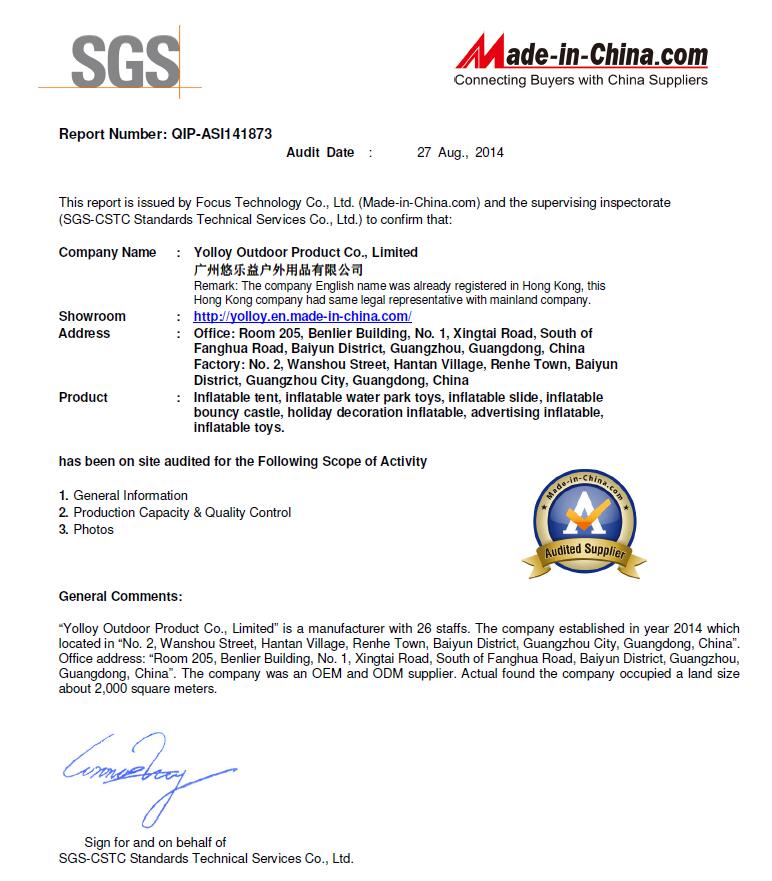
If you are ready to explore how an inflatable canvas tent can transform your event business, YOLLOY offers custom design-to-production service with commercial-grade materials, certified blowers, and a 95% on-time delivery record. From a single prototype to a bulk order, every product is built to your exact specifications.
Contact YOLLOY today at [email protected] or call +86-20-8370 0771 to discuss your project requirements and receive a tailored quotation.